A gravel bike helmet and a road helmet are similar in shape, but a gravel helmet usually gives a little more coverage at the back and sides, more ventilation for dusty trails, and a peak or a mount for accessories, while a road helmet is lighter and more aerodynamic for fast riding on smooth tarmac. In general terms, a road helmet is built for speed, and a gravel helmet is built for rougher, slower, and dustier riding.
Gravel riding sits between road cycling and mountain biking: you ride on tarmac, gravel, dirt, and sometimes mud, often for long distances and in all weathers. That mixed riding changes what you need from a helmet. This guide explains the differences and helps you choose the right one for the riding you do.
How Do Gravel and Road Helmets Differ in Coverage?
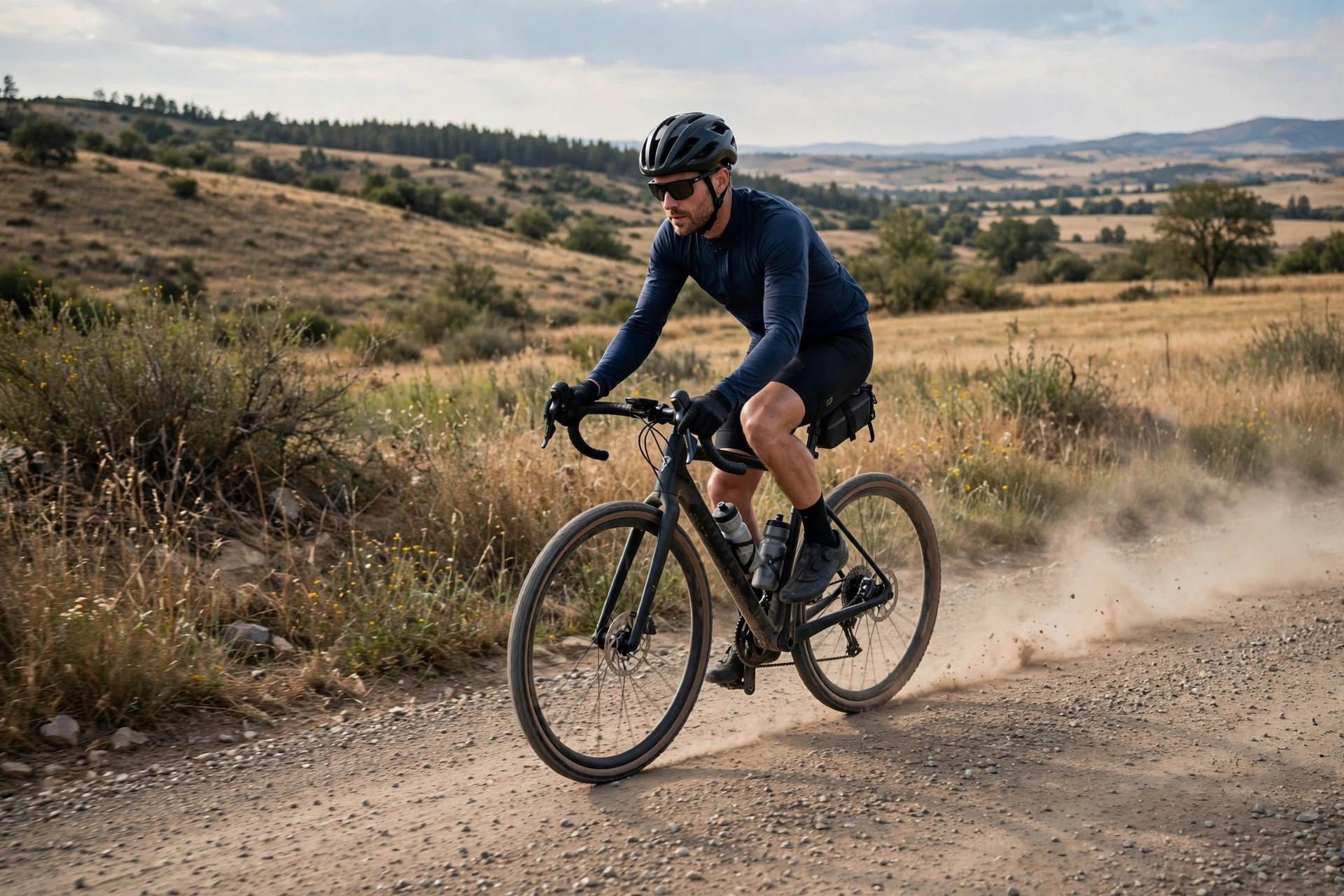
A road helmet is designed to be light and aerodynamic, with a shape that sits high on the head and leaves the back and sides fairly open. That is fine on smooth tarmac, where the main risk is a fall at speed on a hard surface. A gravel helmet, by contrast, usually extends a little lower at the back and sides, giving more coverage if you fall on a rough, uneven surface or if you are hit by a stone thrown up from the trail.
The extra coverage does not make a gravel helmet a mountain bike helmet: it is still light and well ventilated, and it does not have the deep coverage or the large peak of a full mountain bike helmet. But for a rider who spends time on loose gravel and dirt, where a fall can be unpredictable and the surface is hard and uneven, the extra coverage is a genuine benefit. If you ride mostly on tarmac with only the occasional gravel section, a road helmet is fine; if gravel is a regular part of your riding, the extra coverage is worth having.
What About Ventilation and Dust?
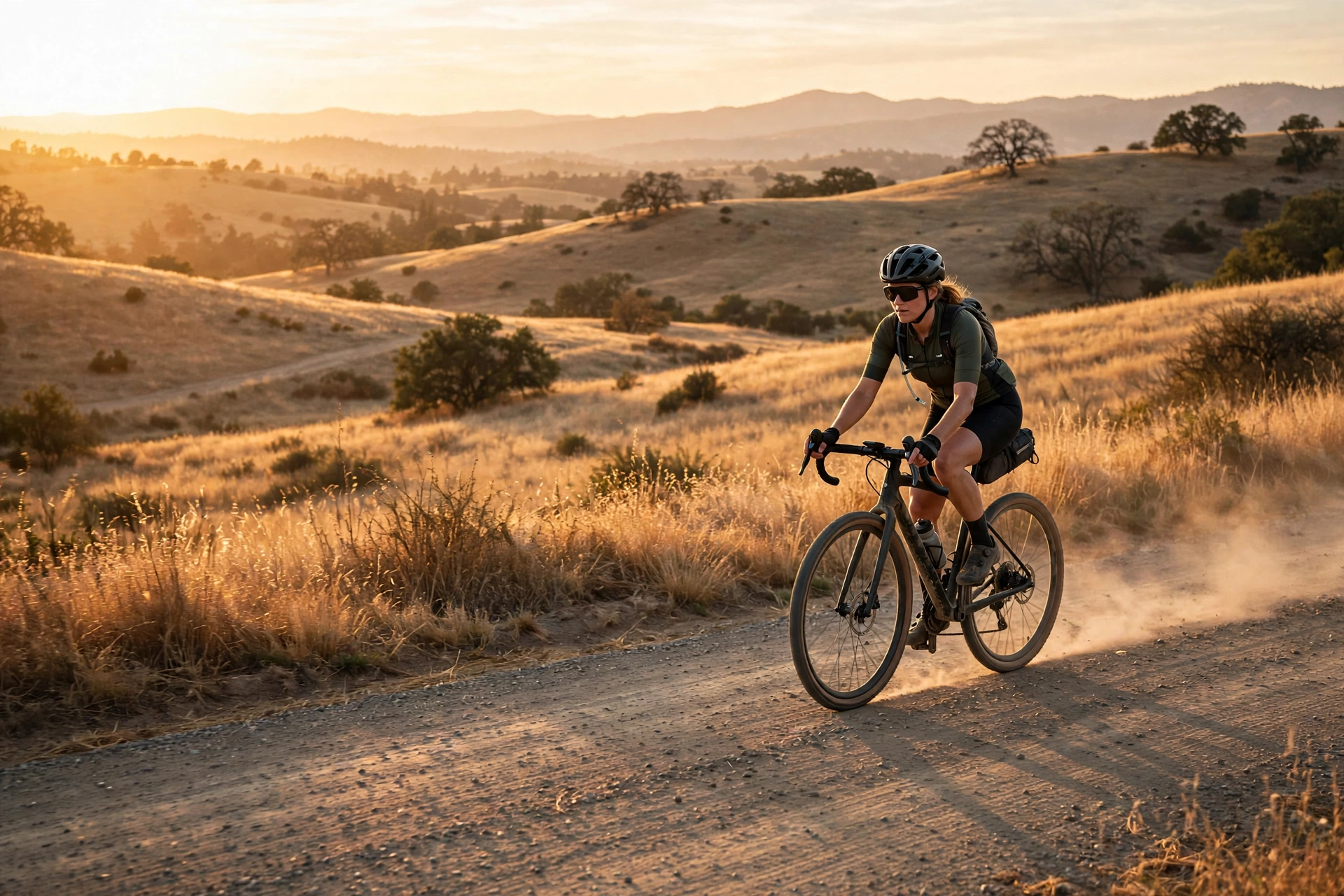
Ventilation is important for both types, but gravel riding adds a problem that road riding does not: dust. On a dry gravel road, the rider in front kicks up a cloud of dust, and that dust gets into the helmet’s vents, the padding, and your eyes. A gravel helmet often has larger vents that are easier to clear, and some have a mesh or a liner that keeps insects and larger bits of debris out of the vents while still letting air through.
Road helmets are designed for maximum airflow at speed, with vents shaped to channel air over the head when the rider is in a tucked, aerodynamic position. A gravel rider sits more upright, rides more slowly, and may be riding in a group where the airflow is broken up by the rider in front, so the vents need to work in a more upright position and at lower speeds. A gravel helmet’s vents are usually designed with that in mind, with larger openings and a shape that catches air even when you are sitting up.
Do Gravel Helmets Have a Peak or Mounts?
Many gravel helmets have a small peak, or a mount for a peak, which helps keep sun, rain, and mud out of your eyes on a trail. A road helmet almost never has a peak, because a peak adds drag and is not needed on smooth tarmac. The peak on a gravel helmet is usually small and removable, so you can take it off for a road ride if you prefer, and it is not as large as the peak on a mountain bike helmet.
Gravel helmets often have mounts for accessories too, such as a light or a camera, because gravel riders often ride in poor light or want to record their rides. A road helmet may have a mount for a light, but it is less common. If you ride in low light or you like to film your rides, a gravel helmet with a light or camera mount is a practical choice. And if you want to understand the safety features inside either type, reading about what MIPS is for helmets can help you make sense of what is listed on the box.
How Do Weight and Fit Compare?
A road helmet is usually lighter than a gravel helmet, because it has less coverage and a simpler design. The difference is often small, but on a long ride, a lighter helmet is more comfortable, especially if you are climbing. A gravel helmet is a little heavier, but the extra weight is the price of the extra coverage and the peak, and most riders find it a fair trade for the added protection on rough surfaces.
Fit is the same for both: the helmet should sit level, feel snug all around, and not rock or slide when you shake your head. The strap should fasten snugly under your chin, and the helmet should work with your glasses or sunglasses. Try the helmet on with the glasses you ride in, because the arms can create pressure points or let in wind. And check the fit with any accessories you plan to use, such as a light mount or a camera, because these can change how the helmet sits.
Which Helmet Should You Choose?
If you ride mostly on tarmac, with only the occasional gravel section, a road helmet is the better choice: it is lighter, more aerodynamic, and it will keep you cooler at speed. If you ride gravel regularly, or if your riding is a mix of tarmac, gravel, and dirt, a gravel helmet is the better choice: the extra coverage, the peak, and the ventilation designed for upright, slower riding will serve you better.
Many riders who do both own one helmet and choose according to the majority of their riding, while others own both types and pick the right one for the day. If you can only buy one, think about where you spend most of your time: the helmet that suits your most common riding is the one to buy. And whatever you choose, make sure it meets a recognised bicycle helmet safety standard and fits well, because those two things matter more than the difference between a gravel and a road helmet.
Frequently Asked Questions
Q: Can I use a road helmet for gravel riding?
A: Yes, in general terms a road helmet that meets a recognised standard will protect you on gravel, but it gives less coverage at the back and sides and has no peak, so a gravel helmet is a better choice if you ride gravel regularly.
Q: Can I use a gravel helmet for road riding?
A: Yes, a gravel helmet works well on the road, though it is a little heavier and less aerodynamic than a road helmet. If you ride a mix of road and gravel, a gravel helmet is a good all-round choice.
Q: Is a gravel helmet the same as a mountain bike helmet?
A: No, a gravel helmet is lighter and has less coverage than a mountain bike helmet, with a smaller peak. It sits between a road helmet and a mountain bike helmet, and it is designed for the mixed surfaces of gravel riding.

Olivia
Writer at Helmet Today, covering helmet reviews, fit and riding safety.