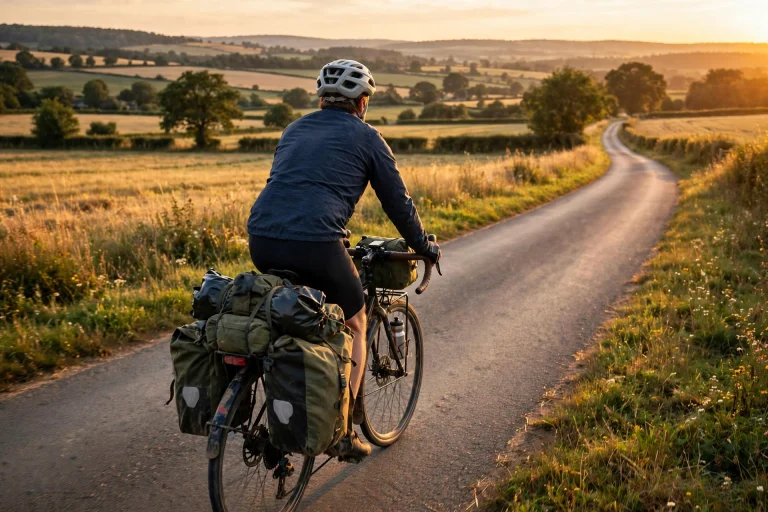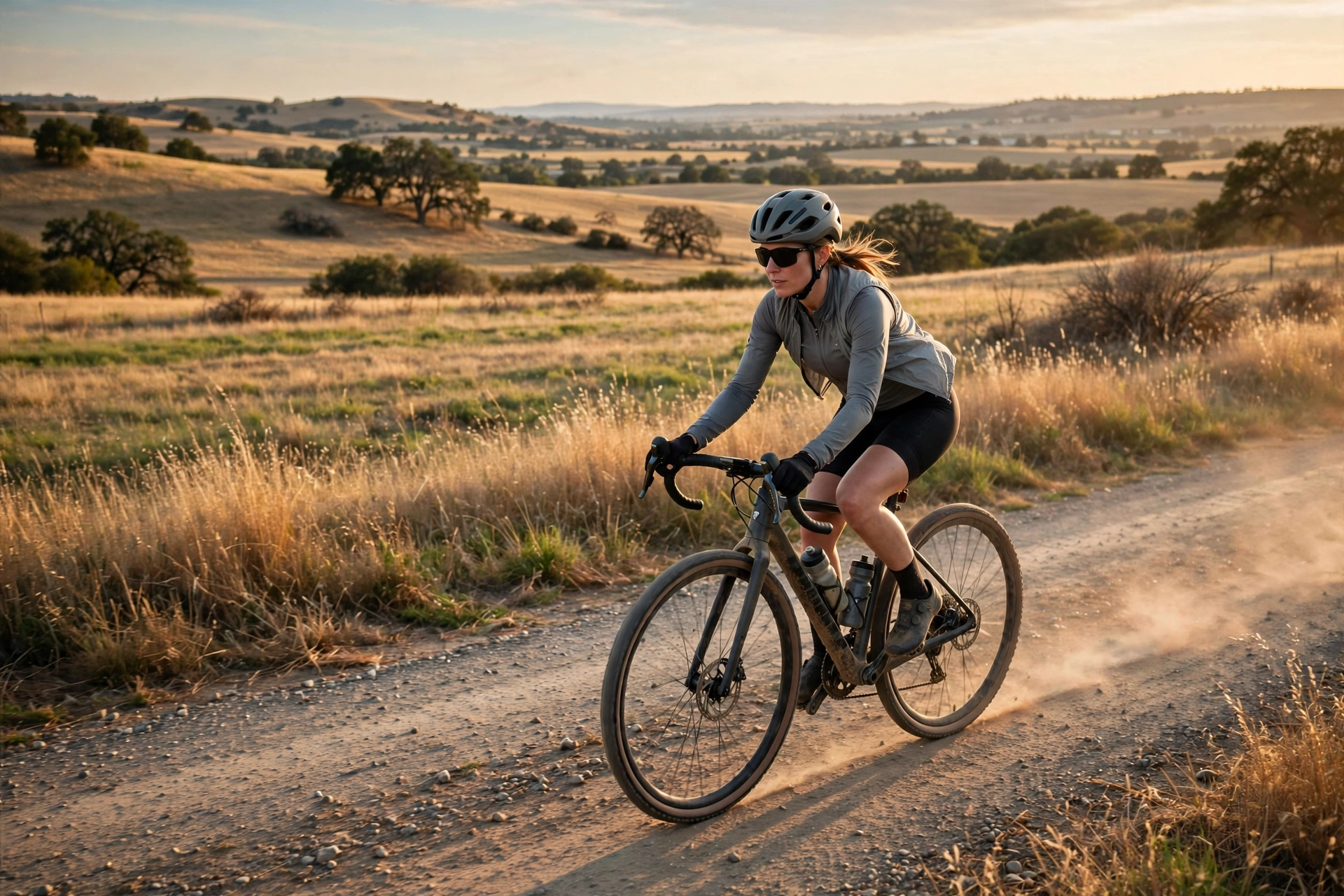
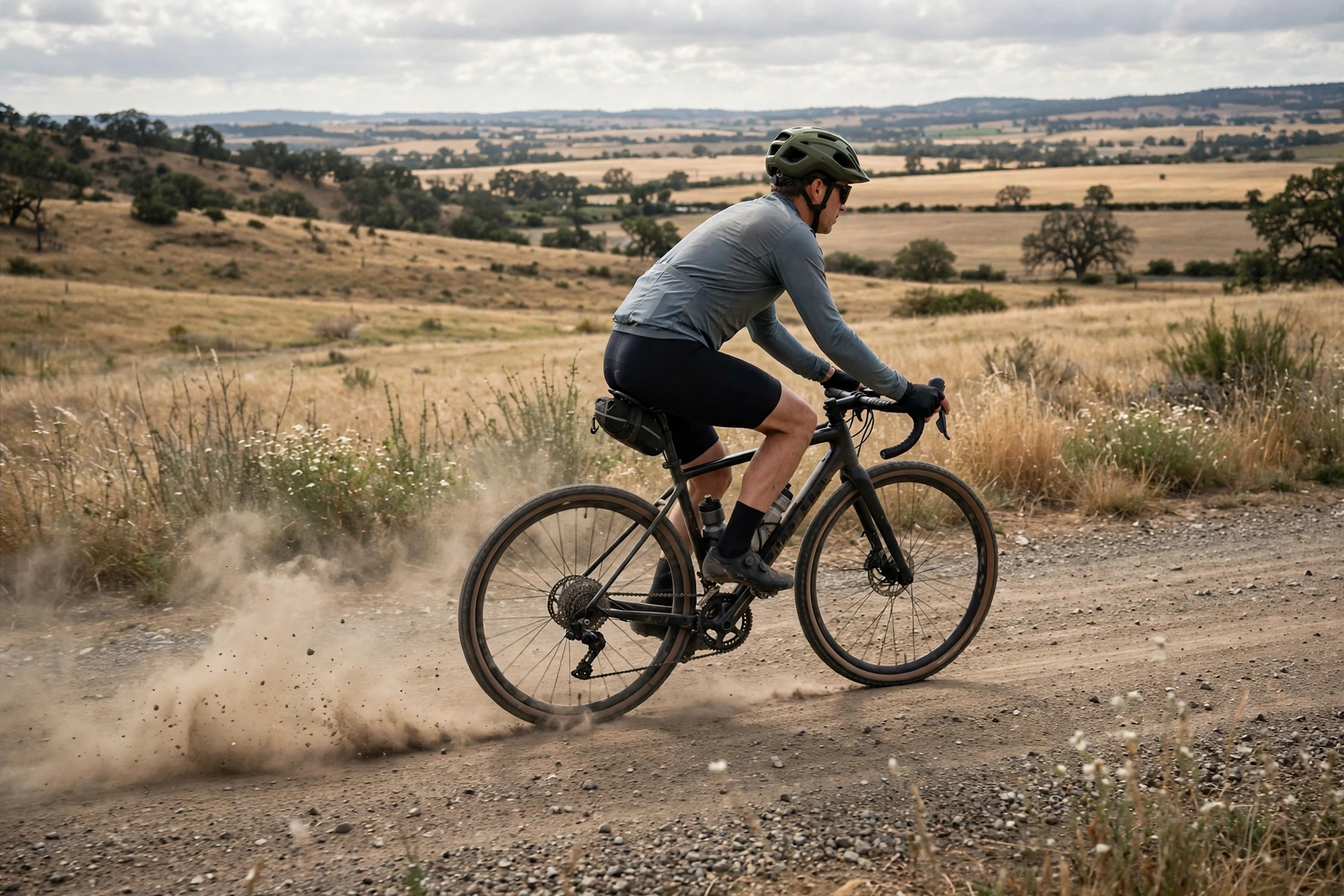
To choose a gravel cycling helmet, pick one that balances road-style ventilation with extra coverage for loose surfaces: a well-ventilated helmet with a little more side and rear coverage than a pure road helmet, a secure fit, and a recognised safety standard for your region. Gravel riding mixes smooth tarmac, rough tracks, dust, and the odd loose descent, so the best helmet is one that stays cool on long climbs, stays put on bumpy ground, and works with glasses or sunglasses.
There is no single gravel helmet shape that suits every rider. Some gravel helmets look almost identical to road helmets, while others borrow coverage from mountain bike designs. Your choice should follow the riding you actually do: mostly smooth gravel and road, or rougher tracks with more chance of a slow-speed fall. This guide walks through coverage, ventilation, fit, and the small details that matter on a long day out.
What Is Different About a Gravel Cycling Helmet?
Gravel sits between road and mountain biking, and gravel helmets reflect that middle ground. In general terms, a gravel helmet usually offers slightly more coverage at the sides and back of the head than a lightweight road racing helmet, without the full extended rear coverage of a trail mountain bike helmet. That extra coverage is meant for the kind of falls gravel riders face: a slow slide on loose stones, a wheel washing out on a dusty corner, or a tumble on a rutted track.
Many gravel helmets also come with a small removable peak or visor, which helps keep low sun and rain out of your eyes on open tracks. Some riders remove it for road-heavy rides, and that flexibility is part of the appeal. Ventilation tends to sit between road and mountain bike designs too: enough airflow for long climbs, but with vents placed to work at the slower speeds typical of rough gravel.
Weight matters on long rides, but it should not be the only factor. A very light helmet with minimal coverage may feel good on a smooth road ride and feel thin on a rough descent.
How Much Coverage Do You Need for Gravel Riding?
Coverage is the first real decision. If your gravel riding is mostly smooth, hard-packed tracks and quiet lanes, a road-style helmet with good ventilation will usually be enough, provided it fits well and meets a recognised standard. If you regularly ride loose descents, rocky tracks, or forest trails mixed in with your gravel routes, a helmet with more rear and side coverage gives extra protection where a fall is more likely to involve a sideways or backward landing.
One useful test is to look at how the helmet sits on your head. It should cover your forehead down to just above your eyebrows, and the back should sit low enough to protect the base of the skull without pressing on your neck when you look up. A helmet that sits high at the back leaves a vulnerable area exposed, whatever its shape on the shelf.
Remember that coverage and comfort work together. Extra coverage adds a little weight and warmth, so a helmet with generous coverage that you leave at home because it feels hot is worse than a slightly lighter one you wear every time.
How Important Is Ventilation on a Gravel Helmet?
Ventilation matters a lot on gravel, because gravel rides are often long, slow, and exposed. Unlike fast road riding, where speed pushes air through the vents, gravel climbing happens at low speed on steep, loose tracks, and the sun can be relentless on open ground. A helmet with well-placed front vents and clear channels to the rear will keep air moving even when you are grinding uphill.
Look for vents you can feel working. Front vents should sit where the wind hits them when you are in a riding position, not just when you are standing upright in a shop. Rear exhaust vents help warm air escape, and internal channels connect the two.
Dust is the other half of the ventilation question. On dry gravel, fine dust gets everywhere, including inside vents and under padding. A helmet with removable, washable pads is easier to keep fresh, and vents that are not too small are easier to rinse out after a ride. If you ride dusty trails often, good airflow and easy cleaning matter more than the number of vents printed on the box.
How Should a Gravel Helmet Fit?
Fit decides how much protection a helmet actually gives you. Measure around your head just above your eyebrows and ears, and use the maker’s size chart as a starting point, since sizing varies between makers. The helmet should sit level, low on your forehead, and feel snug all around with no pressure points that throb after a few minutes.
Use the retention dial at the back to fine-tune the fit, and adjust the side straps so they meet just below your ears in a neat V shape. Do the chin strap up so it is snug under your chin — you should be able to fit about two fingers between strap and chin, but the helmet should not rock forward or backward when you shake your head. If it moves, tighten the retention system or try a different size or shape.
Try the helmet with the glasses or sunglasses you ride in, and with any cap or liner you wear in cooler weather. Glasses arms that clash with the retention system or press against the straps will irritate you for hours. And if you are comparing helmets with rotational impact protection, reading about what MIPS is for helmets can help you understand one of the features you may see listed on the box.
What Else Should You Check Before Buying?
Start with the safety standard label inside the helmet, which should show a recognised bicycle helmet standard for your region. Beyond that, check the little things that decide whether you will enjoy wearing it. Removable, washable padding is worth having on dusty gravel. A rear light mount or reflective details help on dim lanes and winter rides. A peak that removes easily lets you switch between road and trail setups.
Think about how the helmet works with the rest of your kit. Does it fit with your riding glasses? Can you hear traffic and other riders clearly? Is it easy to adjust the fit with gloves on, on a cold morning?
Finally, consider replacement. In general terms, a helmet that has taken a hard knock should be replaced, even if it looks fine from the outside, and a helmet that has seen years of sun, sweat, and dust will not last forever.
Frequently Asked Questions
Q: Can I use a road helmet for gravel riding?
A: Yes, in general terms. A road helmet works well for smooth gravel and road-heavy routes, but a gravel helmet with a little more side and rear coverage suits rougher tracks and loose descents better.
Q: Do gravel helmets need a peak?
A: Not necessarily. A small peak helps with low sun and rain on open tracks, but many riders remove it for road riding. A removable peak gives you both options.
Q: How do I know if a gravel helmet fits correctly?
A: It should sit level and low on your forehead, feel snug without pressure points, and stay put when you shake your head. The straps should form a V below your ears, and the chin strap should be snug but comfortable.

Olivia
Writer at Helmet Today, covering helmet reviews, fit and riding safety.