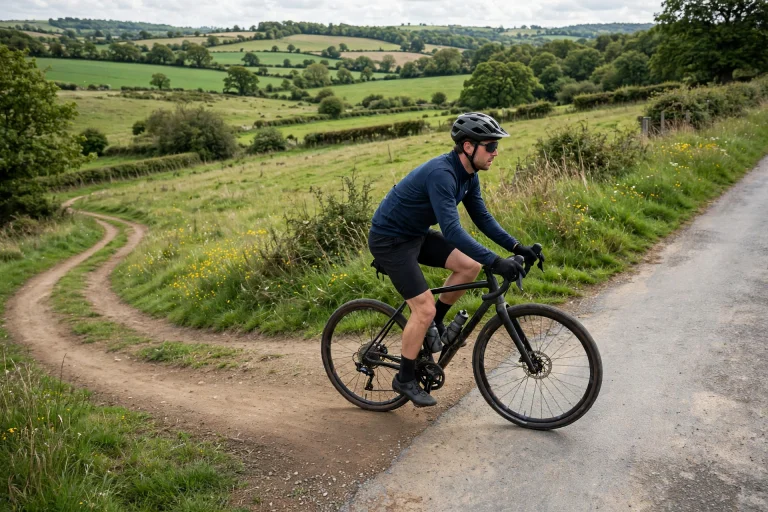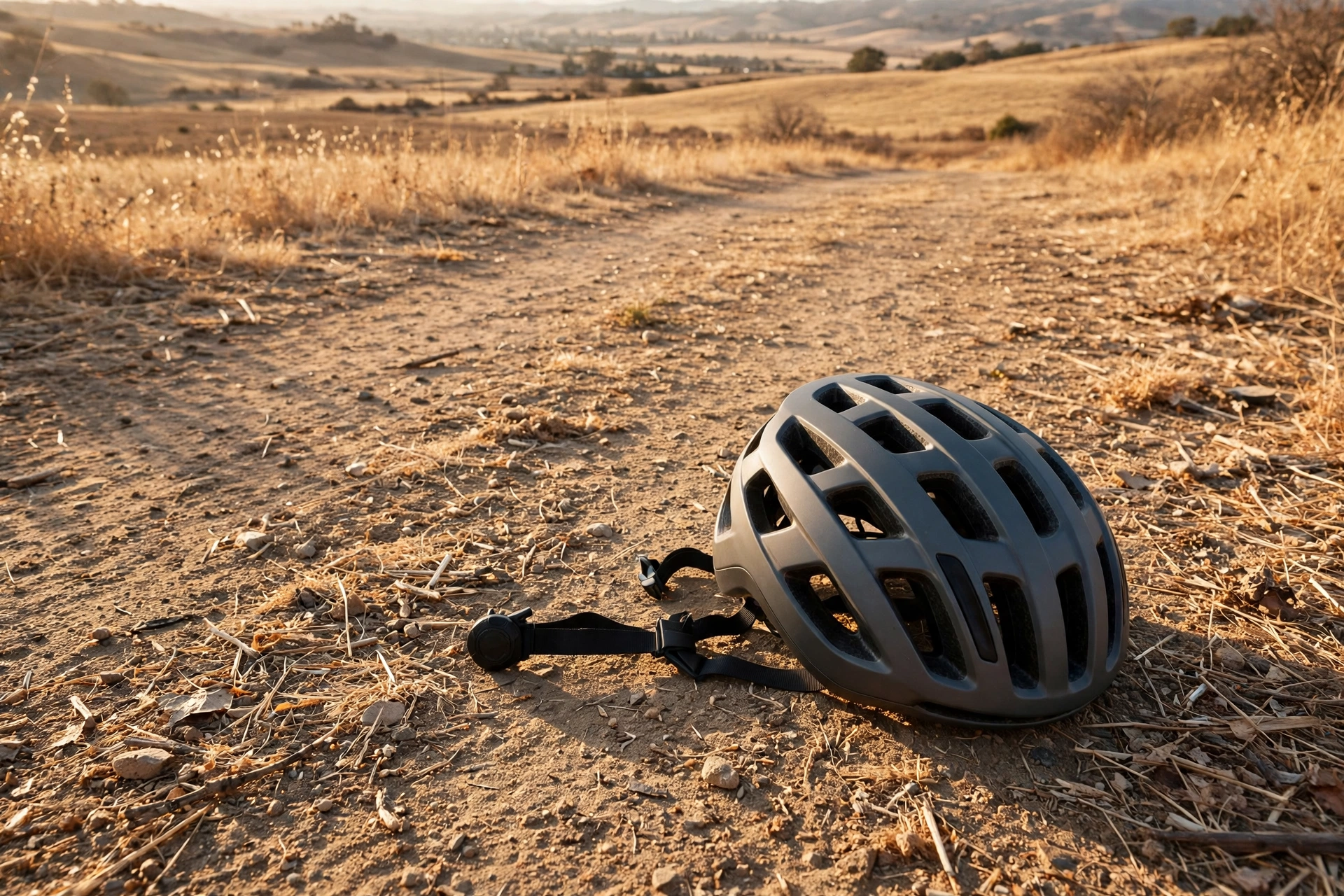
Gravel helmet ventilation for dusty trails works best when the helmet has large, well-placed front vents, clear internal channels, and rear exhaust vents that keep air moving at low speed — and when you clean the vents and pads regularly so dust does not block the airflow. On dry gravel, dust is the enemy of cooling: it settles in vents, clogs padding, and turns a well-ventilated helmet into a hot, stuffy one by the end of a long ride.
The good news is that ventilation on dusty trails is mostly a matter of design and maintenance, not expensive technology. A helmet built for gravel usually has vents shaped for slower riding and dirtier conditions, and a few simple habits after each ride keep the airflow working. This guide explains how gravel helmet ventilation works, why dust blocks it, and what to do about it.
How Does Helmet Ventilation Work on Gravel?
Helmet ventilation works by letting air in through front vents, channelling it over your head, and pushing warm air out through rear vents. On the road, high speed does most of the work: air is forced through the helmet as you ride. On gravel, speeds are lower, climbs are steeper, and you spend more time grinding uphill in still air, so the helmet has to work harder with less wind to help it.
That is why vent placement matters more than vent count. Front vents should sit where the wind hits them when you are in a riding position, leaning forward over the bars, and internal channels should connect those front vents to the rear exhausts so air actually flows across your scalp rather than pooling inside the helmet.
Some gravel helmets also use slightly larger vents than road helmets. Larger openings let more air in at low speed, and they are easier to clear when dust or mud gets in. Small, fiddly vents may look neat, but on a dusty trail they clog faster and are harder to rinse out.
Why Does Dust Block Helmet Ventilation?
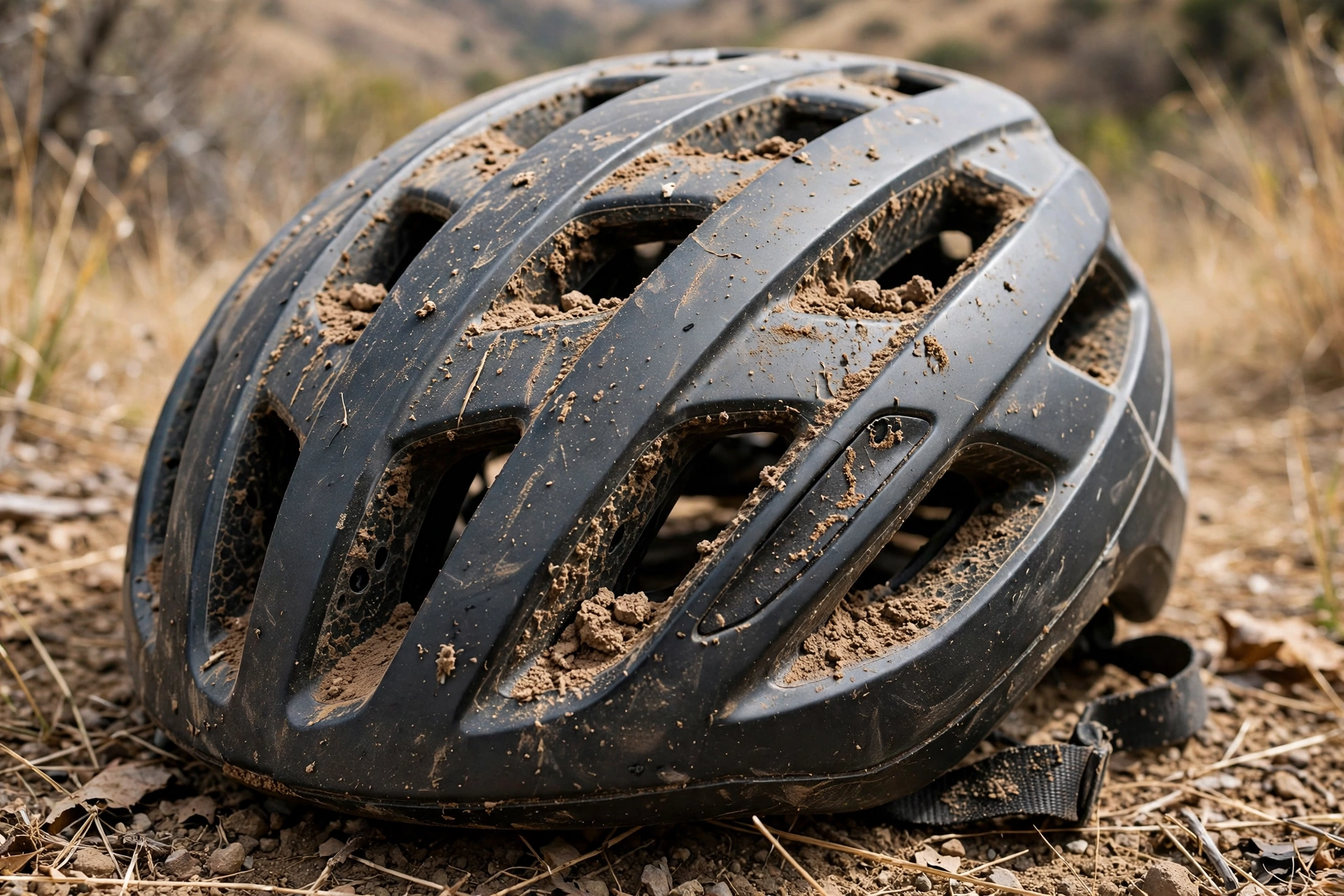
Dust blocks ventilation in two ways. First, fine dust settles inside the vents and along the internal channels, narrowing the passages that air flows through. Second, dust soaks into the helmet’s padding, which holds heat and sweat against your head instead of letting air pass. After several dry rides without cleaning, a helmet can feel noticeably hotter even though nothing about the design has changed.
The dust on gravel trails is often very fine, especially in dry summer conditions. It is kicked up by your own front wheel, by other riders ahead of you, and by passing vehicles on shared tracks. Riding in a group makes it worse, since you sit in the dust cloud of the rider in front.
Heat is the other half of the problem. Dusty trails are often ridden in hot, dry weather, and gravel rides tend to be long. When your helmet cannot move air properly, sweat builds up, your head overheats, and your concentration drops.
What Vent Features Help Most on Dusty Trails?
When choosing a helmet for dusty gravel, look for large front vents that are easy to see into and rinse out. Vents with smooth, open shapes collect less dust than vents with fine mesh or narrow slots, and they are easier to clean with a quick rinse or a soft brush. If the helmet has a mesh insert over the vents, check whether it can be removed or cleaned, since mesh traps dust and can block airflow once it is clogged.
Internal channelling is just as important as the vents themselves. Look inside the helmet: you should be able to see channels running from front to back, guiding air over your head. Helmets with deep channels tend to ventilate better at low speed, which is exactly the situation on a steep gravel climb. Rear exhaust vents should be large enough to let warm air out freely rather than trapping it inside.
Removable, washable padding is also worth having. Padding that you can take out and wash lets you remove the dust and dried sweat that block airflow and hold heat. If you are comparing helmets, reading about what MIPS is for helmets can help you understand one of the features you may see listed on the box.
How Do You Keep a Gravel Helmet Ventilated on Dusty Rides?
The most important habit is a quick clean after dusty rides. Shake the helmet out, then rinse the vents with clean water and let it air-dry in a shaded, ventilated spot — not in direct sun or on a radiator, which can damage the materials over time. A soft brush or an old toothbrush can clear dust from vent openings and channels without scratching the shell.
Wash the padding regularly too. Most gravel helmet pads unclip or peel out, and they can be washed by hand in mild soapy water, then rinsed and air-dried. Do this after a few dusty rides, or sooner if the pads feel stiff or gritty. Clean pads absorb sweat better and let air flow more freely, which makes a real difference on the next ride.
On the ride itself, a few small choices help. A cycling cap or thin skull cap under the helmet can catch some dust before it reaches the padding, and it also keeps sweat out of your eyes. Riding a little further back from the rider ahead reduces the dust you sit in. And if you stop for a break, take the helmet off and shake it out — a few seconds of airflow can clear loose dust from the vents before it settles in.
When Should You Replace a Dusty Gravel Helmet?
Dust itself does not usually end a helmet’s life, but the wear that comes with dusty riding can. Check the helmet regularly for cracks in the shell, loose vents, or padding that has gone hard, thin, or misshapen. Straps that have gone stiff with dried sweat and dust should be cleaned or, if they stay stiff, treated as a warning sign.
In general terms, a helmet that has taken a hard knock in a crash should be replaced, even if the damage is not obvious from the outside. Dust can hide small cracks, so inspect the shell carefully in good light after any fall, and run your fingers over the surface to feel for splits the dust may be covering. If you are unsure, replacing the helmet is the safer choice.
Age matters too. Years of sun, sweat, dust, and washing wear down padding and straps, and a helmet that no longer fits snugly because the pads have compressed will not protect as well. A helmet that stays cool and comfortable because you keep it clean is a helmet you will keep wearing — and that is the best ventilation of all.
Frequently Asked Questions
Q: Do more vents always mean better cooling on dusty trails?
A: Not necessarily. Vent placement and internal channels matter more than the number of vents, and very small vents can clog with dust faster. Large, well-placed vents with clear channels usually cool better at low gravel speeds.
Q: Can I hose down my gravel helmet after a dusty ride?
A: In general terms, a gentle rinse with clean water is fine for most helmets, but avoid high-pressure water and harsh cleaners. Remove the pads and wash them separately, then let everything air-dry away from direct heat.
Q: Does a peak help with dust on gravel rides?
A: A small peak can deflect some dust and grit thrown up from the front wheel, and it helps with low sun. It will not keep dust out entirely, so regular cleaning of the vents and pads still matters.

Olivia
Writer at Helmet Today, covering helmet reviews, fit and riding safety.