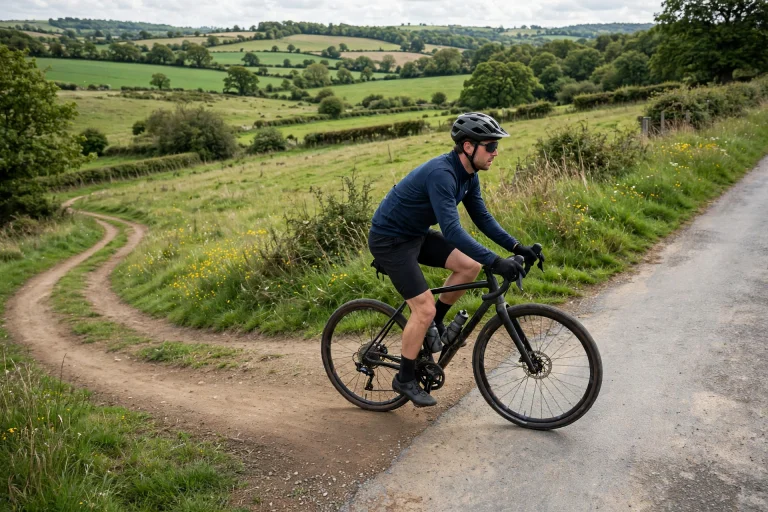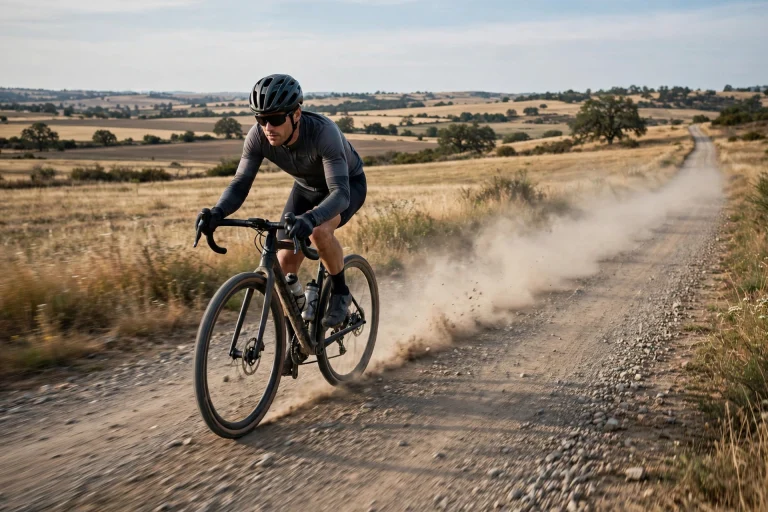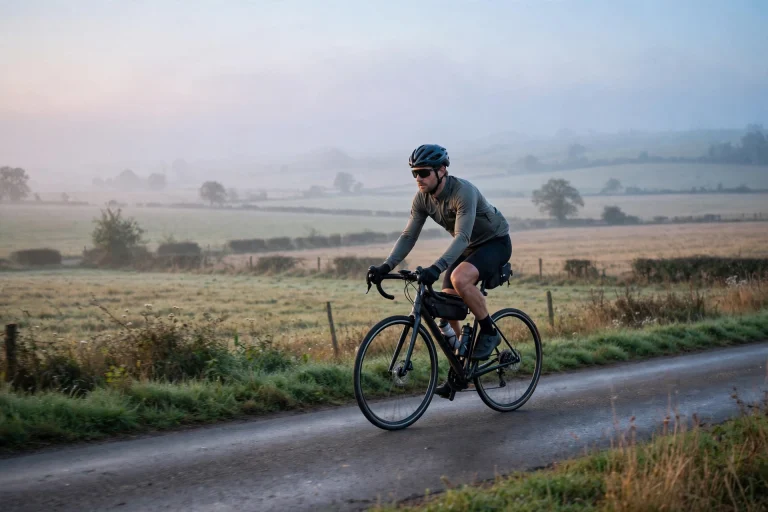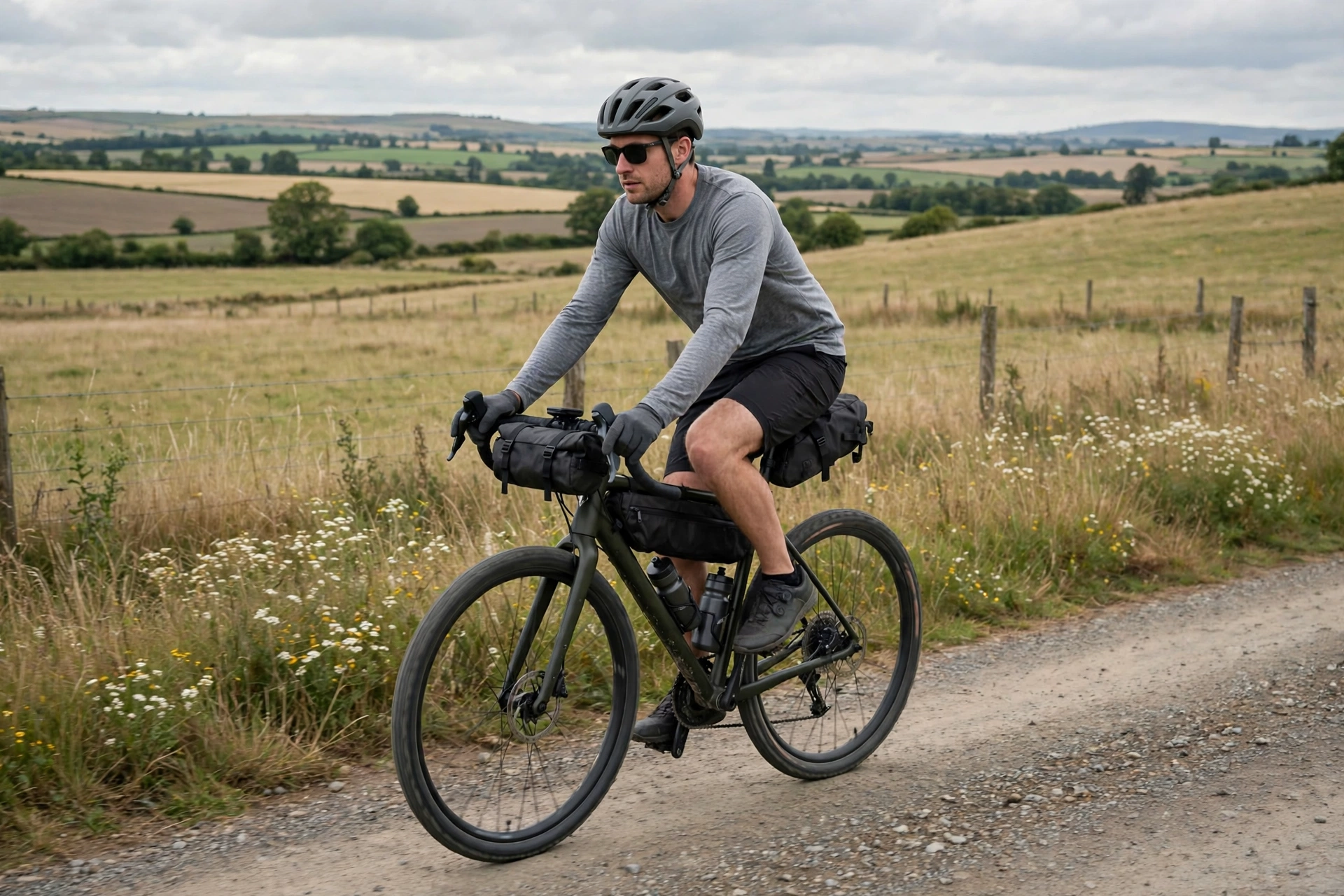
A bikepacking helmet for road touring is, in general terms, a comfortable, well-ventilated road-style helmet chosen for long days with a loaded bike — not a specialist helmet, but a practical one. Bikepacking on the road means carrying your gear on the bike, riding long distances, and often being far from shops and help. Your helmet has to be comfortable for hours, cool in the heat, and tough enough to survive being knocked around at campsites and on trains.
This guide explains what makes a helmet work for bikepacking on the road, how it differs from a racing helmet, and what to look for when you choose one for a long trip.
What Is Bikepacking on the Road?
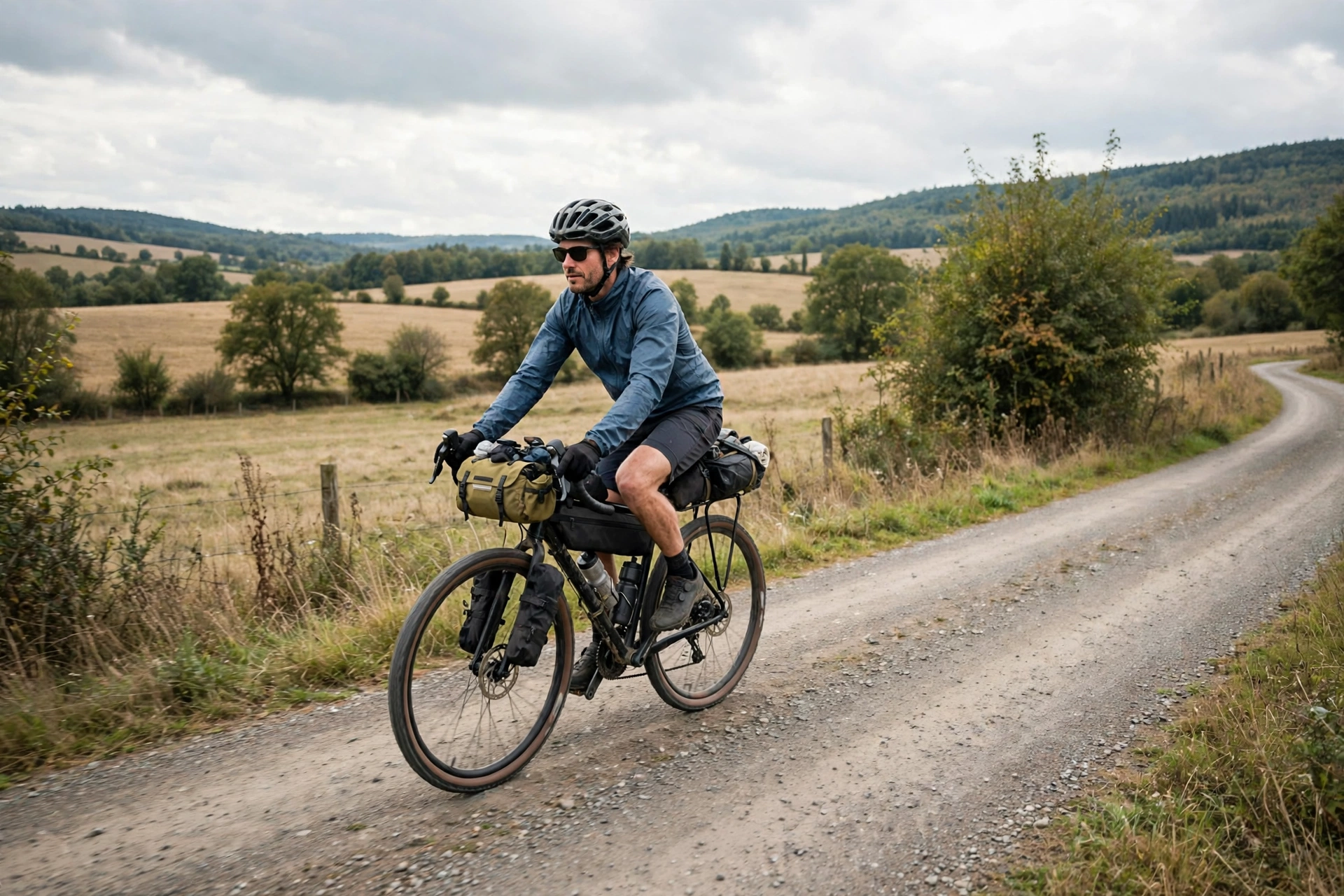
Bikepacking is travelling by bike with your gear packed into bags attached to the bike itself, rather than in panniers on racks. On the road, that usually means a mix of quiet country lanes, the occasional main road, and long days in the saddle with everything you need strapped to your bike.
Road bikepacking is different from racing and from traditional touring. You are self-sufficient, carrying your tent, food, and clothing, and you may be far from a bike shop if something goes wrong. Your pace is steady rather than fast, and your days are long. The bike is heavier than a racing bike, the riding position is more upright, and you spend more time looking around than tucked low.
That shapes the helmet you need. You do not need the lightest or most aerodynamic helmet on the market. You need one that is comfortable for hours, ventilated enough for long climbs with a loaded bike, and practical enough to live with day after day.
How Is a Bikepacking Helmet Different from a Racing Helmet?
A racing helmet is built for speed. It is light, aerodynamic, and designed for a rider in a tucked position who is trying to go as fast as possible for a few hours. A bikepacking helmet is built for endurance. Comfort, ventilation, and durability matter more than weight or aerodynamics, because you will wear it for far longer and in far more varied conditions.
The riding position is different too. A bikepacker sits more upright than a racer, with a wider view of the road and a more relaxed posture. A helmet designed for a tucked racing position may not feel right when you sit up, and a long aerodynamic tail would be useless. A compact, rounded road-style helmet suits the upright position far better.
There is also the question of what else you carry. A bikepacker may wear a cap under the helmet in cold weather, use a rain cover in wet weather, and clip a light to the helmet for riding at dawn or dusk. A helmet that works with those extras — with room for a cap, a shape that takes a cover, and a mount or strap for a light — is far more useful than one that does not.
What Should You Look for in a Bikepacking Helmet?
Start with fit and comfort. The helmet should sit level, feel snug without pressure points, and stay put when you shake your head. The fit system should be easy to adjust with one hand, so you can loosen it on a long climb and tighten it for a descent. On a multi-day trip, a helmet that fits well on day one and still fits well on day five is worth more than any other feature.
Ventilation comes next. Bikepacking days are long, and you will climb hills with a loaded bike in the sun. A helmet with large vents and internal channels that move air over your scalp will keep you cooler and more comfortable. Look for vents that work at steady touring speeds, not only at race speeds.
Durability matters too. Your helmet will be tossed in bags, hung on handlebars, and knocked around at campsites. A tough shell and in-mould construction will survive that life better than a delicate helmet. If you are learning about the features inside modern helmets, reading about what MIPS is for helmets can help you understand one of the options you may see when comparing models.
How Do You Manage a Helmet on a Bikepacking Trip?
Off the bike, your helmet needs somewhere to go. On a bikepacking trip, space is tight, and a helmet is a bulky thing to carry. Some riders clip it to the outside of a bag, others hang it from the handlebars, and some pack it inside a larger bag when travelling by train. A helmet that is light and compact is easier to manage than a large, awkward one.
Keeping the helmet clean matters too. On a long trip, sweat, dust, and rain build up quickly, and a helmet that smells is a helmet you will not want to wear. Removable, washable padding is a real plus: you can rinse it in a sink at the end of the day and let it dry overnight. A helmet that dries quickly is also worth having, because you may need to wear it again the next morning.
Think about spares as well. If a strap breaks or a fit dial fails far from home, can you fix it or find a replacement? A helmet from a widely available maker, with spare parts you can buy in a bike shop, is a safer choice for a long trip than a rare model. And if your helmet takes a hard knock or is involved in a crash, replace it — even if it looks fine, the protection inside may be damaged.
Is a Bikepacking Helmet Worth Buying Separately?
For most riders, the answer is no — you do not need to buy a separate helmet just for bikepacking. If you already own a comfortable, well-ventilated road helmet that fits well, it will almost certainly work fine for bikepacking on the road. The key is to choose it with long days in mind, rather than with racing in mind.
It is worth buying a new helmet if your current one is uncomfortable over long rides, poorly ventilated, or nearing the end of its life. In that case, look for a road helmet with strong ventilation, a comfortable fit system, a durable shell, and a bright colour for visibility. Those features serve you well on a bikepacking trip and on every other ride too.
Whatever you choose, try it on a long ride before your trip. A helmet that feels fine for an hour can feel very different after six hours with a loaded bike, and it is far better to discover that on a ride near home than on the second day of a tour.
Frequently Asked Questions
Q: Do I need a special helmet for bikepacking?
A: Not in general terms. A comfortable, well-ventilated road helmet works well for bikepacking on the road. You do not need a specialist helmet, but you should choose one with long days, loaded riding, and durability in mind.
Q: How do I carry my helmet when I am off the bike?
A: Most bikepackers clip the helmet to the outside of a bag or hang it from the handlebars. A light, compact helmet is easier to manage, and it should be easy to reach when you are ready to ride again.
Q: Can I wear a cap under my bikepacking helmet?
A: Yes, in general terms a thin cycling cap works well under a helmet in cold or wet weather. Make sure the helmet still fits comfortably over the cap and sits level, without tilting or pressing.

Olivia
Writer at Helmet Today, covering helmet reviews, fit and riding safety.