When you choose a touring bike helmet, look for comfort, ventilation, fit, and durability above all else — because on a long day in the saddle, a helmet that stays comfortable for hours matters far more than one that is a few grams lighter. Touring means long days, changing weather, loaded bikes, and roads far from home. Your helmet has to work all day, every day, for as long as the tour lasts.
This guide explains what to look for in a touring helmet, from fit and airflow to practical details like carrying it off the bike and keeping it clean on the road. Whether you are planning a weekend tour or a month on the road, the right helmet makes the long days far more enjoyable.
Why Is Comfort the First Priority for Touring?
Touring is not racing. You are not chasing seconds; you are riding for hours, day after day, often with a loaded bike and a body that is already tired from yesterday. A helmet that presses on your forehead, rubs your ears, or feels heavy after an hour will become a misery by the end of the day — and a misery you cannot escape, because you still have to wear it tomorrow.
Comfort starts with fit. A touring helmet should sit level on your head, feel snug without pressure points, and stay put when you shake your head. The fit system at the back should be easy to adjust, even with tired hands, and the straps should sit flat without rubbing your ears or your neck.
Weight matters too, but in a different way than it does for racing. A touring helmet does not need to be the lightest on the market, but it should not be needlessly heavy either. A helmet that is light enough to forget about is a helmet you will happily wear all day, and that is the real goal.
How Important Is Ventilation on Long Days?
Ventilation is one of the most important features of a touring helmet. On a long day, you will ride through heat, climb hills in the sun, and work hard with a loaded bike. Without good airflow, sweat builds up, your head overheats, and your concentration fades. A helmet with large vents and internal channels that guide air over your scalp makes a real difference.
Look for a helmet with plenty of vents at the front and exhaust vents at the back, so air flows through rather than just sitting inside. The vents should work at touring speeds, not only at race speeds — you will spend much of your day riding steadily rather than flying along.
Ventilation also helps with drying. A helmet that airs out quickly between rides is less likely to smell, and on a multi-day tour, that matters. Removable, washable padding is a practical plus: you can rinse it out in a sink at the end of the day and let it dry overnight. If you are learning about the features inside modern helmets, reading about what MIPS is for helmets can help you understand one of the options you may see when comparing models.
What About Fit, Adjustability, and Sunglasses?
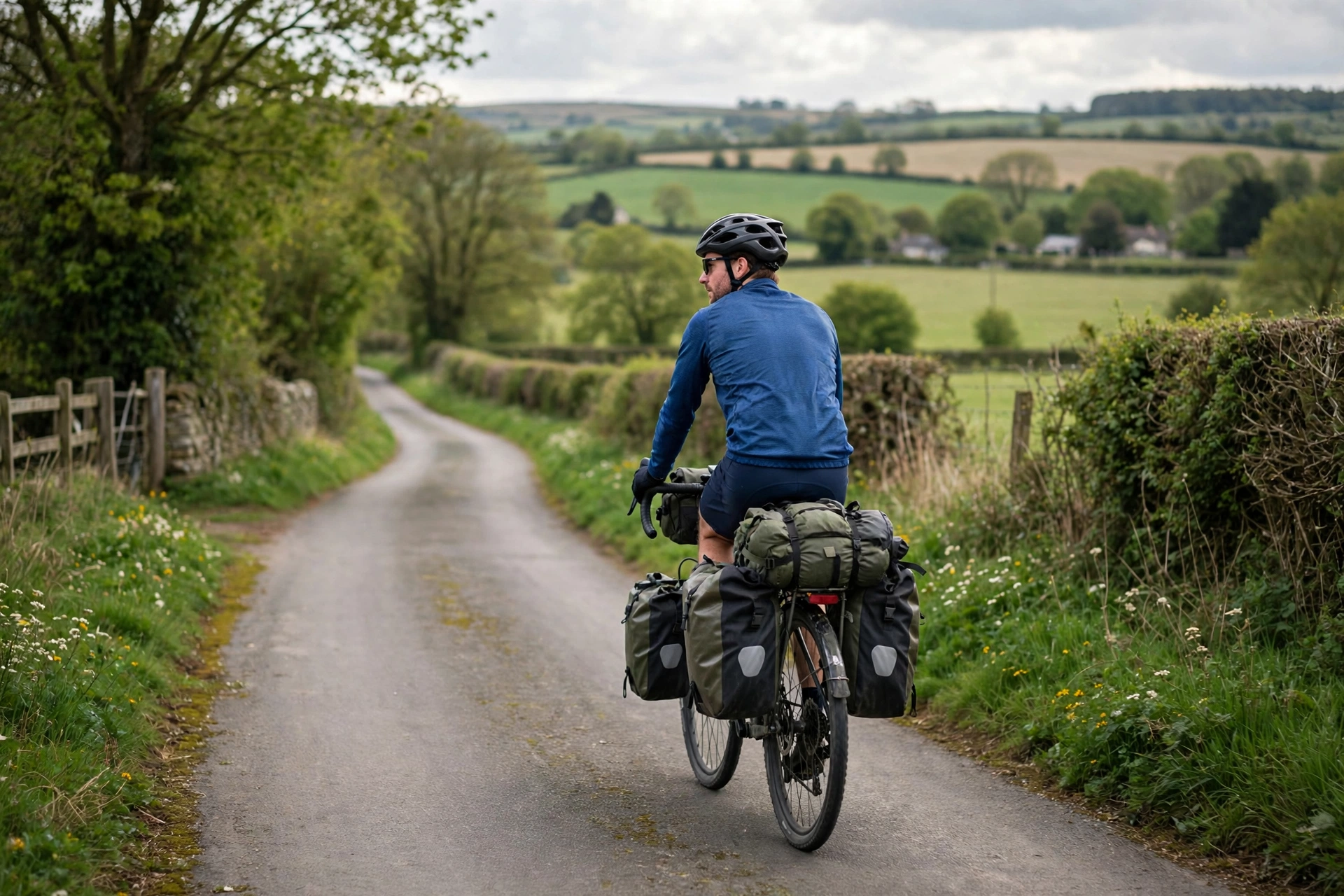
Fit is not a one-time thing on tour. Your head can swell slightly in the heat, you may wear a cap or a thin liner underneath in cold weather, and you will want to loosen the fit on a long climb and tighten it for a fast descent. A good touring helmet has a fit system you can adjust with one hand while riding, without stopping or taking the helmet off.
The helmet should also work with the rest of your kit. It should sit well with sunglasses, with room for the arms to rest without pressing against the shell. If you wear a cycling cap underneath, the helmet should still fit comfortably over it. And if you ride in rain, the helmet should work with a rain cover or a cap peak that keeps water out of your eyes.
Straps deserve attention too. On a long tour, straps that rub or twist become a constant irritation. Look for straps that lie flat, adjust easily, and stay put once set. A helmet with a little extra strap length is easier to adjust with gloves on, which matters on cold mornings.
How Durable Should a Touring Helmet Be?
A touring helmet gets knocked around. It is tossed in panniers, hung on handlebars, dropped on campsites, and packed into bags on trains and ferries. A helmet that is too delicate for that life will not last a long tour, so durability matters more for touring than it does for racing.
Look for a helmet with a tough outer shell that resists scratches and small knocks. In-mould construction, where the shell is bonded to the foam, is generally more durable than a helmet with a separate shell that can peel away. A helmet with a replaceable fit system and spare pads available is also a good sign, because it means the maker expects the helmet to last.
That said, durability has limits. A helmet that has taken a hard knock or been in a crash should be replaced, even if it looks fine from the outside. On tour, that means carrying a plan for what you would do if your helmet were damaged far from home — which is one more reason to choose a helmet that is easy to find in bike shops along your route, rather than a rare or specialist model.
What Practical Details Matter on Tour?
Small details make a big difference on a long tour. A helmet that is easy to carry off the bike — light enough to hang from a strap, with a shape that fits in a pannier — is far more practical than one that is awkward to store. Some riders clip their helmet to their bag; others hang it from the handlebars. Either way, it should be easy to manage when you stop for lunch or wander around a town.
Visibility is worth thinking about too. A helmet in a bright colour is easier for drivers to see, which matters on busy roads and in low light. Some touring helmets have reflective details or a mount for a rear light, both of which help you be seen at dawn and dusk.
Finally, think about the weather you will actually ride in. If your tour crosses mountains, you may need a helmet that works with a warm liner. If you will ride in rain, a helmet that sheds water well and works with a rain cover is worth having.
Frequently Asked Questions
Q: Do I need a special helmet for bike touring?
A: Not necessarily. A good road helmet with strong ventilation, a comfortable fit, and a durable shell works well for most touring. You do not need a specialist touring helmet, but you should choose with long days in mind.
Q: How should a touring helmet fit?
A: It should sit level on your head, feel snug without pressure points, and stay put when you shake your head. The fit system should be easy to adjust with one hand, so you can loosen it on climbs and tighten it for descents.
Q: Should I choose a bright-coloured helmet for touring?
A: In general terms, yes. A bright colour makes you easier for drivers to see, which helps on busy roads and in low light. Reflective details or a rear light mount are useful extras for touring.

Olivia
Writer at Helmet Today, covering helmet reviews, fit and riding safety.