Time trial helmets can work for road racing in some situations, but in general terms, they are not the best choice for most road races. The long tail and smooth shell can reduce drag on a flat, fast course when you hold a steady tucked position. But road racing involves sitting up, cornering, climbing, riding in a group, and reacting to other riders — and in those moments, a time trial helmet’s heat, weight, and handling trade-offs often outweigh its aerodynamic gain.
That does not mean a time trial helmet has no place in road racing. In certain events, such as a flat time-trial-style stage or a solo breakaway, it can help. This guide explains when it works, when it does not, and what to consider before you wear one in a road race.
What Makes a Time Trial Helmet Different?
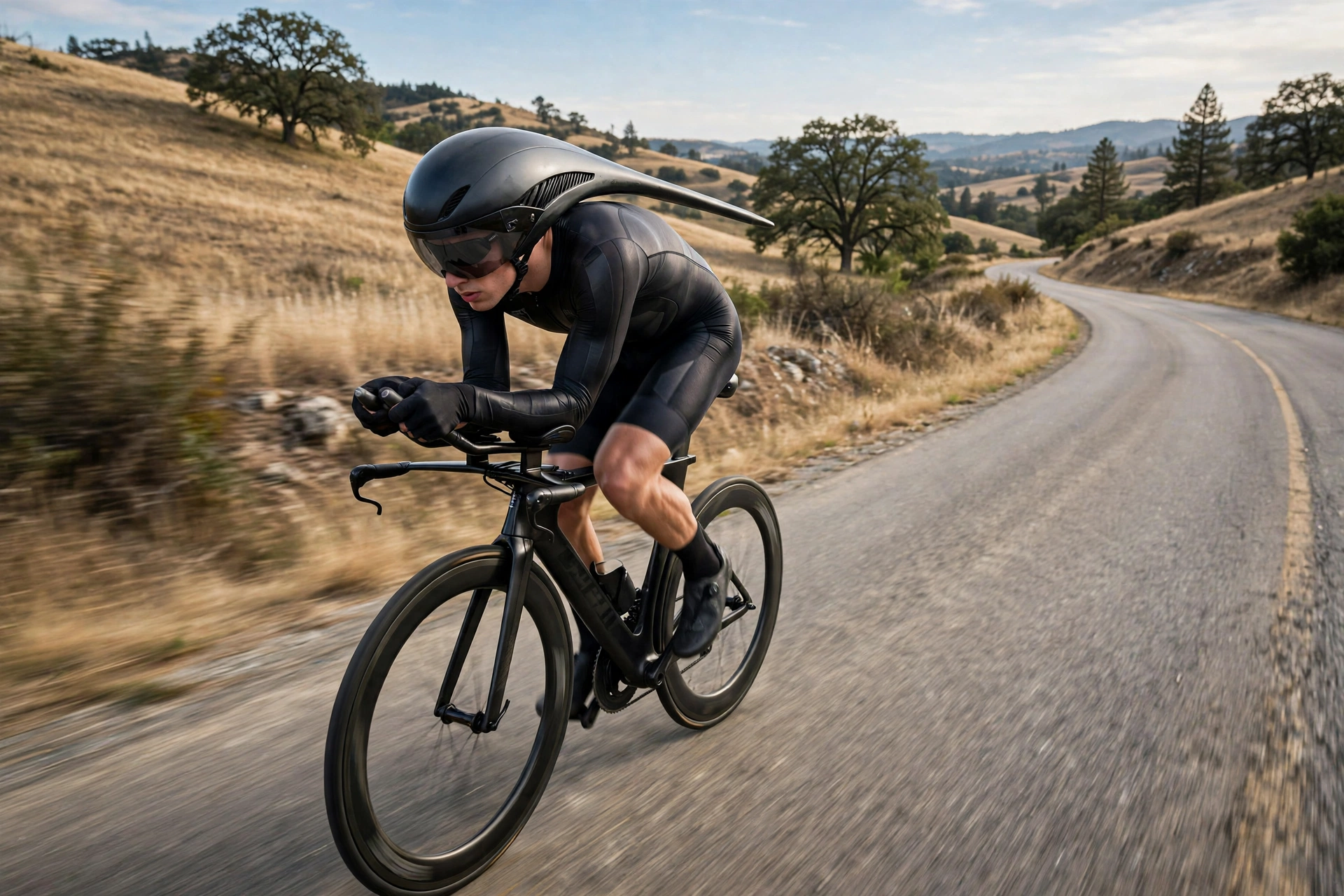
A time trial helmet is built for one job: going as fast as possible in a straight line, alone, in a tucked position. It has a smooth, enclosed shell with very few vents, a long tail that extends backwards over the rider’s neck, and often a built-in visor. The shape is designed to guide air cleanly over the head and down the back, reducing the turbulence that creates drag.
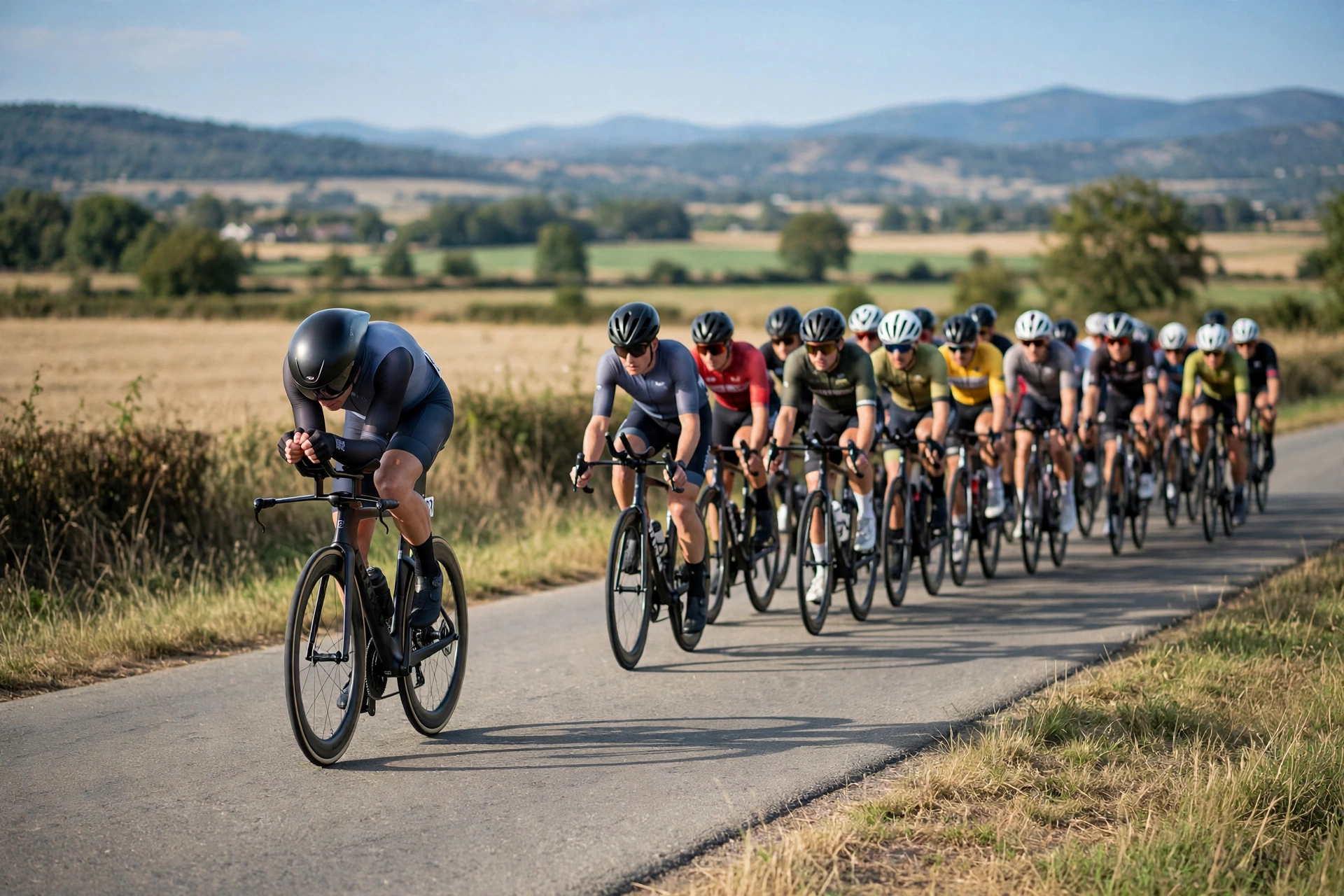
A road racing helmet is built for a much wider range of riding. It is light, with large vents that keep your head cool, a compact shape that works in every position, and a fit system you can adjust on the move. It is designed for hours of riding in changing conditions, not for a short, flat effort in a fixed tuck.
The difference matters because road racing is not a time trial. You climb, descend, corner, sprint, sit up to drink, and look around to check the group. A helmet that only works well in one position will spend much of a road race working against you.
When Could a Time Trial Helmet Help in a Road Race?
A time trial helmet can help on a flat, fast road race where you spend long stretches tucked low at speed. That might be a flat circuit race, a long solo breakaway, or a race where you expect to ride on the front for extended periods. In those situations, holding a steady aero position for a long time makes the tail’s shape more useful.
It can also help in a race with a long, flat finishing straight, where the final kilometres are ridden at high speed in a tuck. Some riders switch to a time trial helmet for specific events they know well, where the course suits it and the weather is cool enough that heat is not a problem.
But these are narrow cases. For most road races, the course changes too much for a time trial helmet to pay off. Climbs, corners, and group riding all break the tucked position the helmet depends on, and once you sit up, the tail stops helping and starts hurting.
What Are the Problems with Using One on the Road?
Heat is the biggest problem. A time trial helmet has very few vents, and a road race can last hours in warm weather. Without airflow, sweat builds up, your head overheats, and your concentration suffers. On a long climb in the sun, a hot head can cost you far more time than the helmet’s aerodynamics could ever save.
Handling is the second problem. The long tail catches crosswinds, and in gusty conditions it can tug at your head at exactly the moment you need to stay steady — in a corner, in a sprint, or while riding close to other riders. The helmet is also heavier than a road helmet, which matters on climbs and over a long race.
Vision and hearing are affected too. A built-in visor can fog up in cold or damp weather, and the enclosed shell covers more of the ears, muffling the sounds around you. In a group, hearing other riders call out hazards matters, and a helmet that dulls that awareness is a real drawback.
Do Road Race Rules Allow Time Trial Helmets?
In general terms, most road races allow any helmet that meets a recognised safety standard, including time trial helmets. But rules vary between events, organisers, and governing bodies, and some races restrict equipment in ways that could affect a time trial helmet. It is always worth checking the rules for your specific race before you turn up with one.
There is also the question of what other riders expect. Road racing is a group activity, and a long-tail helmet can look out of place in a bunch. That is not a safety issue on its own, but it can draw attention and questions, and in a close group, a tail that sticks out behind your head is one more thing for another rider’s wheel to catch in a crash.
If you are unsure, ask the race organiser or a commissaire before the event. A quick question beforehand is far better than a problem at the start line. And remember that a helmet choice that is allowed is not automatically a good choice — the rules set a minimum, not a recommendation.
What Should You Wear Instead?
For most road races, a good road helmet is the right choice. Modern road helmets are already quite aerodynamic, and many are designed with a balance of airflow and smooth shaping that works well at race speeds. They are light, cool, and comfortable in every position, which matters far more over a long race than a small drag saving in one position.
Some road helmets even borrow ideas from time trial helmets, with smoother shells and fewer vents, while keeping enough airflow to stay comfortable. These aero road helmets are a good middle ground: they give you some of the aerodynamic benefit without the heat and handling problems of a full time trial helmet. If you are learning about the features inside modern helmets, reading about what MIPS is for helmets can help you understand one of the options you may see when comparing models.
Save the time trial helmet for time trials, where it was designed to be used. For road racing, choose the helmet that keeps you cool, comfortable, and aware for the whole race — because a helmet you forget you are wearing is a helmet that lets you focus on the race itself.
Frequently Asked Questions
Q: Will a time trial helmet make me faster in a road race?
A: In general terms, it may help on a flat, fast stretch where you hold a steady tuck, but over a whole road race the heat, weight, and handling trade-offs usually cancel out the gain. A good road helmet is faster overall for most riders.
Q: Is it legal to wear a time trial helmet in a road race?
A: Most road races allow any helmet that meets a recognised safety standard, but rules vary by event and organiser. Check the rules for your specific race before you ride with one.
Q: What is an aero road helmet?
A: An aero road helmet is a road helmet with a smoother shell and fewer vents than a standard road helmet, designed to reduce drag while keeping enough airflow for long rides. It is a middle ground between a road helmet and a time trial helmet.

Olivia
Writer at Helmet Today, covering helmet reviews, fit and riding safety.