Cargo bike riders do not necessarily need a helmet with extra coverage, but in general terms, a helmet with good rear and side coverage suits cargo riding well. Cargo bikes are heavy, slow to stop, and often carry children or goods, so the riding is steady rather than fast. A standard well-fitting bike helmet is a sound choice, and extra coverage is a sensible bonus rather than a requirement.
The question comes up because cargo bikes feel different from ordinary bikes. They are longer, heavier, and less nimble, and a fall can happen at low speed while manoeuvring, loading, or stopping. This guide explains how cargo riding changes the helmet choice, and when extra coverage is worth having.
How Is Riding a Cargo Bike Different?
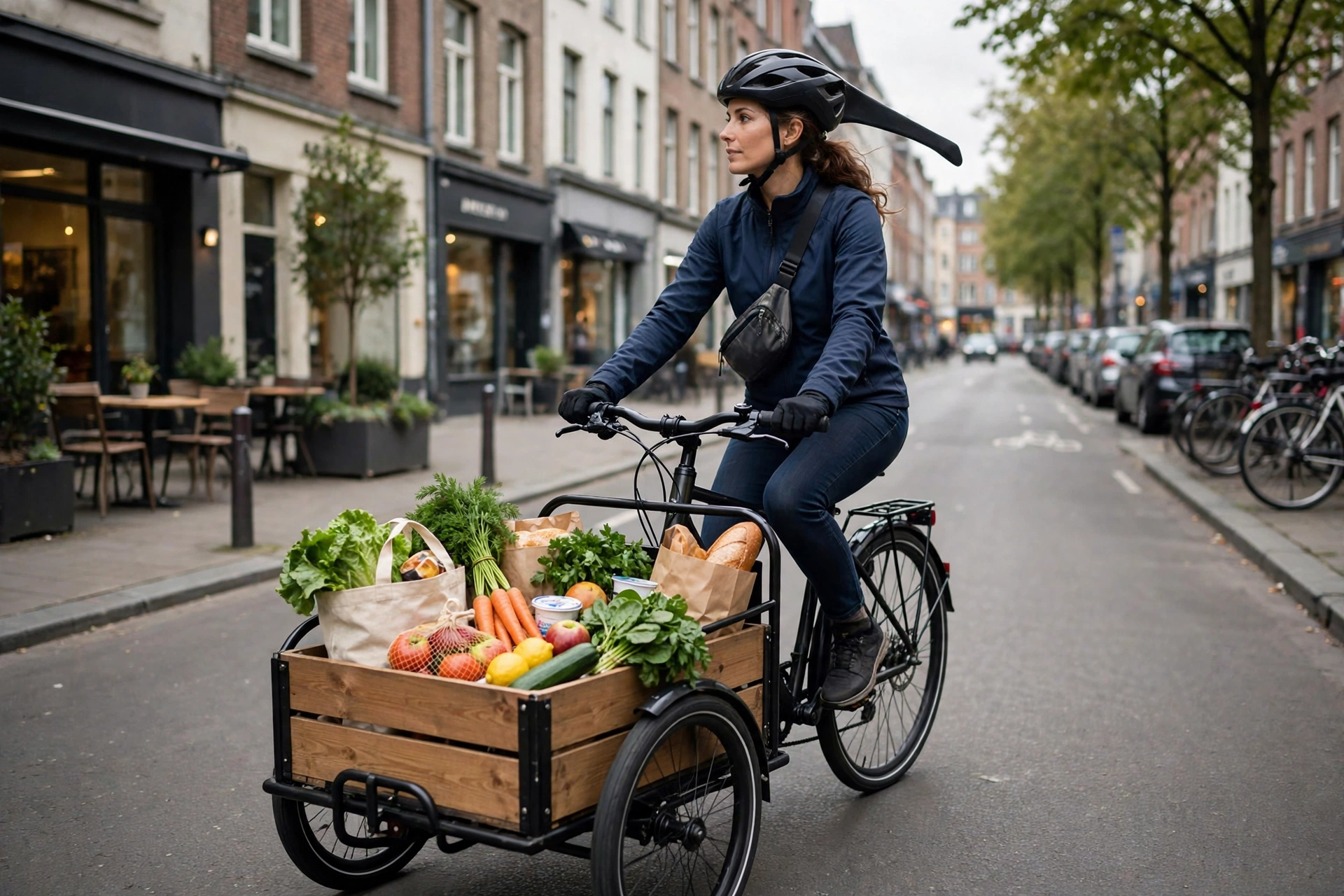
A cargo bike carries its load in front of or behind the rider, which changes how the bike handles. The extra weight makes the bike slower to speed up and slower to stop, and it makes low-speed balance trickier, especially when the load shifts or a child moves. Turning sharply, mounting a kerb, or stopping on a slope all demand more care than on a light bike.
Speeds are usually modest. Cargo riders rarely ride fast, because the load and the weight make speed impractical and because they are often riding with children on board. In general terms, falls on a cargo bike are more likely to be low-speed topples — at a junction, while parking, or while loading — than high-speed crashes.
That does not make the risk small. A low-speed fall with a heavy bike can still land you hard, and a bike that tips over can be difficult to get clear of. A helmet that covers the back and sides of the head well gives useful protection in exactly the kind of fall a cargo rider is most likely to have.
What Does Extra Coverage Actually Mean?
Extra coverage means the helmet shell extends further down at the back and sides of the head than a typical lightweight road helmet. Some helmets designed for city and cargo riding have this deeper shape, and it covers more of the head without adding a chin bar or turning the helmet into a full face model.
The benefit is straightforward: more of the head is covered if you fall sideways or backwards. The trade-off is that a deeper helmet can feel warmer and heavier than a light road helmet, and it may have fewer vents. For a cargo rider, who rides slowly and generates little cooling airflow, ventilation still matters, so look for a deeper helmet that still has good vents.
Fit is just as important as coverage. A helmet with extra coverage that sits too high or rocks from side to side does not protect as well as a lighter helmet that fits properly. Try the helmet on, shake your head gently, and check that it stays put. If you are learning about helmet technology, reading about what MIPS is for helmets can help you understand one of the features you may see listed on cargo and city helmets.
Should Cargo Bike Riders Choose a Full Face Helmet?
In general terms, no. A full face helmet is designed for fast, high-impact riding, and it is heavier, warmer, and more restrictive than a cargo rider needs. It also limits hearing and peripheral vision, which matter a great deal when you are riding a long, heavy bike in traffic with children on board.
There are exceptions. If you ride a cargo bike fast on rough tracks, or you carry loads over uneven ground, you might prefer the extra protection of a helmet with a chin bar. But for ordinary town and school-run riding, an open-face helmet with good rear and side coverage is the more practical choice.
Think about what you need to do while riding: look over your shoulder, hear traffic, talk to a child in the box, and stop and start often. A helmet that lets you do all of that comfortably is the right one for cargo riding, and a full face helmet gets in the way of most of it.
What Else Matters for Cargo Bike Helmets?
Visibility is important. Cargo bikes are large and slow-moving, and other road users need to see you early. A bright-coloured helmet helps, and reflective details are useful for early morning and evening rides. Lights on the bike matter too, but a bright helmet adds visibility at head height, where drivers look.
Comfort over short, frequent rides matters more than comfort over a single long ride. Cargo riders put the helmet on and take it off many times a day — for the school run, the shops, the nursery — so a helmet that is easy to adjust and comfortable from the first minute is worth having. A simple dial adjustment at the back and straps that stay set are practical advantages.
Finally, think about the children you carry. Their helmets matter just as much as yours, and they need helmets that fit their smaller heads properly. A child helmet should sit level, feel snug, and stay put when the child shakes their head. Check their fit regularly, because children grow quickly and a helmet that fitted last year may be too small now.
How Do You Look After a Cargo Bike Helmet?
A cargo bike helmet is used daily, often left on the bike while you load or unload, so it needs to be sturdy. Wipe the shell clean after wet rides, wash removable pads regularly, and let the helmet air-dry rather than leaving it in a damp pannier or box.
Check the straps and buckle often, because daily use wears them faster than occasional use. If a strap frays or a buckle no longer clicks firmly, replace the part if the maker sells spares, or replace the helmet if it cannot be repaired safely.
Store the helmet where it will not be crushed under shopping or knocked off the bike onto concrete. A helmet that has had a hard knock should be inspected carefully, and makers generally advise replacing a helmet after a crash, even when the damage is not easy to see.
Frequently Asked Questions
Q: Do cargo bike riders need a different helmet from other cyclists?
A: Not necessarily. A standard bike helmet that meets a recognised safety standard and fits well is a sound choice. A helmet with extra rear and side coverage is a sensible option for cargo riding, but it is not a requirement.
Q: Is a skate-style helmet good for cargo bike riding?
A: In general terms, a skate-style helmet can suit cargo riding because it often has good side and rear coverage. Check that it meets a recognised bicycle helmet safety standard and that it is comfortable and well ventilated for your rides.
Q: Should children on a cargo bike wear helmets?
A: In general terms, yes. Children riding in a cargo box or on a seat should wear a properly fitting helmet, just as they would on an ordinary bike. Check the fit regularly as they grow, and make sure the helmet sits level and snug.

Olivia
Writer at Helmet Today, covering helmet reviews, fit and riding safety.