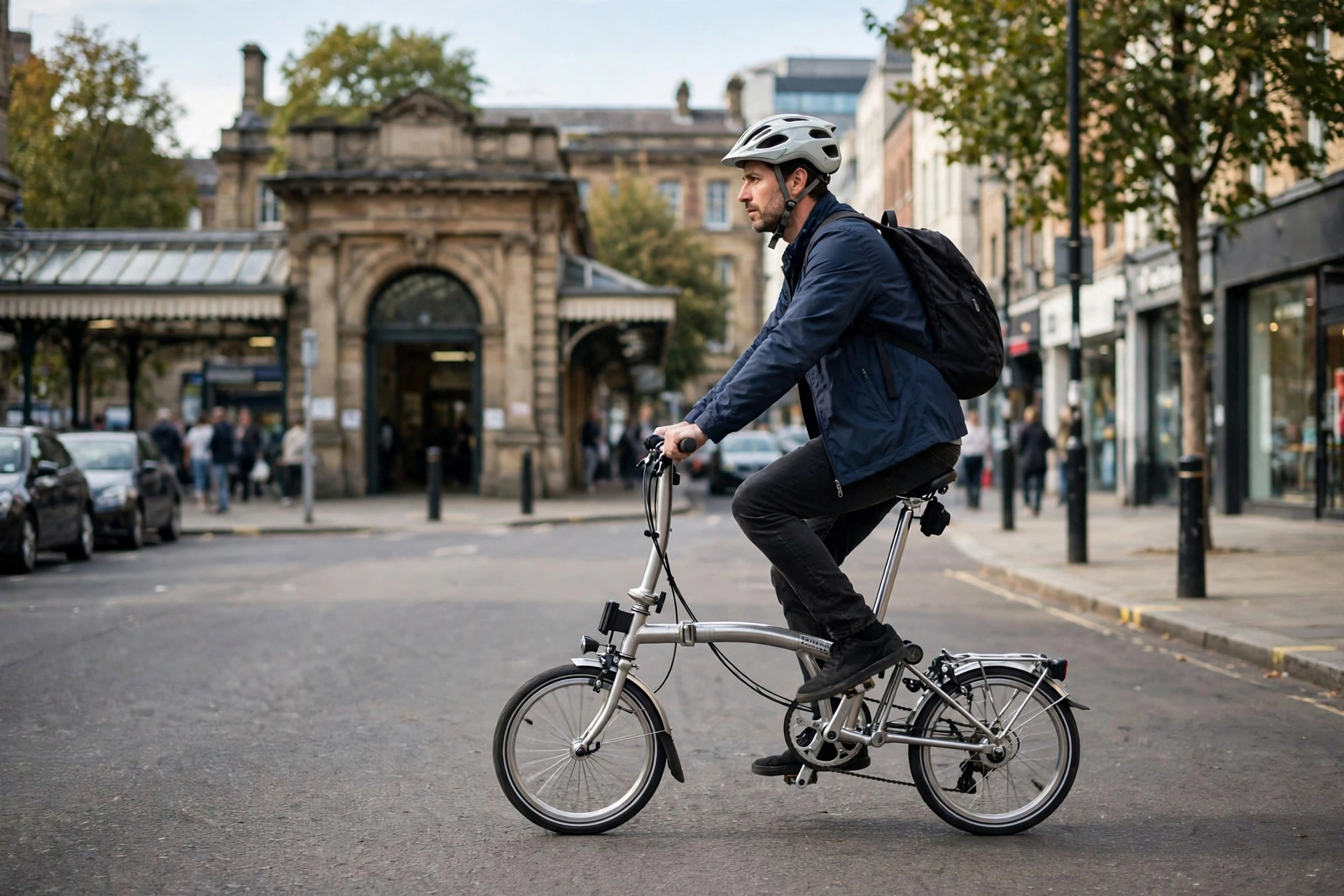
A commuter helmet for folding bike riders should be light, well ventilated, easy to carry when folded, and comfortable for short, everyday rides in traffic. Folding bike riders have a particular routine: ride to a station, fold the bike, carry it onto a train or into an office, then ride again. The helmet needs to fit that routine, not just the riding part of it.
Unlike a long-distance cyclist, a folding bike commuter rarely rides for hours at a time. Rides are usually short, stop-start, and in town, with traffic, junctions, and kerbs to deal with. This guide explains what matters in a commuter helmet for folding bike riders, and what you can safely ignore.
What Is Different About Commuting on a Folding Bike?
Folding bikes are designed for mixed journeys. You might ride ten minutes to the station, fold the bike, take a train, then ride another ten minutes to work. That means your helmet spends as much time being carried as being worn, and it needs to survive being tucked under an arm, slipped into a bag, or hung from a folded frame.
The riding itself is different too. Folding bikes have small wheels, an upright riding position, and quick, responsive steering. Speeds are usually modest, but the riding is busy: pulling away from lights, watching for car doors, turning at junctions, and stopping often. In general terms, a commuter helmet needs to be comfortable at low speeds, where there is less airflow, and easy to put on and take off many times a day.
Because the rides are short, some folding bike riders are tempted to skip the helmet altogether. A helmet that is light, comfortable, and easy to carry removes the main excuses for leaving it at home. The best commuter helmet is the one you will actually wear on every short ride, not the one with the most features.
What Should a Folding Bike Commuter Helmet Offer?
Start with weight and ventilation. A light helmet is easier to carry when folded, and it is more comfortable on a warm day in traffic. Good ventilation matters even on short rides, because stop-start riding in town gives you little cooling airflow. Look for a helmet with vents at the front and rear so air moves through it, even at low speeds.
Fit matters just as much. The helmet should sit level on your head, low enough to cover your forehead, and feel snug without pressing anywhere. An adjustable dial at the back helps you get a secure fit quickly, which matters when you are putting the helmet on several times a day. Straps should stay adjusted once set, so you are not fiddling with them at every junction.
Think about how you will carry the helmet when you are not riding. Some commuter helmets have a flatter shape that sits more neatly in a bag, and some come with a small carry bag of their own. If your helmet has a peak, check whether it is removable, because a peak can make the helmet harder to pack. If you are learning about helmet technology, reading about what MIPS is for helmets can help you understand one of the features you may see listed on commuter helmets.
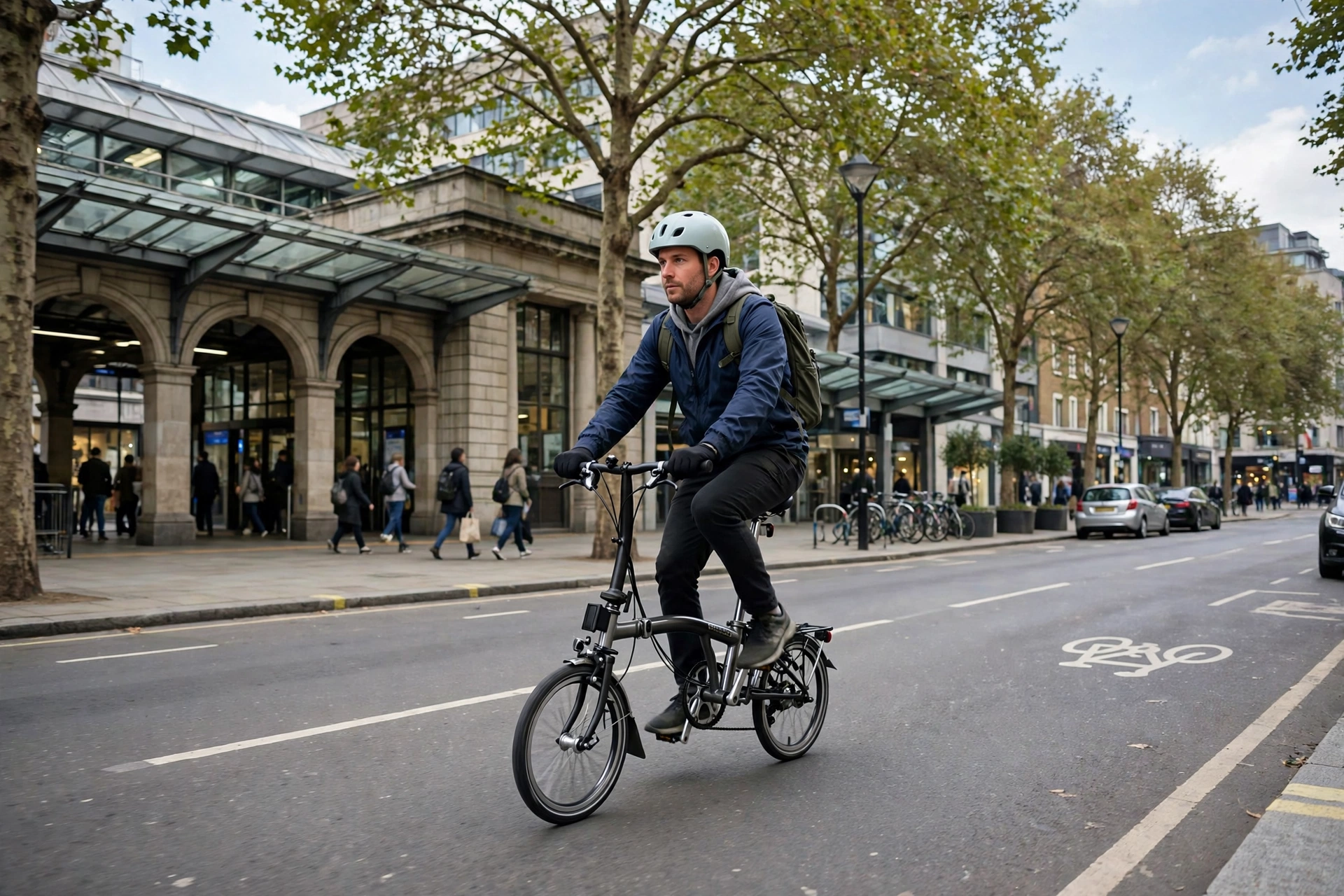
Should a Commuter Helmet Have a Peak or a Visor?
A small peak can be genuinely useful for commuting. It shades your eyes from low morning and evening sun, and it keeps light rain off your face and glasses. On a folding bike, where you sit upright and face into the weather, that shade and shelter are more useful than they are on a low, fast road bike.
The downside is that a peak adds bulk and can catch the wind, which makes the helmet slightly harder to carry and pack. In general terms, a short, removable peak is the best compromise for a folding bike commuter: use it when the sun or rain calls for it, and take it off when you want the helmet to pack flat.
Some commuter helmets come with an integrated visor or a built-in rain cover. These can be handy, but they add weight and complexity. A simple helmet with a removable peak, plus sunglasses for bright days, covers most commuting needs without extra fuss.
How Important Is Visibility for a Folding Bike Commuter?
Visibility matters a great deal in town. You are sharing the road with cars, buses, and lorries, often in low light or rain, and being seen early gives drivers more time to react. A bright-coloured helmet — white, yellow, or a bright colour that stands out — helps you be noticed, especially at junctions and in traffic.
Reflective details add to that effect in low light. Many commuter helmets have reflective strips or logos that catch headlights, and these are worth having for winter commutes or evening rides. They do not replace lights, which you should use as well, but they add another layer of visibility.
Colour is a simple choice with a real benefit, and it costs nothing extra. If you are choosing between two helmets that are otherwise equal, pick the brighter one. It is one of the easiest safety gains a commuter can make.
How Do You Look After a Commuter Helmet?
A commuter helmet gets used every day, often in all weathers, so it needs a little care to stay comfortable. Wipe the shell clean after wet or muddy rides, and wash removable pads regularly so they do not build up sweat and smell. Let the helmet air-dry in a well-ventilated place, away from direct heat, rather than leaving it in a damp bag.
Check the straps and the retention dial regularly. Daily use wears straps and buckles faster than occasional use, and a strap that slips or a dial that no longer holds its setting needs attention. If a part is worn, check whether the maker sells replacements before deciding the helmet needs replacing.
Store the helmet where it will not be crushed. Hanging it on a hook by its straps is fine, but stuffing it under a pile of bags or dropping it on a hard floor repeatedly is not. In general terms, a helmet that has had a hard impact should be checked carefully, and makers generally advise replacing a helmet after a crash, even if the damage is not obvious.
Frequently Asked Questions
Q: Do I need a special helmet for a folding bike, or will any bike helmet do?
A: Any bike helmet that meets a recognised bicycle helmet safety standard and fits well will protect you. A commuter helmet simply suits the folding bike routine better, because it is lighter, easier to carry, and more comfortable for short, stop-start rides.
Q: Is a folding helmet a good idea for folding bike commuters?
A: A folding helmet can be convenient because it packs smaller, but check that it meets a recognised safety standard and fits securely. A standard commuter helmet is often more comfortable and better ventilated, so weigh the packing benefit against comfort.
Q: Should my commuter helmet have a light mount?
A: A light mount can be useful, especially for winter commutes, but it is not essential. Many riders clip a light to the bike instead. If your helmet has a mount, make sure it does not block vents or unbalance the helmet.

Olivia
Writer at Helmet Today, covering helmet reviews, fit and riding safety.