
In general terms, a helmet with large, well-placed vents and a moisture-wicking liner is the best choice for humid climates. Humidity makes heat feel worse, because sweat evaporates slowly in damp air and the body struggles to cool itself. A helmet that ventilates well helps, but it cannot fix humidity on its own, so the rider’s habits matter too.
Humid climates are common in tropical and subtropical regions, from South-East Asia to the southern United States, and they attract cyclists and motorcyclists all year round. The warmth is inviting, but the humidity is a hidden challenge. This guide explains how helmet ventilation works in humid conditions, what features help, and how riders can stay comfortable and safe when the air is thick with moisture.
Why Is Humidity Hard on Helmet Ventilation?
Humidity is hard on ventilation because it reduces the cooling effect of airflow. In dry air, sweat evaporates quickly and carries heat away from the skin, so even a modest airflow through a helmet can keep a rider cool. In humid air, sweat evaporates slowly, which means the same airflow does far less cooling. A rider in a humid climate can feel hot and sticky even in a well-ventilated helmet, and that discomfort can be distracting.
Humidity also affects the helmet itself. Moisture can build up inside the helmet, making the liner damp and the padding heavy. A damp liner is less comfortable, can smell after a few rides, and may irritate the skin. Helmets used in humid climates need more care than those used in dry ones, including regular cleaning and drying, to stay comfortable and hygienic.
What Helmet Features Help in Humid Climates?
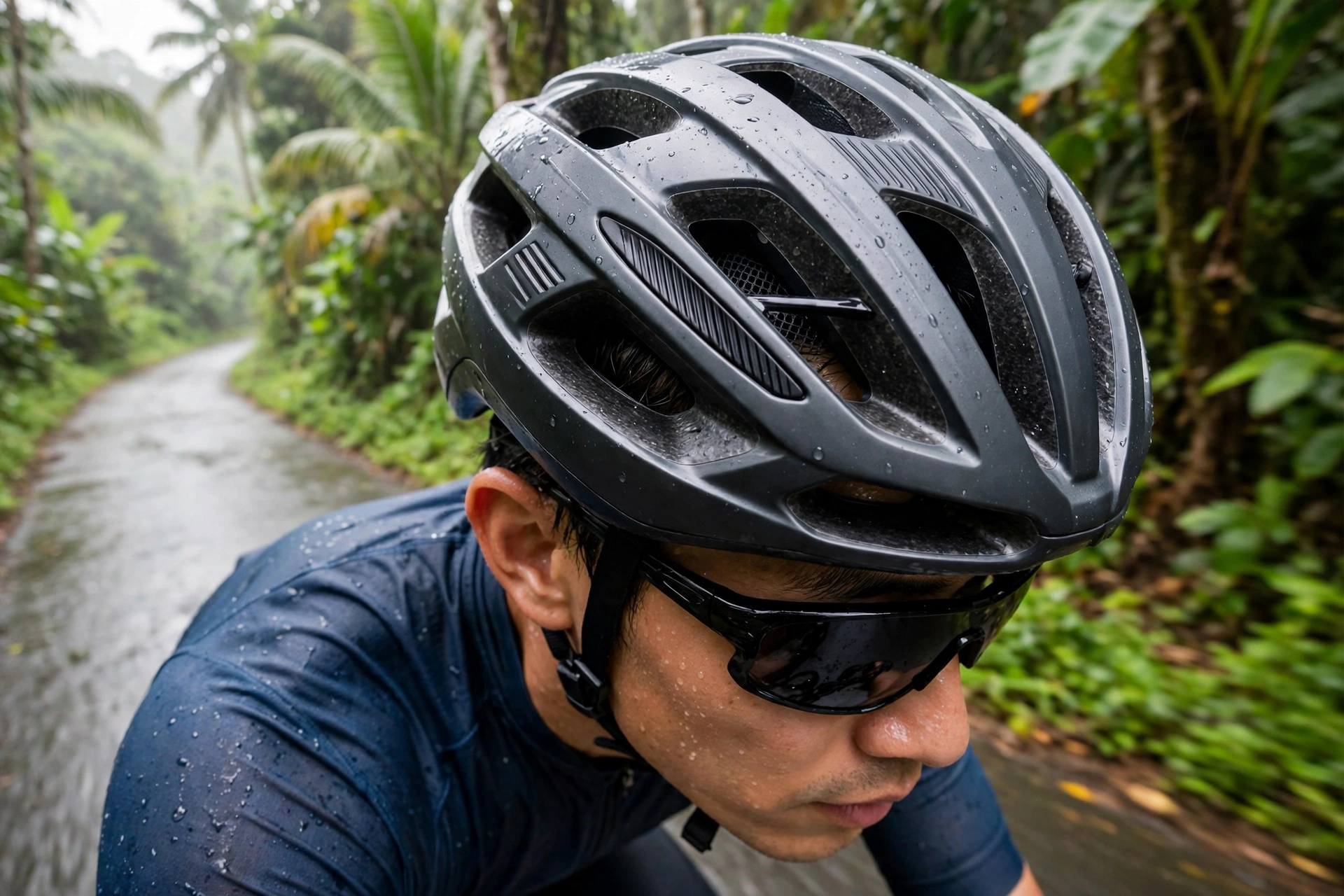
Large vents are the most important feature for a humid climate. Vents that let air flow freely through the helmet, from front to back, carry away as much heat and moisture as possible. Look for a helmet with vents that are open and unobstructed, rather than small or decorative ones, and with channels inside the shell that guide air across the head. A helmet with adjustable vents is useful too, since it lets the rider open them fully on a hot, humid day.
A moisture-wicking liner is also worth looking for. A liner that draws sweat away from the skin helps keep the head drier, even when the air is humid. Removable, washable padding is a practical plus, since a liner that can be washed regularly stays fresher and more comfortable. A light-coloured helmet can help as well, since it reflects sunlight rather than absorbing it, which keeps the shell cooler in strong tropical sun.
How Can You Stay Comfortable in a Helmet in Humid Weather?
The simplest way to stay comfortable is to keep the helmet clean and dry between rides. After a ride in humid weather, take the helmet out of its bag, remove the liner if it is washable, and let everything air-dry in a well-ventilated place, out of direct sun. A helmet that is left damp in a closed bag will smell quickly and can develop mould, which is unpleasant and can irritate the skin.
Staying hydrated matters in humid weather, even though it may not feel as hot as in a dry climate. A rider in humid air still loses fluid through sweat, and dehydration makes a rider tired and less focused. Drink water regularly, before you feel thirsty, and carry more than you think you will need. A thin, moisture-wicking skull cap under the helmet can also help, by drawing sweat away from the skin, provided it is thin enough not to change how the helmet fits. If you are learning about helmet technology, reading about what MIPS is for helmets can help you understand one of the features you may see listed on the box.
What Should You Check Before Riding in a Humid Climate?
Before a ride in a humid climate, check that the helmet’s vents are clear. Dust, insects, and debris can block vents, and a blocked vent cannot cool the head. A quick check with a soft brush or a blast of air will clear most blockages. Also check the liner and padding for dampness or odour from the last ride, and wash them if they need it. A clean, dry liner is far more comfortable than a damp one.
Check the straps and buckle too, since moisture can affect them over time. Straps that have gone stiff or frayed should be replaced, and a buckle that no longer clicks shut firmly is a reason to replace the helmet. A helmet that is used regularly in a humid climate should be checked more often than one used in a dry one, since moisture accelerates wear on the liner, the straps, and the foam.
When Should You Take a Break in Humid Weather?
Humid weather can be deceptive, because it may not feel as hot as a dry day, yet the body is still working hard to cool itself. A rider who feels dizzy, nauseous, or unusually tired should stop, find shade, and drink water. These can be signs of heat exhaustion, which is a serious condition that needs to be taken seriously. A ride that is cut short is always better than a ride that ends in a medical emergency.
Plan rides for the cooler parts of the day where possible, such as the early morning or the late afternoon, and avoid riding in the hottest, most humid part of the day if you can. Take regular breaks, drink water often, and listen to your body. A rider who knows their limits in humid weather is a rider who will be able to ride again tomorrow.
Frequently Asked Questions
Q: Does a well-ventilated helmet make a big difference in humidity?
A: In general terms, yes, though the effect is smaller than in dry air. Large, open vents help carry heat and moisture away from the head, but humidity limits how much cooling airflow can provide. A moisture-wicking liner and regular cleaning help too.
Q: How do I stop my helmet smelling in a humid climate?
A: Air-dry the helmet and liner after every ride, out of direct sun, and wash removable padding regularly. A helmet that is left damp in a closed bag will smell quickly, so always let it dry fully before storing it.
Q: Can I wear a skull cap under my helmet in humid weather?
A: In general terms, yes, a thin moisture-wicking skull cap can help by drawing sweat away from the skin. Make sure it is thin enough not to change how the helmet fits, and that the helmet still sits level and snug.

Olivia
Writer at Helmet Today, covering helmet reviews, fit and riding safety.