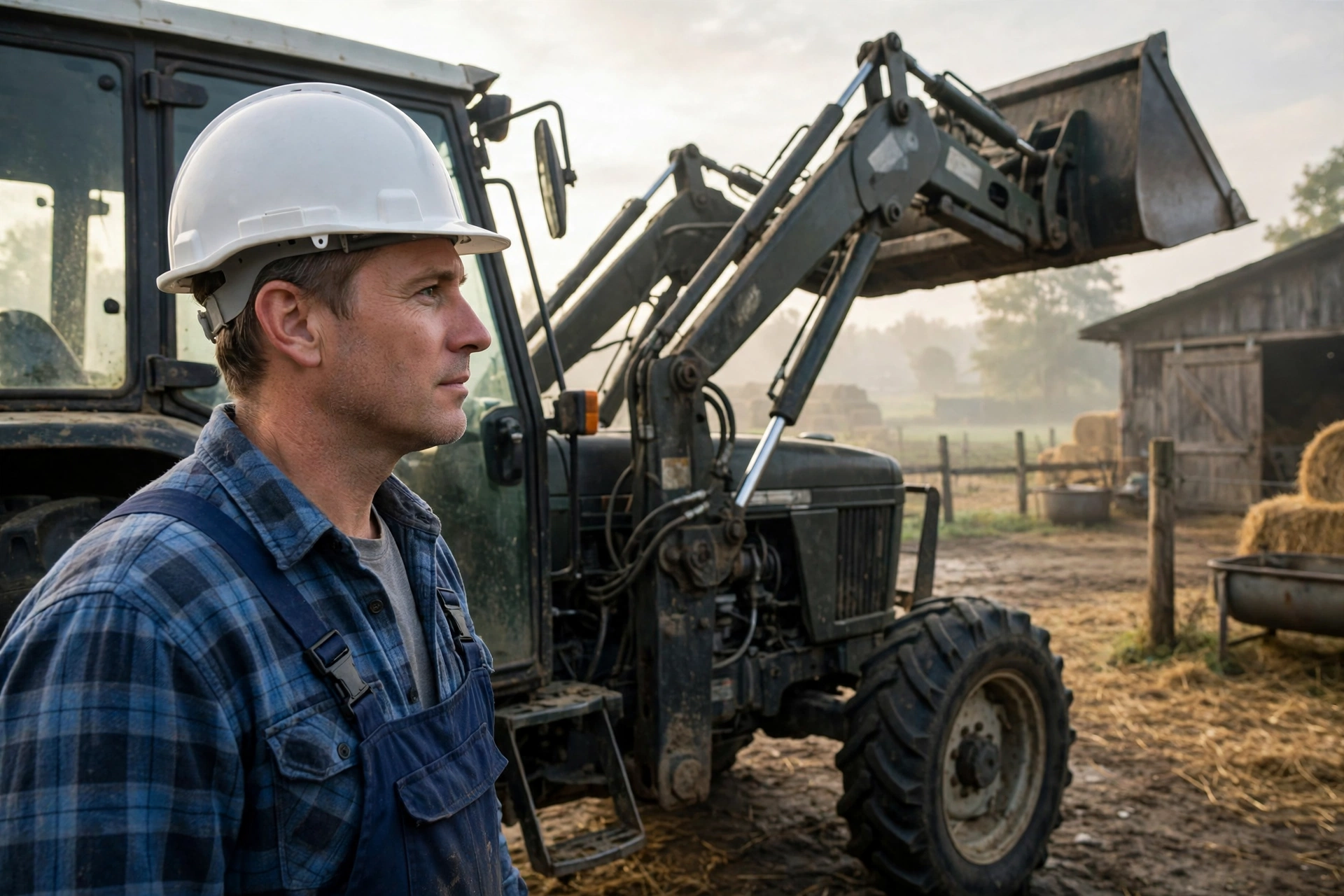
Yes, a helmet is needed when working with farm machinery whenever there is a risk of being struck by moving parts, falling objects, or a fall from height — in general terms, if the job puts your head near danger, wear one. Farm work mixes heavy machines, raised loads, and uneven ground, and a hard hat or industrial helmet is the simplest protection against the head injuries those hazards can cause. The exact requirement depends on the task and the site rules, but the principle is simple: no helmet, no exposure to the risk.
Farms are workplaces, even when they are family-run, and the same head protection thinking that applies on a building site applies in a yard full of tractors, trailers, and grain handling equipment. This guide explains when a farm machinery helmet is needed, what type suits farm work, and how to choose and wear one properly.
When Is a Helmet Needed Around Farm Machinery?
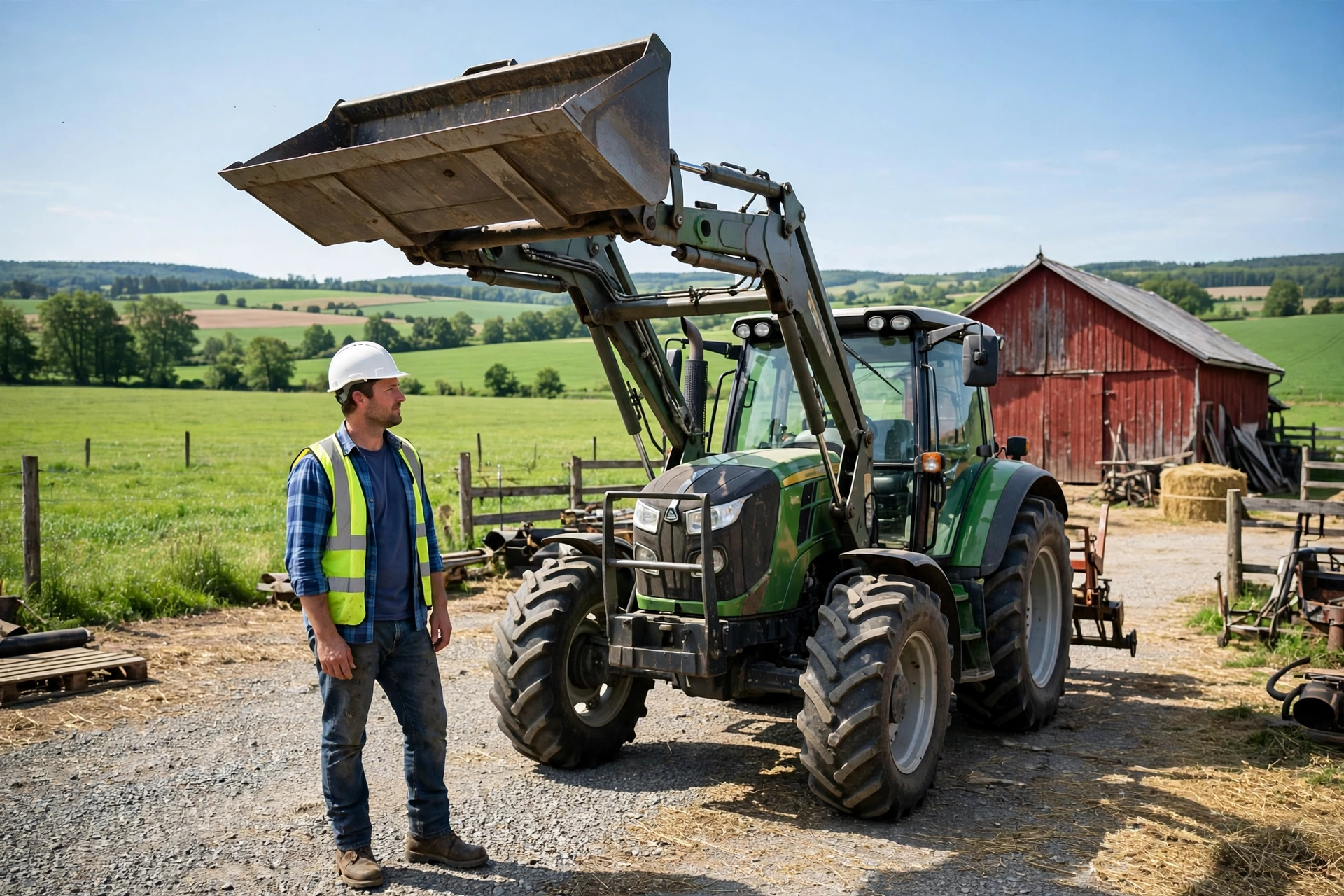
A helmet is needed whenever you work close to moving machinery parts, under raised implements, or near loads being lifted. Typical examples include servicing a tractor with the loader raised, working under a raised trailer bed, clearing a blocked harvester, or standing near a telehandler moving bales. In each case, a slip, a dropped tool, or a part under tension could strike the head, and a helmet takes the force that would otherwise reach the skull.
Helmets are also sensible during maintenance work on machinery. Changing a belt, working on a power take-off shaft, or reaching into a machine to clear a blockage puts your head close to hard edges and heavy components. Even a small bump against a steel frame can cause a painful injury, and a helmet turns that into a minor knock. If you are unsure whether a job needs a helmet, ask yourself what could fall or swing towards your head — if the answer is anything at all, wear one.
What Type of Helmet Suits Farm Machinery Work?
For most farm machinery work, a standard industrial safety helmet — the familiar hard hat — is the right choice. It protects against falling objects and bumps, is light enough for a long working day, and works with earmuffs and other accessories. Look for a helmet that meets the industrial helmet standard recognised in your country, and check that the shell is undamaged and the harness inside is in good condition.
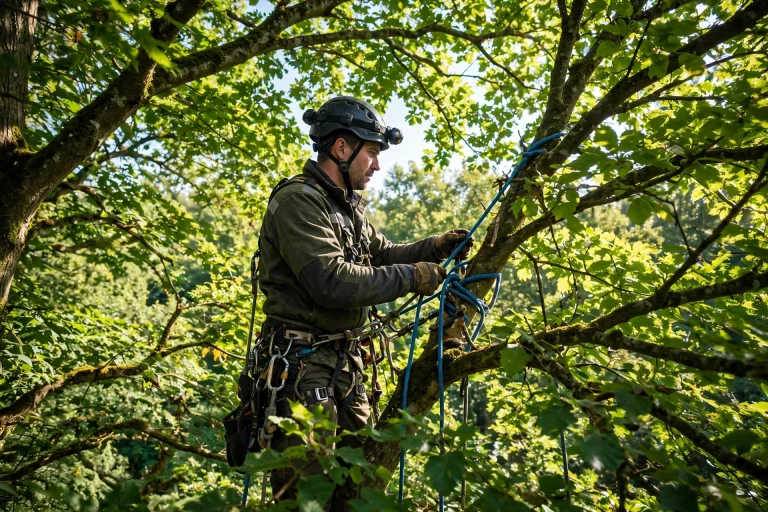
Some farm jobs call for a different type of helmet. Work at height, such as repairing a barn roof or working from a raised platform, may suit a helmet with a chin strap that keeps it on if you fall. Work with a chainsaw needs a forestry helmet with a visor and ear defenders. The key is to match the helmet to the hazard rather than wearing the same one for every job, because a helmet designed for falling objects is not the same as one designed for chainsaw kickback.
Comfort matters more than it might seem. A helmet that is hot, heavy, or poorly fitting will be taken off, and a helmet sitting on a tractor seat protects nobody. Choose a helmet with good ventilation, an adjustable harness, and a fit that stays level on your head. If you wear it for hours at a time, a lighter shell and a padded sweatband make a real difference to whether it stays on.
Does a Helmet Replace Other Safety Steps on a Farm?
No, a helmet is only one layer of protection, and it does not make a dangerous job safe on its own. Before starting work on machinery, the machine should be switched off, the keys removed, and any raised parts properly supported — never rely on hydraulics alone to hold a loader or implement up while you work underneath it. Lockout steps like these prevent the accident, while the helmet only reduces the harm if something still goes wrong.
Think of the helmet as the last line of defence rather than the first. The order should always be to remove the hazard where possible, guard it where you cannot remove it, and wear personal protection for the risk that remains. A helmet worn alongside those steps is sensible protection; a helmet worn instead of them is a false sense of security.
How Should a Farm Machinery Helmet Fit and Be Cared For?
A helmet should sit level on your head, low enough to cover the forehead without slipping down over your eyes. The harness should be adjusted so the helmet feels snug all round and stays put when you bend over or shake your head gently. If it wobbles or slides forward when you look down, tighten the harness or try a different size — a loose helmet can fall off at the very moment you need it.
The chin strap, where one is fitted, should be fastened whenever you are working. It stops the helmet coming off if you bend, climb, or are knocked, and it is essential for any work at height. If your helmet does not have a chin strap and your work involves climbing or working overhead, consider a model that does.
Care is simple but worth doing. Store the helmet out of direct sunlight, which can weaken the shell over time, and keep it away from chemicals such as fuel, solvents, and strong cleaning products. Check the shell for cracks, dents, or fading before each use, and check the harness for fraying or broken clips. If you are learning how helmets handle different kinds of impact, reading about what MIPS is for helmets can help you understand one of the technologies used in modern helmet design. Replace a helmet after a hard impact, even if the damage is not visible, because the inside can be damaged in ways you cannot see.
What About Helmets for Visitors and Children on Farms?
Visitors to a farm, including delivery drivers and contractors, should wear a helmet in any area where machinery is working or loads are being moved. A short visit does not reduce the risk — a falling object does not check whether you work there. Farms that welcome visitors should keep a few spare helmets in good condition near the yard entrance, with sizes that fit most adults.
For young workers old enough to help on a farm, fit matters even more. A helmet that is too large will slip and block vision, while one that is too small will be uncomfortable and may be worn incorrectly. Make sure any young worker has a helmet that fits their head properly, and that they understand when and why to wear it.
Frequently Asked Questions
Q: Do I need a helmet just to drive a tractor?
A: In general terms, no — driving a tractor on flat ground in a cab does not usually call for a helmet. A helmet becomes needed when you leave the cab to work around moving parts, raised implements, or overhead loads.
Q: Can I use a bike helmet instead of a hard hat on a farm?
A: No. A bike helmet is designed for a fall from a bicycle, not for falling objects or bumps against steel machinery. An industrial helmet is the right protection for farm machinery work.
Q: How often should a farm helmet be replaced?
A: In general terms, check it before each use and replace it after any hard impact, or when the shell shows cracks, fading, or damage. Follow the maker’s guidance on service life, and replace a worn harness promptly.

Olivia
Writer at Helmet Today, covering helmet reviews, fit and riding safety.