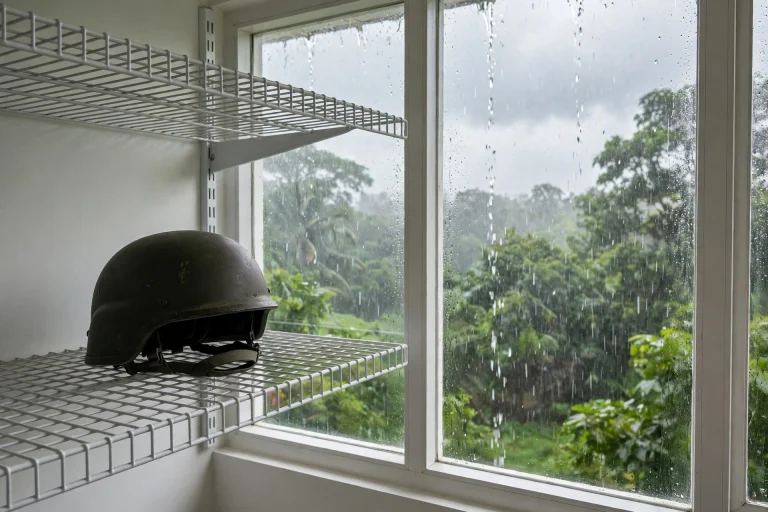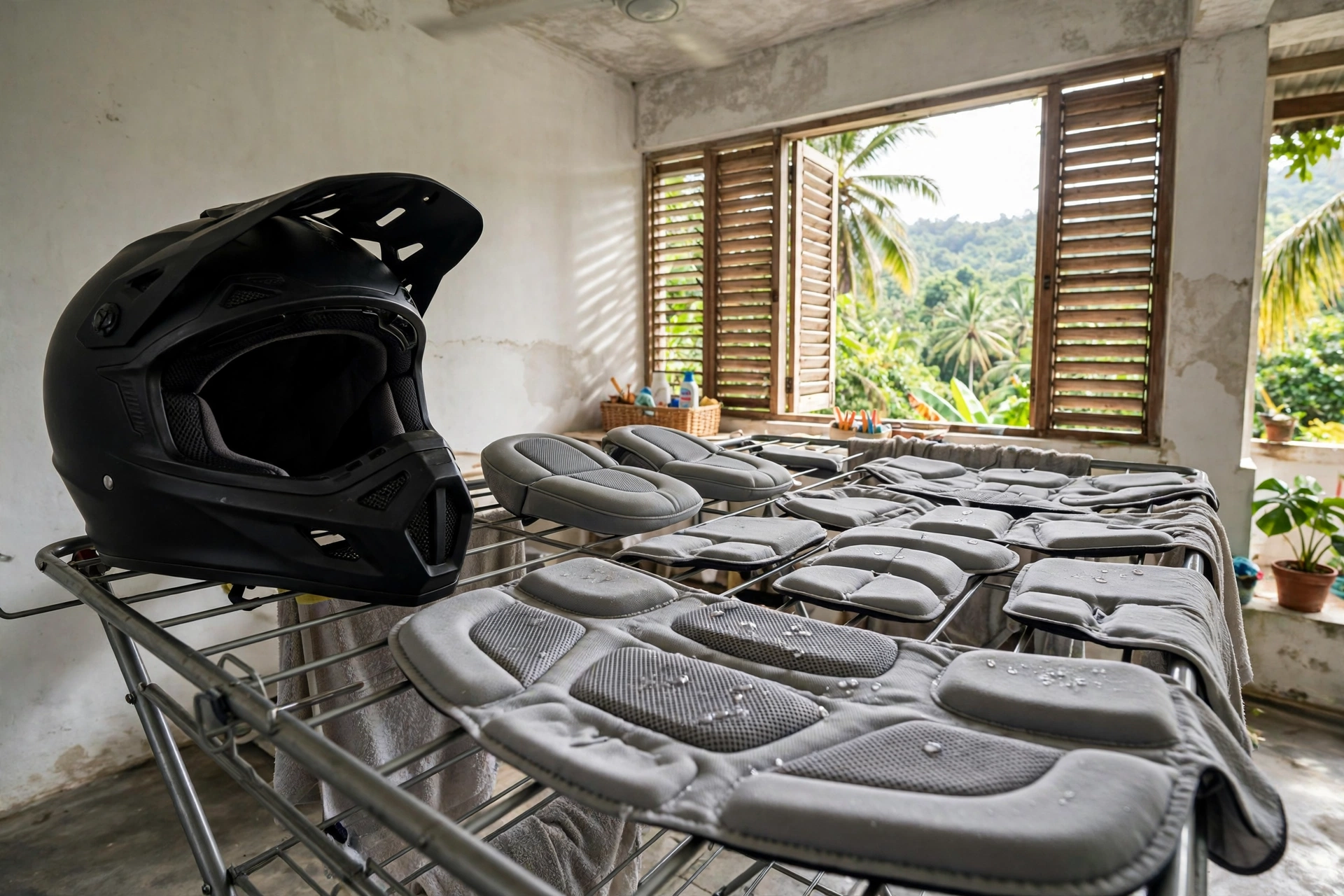
Yes, you can stop mould growing in helmet padding in a humid climate — the key is to dry the padding fully after every ride, keep the helmet ventilated, and clean it regularly before mould has a chance to take hold. Mould loves warm, damp, dark places, and the inside of a helmet after a sweaty ride in humid air is exactly that. If the padding stays damp for days, mould can grow, smell, and stain the fabric, and it can also irritate the skin.
Humid climates make the problem worse because the air itself is already full of moisture, so a helmet left in a closed bag or a damp room may never dry on its own. The good news is that a simple routine of drying, airing, and cleaning will keep most helmets mould-free. This guide explains why mould grows, how to dry padding properly, and what to do if mould has already appeared.
Why Does Mould Grow in Helmet Padding?
Mould grows when moisture, warmth, and a food source come together, and helmet padding provides all three. Sweat soaks into the foam and fabric, body heat warms it, and skin oils and dust give mould something to feed on. In a humid climate, the air adds even more moisture, so the padding stays damp for longer after each ride.
Poor storage makes the problem worse. A helmet shut inside a bag, a locker, or a car boot has no airflow, so moisture has nowhere to go. A helmet left in a bathroom or a damp garage faces the same problem. In general terms, any helmet that is put away wet and left undisturbed is at risk, and the risk rises sharply when the humidity is high for weeks at a time.
How Should You Dry Helmet Padding After a Ride?
The most important habit is to dry the helmet as soon as you finish riding. Take the helmet indoors, open the vents, and set it in a well-ventilated spot with the opening facing the airflow. If the padding is removable, take it out and lay the pieces separately so air can reach both sides. This simple step removes most of the moisture before mould can start.
A gentle fan helps a great deal in humid weather, because still, damp air dries things slowly. Place the helmet a short distance from a fan and let air move through it for a few hours. Avoid direct heat from a hair dryer on a high setting or a radiator, because strong heat can damage foam and glue. Warm, moving air is the safest way to dry padding.
Do not put a damp helmet straight into a bag or a closed cupboard. If you must carry it, leave the bag open or use a mesh bag that lets air through. When you get home, take the helmet out and let it dry fully before you store it. In a humid climate, this drying step matters after every ride, not just after long or very sweaty ones.
How Do You Clean Helmet Padding to Prevent Mould?
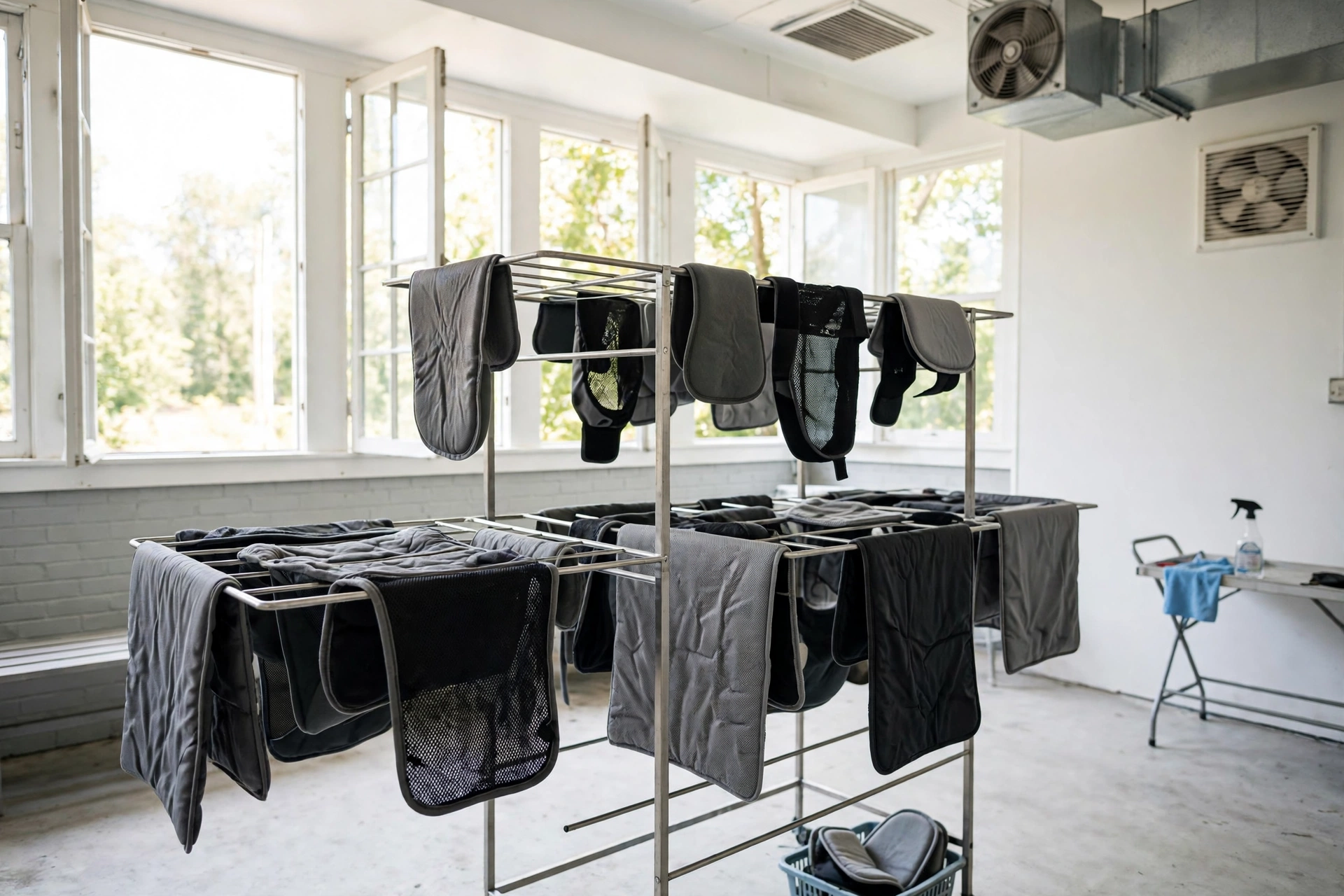
Clean the padding regularly with mild soap and lukewarm water. If the pads are removable, take them out and wash them by hand, squeezing gently rather than wringing them hard. Rinse them well so no soap is left behind, because soap residue can hold moisture and attract dirt. Let the pads dry fully in moving air before you put them back.
If the padding is not removable, wipe the inside of the helmet with a damp cloth and a little mild soap, then wipe it again with a clean damp cloth to remove the soap. Pay attention to the areas that touch your skin most, such as the forehead pad and the cheek pads. A soft brush can help lift dirt from fabric without damaging it.
For the shell and the vents, wipe away dust and sweat with a damp cloth and let the helmet dry with the vents open. In general terms, a light clean every few rides and a deeper clean once a month is a good routine in a humid climate, but you may need to clean more often if you ride daily or sweat heavily. If you want to understand how helmets are built to manage impact as well as comfort, reading about what MIPS is for helmets can help you see how the liner and padding fit into the design.
How Should You Store a Helmet in a Humid Climate?
Store the helmet in a dry, ventilated place, away from damp walls and floors. A shelf in a lived-in room is usually better than a garage or a shed, because indoor air is often drier and warmer. Keep the helmet out of its bag when you are not travelling, and leave the vents open so air can move through it. A helmet stand or a hook that holds the helmet upside down can help air circulate inside.
Silica gel packs or a small moisture absorber in the storage area can help in very humid homes, but they are not a substitute for drying the helmet after each ride. Replace or recharge the packs regularly, and keep them away from the padding itself. Avoid storing the helmet in a bathroom, where steam from showers keeps the air damp for much of the day.
What Should You Do If Mould Has Already Appeared?
If you find mould, act quickly and clean the helmet away from your face. Remove the padding if you can, and wash it in mild soapy water, then rinse it well and dry it fully in moving air. For stubborn spots, a diluted white vinegar solution can help, but test it on a small hidden area first and rinse thoroughly afterwards. Do not use bleach or harsh chemicals on padding, because they can damage the fabric and irritate the skin.
For padding that is fixed in place, wipe the mouldy area gently with a cloth dampened with mild soapy water, then wipe again with clean water and let the helmet dry fully. Repeat the cleaning if the spots remain, and do not use the helmet until it is clean and completely dry. If the smell or the staining does not go away after cleaning, the padding may need to be replaced.
Replace padding that is badly stained, stiff, or still smells after cleaning, because mould can live deep in foam where wiping cannot reach it. Most brands sell replacement pads for their helmets, and fitting new pads is usually simple. After replacing the pads, start the drying routine straight away so the problem does not come back.
Frequently Asked Questions
Q: How can I stop mould growing in helmet padding in a humid climate?
A: Dry the padding fully after every ride in moving air, clean it regularly with mild soap and water, and store the helmet in a dry, ventilated place with the vents open. Never put a damp helmet away in a closed bag.
Q: Is it safe to wear a helmet with mould in the padding?
A: In general terms, no. Mould can irritate the skin and the airways, and it can also mean the padding is damp and damaged. Clean the helmet fully or replace the padding before you wear it again.
Q: Can I use a hair dryer to dry helmet padding?
A: A hair dryer on a cool or low warm setting, held at a distance, can help, but strong heat can damage foam and glue. Gentle moving air from a fan at room temperature is safer and usually works well.

Olivia
Writer at Helmet Today, covering helmet reviews, fit and riding safety.