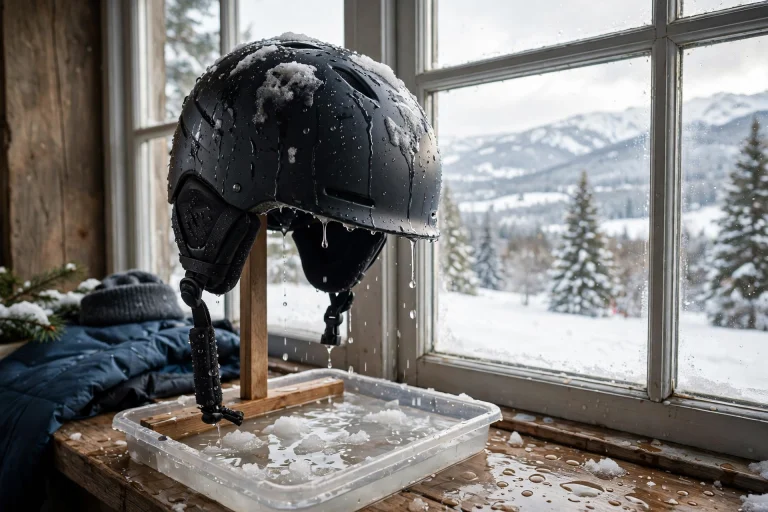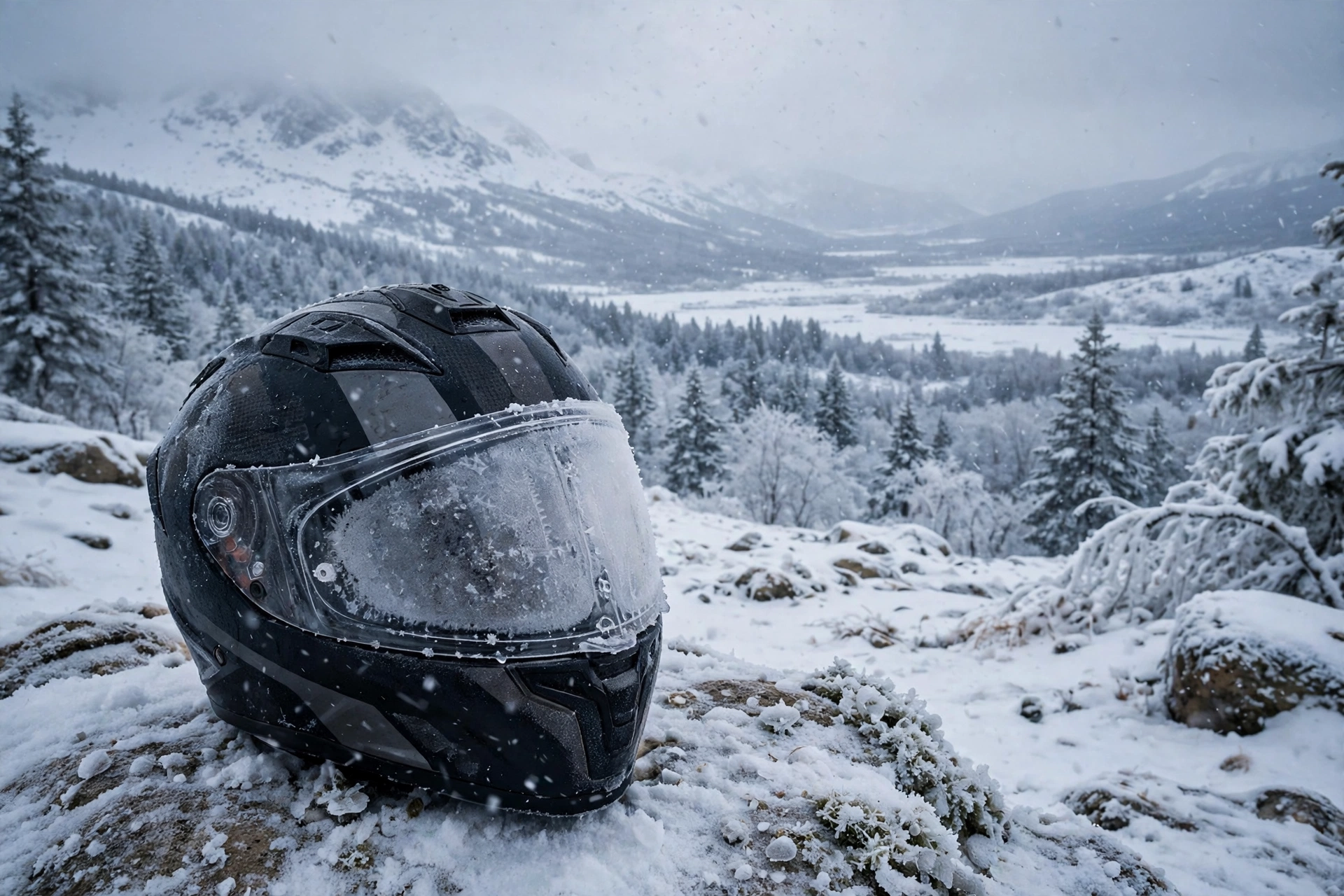
Helmet visor care in extreme cold means keeping the visor clean, dry, and free of ice, handling it gently when it is frozen, and using an anti-fog insert or coating if your helmet supports one — a clear visor matters most when winter light is low and the air is freezing. In extreme cold, a visor fogs more easily, can ice up, and becomes more brittle, so the way you clean and store it makes a real difference to your view.
Skiers, snowmobilers, and winter motorcycle riders all rely on a clear visor in conditions where stopping to clean it is not always easy. A visor that fogs, ices, or scratches in extreme cold can turn a good ride into a difficult one. This guide explains why cold affects visors, how to clean and defog them, and how to protect them between rides.
Why Does a Visor Fog Up in Extreme Cold?
A visor fogs when warm, moist air from your breath meets the cold surface of the visor and condenses into tiny water droplets. In extreme cold, the difference between the warm air inside the helmet and the freezing air outside is larger, so fogging happens faster and is harder to clear. Breathing hard on a climb or a fast ride adds even more moisture.
Poor ventilation makes fogging worse. If the helmet vents are closed or blocked by snow, moist air has nowhere to go and stays inside the helmet. Opening the vents, even a little, lets drier air move through and can reduce fogging. In general terms, a helmet that breathes well will fog less than one that is sealed shut.
A dirty visor fogs more easily too. Fingerprints, dust, and old cleaning marks give moisture something to cling to, so a visor that is not clean will fog faster than a clean one. Keeping the inside of the visor clean is one of the simplest ways to reduce fogging in the cold.
How Should You Clean a Visor in Extreme Cold?
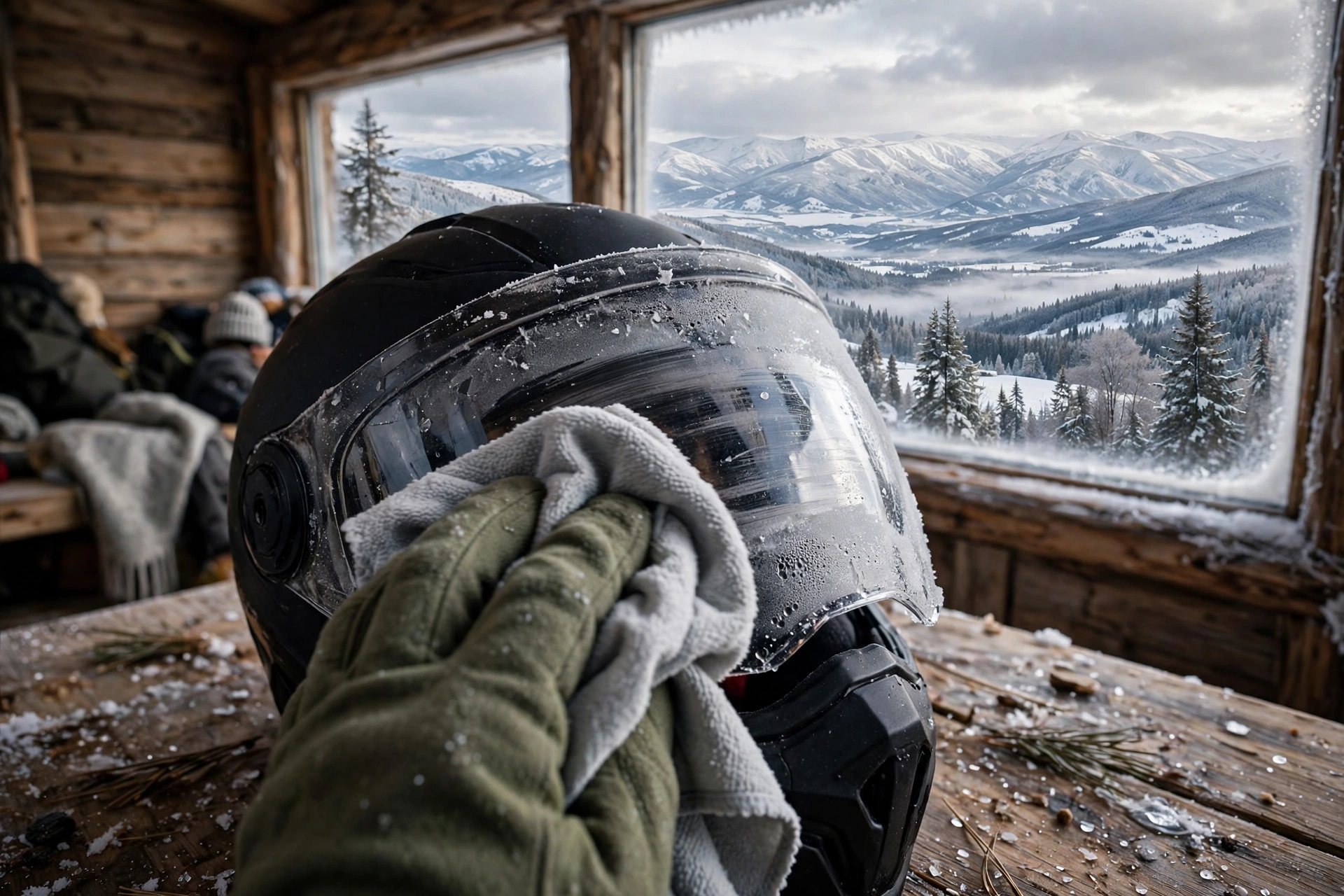
Clean the visor indoors, at room temperature, rather than outdoors in freezing air. Let the helmet warm up first, so any ice or frost on the visor melts naturally. Then rinse the visor with lukewarm water to wash away grit and salt, and wash it gently with mild soap and a soft cloth. Rinse again and let it air-dry, or pat it dry with a soft, lint-free cloth.
Do not wipe a frozen or icy visor with a dry cloth, because ice crystals and grit can scratch the surface. Do not scrape ice off a visor with a hard tool, and do not pour hot water on a frozen visor, because the sudden change in temperature can damage it. Let the ice melt indoors, and then clean the visor gently.
Avoid harsh cleaners, solvents, and paper towels, which can damage coatings and scratch the surface. Use only mild soap and a soft cloth, and check the manufacturer’s guidance for your visor, because some visors have special coatings that need particular care.
How Do Anti-Fog Inserts and Coatings Help?
Many helmets support an anti-fog insert, such as a Pinlock insert, which fits inside the visor and creates a double-glazed layer that stays warmer and fogs less. If your helmet supports one, fitting it before the cold season is one of the most effective ways to keep your view clear. Follow the manufacturer’s instructions when you fit it, and check that it seals properly around the edges.
Some visors have an anti-fog coating applied at the factory. These coatings help, but they can wear off over time, especially if the visor is cleaned with harsh products or rubbed hard. Handle a coated visor gently, and do not use anti-fog sprays unless the manufacturer says they are safe for your visor, because the wrong product can damage the coating.
If your helmet does not support an insert, a breath guard or a nose guard can help by directing your breath away from the visor. These small parts are easy to fit and can make a noticeable difference in extreme cold. If you want to understand how the visor fits into the whole helmet, reading about what MIPS is for helmets can help you see how the liner and shell work together.
How Should You Store a Visor in Extreme Cold?
Store the helmet indoors, in a dry place at room temperature, with the visor closed or covered to protect it from dust and scratches. A helmet bag or a soft cover helps, but make sure the helmet is dry before you put it away, because moisture left on the visor can freeze and leave marks.
Do not leave the helmet in a freezing car or an unheated garage overnight if you can avoid it. A visor that starts the day frozen will fog as soon as you breathe on it, and it will be brittle until it warms up. Bring the helmet indoors the night before a ride, so it starts at room temperature.
If you carry a spare visor, store it in its own soft pouch, away from hard objects that could scratch it. A spare visor is useful in winter, when light changes quickly, but a scratched spare is no better than a scratched visor on the helmet.
When Should You Replace a Cold-Weather Visor?
Replace a visor if it is scratched, cloudy, cracked, or no longer fits the helmet properly. Scratches scatter light and make it harder to see in low winter sun, while a cloudy visor reduces contrast on snow. A visor that does not seal properly will let cold air and snow in, and it will fog more easily.
Also replace a visor if its anti-fog coating has worn off and cleaning no longer helps, or if an insert no longer seals. A new visor is usually far cheaper than a new helmet, and it can restore a clear view in a single step. Check that the replacement visor is made for your exact helmet model, because visors are not interchangeable between models.
In general terms, a visor that is cleaned gently, stored indoors, and protected from ice and scratches will last through many cold seasons. The care you give it in extreme cold is what decides whether it stays clear or becomes a problem on the ride.
Frequently Asked Questions
Q: How do I stop my helmet visor fogging in extreme cold?
A: Keep the inside of the visor clean, open the vents a little, and use an anti-fog insert if your helmet supports one. A breath guard can also help by directing your breath away from the visor.
Q: Can I scrape ice off a helmet visor?
A: In general terms, no. Scraping can scratch the visor. Let the ice melt indoors at room temperature, then rinse and clean the visor gently with mild soap and a soft cloth.
Q: Should I use anti-fog spray on my visor?
A: Only if the manufacturer says it is safe for your visor. Some sprays can damage anti-fog coatings, so check the guidance first and use a proper insert if your helmet supports one.

Olivia
Writer at Helmet Today, covering helmet reviews, fit and riding safety.