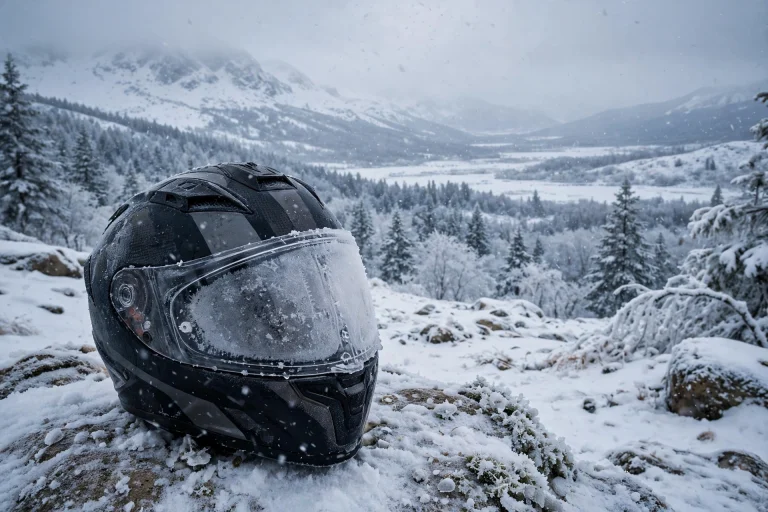
To dry a helmet after riding in wet snow, take it indoors straight away, remove the padding if you can, and let it dry in moving air at room temperature — never put a wet helmet away in a closed bag, and never dry it with strong heat. Wet snow soaks into padding and vents more thoroughly than light powder snow, and a helmet that is left wet will smell, grow mould, and feel cold and uncomfortable on the next ride. A proper dry after each wet ride keeps the helmet fresh and ready.
Wet snow is common in late winter and early spring, when the snow is heavy and the air is close to freezing. It sticks to the helmet, melts into the vents, and soaks the padding from the outside in. This guide explains how to dry a helmet safely, what to do with the visor and strap, and how to store it between winter rides.
What Should You Do First After a Wet Snow Ride?
As soon as you get indoors, shake the helmet gently upside down to remove loose snow, and wipe the outside with a soft cloth to remove melting snow and water. Open the vents so air can move through the helmet, and take out the removable padding if your helmet allows it. Lay the pads separately so air can reach both sides.
Do not leave the helmet in a cold car, a porch, or a garage while it is wet. Snow that melts and then refreezes in the padding can make the helmet stiff and icy, and a wet helmet left in the cold will take far longer to dry. Bring it indoors, where the air is warmer and drier, and start the drying process straight away.
Check the visor and the strap while the helmet is still wet. Wipe the visor gently with a soft cloth, and rinse it with fresh water if it has road salt or grit on it. Rinse the strap and buckle with fresh water as well, because wet snow on roads often carries salt that can corrode metal parts if it is left in place.
How Do You Dry Helmet Padding Properly?
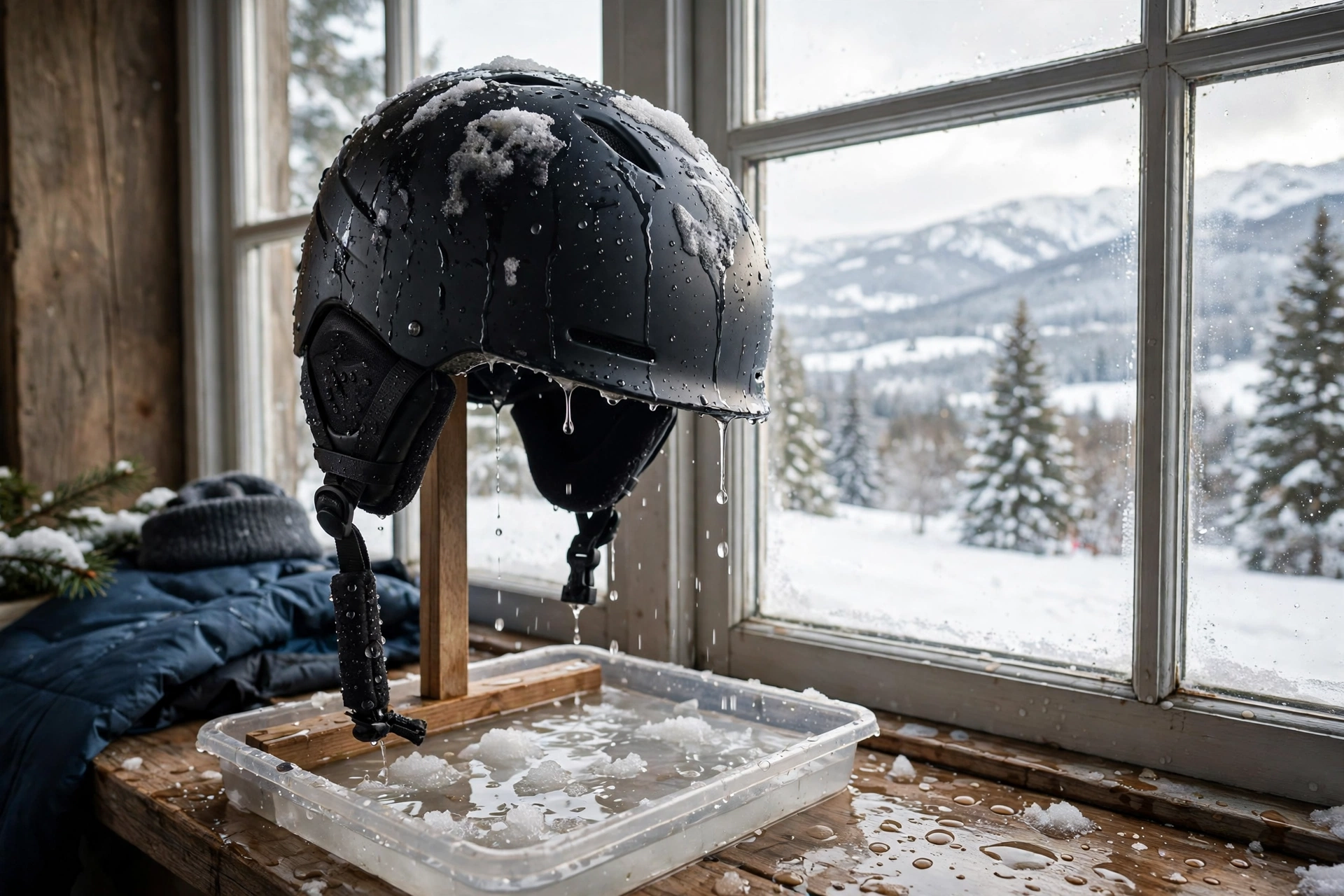
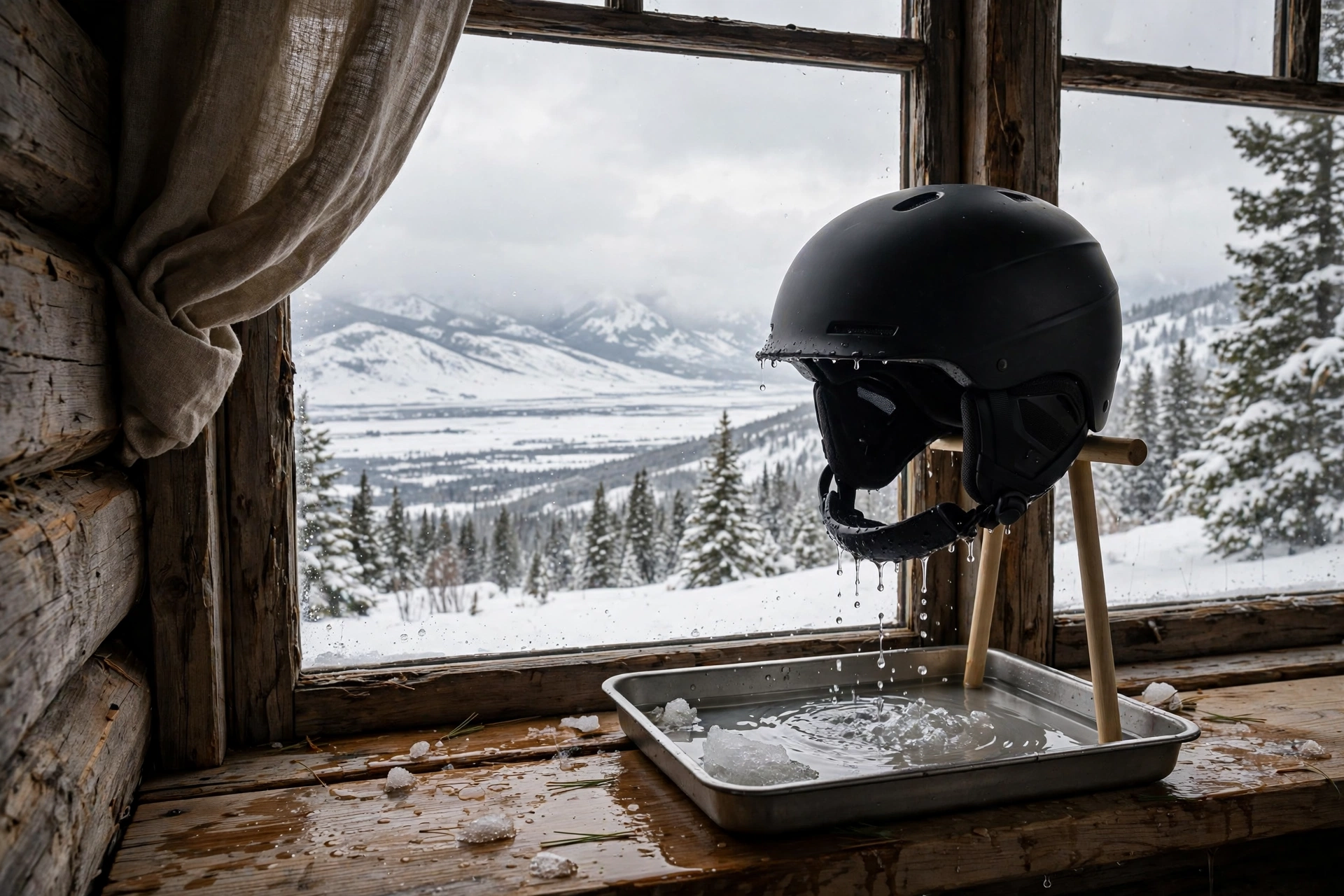
The safest way to dry padding is with gentle moving air at room temperature. Place the helmet near a fan, with the opening facing the airflow, and let the air move through it for several hours. If the padding is removed, place the pieces near the fan as well, so they dry evenly. Turn the helmet from time to time so air reaches all of the padding.
Avoid strong heat. Do not put the helmet on a radiator, in front of a hot fire, or under a hair dryer on a high setting, because strong heat can damage foam, glue, and fabric. Warm air from a fan at room temperature is enough, and it is far safer for the materials inside the helmet.
Do not use the helmet again until the padding is fully dry. Press the padding gently with your fingers: if it still feels damp or cold, give it more time. A helmet that feels dry on the outside can still be damp inside, especially around the forehead pad and the cheek pads, where sweat and melted snow collect most.
How Do You Dry the Shell, Vents, and Visor?
Wipe the shell with a soft, dry cloth to remove water, and leave the vents open so air can move through the channels. If snow has packed into a vent, use a soft brush to clear it gently, and let the vent dry with the helmet. Do not use a sharp tool to dig snow out of a vent, because it can damage the vent or the shell.
For the visor, wipe it gently with a soft cloth, and let it air-dry. If the visor has an anti-fog coating, avoid rubbing it hard, and do not use harsh cleaners that could damage the coating. A visor that is scratched or cloudy gives a poorer view, so treat it gently while it is wet.
Check the strap and buckle as they dry. Work the buckle open and closed a few times to make sure it moves freely, and check that the strap is not stiff or twisted. If the buckle feels gritty, rinse it again with fresh water. If you want to understand the layers under the padding, reading about what MIPS is for helmets can help you see how the liner fits into the helmet.
How Should You Store a Helmet Between Wet Snow Rides?
Store the helmet indoors, in a dry, ventilated place, with the vents open and the padding fully dry. A shelf in a lived-in room is usually ideal. Keep the helmet out of its bag when you are at home, so air can move through it, and do not stack other kit on top of it.
If you ride in wet snow several days in a row, give the helmet a full night to dry between rides. If it is still damp in the morning, use a fan for a few more hours rather than putting on a wet helmet. A damp helmet is uncomfortable, and it can chill your head quickly in cold air.
Check the helmet before each ride in a wet snow season. Look for damp spots, smells, or mould, and clean the padding if needed. A quick check takes a minute and can catch a problem before it becomes a reason to replace the padding.
What If the Helmet Still Smells After Drying?
If a helmet still smells after it is fully dry, the padding probably needs a wash. Remove the pads and wash them by hand in lukewarm water with mild soap, rinse them well, and dry them fully in moving air. If the padding is not removable, wipe the inside of the helmet with a damp cloth and mild soap, then wipe again with clean water and let it dry.
A musty smell that does not go away after washing may mean mould has started in the foam, especially if the helmet was stored wet. In that case, replace the padding if the manufacturer sells a replacement for your model. Do not use a helmet that smells strongly of mould, because it can irritate the skin and the airways.
To stop the smell coming back, dry the helmet fully after every wet ride, and clean the padding regularly through the winter. A helmet that is dried and cleaned as a habit will stay fresh, even in a long wet snow season.
Frequently Asked Questions
Q: How do I dry a helmet after riding in wet snow?
A: Take it indoors, remove the padding if you can, and dry it in moving air at room temperature with the vents open. Never use strong heat, and do not store it until it is fully dry.
Q: Can I use a hair dryer to dry a wet helmet?
A: A hair dryer on a cool or low warm setting, held at a distance, can help, but strong heat can damage foam and glue. A fan at room temperature is safer and usually works well.
Q: How long does a wet helmet take to dry?
A: In general terms, several hours in moving air at room temperature, and often overnight if the padding is soaked. Press the padding to check: if it still feels damp, give it more time.

Olivia
Writer at Helmet Today, covering helmet reviews, fit and riding safety.