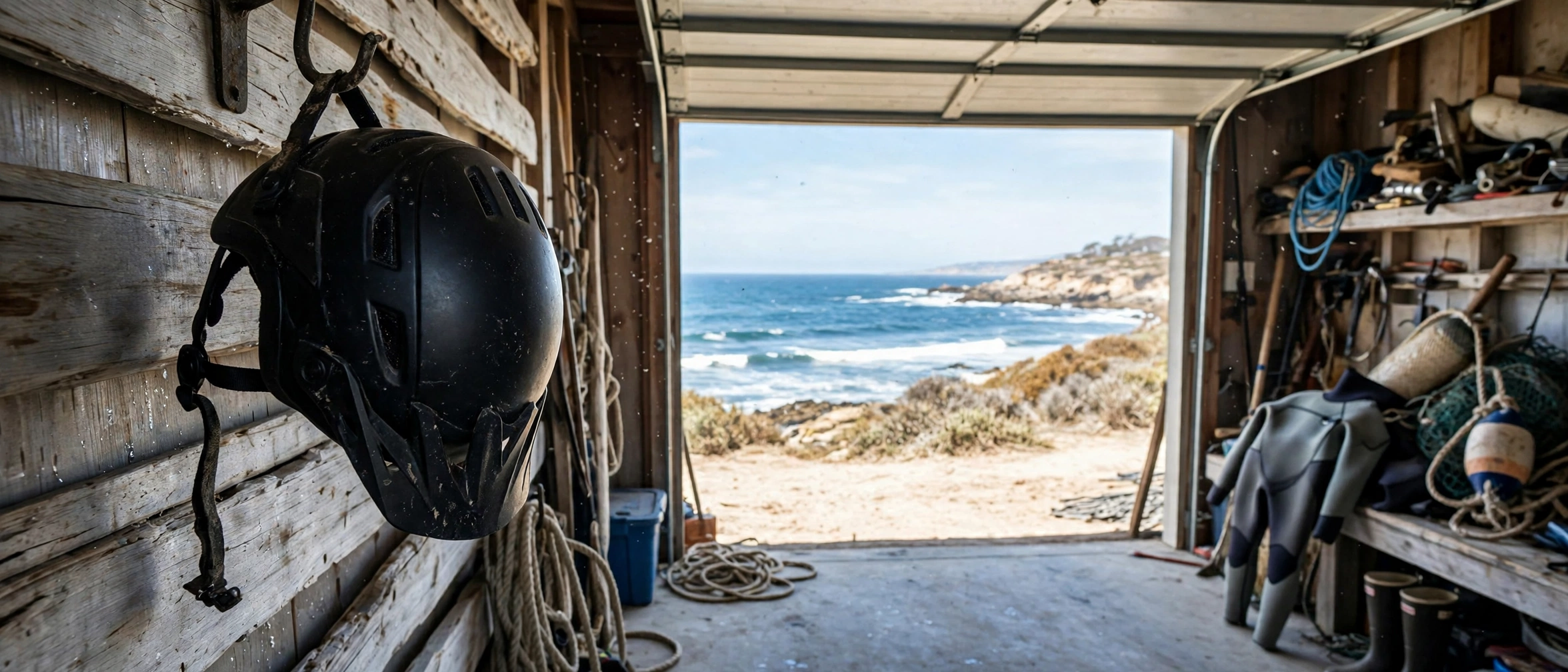
Helmet care in coastal salt air means rinsing the helmet with fresh water regularly, drying it fully, and storing it indoors away from the sea breeze — salt in the air settles on metal parts, straps, and padding even when the helmet never touches the water. Coastal air carries tiny salt particles, and over weeks and months they build up on a helmet that is used or stored near the sea. A simple cleaning routine keeps that build-up under control.
Many riders live near the coast and ride there every day, so salt air is not a one-off problem but a constant part of helmet care. The damage is slow and easy to miss: a buckle that gradually stiffens, a strap that slowly fades, padding that starts to smell. This guide explains what salt air does, how to clean a helmet that lives by the sea, and how to store it well.
What Does Coastal Salt Air Do to a Helmet?
Salt air deposits a fine layer of salt on everything it touches, including a helmet. On metal parts such as buckles, rivets, and screws, that salt can cause corrosion, especially if the helmet is also damp. Corrosion weakens metal over time, and a corroded buckle may stick, feel gritty, or fail to click shut firmly.
On fabric, salt makes straps and padding stiff and rough, and it can leave white marks on the shell and the visor. Salt also draws moisture from the air, so a helmet that is salty stays damp for longer, which encourages smells and mould in the padding. In general terms, a helmet kept near the sea will age faster than the same helmet kept inland, unless it is cleaned regularly.
The shell itself is usually the most resistant part, but salt can still mark its finish and hide in vents, joints, and fittings. A visor that is wiped while salty can be scratched by the salt crystals, so the way you clean matters as much as how often you clean.
How Often Should You Clean a Helmet in Coastal Salt Air?
How often you clean depends on how close you live to the sea and how often you ride. If you ride on the coast daily, a fresh-water rinse once a week is a good routine, with a deeper clean once a month. If you ride less often, rinse the helmet after each coastal ride and clean it fully every few weeks.
Look for the signs that cleaning is due: white salt marks on the shell or the strap, a buckle that feels gritty, padding that smells musty, or a visor that looks cloudy. These signs mean salt has already built up, so clean the helmet straight away rather than waiting for the next scheduled clean.
After a storm or a period of strong onshore wind, clean the helmet sooner, because strong winds carry more salt inland. Even a helmet that was stored indoors can pick up salt if it was used outdoors in salty air, so check it after any coastal ride, not just after beach trips.
How Do You Clean a Helmet Exposed to Salt Air?
Start with a fresh-water rinse. Hold the helmet under a tap or a shower and let clean water run over the shell, through the vents, and over the strap and buckle. This washes away loose salt before you touch the helmet with a cloth, which helps to avoid scratching the shell or the visor.
Then wash the helmet gently with lukewarm water and mild soap, using a soft cloth. Work the soapy water through the padding and the vents, and pay attention to the buckle and the strap, where salt collects most. If the padding is removable, wash it separately by hand. Rinse the helmet again with fresh water until no soap remains.
Dry the helmet in moving air, with the vents open, until it is fully dry inside and out. A fan helps in humid coastal weather. Work the buckle open and closed a few times while it dries to flush out any remaining salt, and check that it clicks shut firmly. If you want to understand the layers under the padding, reading about what MIPS is for helmets can help you see how the liner fits into the helmet.
How Should You Store a Helmet Near the Coast?
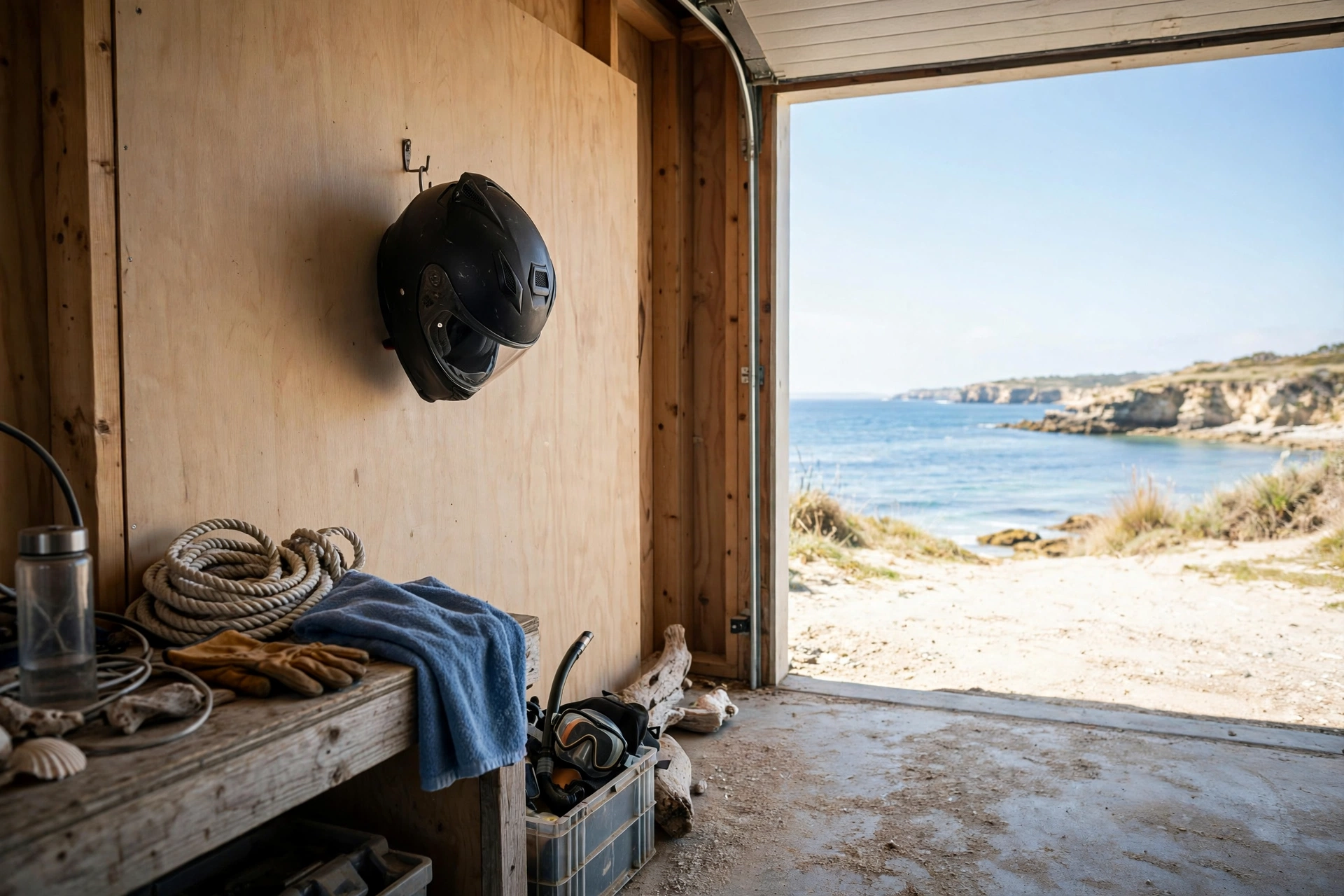
Store the helmet indoors, in a dry, ventilated room away from open windows that face the sea. A hallway or a bedroom is usually better than a garage or a shed near the beach, because indoor air is drier and carries less salt. Keep the helmet out of its bag when you are at home, with the vents open so air can move through it.
Do not store the helmet on a balcony, a porch, or a boat, where it is exposed to salt air all day and night. If you must keep it in a garage, put it in a closed cupboard or a sealed box with a moisture absorber, and clean it before you store it. A helmet that is put away clean will stay in better condition than one that is put away salty.
Use a helmet bag or a case when you carry the helmet outdoors, and keep the bag closed when you are not riding. This simple habit keeps salt off the helmet between rides. Check stored helmets every week or so, and air them out if they feel damp or smell musty.
When Should Coastal Helmet Parts Be Replaced?
Replace a strap or a buckle as soon as it shows corrosion, stiffness, or damage. A buckle that no longer clicks firmly, a strap that is frayed or very stiff, or stitching that is coming loose are all signs that the retention system is no longer reliable. Many manufacturers sell replacement straps and buckles for their models.
Replace padding that stays stiff, smells, or is stained after cleaning, because salt can live deep in foam where washing cannot fully reach it. A visor that is scratched or cloudy should also be replaced, because a poor view is a safety problem, especially in bright coastal light.
In general terms, a helmet that is rinsed regularly, dried fully, and stored indoors can last well by the coast, but one that is left salty in a damp garage will wear out much faster. The routine matters more than the location: a little care after each ride protects the helmet for the long term.
Frequently Asked Questions
Q: Does coastal salt air damage a helmet even if it never touches seawater?
A: Yes. Salt in the air settles on metal parts, straps, and padding, and it can cause corrosion, stiffness, and smells over time, even without direct contact with the sea.
Q: How often should I rinse a helmet that lives near the coast?
A: In general terms, rinse it with fresh water after each coastal ride, and give it a deeper clean with mild soap once a month, or once a week if you ride on the coast daily.
Q: Where is the best place to store a helmet near the coast?
A: Indoors, in a dry, ventilated room away from sea-facing windows. Avoid balconies, porches, boats, and damp garages, and keep the helmet out of its bag with the vents open.

Olivia
Writer at Helmet Today, covering helmet reviews, fit and riding safety.