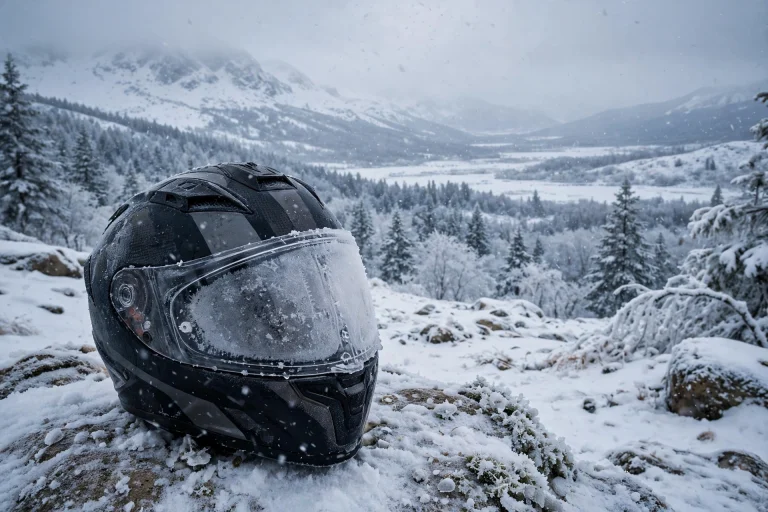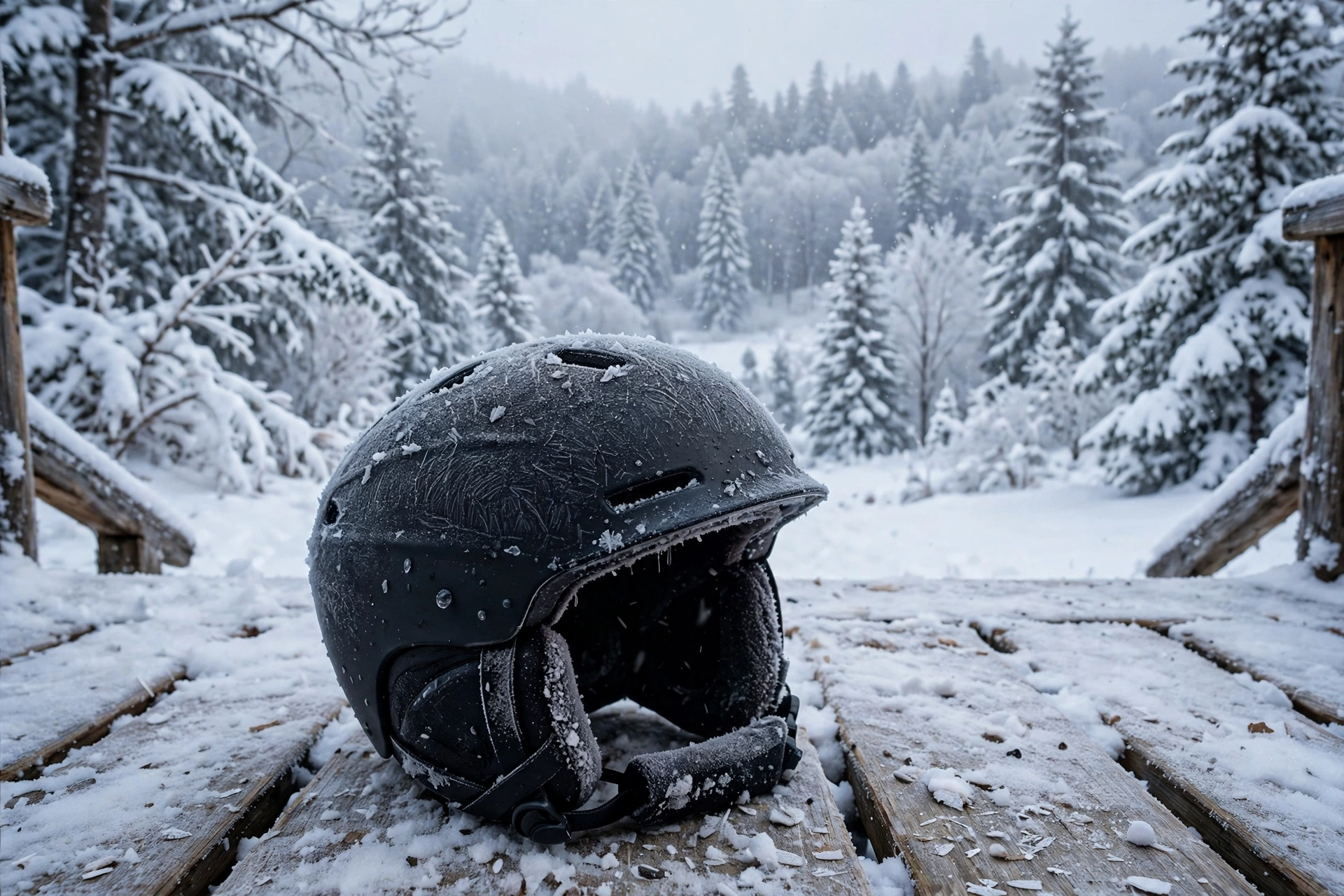
In general terms, freezing weather does not change a good helmet shell in a way you would notice on a single cold ride — modern shells are made to work across a wide range of temperatures — but long exposure to extreme cold can make some materials stiffer and more brittle, and it can affect the padding, the visor, and the strap. A helmet that is left outside in deep frost overnight will feel cold and stiff when you pick it up, and it needs time to warm up before it fits and works as it should.
Winter riders, skiers, snowboarders, and anyone who stores a helmet in an unheated garage need to know how cold affects their kit. The shell is only one part of the story: the liner, the padding, the visor, and the buckle all behave differently in freezing air. This guide explains what cold does, what to watch for, and how to look after a helmet in winter.
Does Cold Make a Helmet Shell Brittle?
Most modern helmet shells are made from materials that stay tough in cold weather, including polycarbonate, fibreglass, and carbon fibre composites. These materials are tested across a range of temperatures, so a shell that is used in normal winter conditions should not become dangerously brittle. In general terms, a helmet made for winter sports or for riding in cold climates is designed with cold weather in mind.
Even so, materials do change with temperature. In very cold air, plastics can become stiffer and less flexible, which means they may not absorb energy in quite the same way as they do at room temperature. This does not mean the shell will crack if you touch it, but it is one reason why helmets are tested at different temperatures and why manufacturers give guidance on the conditions their helmets are made for.
How Does Freezing Weather Affect the Liner and Padding?
The foam liner inside a helmet can feel firmer in freezing weather, because foam stiffens as it gets colder. When you first put on a cold helmet, the padding may feel hard and unforgiving, and the helmet may feel tighter than usual. As the helmet warms up from your body heat, the padding softens and the fit usually returns to normal.
This is why it is worth warming a helmet indoors before a winter ride, rather than putting on a helmet that has been left outside overnight. A cold helmet is uncomfortable, and a stiff liner may not sit as well on your head until it warms up. Give the helmet time indoors, and check the fit again once you have been wearing it for a few minutes.
Damp padding is a bigger problem in freezing weather. If the padding is wet from sweat or snow and then freezes, it can become stiff and icy, and it will take longer to warm up. Dry the helmet fully after each winter ride, and store it indoors so it starts the next ride dry and at room temperature.
What Happens to the Visor and Strap in Extreme Cold?
A visor can fog up more easily in cold weather, because warm, moist air from your breath meets the cold surface of the visor and condenses. Some visors have anti-fog coatings or inserts that help, but even those can struggle in very cold, damp air. Keep the visor clean, and avoid touching the inside surface, because fingerprints and scratches make fogging worse.
In extreme cold, a visor can also become more brittle, so handle it gently and do not force it open or closed when it is frozen. If ice has formed on the visor, let it melt indoors rather than scraping it off, because scraping can scratch the surface. A scratched visor gives a poorer view, which is a safety problem in winter light.
The chin strap can stiffen in the cold, especially if it is damp, and a stiff strap is harder to fasten and adjust. A metal buckle will feel very cold to the touch, and a plastic buckle can become stiffer too. Warm the helmet indoors before you fasten the strap, and check that the buckle clicks shut firmly. If you want to understand the layers inside the shell, reading about what MIPS is for helmets can help you see how the liner and the shell work together.
How Should You Store a Helmet in Freezing Weather?
Store the helmet indoors, in a dry, ventilated place at room temperature, rather than in an unheated garage, a shed, or a car. A helmet that is stored indoors stays dry, keeps its padding soft, and is comfortable to put on. If you must store it in a cold place, bring it indoors well before your next ride so it can warm up fully.
Do not store a wet helmet in freezing air. Water in the padding can freeze, and ice in the foam can damage the padding and make the helmet uncomfortable. Dry the helmet after every winter ride, with the vents open and the padding removed if you can, and let it dry in moving air at room temperature.
Keep the helmet away from radiators and other strong heat sources when you bring it indoors. A helmet that is frozen and then heated quickly can suffer from the sudden change, and strong heat can damage foam and glue. Let it warm up gradually in normal room air, and do not use a hair dryer on a high setting to thaw it.
When Should You Replace a Cold-Weather Helmet?
Replace a helmet if the shell shows cracks, if the liner is loose or misshapen, or if the padding no longer softens as it warms up. These are signs that the materials have aged or been damaged, and cold weather may have made the problem worse. Also replace the helmet if it has been in a crash, whatever the temperature.
Check the visor and the strap as well. A visor that is scratched, cloudy, or cracked should be replaced, and a strap that is stiff, frayed, or has a buckle that no longer clicks firmly should not be relied on. Many manufacturers sell replacement visors and pads, which can extend the life of a helmet that is otherwise sound.
In general terms, a helmet that is used in freezing weather and cared for properly — dried after each ride, stored indoors, and checked regularly — should last as long as a helmet used in milder conditions. The cold itself is not a reason to replace a helmet, but it is a reason to check it more carefully and to store it well.
Frequently Asked Questions
Q: Does freezing weather change a helmet shell?
A: In general terms, a modern shell is made to work in cold weather and should not become dangerously brittle on a normal winter ride, but extreme cold can make materials stiffer, so store and warm the helmet indoors.
Q: Why does my helmet feel tighter in freezing weather?
A: The foam liner and padding stiffen in the cold, so the helmet can feel harder and tighter until your body heat warms it up. Warm the helmet indoors before you put it on.
Q: Can I leave my helmet in a cold car overnight?
A: It is better not to. A helmet left in a freezing car will be cold, stiff, and possibly damp, and it may take a long time to warm up. Store it indoors instead.

Olivia
Writer at Helmet Today, covering helmet reviews, fit and riding safety.