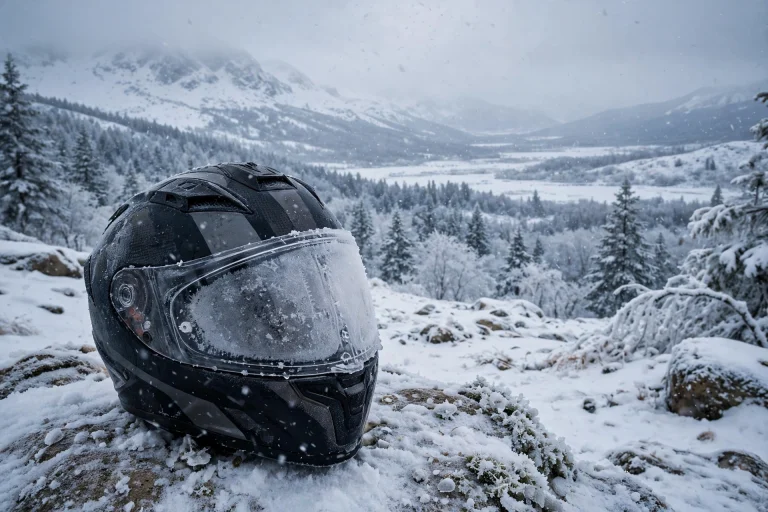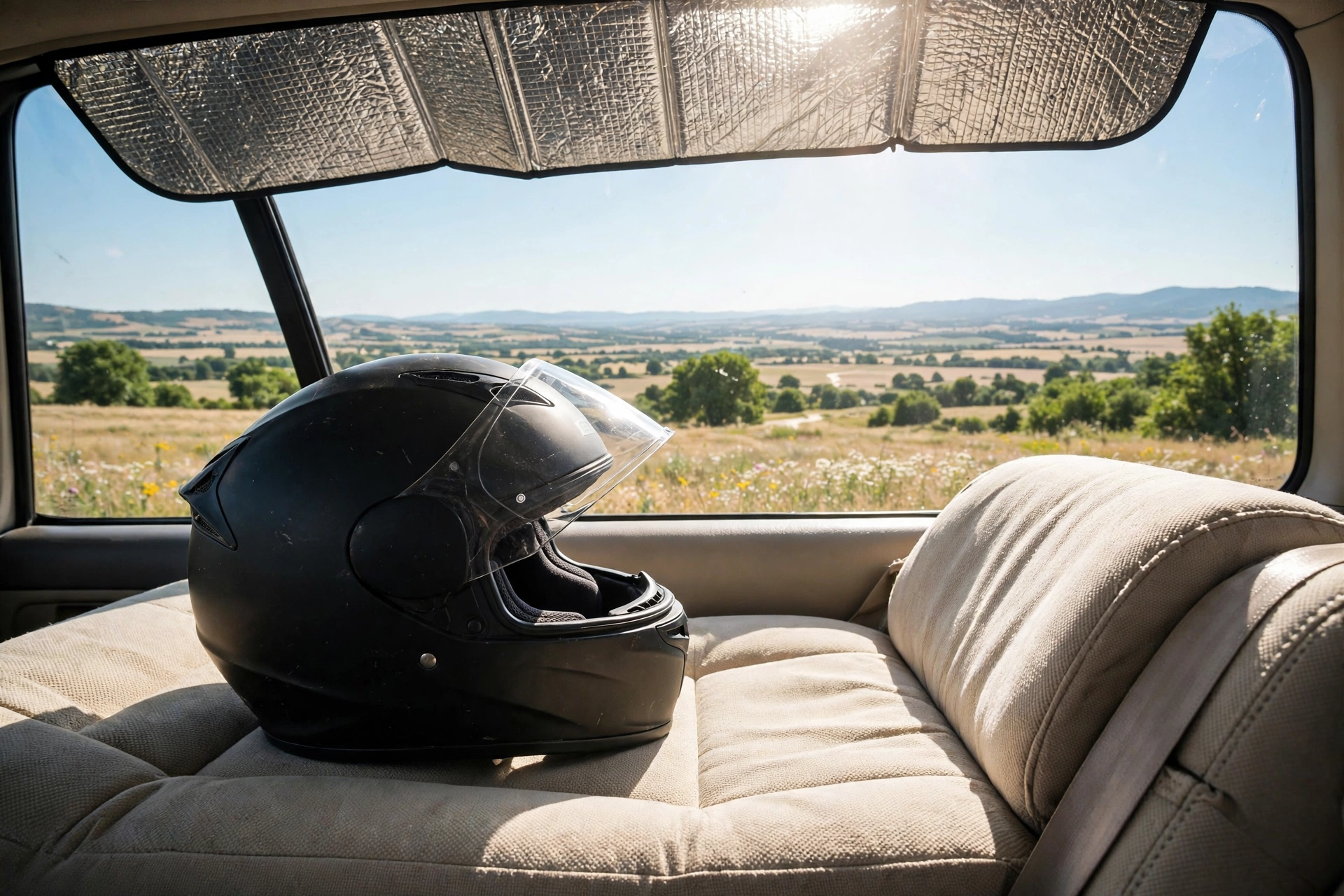
In general terms, you should not store a helmet in a car in summer heat for long — a parked car can get far hotter than the air outside, and that heat can soften adhesives, warp foam, and age the shell and padding faster. If you must leave a helmet in a car, keep it out of direct sunlight, in the coolest spot you can find, and for as short a time as possible. A helmet that lives in a hot car all summer will wear out sooner than one stored indoors.
Many riders leave a helmet in the car because it is convenient, especially on a hot day when carrying it feels like a chore. The risk is easy to miss, because heat damage often builds up slowly and is hard to see. This guide explains how hot a car gets, what heat does to a helmet, and how to store one safely when you have no better option.
How Hot Does a Car Get in Summer?
A parked car in summer can become much hotter than the air outside, even on a mild day. Sunlight passes through the windows and warms the seats, the dashboard, and the air inside, and the closed car traps that heat. In general terms, the inside of a car can reach temperatures well above the outside air within a short time, and it can stay hot for hours.
The hottest spots are the dashboard and the rear parcel shelf, where direct sun falls for most of the day. A helmet left on a seat in full sun will be heated both by the air and by the sun shining directly on its shell. A dark-coloured helmet absorbs more heat than a light-coloured one, so it can become hotter still.
What Does Heat Do to a Helmet?
Heat can soften the glues that hold a helmet together, including the glue that fixes the liner and the padding inside the shell. If those glues soften repeatedly, the liner can loosen or shift, and the padding can come away from the shell. This kind of damage is hard to spot from the outside, but it can affect how the helmet sits and how it performs.
Heat can also affect the foam liner itself. The foam is designed to absorb impact by crushing in a controlled way, and repeated exposure to high heat can change how it behaves. Padding can become stiff, compressed, or misshapen, and the fabric can fade or become brittle. A helmet that has been baked in a car may still look fine, but its materials may have aged faster than they should have.
The shell and the visor are affected too. Some shells can warp slightly in extreme heat, and a visor left in the sun can develop marks or become less clear. Straps can stiffen and fade, and a buckle left in the sun can become hot enough to be uncomfortable to touch. None of these changes happen in a single afternoon, but they add up over a summer of regular heat exposure.
Where Is the Coolest Place in a Car for a Helmet?
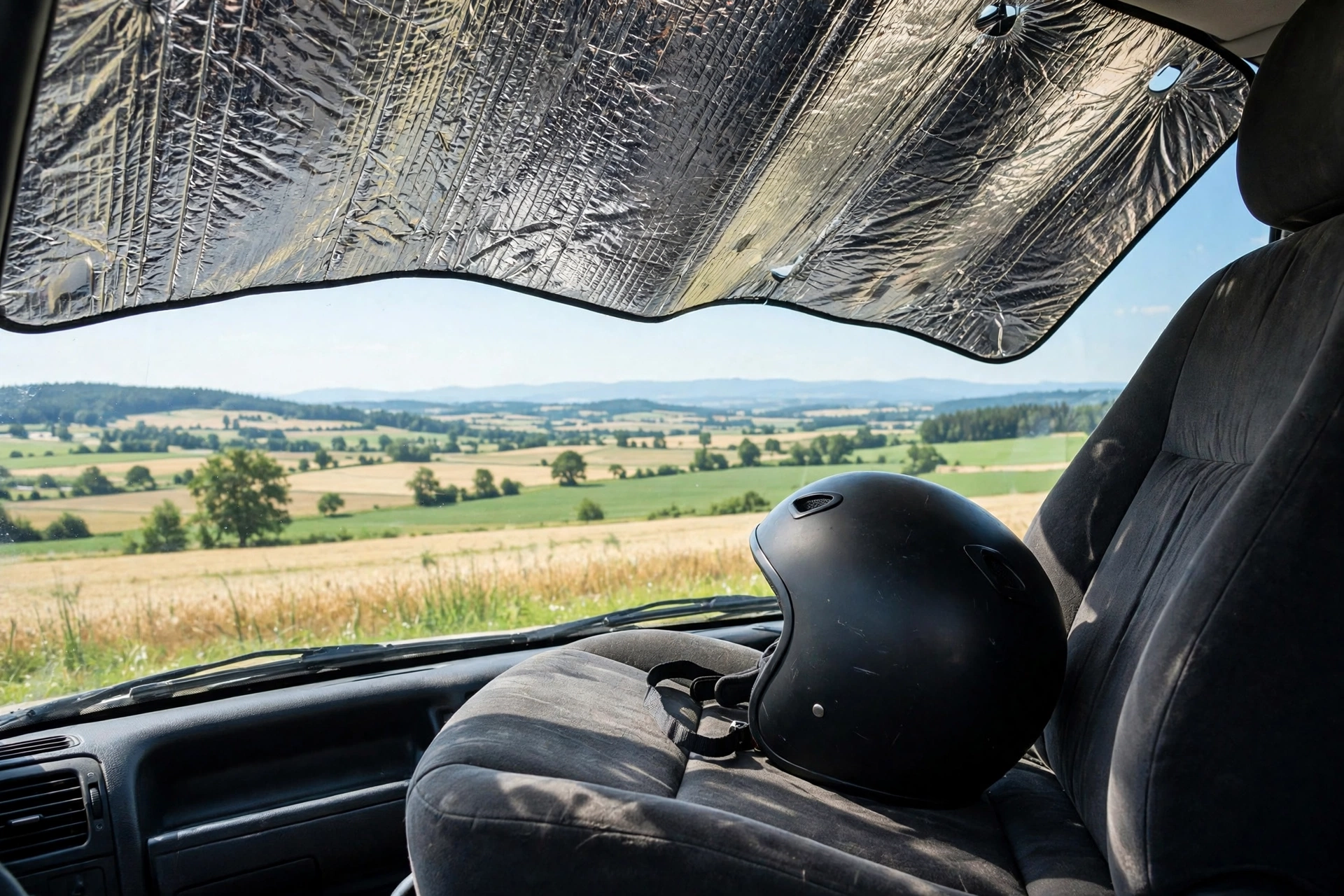
If you must leave a helmet in a car, the boot is usually cooler than the cabin, because it is out of direct sunlight and away from the glass. Put the helmet in a bag or a case to protect it from dust and knocks, and keep it away from heavy items that could fall on it. A helmet in the boot is still warm, but it is not being heated by direct sun.
In the cabin, the footwell is cooler than a seat in the sun, and the floor behind the front seats is often shaded. Avoid the dashboard, the rear parcel shelf, and any seat where the sun falls directly. If you have a sunshade, use it on the windscreen, and park in the shade whenever you can, because even a little shade lowers the temperature inside the car.
How Long Is Too Long in a Hot Car?
There is no single safe time, because it depends on how hot the day is and where the helmet is sitting in the car. A short stop of an hour or so on a warm day is unlikely to cause serious harm, especially if the helmet is in the shade or in the boot. Leaving a helmet in a car for a whole day, or for several days in a row during a heatwave, is a different matter.
The risk grows with repetition. A helmet that is left in a hot car every day for a whole summer will age faster than one that is left there only now and then. If you use your car as your main helmet store, it is worth changing the habit and taking the helmet indoors instead. If you are learning how helmet liners are built, reading about what MIPS is for helmets can help you understand the layers that heat can affect.
When you take a helmet out of a hot car, let it cool down before you put it on. A hot helmet is uncomfortable, and a hot strap or buckle can irritate the skin. Check the padding and the liner while the helmet cools, and look for any signs of loosening or warping before your next ride.
What Is the Best Way to Store a Helmet in Summer?
The best place to store a helmet in summer is indoors, in a cool, dry, ventilated spot away from direct sunlight. A shelf in a hallway, a bedroom, or a living room is usually ideal. Keep the helmet out of its bag when you are at home, with the vents open so air can move through it, and hang it or stand it where it will not be knocked over.
If you travel by car in summer, carry the helmet with you when you stop, rather than leaving it in the car. A helmet bag makes this easy, and it protects the helmet from scratches and knocks while you carry it. If you must leave it in the car, use the boot, keep the time short, and park in the shade.
Check your helmet regularly through the summer. Look at the padding, the liner, and the strap, and feel for any loosening, stiffness, or warping. If anything has changed, ask the manufacturer for advice. A helmet that has been stored well will last longer and feel better to wear, and it will be ready whenever you need it.
Frequently Asked Questions
Q: Is it safe to store a helmet in a car in summer heat?
A: In general terms, no, not for long. A parked car can get far hotter than the air outside, and that heat can soften adhesives, warp foam, and age the helmet faster. Keep it brief and out of direct sun if you must.
Q: Where should I put a helmet in a car on a hot day?
A: The boot is usually coolest because it is out of direct sunlight. In the cabin, use a shaded footwell, park in the shade, and cover the helmet with a light cloth.
Q: How can I tell if heat has damaged my helmet?
A: Look for loose padding or liner, stiff or misshapen foam, a warped shell or visor, and faded or stiff straps. If anything has changed, ask the manufacturer for advice before using the helmet.

Olivia
Writer at Helmet Today, covering helmet reviews, fit and riding safety.