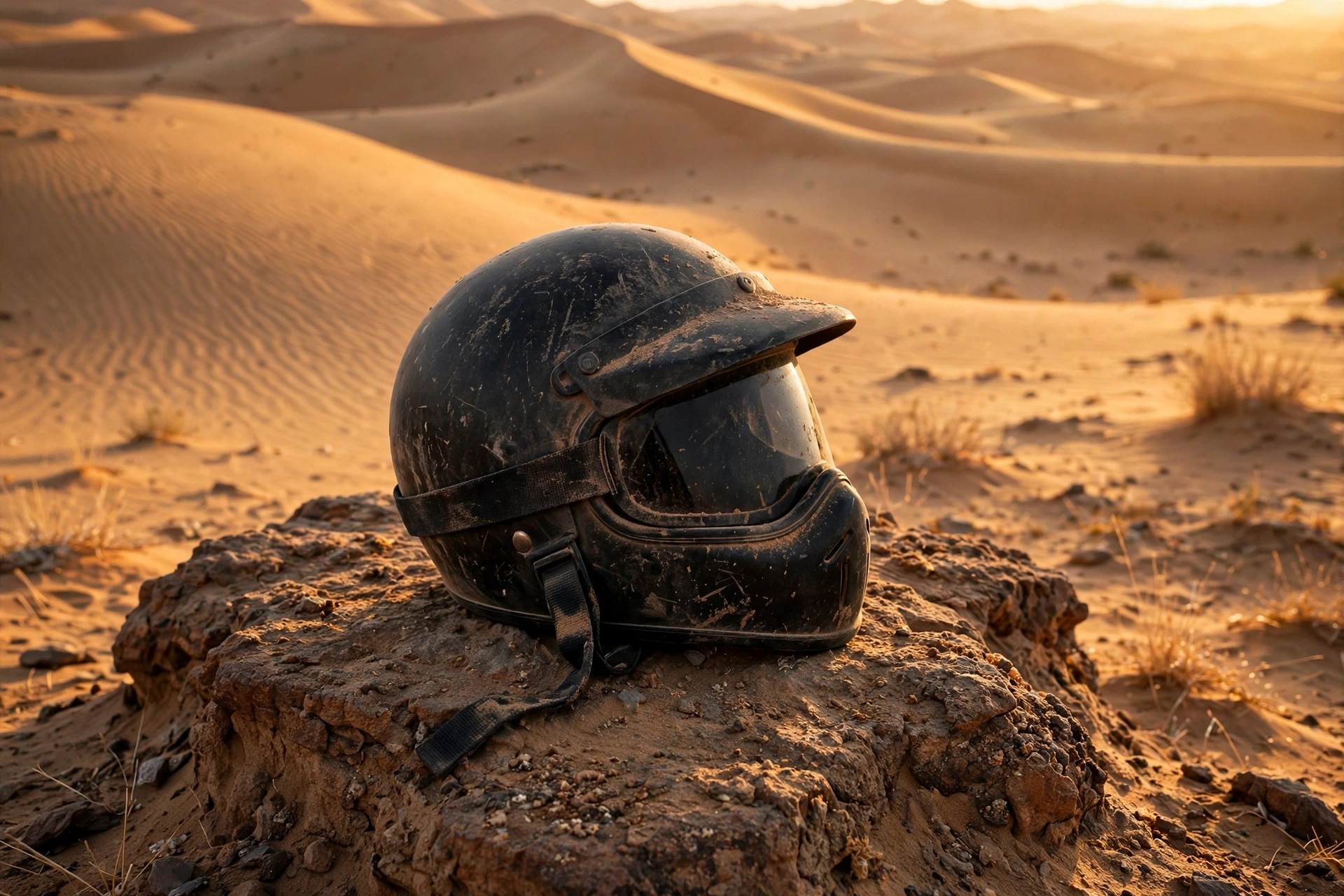
Yes — clean a helmet after a dusty desert ride as soon as you can, starting with dry dust removal before any water touches it, then a gentle wash of the shell, vents and liner, and a slow dry in the shade. Desert dust is fine, dry and gritty, so wiping a dusty helmet with a wet cloth first can push grit into the finish and the padding. A patient, dry-first clean protects the shell, keeps the vents clear, and stops dust from settling into the liner where it can cause smells and irritation later.
A desert ride leaves more than a dusty shell behind. Fine sand works its way into vents, under the visor edge, around the strap, and into the soft padding that sits against your skin. Left alone, that dust can scratch the surface over time, block airflow, and make the next ride feel gritty and uncomfortable. This guide explains a simple step-by-step clean that works in general terms for most helmets, from motorcycle and off-road helmets to cycling and other vented helmets used in dry, dusty places.
Why Should You Remove Dry Dust Before Washing?
Desert dust is different from ordinary road dirt because it is so fine and so dry. It clings to the shell in a thin layer, and it hides in every vent, groove and seam. If you add water straight away, the dust turns into a thin mud that can settle deeper into the padding and the vent channels. Dry removal first keeps most of that grit out of the helmet altogether, which makes the wash that follows much easier and much safer for the finish.
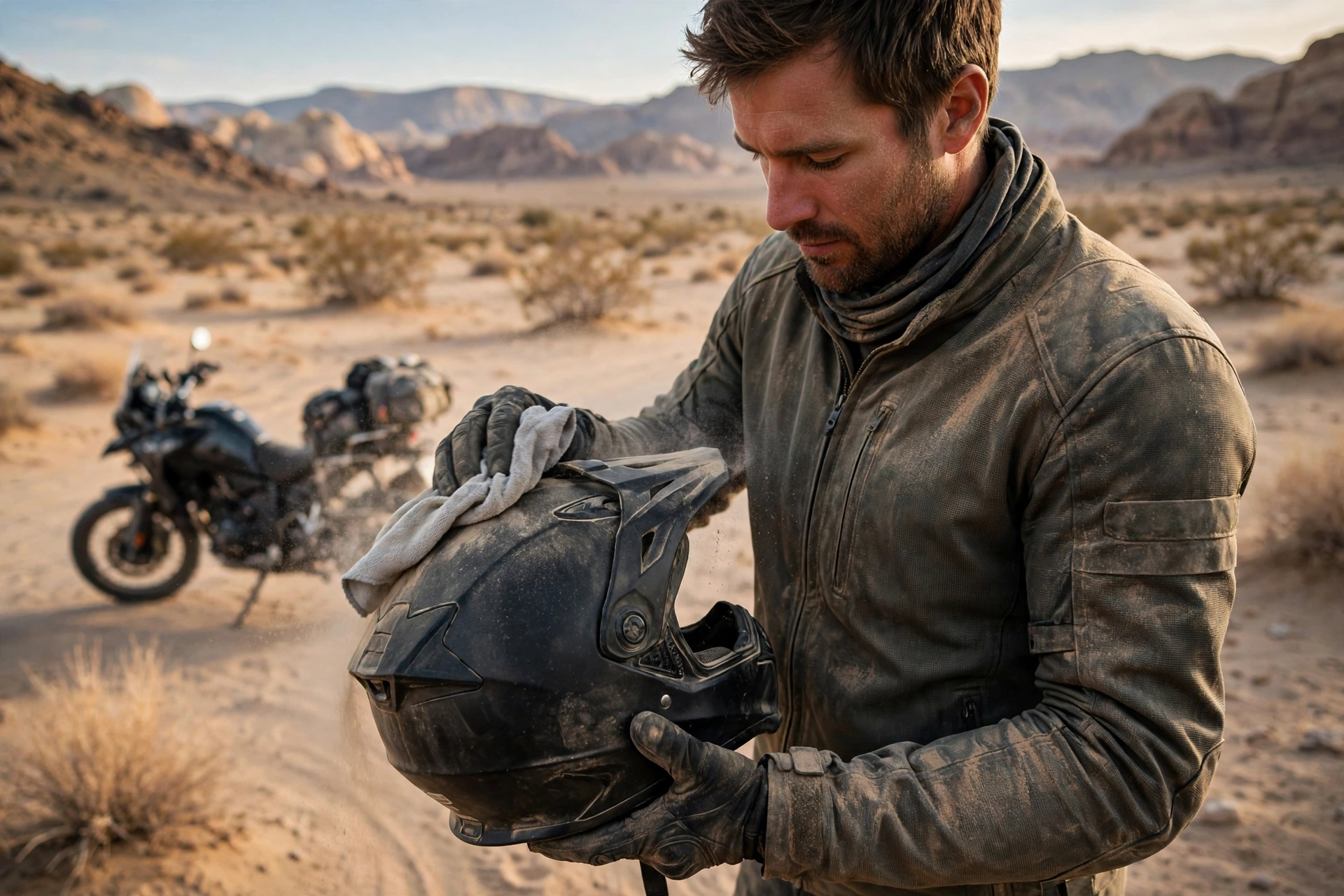
Start by taking the helmet outside or to a well-ventilated spot and tapping it gently to shake loose dust free. Use a soft brush, such as a clean paintbrush or a soft-bristled brush, to sweep dust out of the vents and away from the visor seal. A soft, dry cloth can lift dust from the shell with light strokes, rather than firm rubbing. Work from the top down so dust falls away from the helmet, and pay extra attention to the area around the strap, the buckle, and the edge of the liner.
How Do You Wash the Shell and Vents Safely?
Once the loose dust is gone, wash the outside of the shell with lukewarm water and a small amount of mild soap. Use a soft cloth or a soft sponge, and work in gentle circles. Rinse the cloth often so you are not dragging grit across the surface. For the vents, use a soft brush dipped in the same soapy water, or a cotton bud for narrow openings, and rinse with clean water afterwards. Avoid strong cleaners, solvents, and anything with an abrasive feel, because these can dull the finish or damage the shell material.
The visor needs the same gentle approach. Rinse it first with clean water to float away any remaining dust, then wash it with a soft cloth and mild soap, and rinse again. Dry it by patting it with a soft, lint-free cloth rather than rubbing it hard. If the visor has a special coating, check the maker’s care notes before using any cleaner on it, and in general terms stick to plain water and mild soap when you are unsure.
How Do You Clean the Liner and Padding After Desert Dust?
The liner is where desert dust causes the most discomfort, because it sits against your skin and absorbs sweat as well as dust. If the liner is removable, take it out carefully, following the maker’s instructions, and shake it outside first. Then wash it by hand in lukewarm water with a small amount of mild soap or a gentle laundry cleaner. Squeeze it gently rather than wringing it hard, and rinse it until the water runs clear.
If the liner is not removable, wipe the inside of the helmet with a damp, soft cloth, and use a soft brush to lift dust from the padding. You can repeat the wipe with clean water until the cloth comes away clean. Do not soak a helmet with a fixed liner, and do not use a hose or a strong jet of water inside the helmet, because trapped water can take a long time to dry and can lead to smells.
After washing, press the liner gently in a clean towel to take out extra water, then leave it to dry in fresh air. Do not put it on a hot radiator or in a tumble dryer, because high heat can change the shape of the padding. In general terms, slow drying in the shade keeps the padding soft and keeps its shape for the next ride.
How Should You Dry a Helmet After Cleaning It?
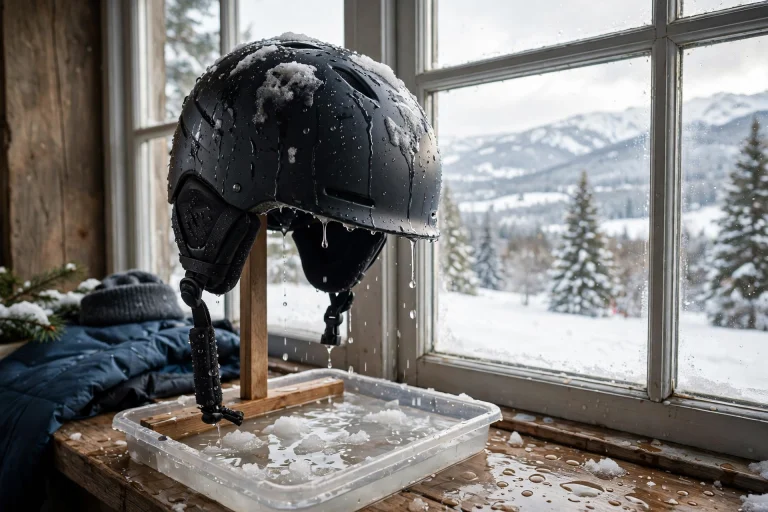
Drying matters just as much as washing, especially after a desert ride when the helmet may already be warm from the sun. Leave the helmet in a shaded, well-ventilated place with the opening facing down or to the side so air can move through it. If you can, place it on a stand or a clean towel rather than on a dusty surface, and turn it once or twice while it dries so air reaches every part of the inside.
Do not dry a helmet in direct sunlight for a long period, and do not use a hair dryer on a hot setting. Heat can affect the shell, the liner, and the glue that holds parts in place. A gentle fan on a low setting, placed at a distance, can help air move through the vents, but natural airflow in the shade is usually enough if you give it time. The helmet should feel fully dry inside and out before you store it or wear it again.
What Should You Check Before Your Next Desert Ride?
Before you ride again, give the helmet a quick check. Look at the shell for scratches or cracks, check that the visor is clear and secure, and make sure the strap and buckle fasten firmly. Put the helmet on and check that it still sits level, feels snug all round, and does not move when you shake your head gently. If anything feels loose or damaged, have it checked before you rely on it.
It is also worth thinking about how the helmet handles different kinds of impact and airflow. If you are learning about the technology inside modern helmets, reading about what MIPS is for helmets can help you understand one of the features that may be part of your helmet’s design.
Frequently Asked Questions
Q: Can I hose down a helmet after a desert ride?
A: In general terms, no. A strong jet of water can push dust deeper into the vents and padding. Remove dry dust first, then wash gently by hand with lukewarm water and mild soap.
Q: How do I get sand out of helmet vents?
A: Brush the vents gently with a soft brush while the helmet is dry, then wash with soapy water and a soft brush or cotton bud, and rinse with clean water. Repeat until no grit remains.
Q: Should I dry a helmet in the sun after washing it?
A: In general terms, no. Dry it in the shade with good airflow instead, because long periods in direct sun and high heat can affect the shell, liner, and fixings.

Olivia
Writer at Helmet Today, covering helmet reviews, fit and riding safety.