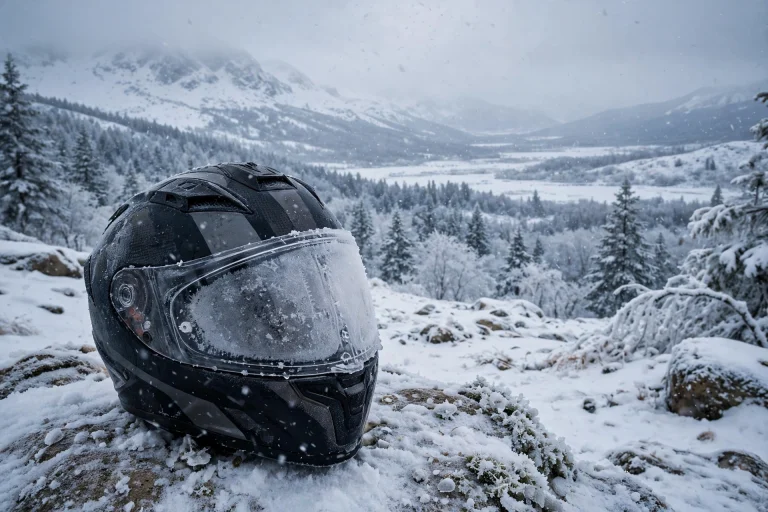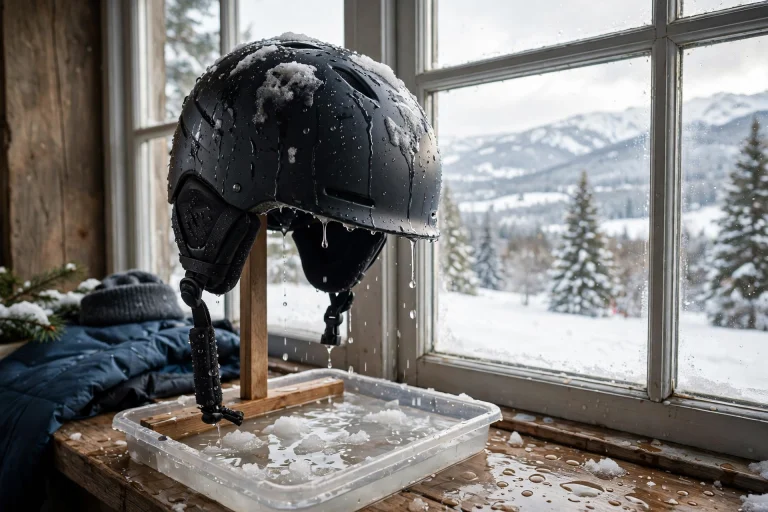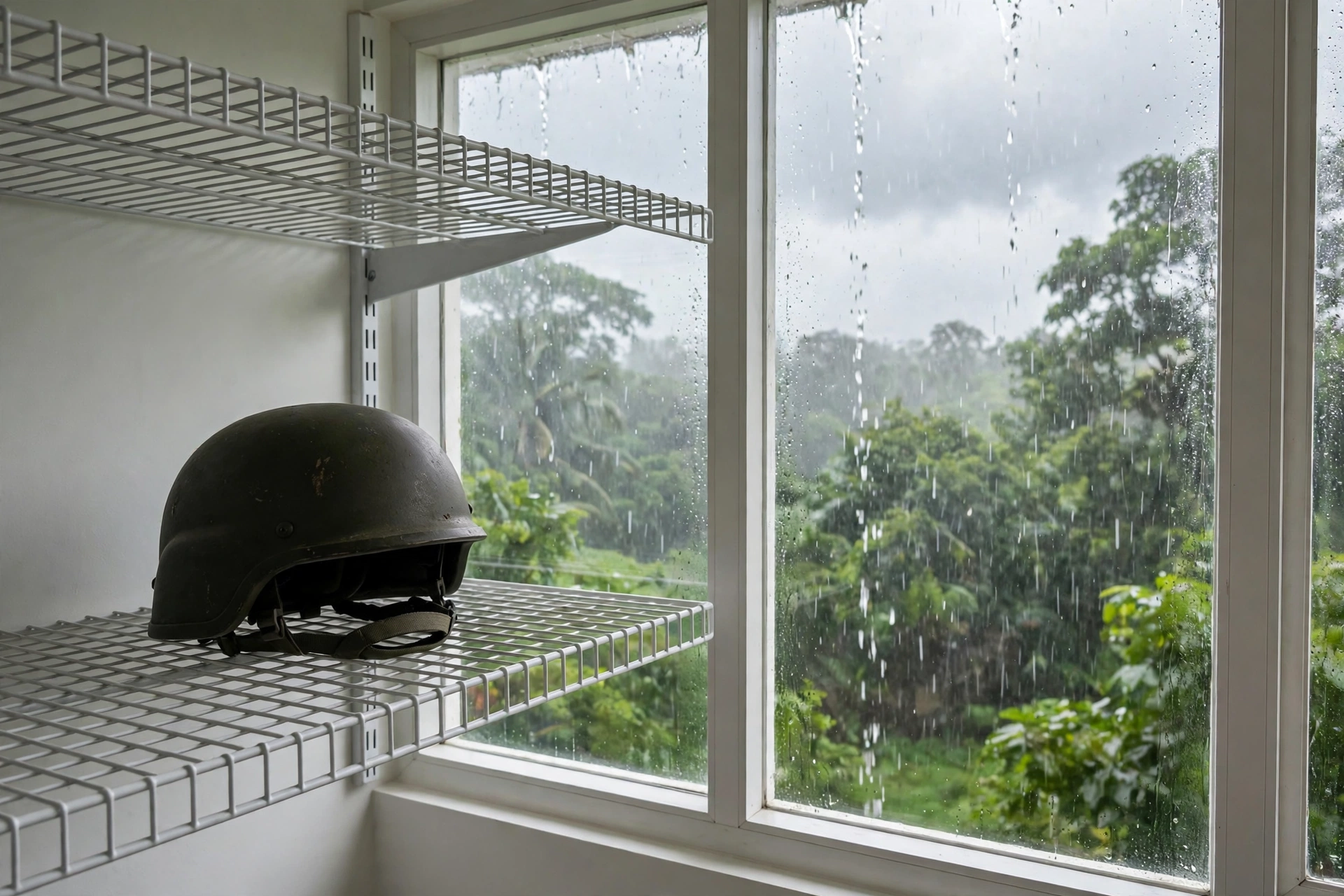
In general terms, the best way to care for a helmet during monsoon season storage is to clean it, dry it fully, and store it in a cool, dry, well-ventilated place away from damp walls, floors, and direct rain. Monsoon air is warm and very humid, and that dampness can lead to mould, smells, and damage to padding if a helmet is put away wet or left in a closed, stuffy space. A short cleaning and drying routine before storage makes a real difference over a long rainy season.
Many riders put their helmet aside for weeks during the monsoon, either because they ride less in heavy rain or because they are waiting for drier days. That pause is when problems start. A helmet that is stored damp, in a plastic bag, or on a cold floor can come out of the season smelling musty, with stained padding or a strap that feels stiff. This guide explains how to prepare a helmet for monsoon storage, where to keep it, and how to check it before you ride again.
Why Is Monsoon Humidity a Problem for Helmets?
Humidity is the main problem during the monsoon, because damp air finds its way into the soft parts of a helmet. The liner and cheek pads absorb sweat during a ride, and in humid weather they dry very slowly. If that dampness stays trapped inside the helmet, it creates the warm, moist conditions in which mould and bacteria can grow. The result is often a musty smell, dark spots on the padding, and a helmet that feels unpleasant to wear.
How Do You Prepare a Helmet for Monsoon Storage?
Start by cleaning the helmet before you store it. Brush off any dirt from the shell and vents, then wash the outside with lukewarm water and a small amount of mild soap, using a soft cloth. Rinse the visor with clean water first to float away grit, then wash it gently and pat it dry with a soft, lint-free cloth. Wash the strap and buckle as well, and make sure the buckle opens and closes smoothly once it is clean.
Next, deal with the liner. If it is removable, take it out and wash it by hand in lukewarm water with mild soap, squeezing it gently and rinsing until the water runs clear. If the liner is fixed, wipe the inside with a damp cloth and repeat with clean water until the cloth comes away clean. Do not soak a helmet with a fixed liner, and do not use strong cleaners or solvents inside the helmet.
The most important step is drying. Leave the helmet and the liner in a shaded, well-ventilated place until they are fully dry, inside and out. In monsoon weather this can take longer than usual, so allow extra time and turn the helmet so air reaches every part. A gentle fan at a distance can help, but do not use a hot hair dryer or place the helmet on a hot surface. The helmet must feel completely dry before you store it.
Where Should You Store a Helmet During the Monsoon?
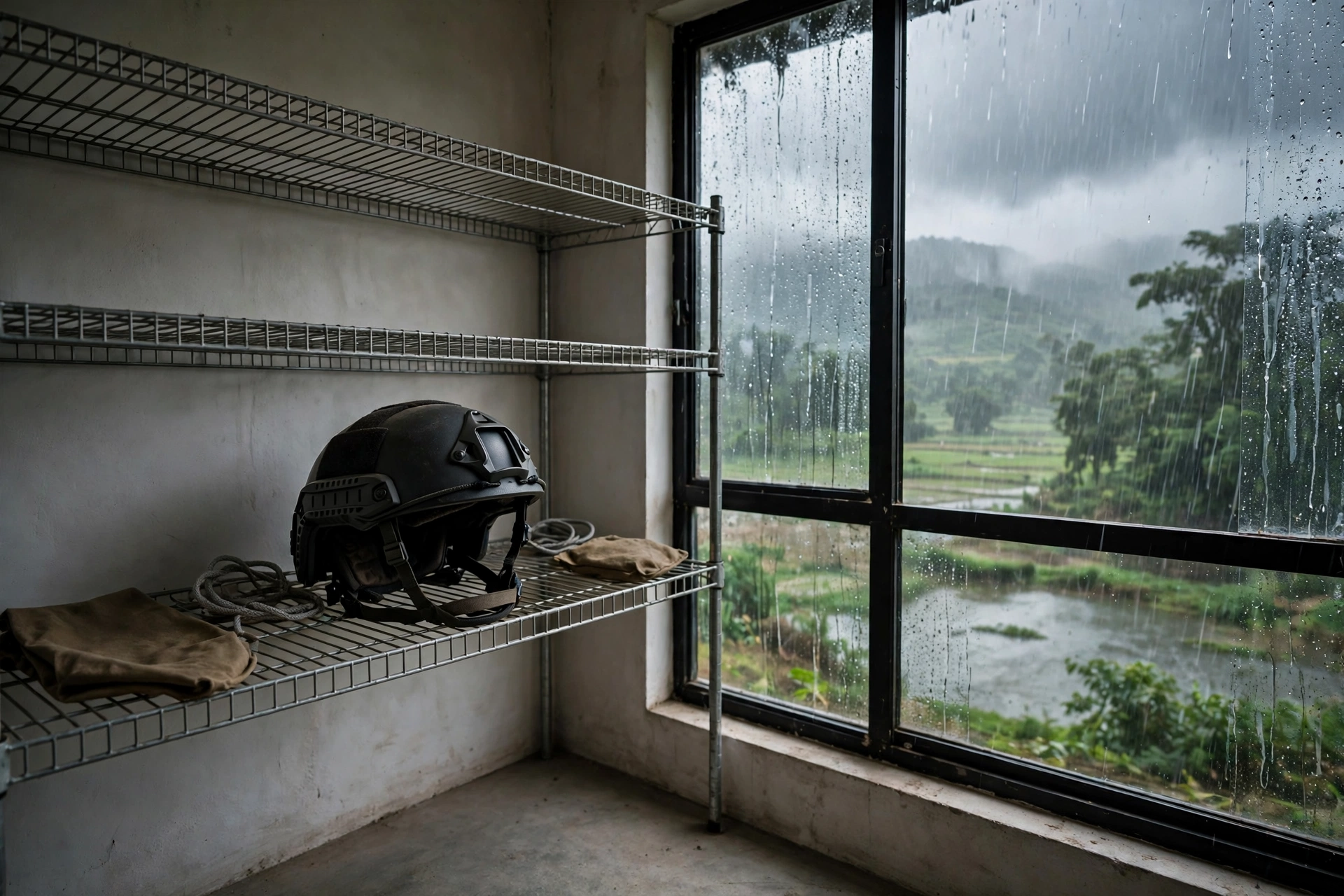
Choose a place that is cool, dry, and ventilated, away from damp walls, floors, and windows where rain can splash in. A shelf in a lived-in room is often better than a garage, a basement, or a closed cupboard, because the air in a lived-in room moves more and is usually drier. Keep the helmet off the floor, where damp and dust collect, and away from direct sunlight, which can heat the shell and fade the finish over time.
Store the helmet the right way up or on its side, with the opening facing out so air can move through it. A helmet stand, a clean shelf, or a wide hook can all work, as long as the helmet is stable and not squeezed into a tight space. Do not hang the helmet by its strap for a long period, and do not place heavy items on top of it, because that can press on the shell and the liner.
How Do You Keep a Stored Helmet Dry in Humid Air?
Even in a good storage spot, monsoon air can be damp enough to slow drying and leave a helmet feeling clammy. One simple step is to check the helmet every week or two during the season. Take it off the shelf, feel the liner and strap, and look for any sign of dampness, dark spots, or a musty smell. If it feels damp, leave it out in a ventilated room for a day, with a gentle fan nearby if you have one, until it feels dry again.
You can also place a small, clean, dry cloth inside the helmet to absorb light moisture, and change that cloth regularly. Some riders use a moisture-absorbing product in the room, following the product’s own instructions, to help keep the air around the helmet drier. In general terms, anything that helps air move and keeps the storage area from feeling stuffy will help the helmet stay in better shape.
What Should You Check Before Riding Again After the Monsoon?
Before your first ride after the monsoon, inspect the helmet carefully. Look at the liner for dark spots, staining, or any sign of mould, and smell the inside — a strong musty smell is a sign that the helmet needs another clean and a full dry before you wear it. Check the strap for stiffness or discolouration, and make sure the buckle fastens and releases smoothly. Look at the shell for cracks or damage, and check that the visor is clear, clean, and secure.
Put the helmet on and check the fit. It should sit level, feel snug all round, and stay in place when you shake your head gently. If the padding feels flat, lumpy, or misshapen after storage, it may need washing or replacing, following the maker’s guidance. If you are unsure about the condition of the helmet, have it checked by a dealer or a specialist before you rely on it.
It can also help to understand the safety features inside a modern helmet before you ride again. If you want to learn more about one of the technologies used in many helmets, reading about what MIPS is for helmets is a useful starting point. A clean, dry, well-checked helmet is the right way to return to riding after a long, wet season.
Frequently Asked Questions
Q: Can I store a helmet in a plastic bag during the monsoon?
A: In general terms, no. A sealed plastic bag traps moisture inside the helmet, which can lead to mould and smells. Use a breathable helmet bag or an open, ventilated shelf instead.
Q: How long does a helmet take to dry in monsoon weather?
A: It can take longer than in dry weather, sometimes a day or more. Leave it in a shaded, ventilated place until it feels fully dry inside and out, and use a gentle fan at a distance if it helps.
Q: What should I do if my stored helmet smells musty?
A: Take the liner out if you can and wash it by hand with mild soap, wipe the inside of the helmet, and dry everything fully in fresh air. If the smell stays after a proper clean and dry, have the helmet checked.

Olivia
Writer at Helmet Today, covering helmet reviews, fit and riding safety.