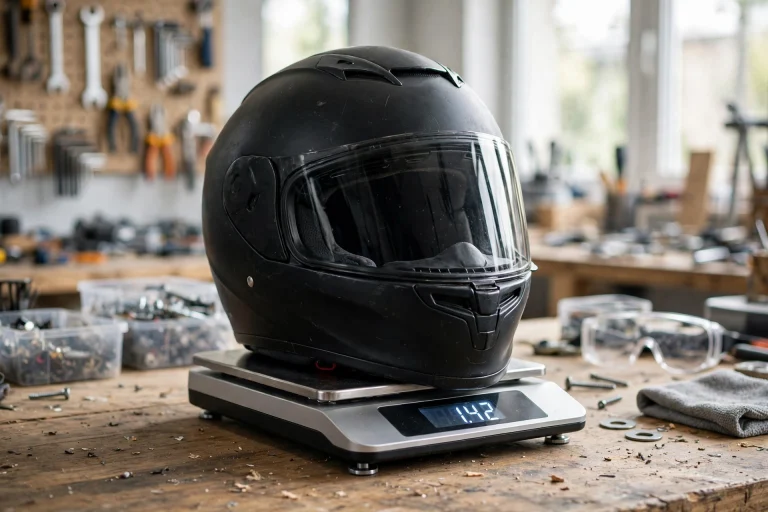
Helmet weight matters a great deal in downhill mountain biking, because a heavy full face helmet can tire your neck over a long, rough descent, while a helmet that is too light may offer less protection. In general terms, most downhill helmets weigh more than a cross-country helmet, and that extra weight comes from the full face coverage, the chin bar, and the stronger shell needed for high-speed crashes on steep, rocky trails.
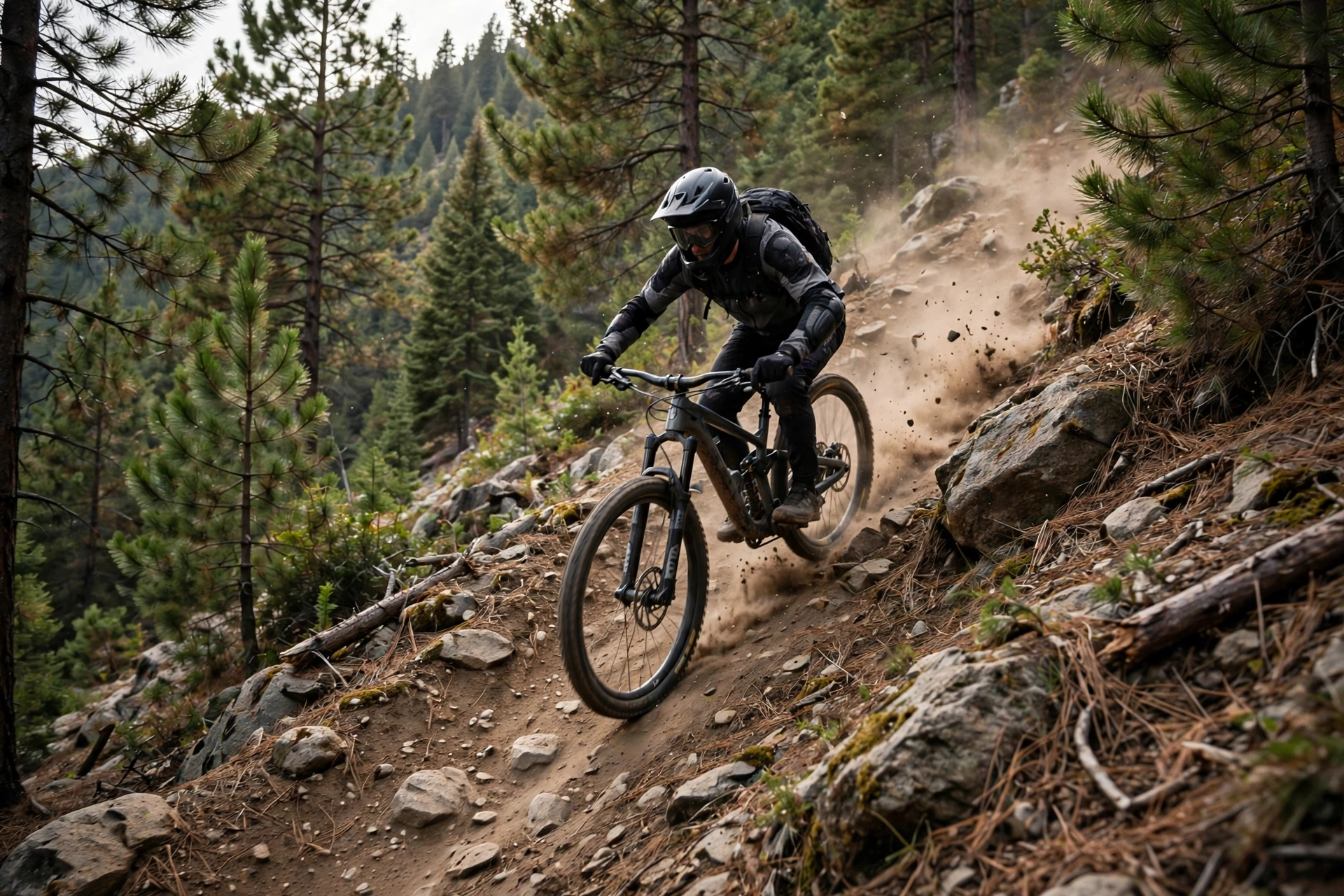
Downhill riding is very different from riding on flat trails or roads. Speeds are high, the ground is uneven, and a fall can mean hitting rocks, roots, or hard-packed dirt. Your helmet has to protect you in those conditions, and it has to stay comfortable enough that you can keep your head up and your eyes on the trail. This guide explains how much downhill helmets usually weigh, why they weigh what they do, and how to judge whether a helmet is the right weight for you.
Why Does Helmet Weight Matter on a Downhill Run?
On a downhill run, your head is constantly moving. You look ahead to pick your line, glance down at the front wheel, and turn your head to check the trail as it bends. Every time you move your head, your neck muscles work against the weight of your helmet. Over a run that lasts several minutes, that effort adds up, and a heavy helmet can leave your neck feeling tired and stiff by the bottom of the hill.
A tired neck is more than just uncomfortable. When your neck muscles are fatigued, it becomes harder to hold your head steady over rough ground, and harder to react quickly when the trail changes. In general terms, a helmet that feels fine for the first minute of a run can start to feel heavy by the third or fourth minute, especially on a long descent with repeated impacts and vibrations.
How Heavy Is a Typical Downhill Mountain Bike Helmet?
In general terms, a full face downhill mountain bike helmet usually weighs somewhere between around 900 grams and around 1,300 grams, depending on its size, shell material, and features. Larger sizes weigh more, because they use more material, and helmets with extra features such as a built-in camera mount or a thicker visor can weigh a little more again.
Carbon fibre shells tend to be lighter than helmets made from other shell materials, but they are also usually more expensive. Fibreglass and polycarbonate shells are heavier, but they can still offer good protection at a lower price. The weight difference between a light helmet and a heavy one in the same category can be a few hundred grams, which is enough to notice on a long day of riding.
It is worth remembering that the number on the box is only a guide. Two helmets with the same listed weight can feel very different on your head, because the balance of the helmet matters as much as the total weight. A helmet that is well balanced, with its weight spread evenly, will usually feel lighter than one that is front-heavy or back-heavy.
Full Face or Open Face: How Does Weight Compare?
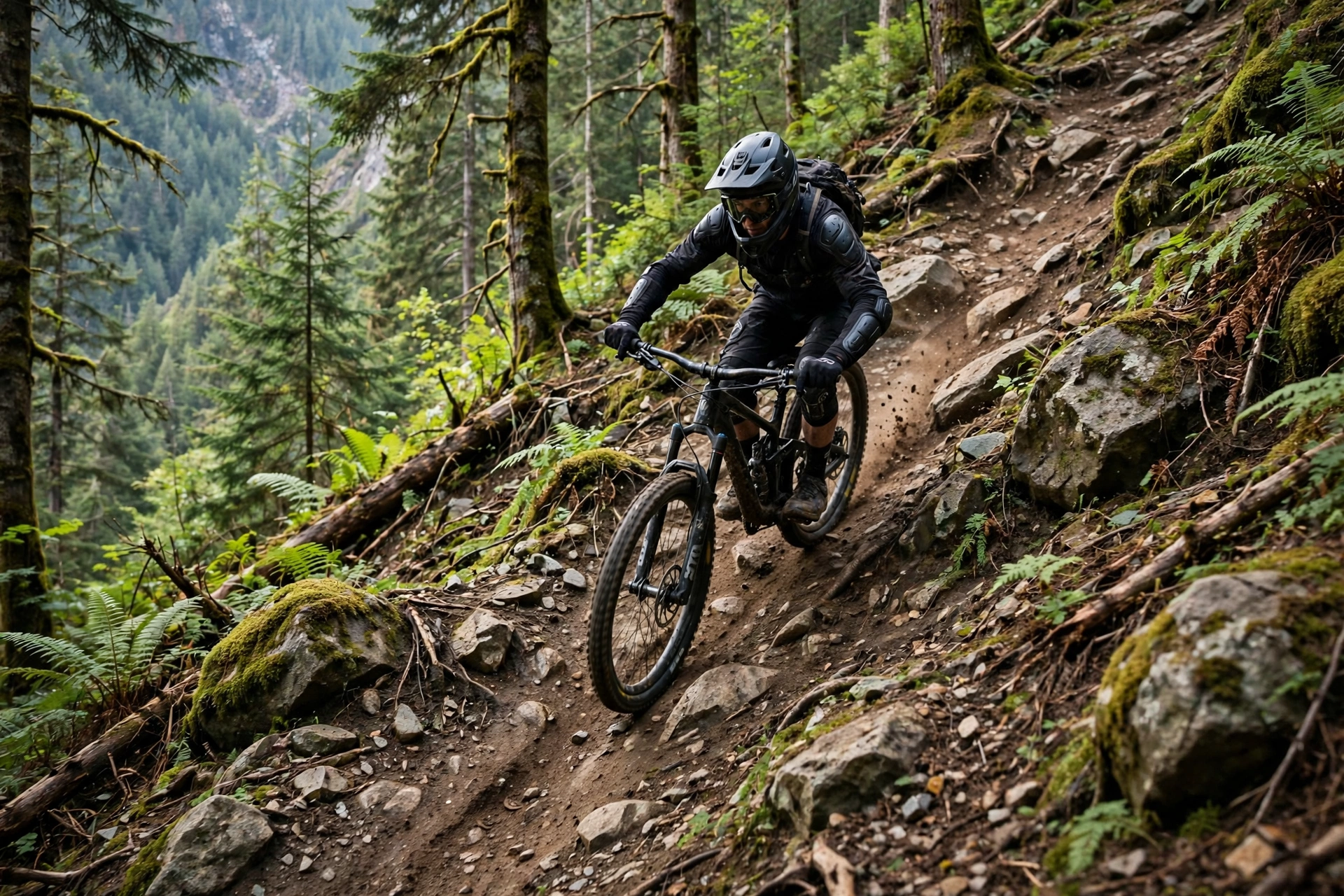
A full face downhill helmet is heavier than an open face trail helmet, and the reason is simple: it covers more of your head. The chin bar alone adds a noticeable amount of weight, and the shell has to be stronger to protect your jaw and face in a crash. An open face helmet, by contrast, leaves your face exposed and uses less material overall.
That weight difference is a trade-off, not a flaw. On a steep downhill track, where crashes can happen at speed and your face is close to the ground, the extra protection of a full face helmet is worth the extra weight for most riders. An open face helmet is lighter and cooler, but it does not protect your chin or jaw, which is why it is rarely the right choice for serious downhill riding.
How Can You Tell If a Helmet Is Too Heavy for You?
The simplest test is to wear the helmet for a while before you buy it. Put it on, fasten the strap, and walk around the shop for ten minutes or so, moving your head from side to side and looking up and down. If your neck starts to ache, or if the helmet feels as though it is pulling your head forward, it may be too heavy for you, or it may not fit well.
Fit and weight are closely linked. A helmet that fits properly spreads its weight evenly across your head, so it feels lighter than it really is. A helmet that is too loose will shift around as you ride, and that movement makes it feel heavier, because your neck has to work harder to keep it steady. A helmet that is too tight can cause pressure points and headaches, which can feel just as tiring as extra weight.
Your own strength and riding habits matter too. A rider who rides downhill several times a week will usually get used to a heavier helmet more quickly than someone who rides occasionally. Younger riders and riders with neck problems should pay extra attention to weight, and choose the lightest helmet that still offers the protection they need. If in doubt, try several helmets side by side and compare how they feel after a few minutes of wear.
What Should You Look for When Choosing a Downhill Helmet?
Start with fit, because a well-fitting helmet protects better and feels lighter. Measure your head, try the helmet on, and check that it sits level, feels snug all round, and does not move when you shake your head. The chin strap should fasten securely and hold the helmet firmly in place without digging into your skin.
Next, check the safety standard. Make sure the helmet meets the standard required for the trails or races you plan to ride. Different organisations may have their own rules, so check before you buy. A helmet that meets the right standard, fits well, and gives a clear view of the trail is the right starting point.
Then think about ventilation and weight together. Downhill riding is hard work, and a helmet with good airflow will keep you cooler and more comfortable. If you are learning about how helmets handle different kinds of impact, reading about what MIPS is for helmets can help you understand one of the technologies used in modern helmet design. Finally, look at the visor and the padding: the visor should keep sun and mud out of your eyes without blocking your view, and the padding should be removable so you can wash it after muddy rides.
Frequently Asked Questions
Q: Is a lighter downhill helmet always better?
A: Not always. A lighter helmet is more comfortable on long descents, but it should still meet the safety standard you need and fit properly. In general terms, the best helmet is the lightest one that still gives you the protection and fit you require.
Q: Does a heavier helmet protect better in a crash?
A: In general terms, no. Protection depends on the shell, the liner, and the fit, not on weight alone. A well-designed lighter helmet can protect as well as a heavier one, so weight on its own is not a reliable guide to safety.
Q: Should children wear a full face downhill helmet?
A: Children can wear full face downhill helmets, but weight matters even more for them, because their necks are still developing. Choose the lightest suitable helmet that fits well, and make sure it meets the right standard for the trails they ride.

Olivia
Writer at Helmet Today, covering helmet reviews, fit and riding safety.