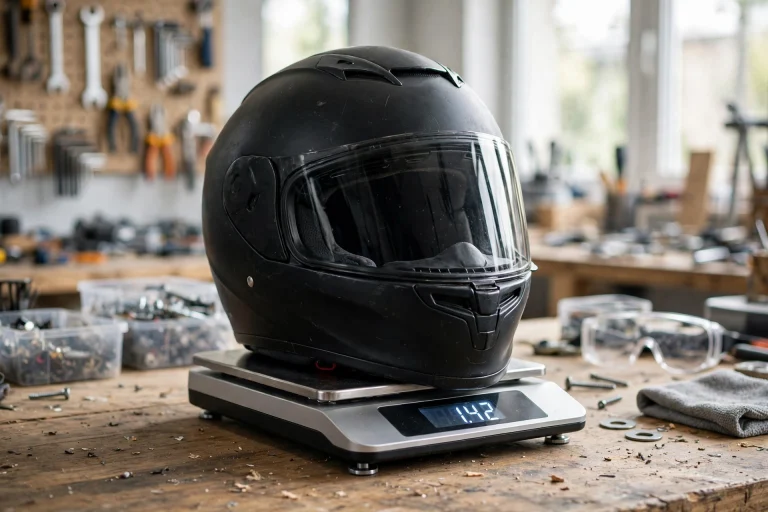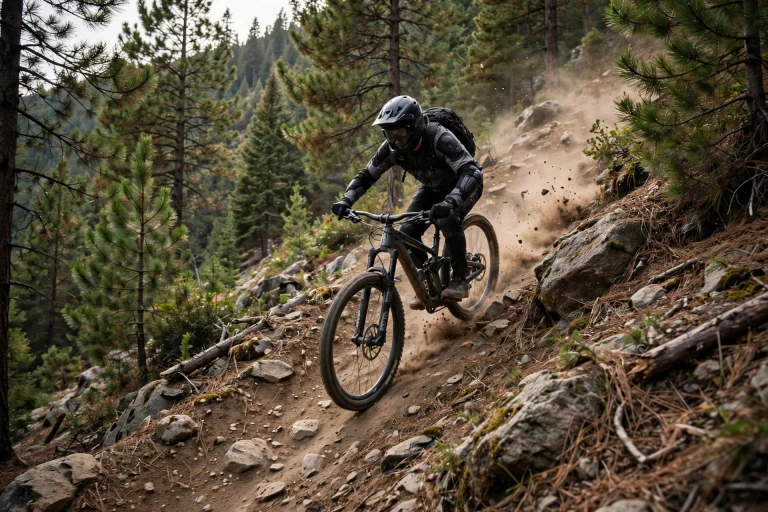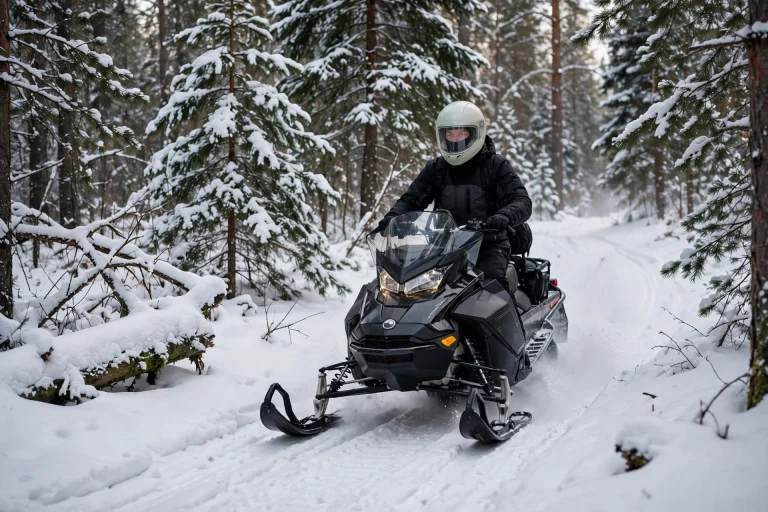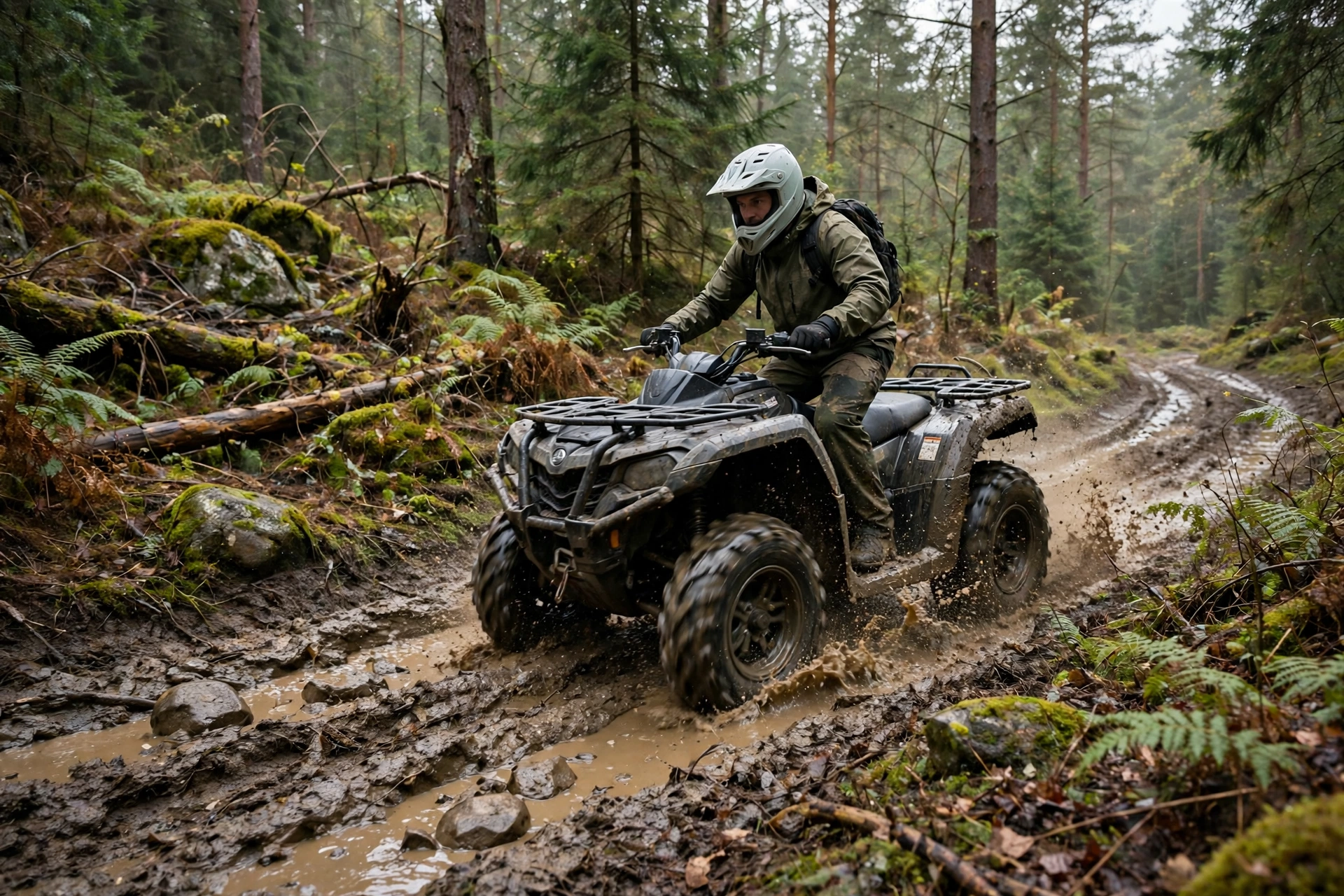
In general terms, helmet weight matters for ATV riders — a lighter helmet can ease neck fatigue on rough trails, where bumps and jumps throw your head around, and make a long day of riding much more comfortable, which is why many ATV riders look for the lightest helmet that still fits well and gives full face protection. ATV riding is rough, bumpy, and often lasts for hours, so a heavy helmet is felt sooner than on a smooth road.
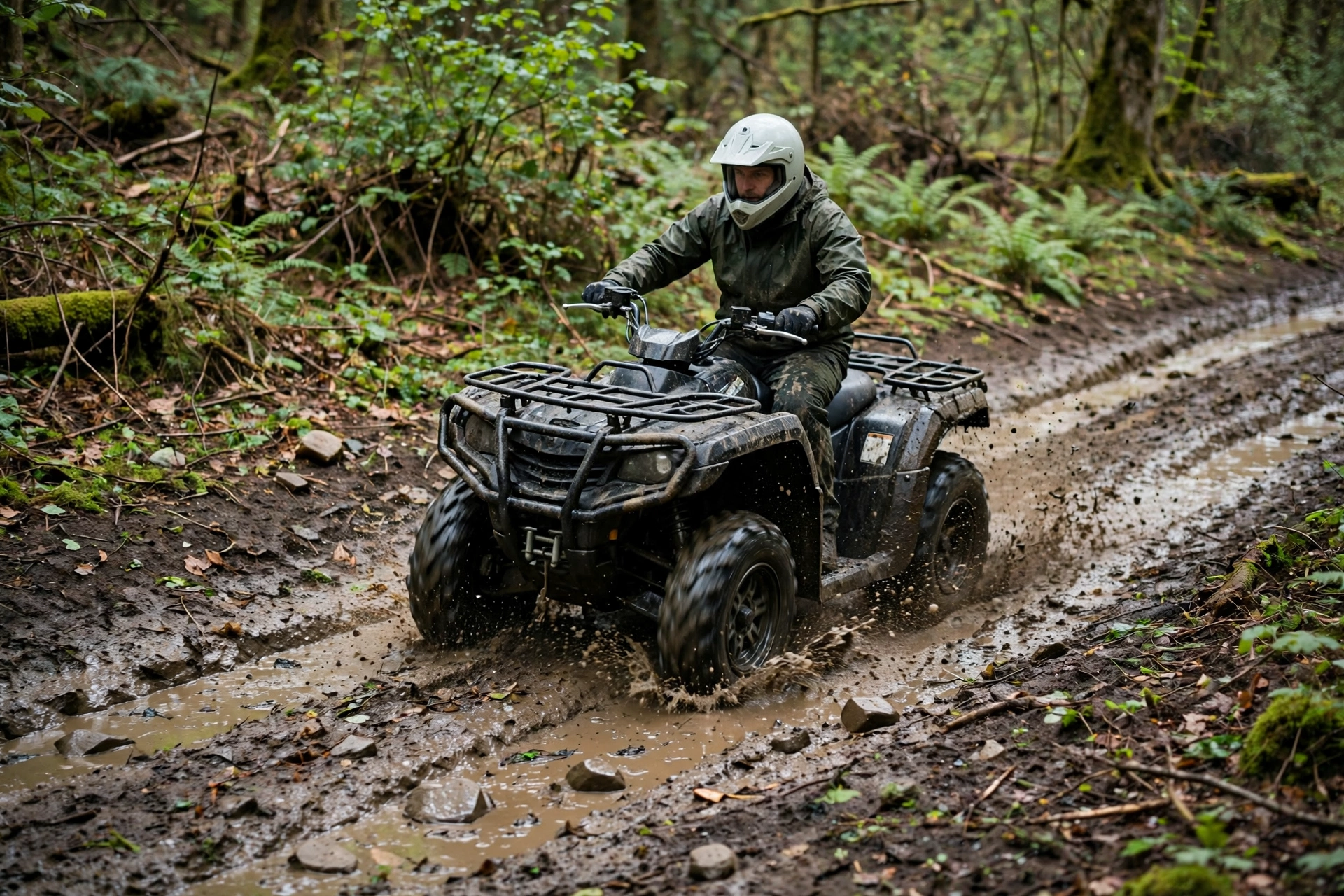
On an ATV, you ride over ruts, rocks, mud, and roots, and your head is constantly moving as the machine bounces underneath you. A heavy helmet adds to the load on your neck with every bump, and over a long trail ride that can lead to tiredness, stiffness, and soreness. This guide explains how helmet weight affects ATV riders, and what to look for in a comfortable trail helmet.
Why Does a Heavy Helmet Tire Your Neck Faster on an ATV?
On a smooth road, your head stays fairly still, and your neck muscles only need to hold the helmet steady. On an ATV trail, your head is thrown up, down, and from side to side with every bump, and your neck muscles have to work much harder to keep the helmet in place. A heavy helmet makes that work harder, because there is more weight to control with every jolt.
The effect builds up over a long ride. At the start of the day, a heavy helmet may feel fine, but after a few hours of rough trails, your neck can feel tired and stiff. That tiredness can affect your riding, because a sore neck makes it harder to look around, check the trail ahead, and react quickly to obstacles.
Jumping and landing add to the load as well. When an ATV leaves the ground and lands again, the impact travels through the machine and into the rider, and a heavy helmet can pull the head forward on landing. A lighter helmet is easier to control in those moments, and it puts less strain on the neck when the ride gets rough.
How Light Can an ATV Helmet Be?
ATV helmets are usually full face helmets, which cover the chin and jaw and have a visor or goggles, so they are naturally heavier than an open face bike helmet. In general terms, though, there is still a useful range of weights among full face ATV helmets, and choosing a lighter one can make a real difference on a long ride.
When you compare helmets, hold them in your hands and try them on. A difference that feels small in the shop can feel much larger after hours on a rough trail. Walk around in the helmet, move your head from side to side, and look up and down. The helmet that feels lightest and most comfortable is usually the right one, provided it fits well.
Do not chase the lightest helmet at any cost. A helmet that is light because it has very thin padding may feel hard and uncomfortable, and a helmet that is too light for your head size may not fit properly. The goal is a helmet that is light enough to ride in happily for hours, comfortable enough to wear with goggles, and snug enough to stay in place over bumps.
Does a Lighter ATV Helmet Protect You Less?
Not necessarily. A lighter helmet is not automatically less safe, and a heavier helmet is not automatically safer. Protection depends on the helmet meeting the right safety standard, fitting correctly, and being worn properly. In general terms, a light full face helmet that meets the standard and fits well will protect you better than a heavy helmet that fits badly or that you wear loosely because it is uncomfortable.
What matters most is the fit. An ATV helmet should sit level, feel snug all round, and stay put when you shake your head. It should work well with your goggles, without a gap at the forehead or pressure on the nose, and the chin strap should fasten snugly under your chin. A helmet that fits well will stay in the right place in a fall or a hard bump.
Check the safety standard for your country or riding area before you buy, and look for a label showing the helmet meets it. Then focus on weight, fit, and comfort. A helmet that meets the standard, fits well, and feels light enough for a long trail ride is a far better choice than a heavier one bought in the hope that weight means safety.
How Do Goggles and Ventilation Affect Helmet Weight?
Most ATV riders wear goggles with their helmet, and the combination matters. Goggles that fit well with the helmet, without pressing on the nose or leaving a gap, will feel more comfortable and make the helmet feel lighter. Goggles that do not fit can push the helmet forward or create pressure points, which makes it feel heavier.
Ventilation matters on a dusty trail too. A helmet with good airflow keeps you cool and helps stop the goggles fogging up, which is a common problem on slow, dusty sections. A helmet that runs hot can feel heavy and uncomfortable, even if it is light on the scales. Look for vents that you can open and close, and that let air flow through without letting in too much dust.
Mud and dust also add weight in practice. A helmet that is easy to clean, with removable padding you can wash, will stay lighter and more comfortable over time. After a muddy ride, clean the vents and the padding, and let the helmet dry fully before you store it.
What Should You Look for in an ATV Helmet?
Start with weight and fit together. Try on several helmets in your size, with your goggles on, and choose the lightest one that sits level, feels snug, and stays put when you move your head. Check that the visor or peak does not catch the wind too much at speed, and that the strap fastens easily, even with gloves on.
Next, check the comfort features. The padding should feel soft and even, without hard spots, and the helmet should feel balanced on your head rather than pulling forward. If you ride in hot weather, look for a helmet with good vents; if you ride in cold weather, look for one that keeps the wind out.
If you are learning about how helmets handle different kinds of impact, reading about what MIPS is for helmets can help you understand one of the technologies used in modern helmet design. Weigh that alongside weight and fit, and remember that a helmet you are happy to wear all day is the one that will protect you when it matters.
Frequently Asked Questions
Q: Will a lighter ATV helmet reduce neck fatigue on long trail rides?
A: In general terms, yes. A lighter helmet puts less load on your neck muscles over bumps and jumps, which can ease tiredness on long rides — though a good fit matters just as much.
Q: Are full face ATV helmets always heavy?
A: In general terms, they are heavier than open face helmets because they cover more of the head, but weights vary. Compare several full face models and choose the lightest one that fits well.
Q: How do I stop my ATV helmet feeling heavy on rough trails?
A: Choose a light, well-fitting helmet, make sure the straps are snug so it does not bounce, and take short breaks on very long rides to rest your neck.

Olivia
Writer at Helmet Today, covering helmet reviews, fit and riding safety.