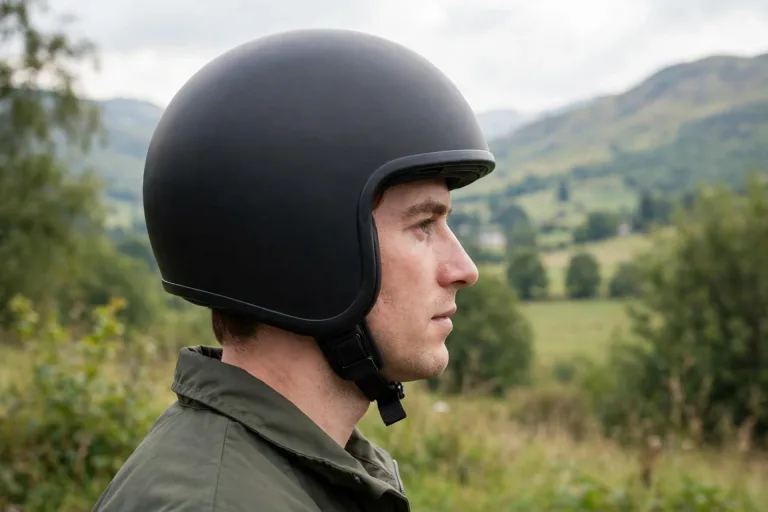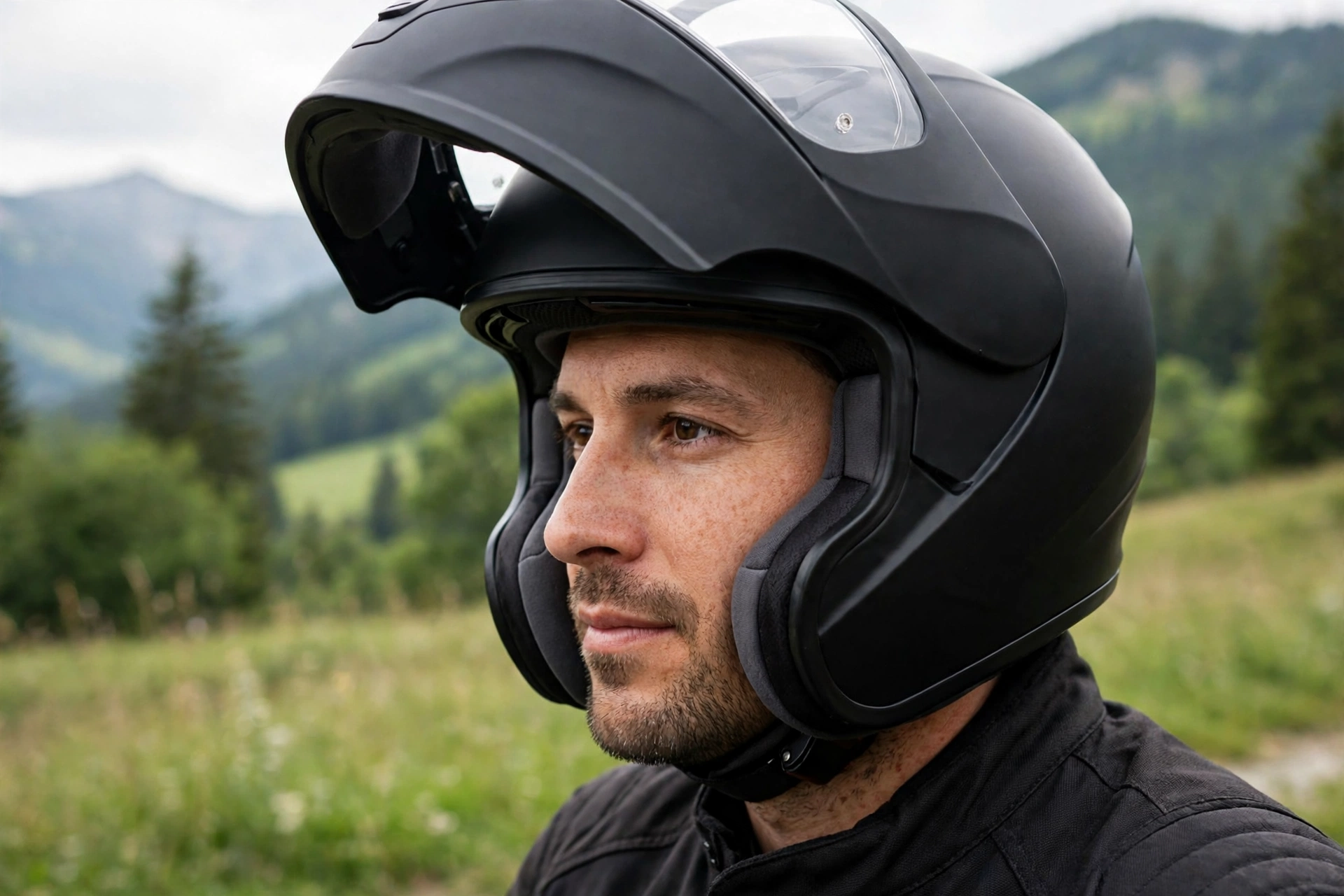
Your helmet squeezes your cheeks because the cheek pads inside a full-face helmet are made to hold your face snugly, and a new helmet often feels tight there until the pads settle with wear. In general terms, a helmet that presses your cheeks firmly but evenly, without pain, is fitting as it should, while a helmet that causes soreness, pinching, or a headache is likely the wrong size or shape for your head. Cheek squeeze is one of the most common complaints from new helmet owners, and it is also one of the most misunderstood, because a certain amount of pressure is normal and even necessary.
A full-face helmet has to stay in place in a crash, and the cheek pads are a big part of how it does that. They grip the sides of your face and stop the helmet from rolling or twisting on your head. Without that grip, the helmet could shift in an impact and leave parts of your head unprotected, so a little tightness when new is often a good sign.
Is it normal for a new helmet to squeeze my cheeks?
Yes, in general terms it is normal for a new helmet to squeeze your cheeks, because the cheek pads are fresh and full, and they have not yet settled to the shape of your face. Most riders find the pressure eases over the first few weeks, as the foam compresses and moulds to the face. The squeeze should feel even on both sides, and it should not be sharp or painful.
The test is how the helmet feels after a short ride. If your cheeks feel pressed but comfortable, and the feeling fades when you take the helmet off, the fit is probably right. If your cheeks feel sore, red marks last a long time, or you get a headache within minutes, the helmet may be too small or the wrong shape. A helmet that hurts is not a helmet you will want to wear, and a helmet you do not wear cannot protect you.
What causes a helmet to squeeze the cheeks too much?
A helmet squeezes the cheeks too much when it is too small, when the cheek pads are too thick for your face, or when the shape of the helmet does not match the shape of your head. Heads come in different widths, and a helmet that suits a narrow face may press hard on a wider one, even in the same size. The pads can also be the wrong thickness: some helmets come with pads that are made for a slimmer face, and a rider with fuller cheeks will feel the difference at once.
Glasses can make the squeeze worse, because their arms sit between the pads and your face. A balaclava can do the same, so check the fit with the glasses or balaclava you will actually wear. The shape of the helmet shell also matters: a long oval shell can press on the cheeks of a rider with a round head, and vice versa.
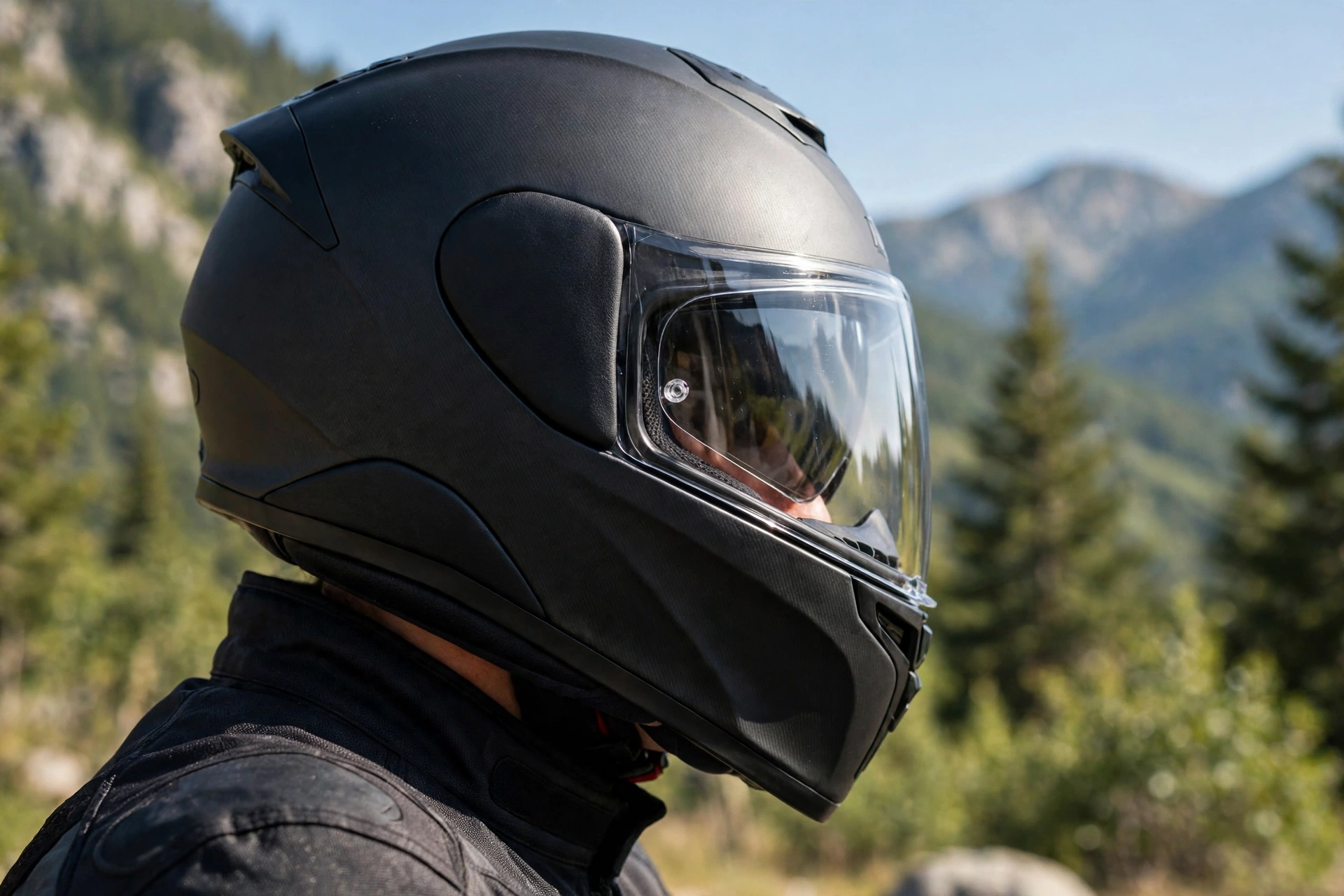
How can I tell if the cheek squeeze is normal or a bad fit?
You can tell if the cheek squeeze is normal by checking how the helmet feels and how it moves. A normal fit presses your cheeks evenly on both sides, lets you open your mouth and talk without pain, and holds the helmet steady when you shake your head. Your cheeks may look slightly pushed in when you look in a mirror, and that is normal. The pressure should ease a little as the helmet warms up.
A bad fit feels different. The pressure is sharp or uneven, one side hurts more than the other, or the pads dig into your jaw or your teeth. You may find it hard to chew, swallow, or speak clearly, or you may get a headache after only a few minutes. If the helmet still slides around easily despite the cheek pressure, the fit is wrong, because the pads press your cheeks while the rest of the helmet is too loose. Riders who want to understand more about how a helmet protects the head may want to read about MIPS, a system designed to reduce rotational forces in a fall, which works best when the helmet fits snugly in the first place.
What can I do if my helmet squeezes my cheeks too much?
If your helmet squeezes your cheeks too much, the first step is to give it time, because new pads often settle within a few weeks of regular wear. Wear it around the house for short periods before riding, and see if the pressure eases. If the helmet is still painful after a few weeks, the next step is to check whether thinner cheek pads are available for your helmet model, because many makers sell pads in different thicknesses and swapping them is a simple fix.
If thinner pads do not help, or the pressure is uneven or painful from the start, the helmet may be the wrong size or shape, and trying a different model is safer. Never try to fix a tight helmet by cutting or squashing the pads yourself, because that can damage the foam and weaken the protection. A helmet shop can help you check the fit and find a model that suits your face shape, and a proper fitting is worth the time.
Should I buy a bigger helmet to stop the cheek squeeze?
You should not buy a bigger helmet just to stop the cheek squeeze, because a helmet that is too big will be loose on the top and sides of your head, and a loose helmet is less able to protect you. The cheek pads are only one part of the fit, and the size is set by your head, not by how your cheeks feel. In general terms, the right size is the one that fits snugly all round, and the cheek pressure should be dealt with by changing the pads or the model, not by going up a size.
A bigger helmet will also move more when you ride, and may lift in the wind or slide over your eyes. If the cheek squeeze is the only problem and the rest of the helmet fits well, thinner pads are almost always the better answer. If the whole helmet feels tight, not just the cheeks, then a bigger size may be right, but the fit should be checked as a whole, not judged on the cheeks alone.
Will the cheek pads loosen over time?
Yes, in general terms the cheek pads in a new helmet will settle and loosen slightly over the first few weeks of regular wear, as the foam compresses to the shape of your face. The pressure should ease, but the helmet should still feel snug.
Can I wear glasses with a tight-fitting helmet?
Yes, in general terms you can wear glasses with a full-face helmet, but check the fit with them on, as their arms add pressure. Some helmets have channels in the padding for glasses arms.
Is cheek squeeze a sign the helmet is too small?
Not always. In general terms, some cheek pressure is normal in a new full-face helmet. It is a sign the helmet is too small only if the pressure is painful, uneven, or does not ease after a few weeks of wear.

Olivia
Writer at Helmet Today, covering helmet reviews, fit and riding safety.