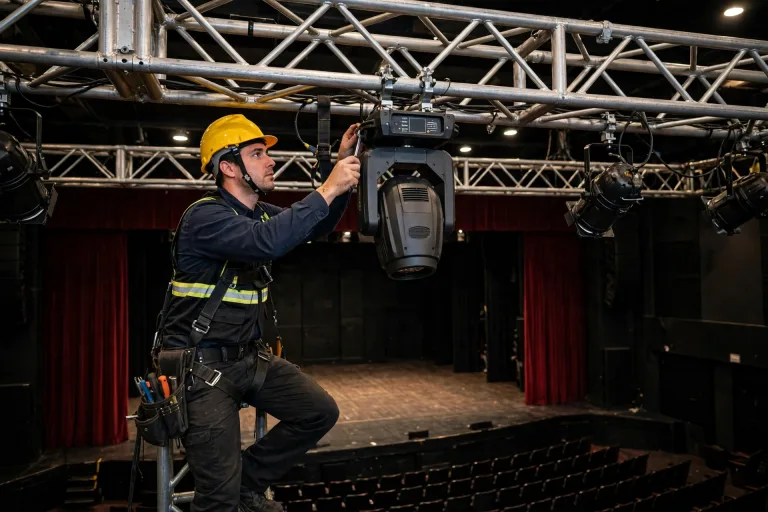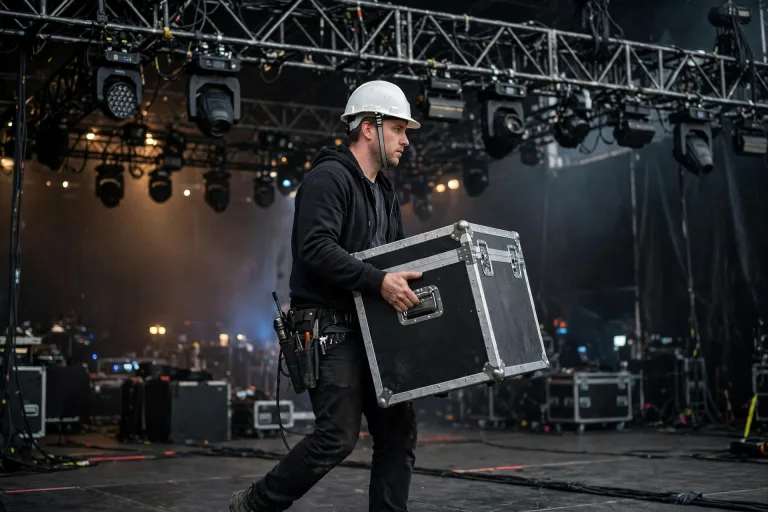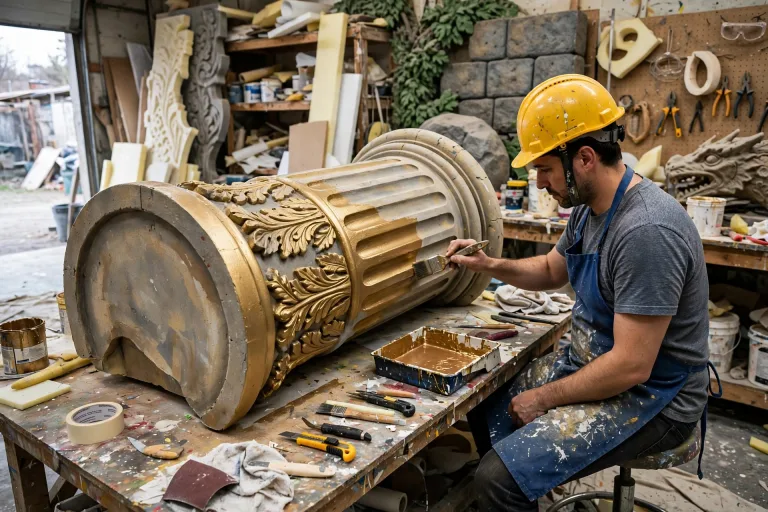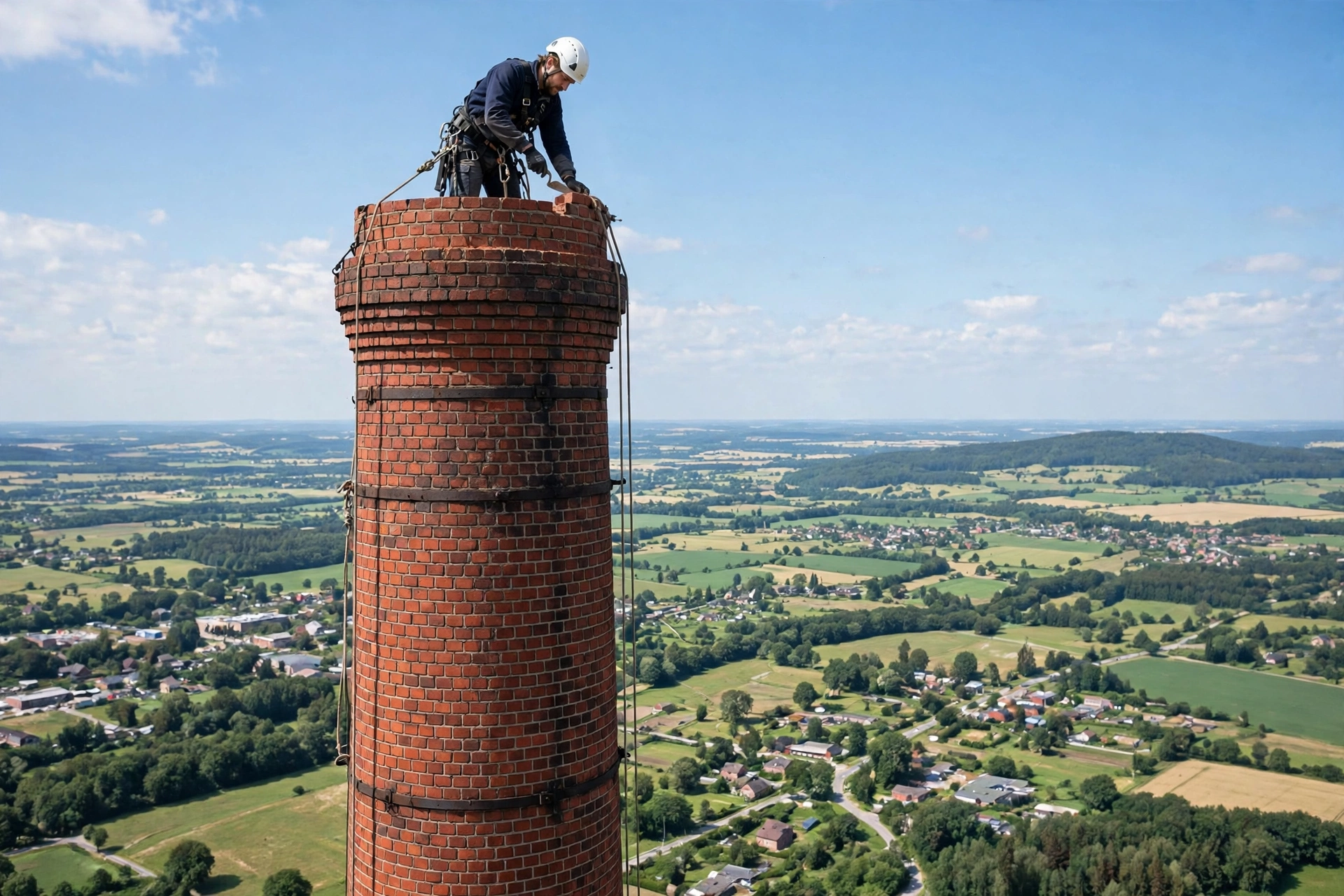
A helmet for steeplejacks is a safety helmet worn by workers who climb and repair tall chimneys, church spires, and towers to protect the head from falling objects, knocks against brick and steel, and falls from height, and in general terms every steeplejack should wear one that fits well and meets the standards for work at height. Steeplejacks work hundreds of feet above the ground, on ladders, scaffolds, and ropes, and the risks are very different from those on an ordinary building site. A helmet is essential safety equipment for that kind of work, not an optional extra.
A steeplejack’s day can involve climbing a tall chimney to repair the brickwork, working on a church spire in the wind, or fitting lightning conductors on a high tower. The work is slow, careful, and exposed to the weather, and the worker’s head is close to hard surfaces all day. A falling brick, a dropped tool, or a knock against a steel bracket can cause a serious injury, and a helmet gives the worker protection in all of those moments.
Why do steeplejacks need a helmet?
Steeplejacks need a helmet because the work takes place at great height, where even a small object falling from above can hit with real force. A spanner dropped from the top of a chimney, a piece of loose brick, or a chunk of mortar can cause a serious head injury, and a helmet spreads the force of that impact and helps to protect the skull. The helmet also protects against knocks when the worker moves around on a narrow platform or leans into a tight space.
There is also the risk of a fall, because steeplejacks work on ladders, ropes, and scaffolds, often in wind and rain. A helmet cannot stop a fall, but it can protect the head if the worker is thrown against the structure or lands on a platform. In general terms, a helmet is one part of a system of safety gear for work at height, and it works best alongside a harness, a lanyard, and a safe method of access.
What kind of helmet is best for steeplejacks?
The best helmet for steeplejacks is, in general terms, a light, well-ventilated industrial safety helmet with a hard outer shell, a chin strap, and a fit that stays secure when the worker looks up or leans over. Many steeplejacks use a climbing-style safety helmet rather than a basic hard hat, because those helmets sit lower on the head, have a chin strap that keeps them in place, and are made to cope with falls from height as well as falling objects.
The helmet should be comfortable enough to wear for a whole working day, and it should work with the rest of the worker’s gear. It should fit with safety glasses, ear protection, and a headlamp, because steeplejacks often work in dark flues or inside chimneys where a light is needed. Vents that let air in without letting in dust are useful, and a lining that can be removed and washed is a practical feature for a worker who sweats in a helmet all day.
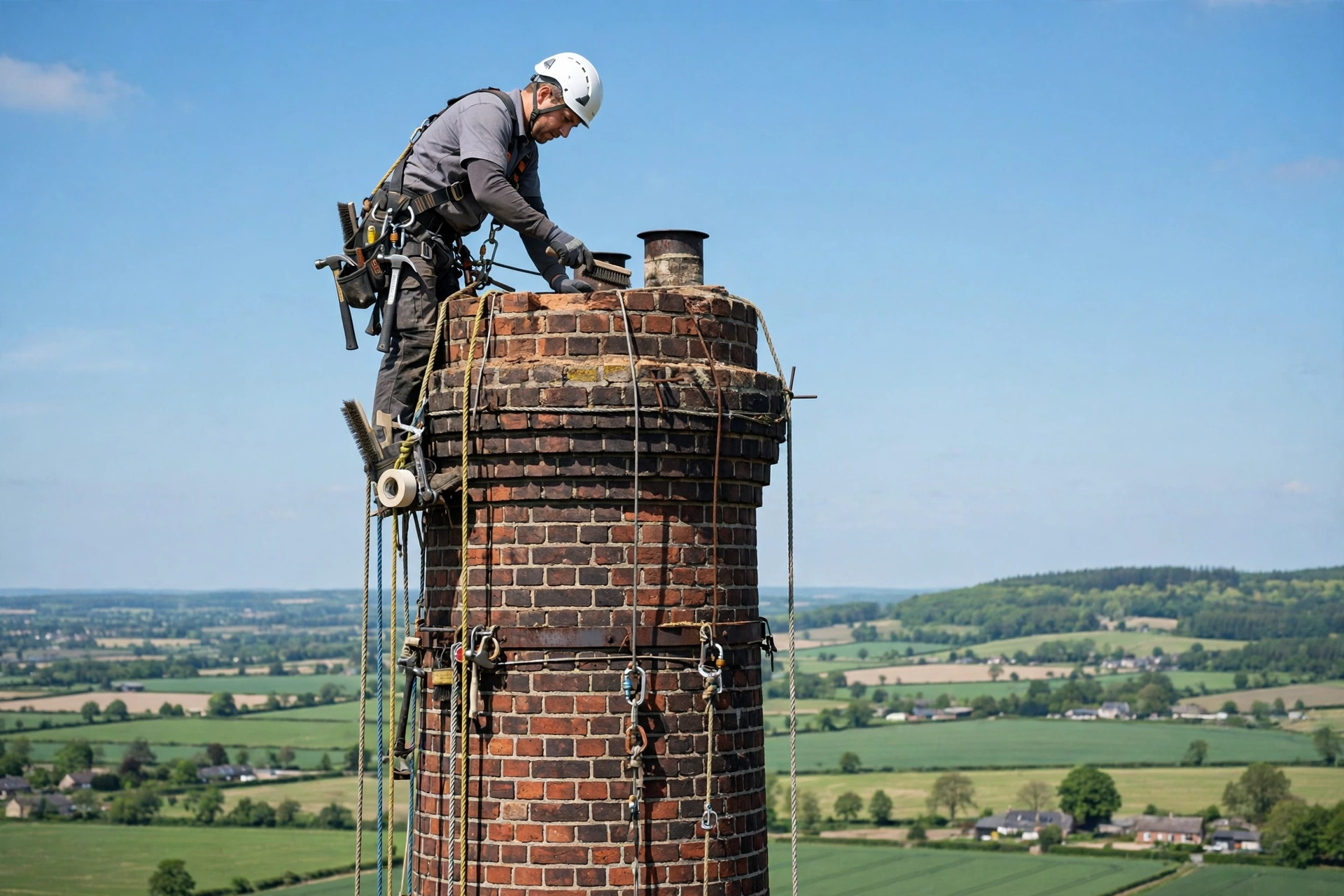
How should a helmet for steeplejacks fit?
A helmet for steeplejacks should fit snugly, sit level on the head, and stay firmly in place when the worker looks up, leans over, or turns their head. The helmet should cover the forehead and the top of the head, and the chin strap should be fastened securely every time the worker is at height. A strap that is left loose lets the helmet slip or fall off, and a helmet that falls from a chimney is no help to the worker and a danger to anyone below.
The fit should be checked with the worker’s other gear in place, because safety glasses, ear defenders, and a headlamp can change how a helmet sits. The helmet should not press on the arms of glasses or push them out of place, and it should not block the worker’s hearing so much that they cannot hear warnings from colleagues below. The worker should also check that the helmet does not slip forward over the eyes when they look down, because a steeplejack needs a clear view of the work and the footholds below.
What safety standards should a steeplejack helmet meet?
A steeplejack helmet should meet the recognised safety standards for industrial helmets and for work at height, because those standards test helmets for the kinds of impacts that happen on a work site. In general terms, employers and site rules look for helmets that carry a current industrial approval, and the rules of the site will usually say which standards are accepted. A helmet that meets the standard has been tested for impact protection, for the strength of the shell, and for the way the harness inside the helmet holds it in place.
Workers should also check that the helmet is in good condition and has not been damaged. A helmet that has been dropped from height, struck by a falling object, or left in strong sun for a long time should be looked at with care, and in general terms a helmet that has taken a serious impact should be replaced rather than used again. The damage may not be easy to see, so a worker who has had a knock or a fall should think honestly about what the helmet has been through.
How should a steeplejack helmet be looked after?
A steeplejack helmet should be looked after with regular cleaning and sensible storage, in the same way as any work helmet. After a day on the chimney, the worker should brush off the dust and brick debris, wipe the shell with a damp cloth, and let the helmet dry naturally away from direct heat. The lining should be washed or replaced when it becomes worn, because a worn lining will not hold the helmet in place properly.
The helmet should be stored in a cool, dry place, away from direct sunlight and away from strong heat, because heat and sun weaken the shell over time. It should be kept where it will not be knocked about, used as a seat, or used to carry tools, because a hard knock can damage it even when no crack is visible. Workers who want to learn more about the features that help in a fall may want to read about MIPS, a system found in some helmets that is designed to reduce rotational forces, which can be useful in the knocks and falls of high work.
Is a normal hard hat enough for a steeplejack?
In general terms, a basic hard hat is not the best choice for a steeplejack, because it has no chin strap and can fall off at height. A climbing-style safety helmet with a chin strap is usually the safer choice.
Can a steeplejack wear a helmet with a headlamp?
Yes, in general terms many safety helmets for steeplejacks have clips or mounts for a headlamp, which is useful for work inside dark chimneys and flues. The lamp should be fitted so it does not unbalance the helmet.
When should a steeplejack helmet be replaced?
A steeplejack helmet should be replaced after a serious impact, a fall, or a strike from a falling object, or when it no longer fits well, shows damage, or has been used for a long time. When in doubt, replace it.

Olivia
Writer at Helmet Today, covering helmet reviews, fit and riding safety.