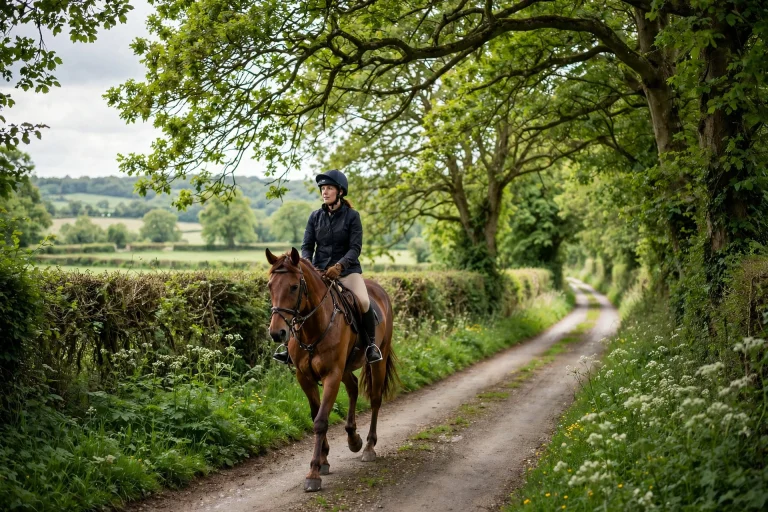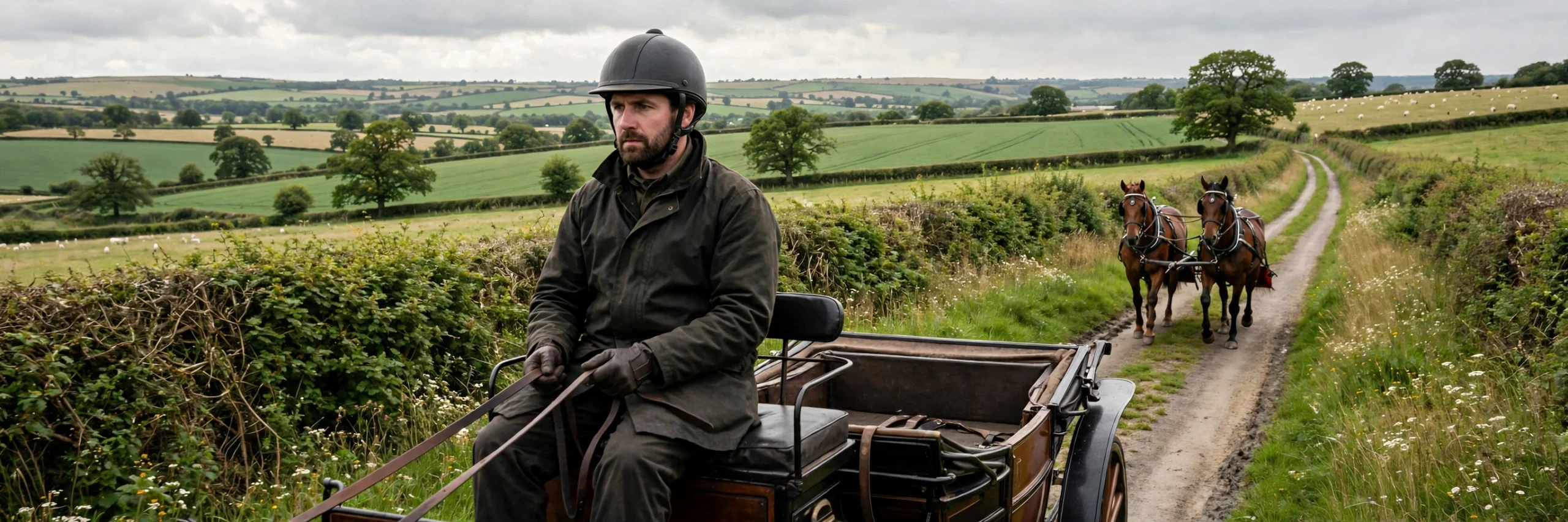
A carriage driving helmet is a riding helmet worn by the driver and passengers on a horse-drawn carriage, designed to protect the head if the carriage tips, the horse shies, or someone falls from the box seat. It looks much like a standard riding helmet, with a hard shell, a peak, and a chin strap, but it is chosen with the driving seat in mind. The driver sits high on the carriage, so a fall from that height carries a real risk, and the helmet is part of the normal turnout for driving.
Carriage driving covers a wide range of activities, from a quiet drive down a country lane to a formal show class or a marathon phase of a driving trial. In each case the driver is in charge of one or more horses from a seat at the front of the carriage, holding the reins and the whip. The carriage can move at a walk, a trot, or a faster pace, and it can turn sharply, cross uneven ground, or meet traffic. A helmet is worn for the whole drive, not just for the faster parts.
What Does a Carriage Driving Helmet Look Like?
A carriage driving helmet usually has a traditional, smart appearance. Most are black or dark navy, with a smooth shell and a short peak, which suits the formal turnout of driving. Some have a velvet or suede-style finish, while others are plain matte. The shape is low and rounded, sitting close to the head, and the harness fastens neatly under the chin.
Unlike some riding helmets, a driving helmet does not need to suit a jumping position or a forward seat, because the driver sits upright on the box. That means the fit is judged in a seated, upright position, with the head held level. The peak should not drop so low that it blocks the view of the horses ahead, and the strap should sit comfortably when the driver is looking forward and holding the reins.
Why Do Carriage Drivers Wear Helmets?
Carriage drivers wear helmets because a fall from the box seat can be serious. The seat is high above the ground, and the driver may land on a hard road, a kerb, or rough ground. A horse may also shy at a sudden noise, stop without warning, or step sideways, and the carriage may jolt or tip. In each of these cases a helmet helps protect the head from impact with the ground or with part of the carriage.
Helmets are also part of the rules for many driving events. Driving trials, shows, and club drives often require a helmet for the driver, and in some cases for the groom or passenger on the back step as well. The rules vary between organisations and between countries, so drivers should check the rules for the event they are entering. Even where a helmet is not required by the rules, many drivers wear one by choice, because the risk is the same on a quiet lane as it is in a competition.
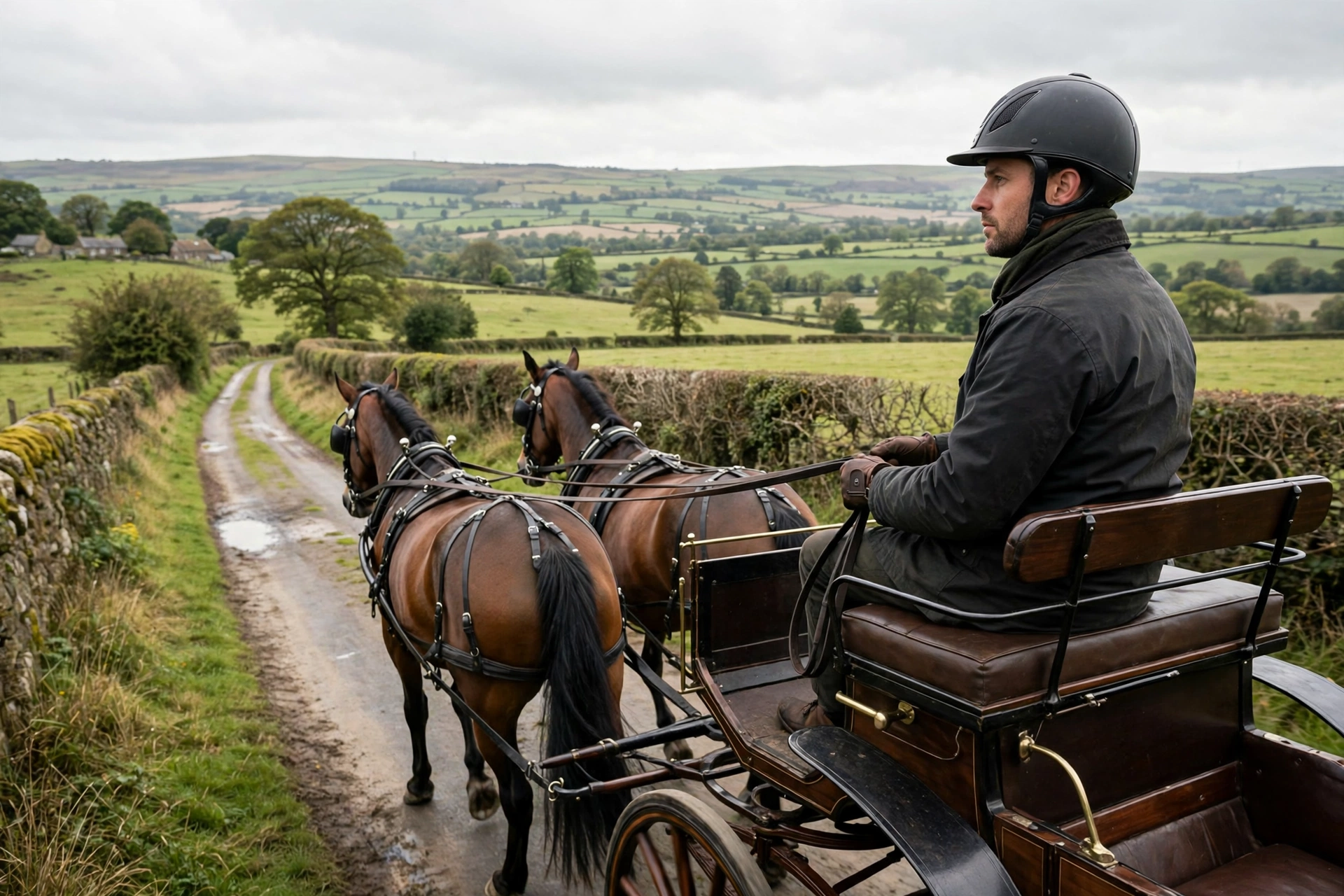
How Is a Carriage Driving Helmet Different from a Riding Helmet?
In general terms, a carriage driving helmet is the same kind of helmet as a riding helmet, and many drivers use a standard riding helmet for driving. The shell, the liner, and the strap work in the same way, and the same standards apply. The difference is mainly in how the helmet is chosen and worn, rather than in a special design made only for driving.
One difference is the driving position. A rider leans forward over fences and moves with the horse, while a driver sits still and upright, looking ahead at the horses. That means the driver may prefer a helmet with a slightly different peak or a fit that feels comfortable when sitting upright for a long time. Ventilation also matters, because a drive can last for an hour or more, and the driver is sitting still in the sun rather than moving through the air.
Another difference is turnout. Driving has a strong tradition of formal dress, with aprons, gloves, and hats that match the carriage and the occasion. A driving helmet needs to look smart with that turnout, so many drivers choose a classic, dark helmet rather than a bright, sporty one. The helmet is part of the overall picture, and a tidy helmet helps the whole turnout look right.
What Should You Look for When Choosing One?
Fit comes first. A carriage driving helmet should sit level, feel snug all round, and stay in place when you turn your head to look at the horses or check the road behind. It should not press hard on the forehead or temples, and the chin strap should fasten securely without feeling tight. Try the helmet on while sitting upright, as you would on the box, and check that the peak does not block your view.
Next, check the standard it meets and the rules for your driving club or event. The label inside the helmet should show the standard, and the event rules should say which standards are accepted. If you drive in different events, check each one, because the rules are not always the same. A helmet that meets the right standard and fits well is the right starting point.
If you are learning about how helmets handle different kinds of impact, reading about what MIPS is for helmets can help you understand one of the technologies used in modern helmet design. Some riding helmets include this kind of system, and it is worth knowing about when you compare helmets for driving.
How Do You Care for a Carriage Driving Helmet?
Store the helmet in a cool, dry place, away from sunlight and heat, and keep it in a helmet bag or a box so the shell does not get knocked or scratched. Do not store it in a hot car or near a heater, and do not hang it by its chin strap for long periods, because that can stretch the strap. A clean, well-kept helmet also looks better with formal driving turnout.
Clean the shell gently with a soft, damp cloth, and let it dry naturally. If the lining is removable, wash it according to the maker’s instructions and let it dry fully before you put it back. Do not use harsh cleaners, and do not put the helmet in a washing machine. Check the strap and buckle regularly to make sure they still fasten firmly.
After any fall or hard knock, have the helmet checked and, in general terms, replace it, even if the damage is not visible. The liner inside can be damaged in ways you cannot see, and a damaged liner may not protect as well in a second fall. Check the shell for cracks or dents before every drive, and replace the helmet if you find any damage.
Frequently Asked Questions
Q: Do carriage drivers have to wear a helmet?
A: It depends on the event and the organisation. Many driving events and clubs require a helmet for the driver, and some require one for passengers too. Check the rules for your event before you drive.
Q: Can I use my normal riding helmet for carriage driving?
A: Yes, in general terms. A standard riding helmet that fits well and meets the required standard is suitable for driving, and many drivers use the same helmet for riding and driving.
Q: Should passengers on a carriage wear a helmet?
A: In general terms, yes, it is sensible for everyone on the carriage to wear one. A passenger or groom can be thrown off or jolted in a sharp turn or a sudden stop, so a helmet helps protect them too.

Olivia
Writer at Helmet Today, covering helmet reviews, fit and riding safety.