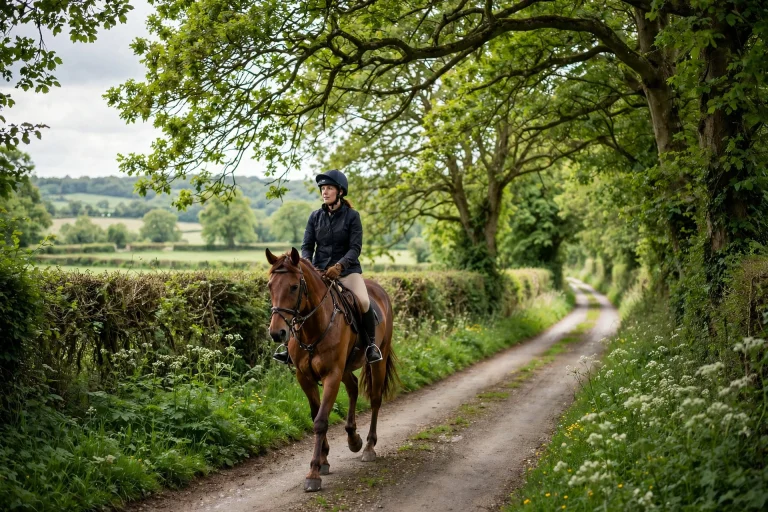
A hunter and jumper helmet is a low-profile, classic-style riding helmet worn for hunter and jumper classes, designed to look traditional in the show ring while protecting the rider in a fall. It is usually a smooth, dark helmet with a small peak, a fitted shape, and a harness that sits neatly under the chin. In the show ring it is part of the turnout, not just safety kit, so riders choose one that looks smart as well as fits well.
Hunter and jumper classes are judged in different ways. Hunter classes reward a smooth, forward ride over fences, with the horse and rider presented in a classic, tidy style. Jumper classes are timed, and the focus is on clearing the fences cleanly and quickly. In both, the rider may fall, the horse may stop suddenly, or a fence may be knocked down, so a helmet is worn for every round, from the first schooling fence to the final class of the day.
What Does a Hunter and Jumper Helmet Look Like?
A hunter and jumper helmet has a traditional, understated look. Most are black, dark navy, or dark brown, with a smooth outer shell and a short, fixed peak at the front. The shape is low and rounded, sitting close to the head rather than standing tall. Some have a subtle suede or velvet-style finish, while others have a plain matte shell, and a few have a small, neat vent at the front or back.
The harness is usually a slim strap that fastens under the chin and sits close to the face, so it does not spoil the line of the rider’s turnout. Many modern hunter helmets also have a dial or adjustable fitting system hidden at the back, which lets the rider fine-tune the fit without changing the classic shape. The lining inside is soft and padded, and it helps the helmet stay in place over fences.
How Is a Hunter and Jumper Helmet Different from Other Riding Helmets?
The main difference is style. A hunter and jumper helmet is made to look traditional, while helmets for cross-country or everyday schooling often have a more modern, vented, sporty shape. The hunter helmet has fewer visible vents, a smoother shell, and a smaller peak, which gives it the classic silhouette that judges and riders expect in the hunter ring.
Underneath that traditional look, the protection is similar in general terms. A hunter and jumper helmet still has a hard outer shell and an inner liner designed to absorb impact, and it still needs to fit snugly and stay in place. The difference is in the finish and the shape, not in the basic job the helmet does. A helmet made for dressage may look very similar, while a cross-country helmet often has a larger peak and more ventilation for long rides outdoors.

What Should You Look for When Choosing One?
Fit comes first, before colour or finish. A hunter and jumper helmet should sit level on the head, low enough to cover the forehead, and feel snug all round without pressing hard on one spot. It should stay in place when you shake your head gently and when you look down, and the chin strap should fasten securely without feeling tight under the throat.
Next, check the standard. Different shows and riding bodies may ask for different standards, so check the rules for the classes you plan to enter before you buy. The label inside the helmet, or the information that comes with it, should show which standard it meets. If you are unsure, ask the show secretary or your instructor, because a helmet that does not meet the required standard may not be accepted in the ring.
Ventilation matters too, especially on warm show days. A hunter helmet has fewer vents than a schooling helmet, so try it on and think about how long you will wear it. A helmet with a removable, washable lining is easier to keep fresh, and a lining that wicks sweat can make a long day at a show more comfortable. Comfort matters because a helmet that feels good is one you will wear properly, with the strap fastened, for every round.
Do You Need a Different Helmet for Hunters and Jumpers?
In general terms, no — one well-fitting hunter and jumper helmet can be used for both hunter and jumper classes. The two disciplines share the same ring, the same fences, and the same kind of fall risk, so the same style of helmet suits both. Many riders use a single helmet for the whole show, changing only their jacket or their horse’s turnout between classes.
There are small differences in what riders prefer. A hunter rider may choose the most traditional, smoothest helmet they can find, because presentation matters so much in hunter classes. A jumper rider may prefer a helmet with slightly more ventilation or a lighter feel, because jumper rounds can be fast and the rider may be in the ring for several rounds in a row. These are matters of preference, not rules, and either style is usually accepted in both rings.
If you are learning about how helmets handle different kinds of impact, reading about what MIPS is for helmets can help you understand one of the technologies used in modern helmet design. Some hunter and jumper helmets include this kind of system, while others use a more traditional liner, and knowing the difference can help you compare helmets when you shop.
How Do You Care for a Hunter and Jumper Helmet?
Care starts with storage. Keep the helmet in a cool, dry place, away from direct sunlight and away from heat, such as a hot car or a tack room heater. A helmet bag or a sturdy box protects the shell from knocks and scratches, and it keeps dust off the velvet or suede-style finish. Do not hang the helmet by its chin strap for long periods, because that can stretch the strap and pull the lining out of shape.
Clean the outside gently with a soft, damp cloth, and let it dry naturally at room temperature. Do not use harsh cleaners or solvents, and do not put the helmet in a washing machine. If the lining is removable, take it out and wash it according to the maker’s instructions, and let it dry fully before you put it back. A fresh lining makes the helmet more comfortable and helps it fit as it should.
Check the helmet regularly for damage. Look for cracks, dents, or soft spots in the shell, and check that the strap, buckle, and fitting system still work smoothly. After any fall where your head hits the ground or a fence, have the helmet checked and, in general terms, replace it, even if the damage is not visible. The liner inside can be damaged in ways you cannot see from the outside.
Frequently Asked Questions
Q: Can I wear a hunter and jumper helmet for everyday schooling?
A: Yes, in general terms. Many riders use the same helmet at home and at shows, though some prefer a more ventilated helmet for long schooling sessions and keep the show helmet for competition.
Q: Does a hunter and jumper helmet have to be black?
A: No. Black is the most traditional choice, but dark navy and dark brown are also widely seen in the ring. Check the rules for your show if you want to wear a less usual colour.
Q: How do I know if my hunter and jumper helmet fits?
A: It should sit level, feel snug all round without a painful pressure point, and stay put when you shake your head. The chin strap should fasten securely, and the helmet should not rock forward or back.

Olivia
Writer at Helmet Today, covering helmet reviews, fit and riding safety.