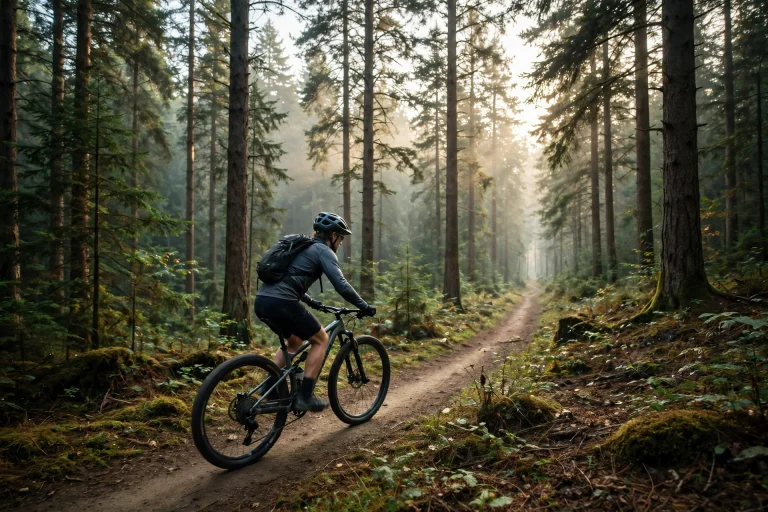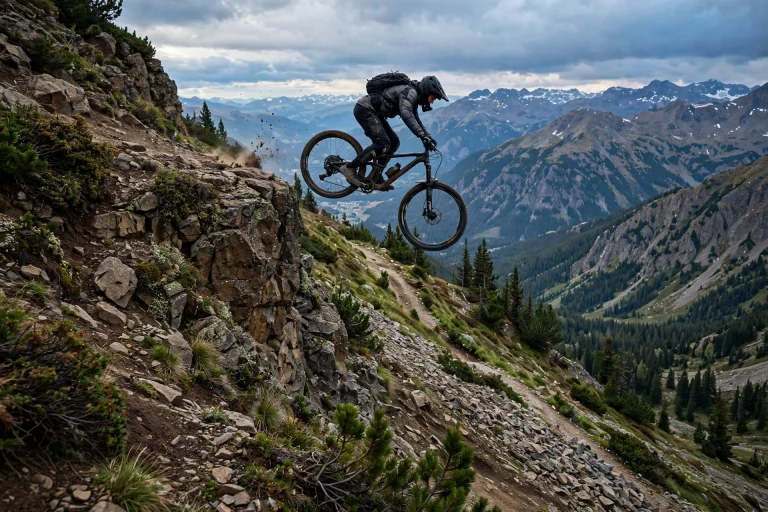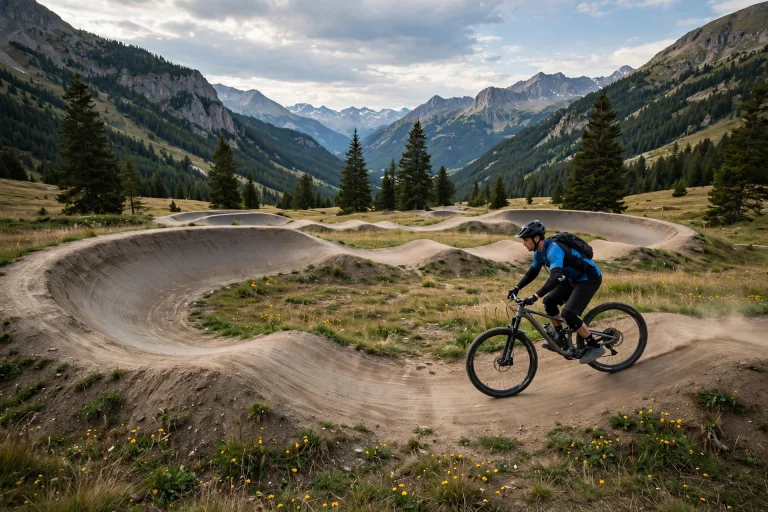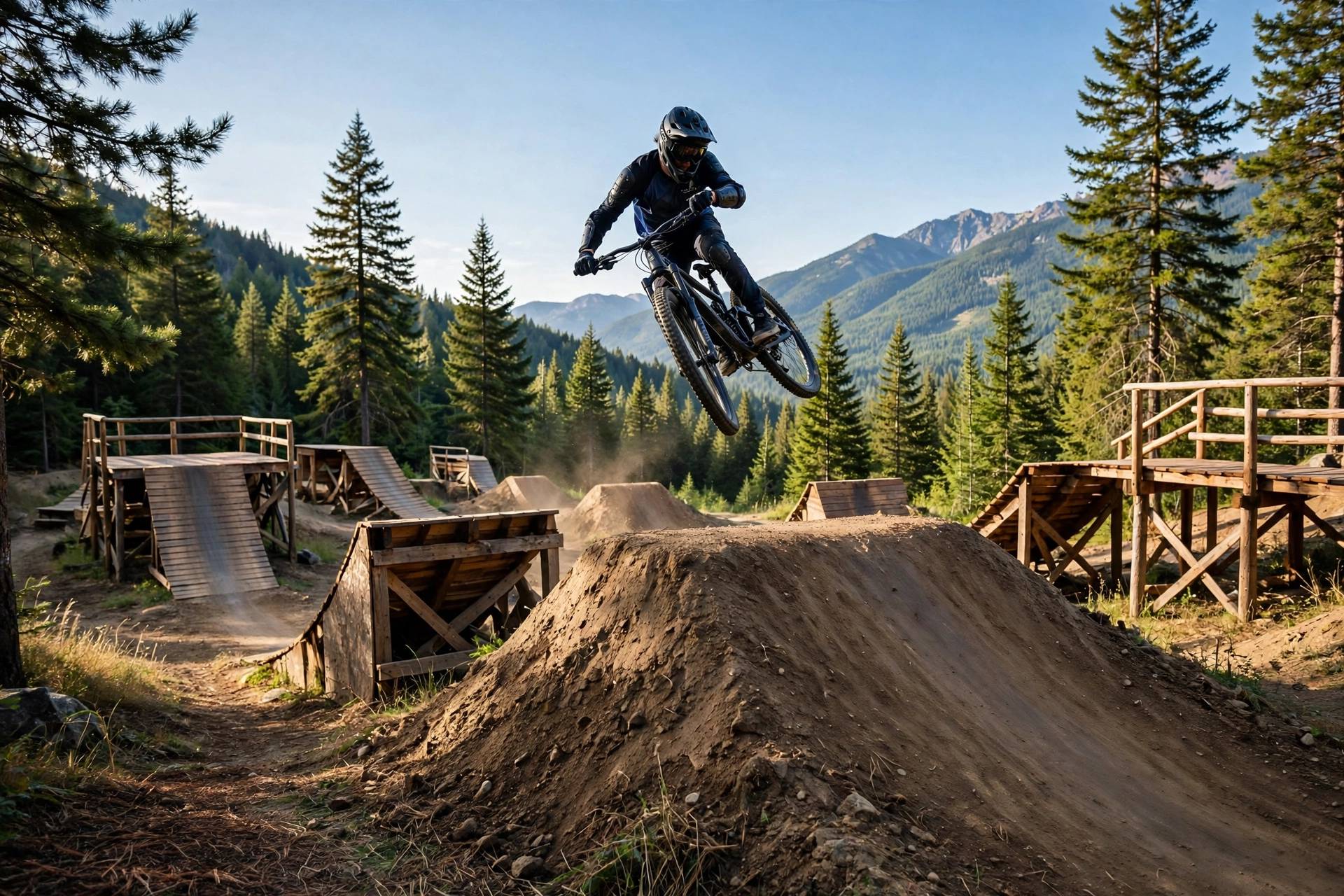
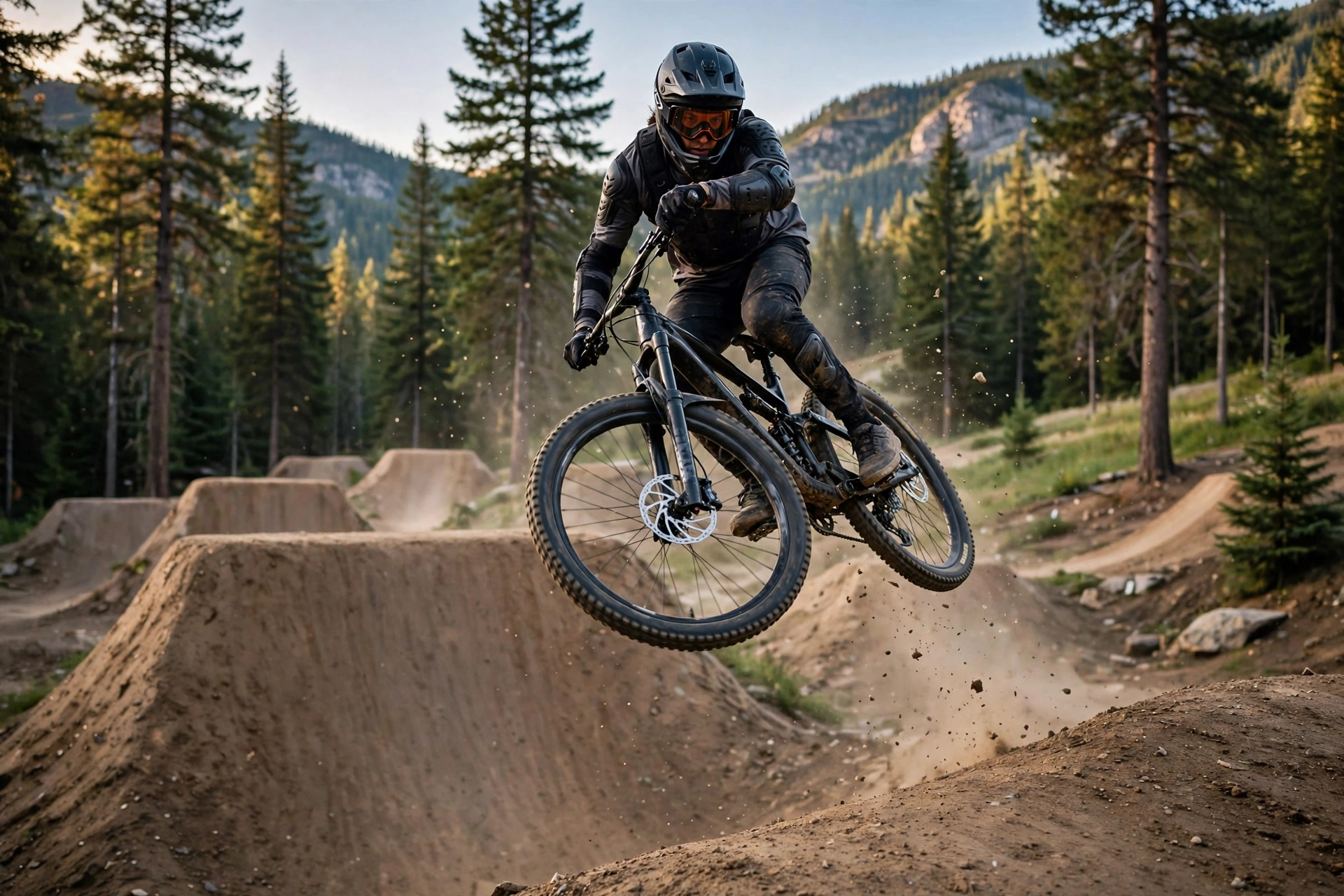
A slopestyle mountain bike helmet is a full face helmet built for the big jumps, drops and tricks of slopestyle riding, with strong chin-bar coverage, a snug fit and good ventilation for short, intense runs. Slopestyle riders launch off large dirt jumps and wooden features, spin and flip in the air, and land on hard-packed dirt, so the helmet has to protect the whole head, including the jaw and chin, while staying firmly in place through every landing.
Slopestyle sits between dirt jumping and freeride mountain biking. The courses are built for style and height rather than speed alone, and a crash can come from a missed landing, a case on a jump lip, or a fall onto a wooden ramp. This guide explains what a slopestyle helmet is, how it differs from other mountain bike helmets, and what to look for when you choose one.
What Is a Slopestyle Mountain Bike Helmet?
A slopestyle mountain bike helmet is, in general terms, a full face helmet designed for dirt jump and slopestyle courses. It has a hard outer shell, a chin bar that covers the jaw, and padding inside that holds the helmet snug against the head. The shell is shaped to be smooth and compact, so it does not catch on the ground if a rider slides after a fall.
Most slopestyle helmets are lighter than a downhill race helmet, because riders need to move their heads freely to spot landings and check their position in the air. The helmet still covers the ears and the back of the head, and the chin bar sits close to the face without pressing on the chin. Vents in the shell let air flow through during a run, which helps on warm days and during repeated practice laps.
How Is a Slopestyle Helmet Different from a Downhill Helmet?
A slopestyle helmet and a downhill helmet look similar at first glance, but they are built for different kinds of riding. A downhill helmet is made for long, fast descents over rough ground, so it often has more padding, a sturdier shell and larger vents for sustained speed. A slopestyle helmet is made for short runs built around jumps, so it tends to be lighter and more compact, with a shape that suits looking up and around in the air.
The chin bar is a good example of the difference. On a downhill helmet the chin bar is often longer and more heavily reinforced for high-speed crashes on rocks and roots. On a slopestyle helmet the chin bar is still strong, but it is usually shorter and closer to the face, which makes it easier for the rider to move their head and breathe during tricks. Both designs protect the jaw, but the balance between weight and coverage is different.
Do You Need a Full Face Helmet for Slopestyle?
Yes, in general terms a full face helmet is the right choice for slopestyle riding. The jumps are large, the landings are hard, and a fall can easily involve the face or jaw. An open face helmet leaves the chin and teeth exposed, which is a real concern when a rider comes down short on a jump or loses balance on a wooden feature.
Some riders start on smaller dirt jumps with an open face helmet, but as the jumps get bigger and the tricks get more committed, the case for full face protection grows stronger. A full face helmet also protects the ears and the sides of the head, which can hit the ground during a sideways fall. For practice sessions, competitions and any course with large features, a full face helmet is the sensible standard.
What Should You Look for in a Slopestyle Helmet?
Fit comes first. A slopestyle helmet should sit level on your head, feel snug all round, and stay put when you shake your head from side to side. It should not press hard on your forehead or temples, and the chin bar should sit close to your chin without touching it when you open your mouth. If you wear goggles, try them on with the helmet before you buy, so you know the eye port fits and the strap sits comfortably.
Next, look at ventilation and weight. You want a helmet that feels light enough to wear for a full practice session, with vents that let air move through without letting in too much dirt. A helmet that feels heavy on your head will tire your neck and make it harder to spot landings. Pick the helmet up, hold it in your hands, and compare how it feels against other helmets in the same style.
Finally, check the strap, the padding and the peak. The strap should fasten securely under your chin and hold the helmet firmly in place. The padding should be removable or washable if possible, because slopestyle riding is sweaty work. The peak should sit above your line of sight and stay in place during a run. If you want to understand one of the technologies used in modern helmets, reading about what MIPS is for helmets can help you compare different models.
How Do You Fit and Care for a Slopestyle Helmet?
Start by measuring your head around the widest part, just above your eyebrows and ears, and use the maker’s size guide as a starting point. Try the helmet on and fasten the strap so that two fingers fit snugly between the strap and your chin. The helmet should not rock forward or back, and it should not slide down over your eyes. If it moves easily, try a smaller size or a different shape, because heads vary and one brand’s medium may fit differently from another’s.
Wear the helmet with the same goggles and any head covering you plan to use on the course, so the fit you test is the fit you will ride in. On cold days, a thin liner under the helmet can change the fit, so check again if you add one. A helmet that fits well in the shop but feels loose with your riding kit on is not the right helmet for you.
Care is simple but worth doing. After a session, take the helmet out of your bag, wipe the shell with a damp cloth, and let it dry in the open air away from direct heat. Remove the pads now and then and wash them following the maker’s guidance. Store the helmet somewhere cool and dry, out of strong sunlight, and keep it away from solvents and harsh cleaners that could damage the shell or the liner.
Frequently Asked Questions
Q: Can I use a downhill helmet for slopestyle riding?
A: In general terms, yes. A downhill helmet gives full face protection and works well on slopestyle courses, though it may feel heavier and bulkier than a helmet made for jumps and tricks.
Q: Do slopestyle helmets work with goggles?
A: Yes. Most slopestyle helmets are made to fit goggles, with an eye port sized for them. Try your goggles with the helmet before you buy to check the fit and the field of view.
Q: How often should I replace a slopestyle helmet?
A: In general terms, replace it after any hard impact, and follow the maker’s guidance on age and wear. A helmet that has taken a heavy knock should be checked and usually replaced, even if it looks undamaged.

Olivia
Writer at Helmet Today, covering helmet reviews, fit and riding safety.