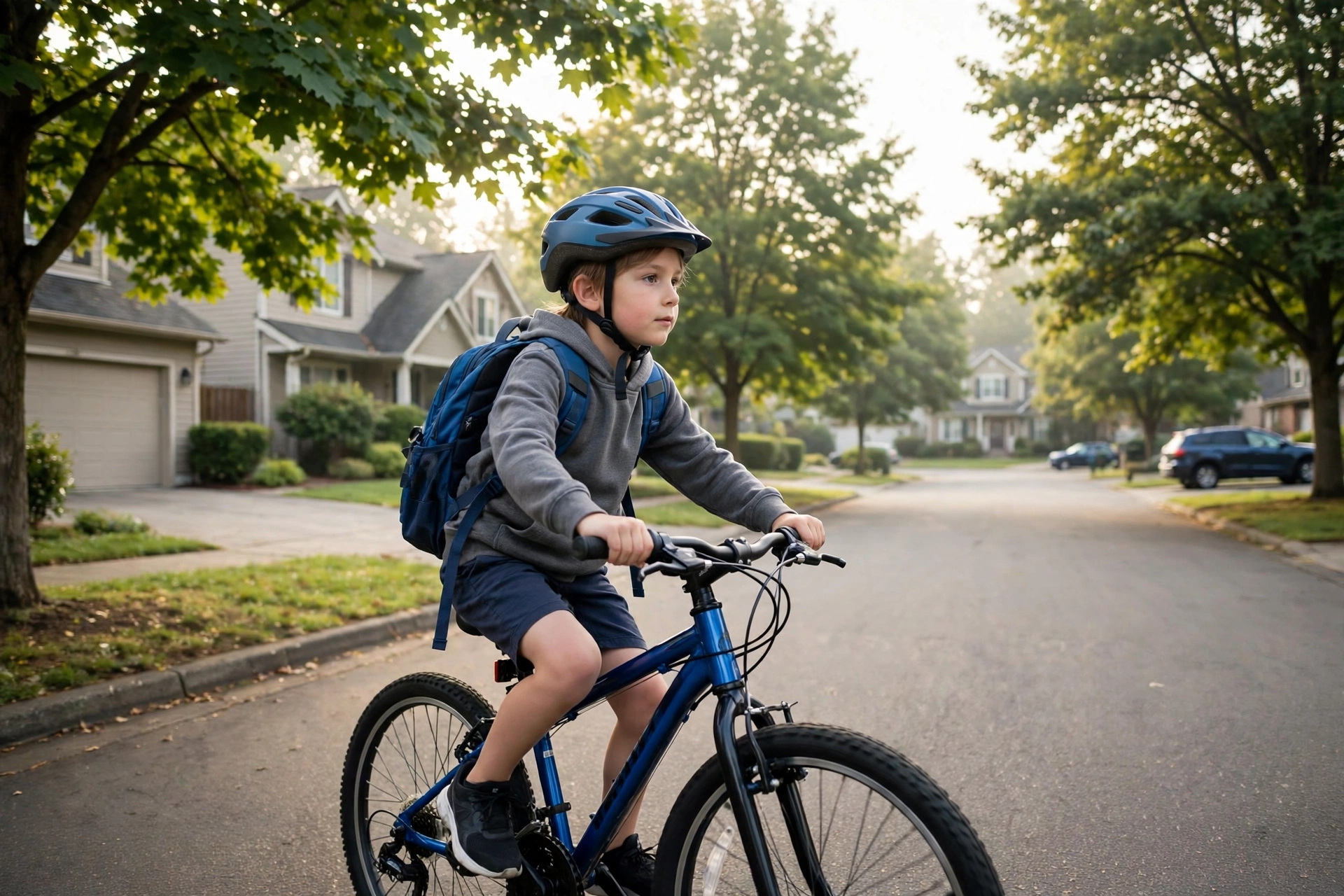
Children aged eight to ten need a helmet that fits their growing head, sits level just above the eyebrows, and stays put on school rides and family cycling trips. At this age most children are confident cyclists who ride further, faster and more often than younger children, so the helmet has to keep up. Look for a proper children’s or small adult’s helmet that matches your child’s head measurement, meets a recognised cycling standard, and is light and well ventilated enough to wear every day.
Between eight and ten, children change quickly. They outgrow helmets faster than they outgrow bikes, and the helmet that fitted last year may already be too small. Many are also cycling to school on their own for the first time. This guide explains how to size a helmet for an eight to ten-year-old, what features matter most, and how to check the fit so the helmet protects properly on every ride.
What Size Helmet Does an Eight to Ten-Year-Old Need?
Start by measuring your child’s head with a soft tape measure. Wrap it around the widest part of the head, about a finger’s width above the eyebrows and ears, and note the number in centimetres. In general terms, many children aged eight to ten measure around 53 to 57 centimetres, which often falls into a medium children’s size or a small adult size, but the measurement is what counts, not the age on the box.
At this age the jump between children’s and adult helmets can be confusing. Some ten-year-olds fit a small adult helmet better than a children’s one, especially if they have a larger head. Try both if you can. An adult helmet may have more vents and a better adjustment dial, but a children’s helmet may suit a rounder head shape better. The right one is the one that sits level, feels snug all round, and does not press on the forehead or temples.
Do not buy a helmet a size up to grow into. A helmet that is too big will slide around and can leave the forehead unprotected in a fall. Buy the size that fits now, and use the rear adjustment dial to fine-tune the fit. Check the fit again every few months, because children at this age can grow out of a helmet in a single school year.
How Do You Check the Fit on an Eight to Ten-Year-Old?
Put the helmet on and check that it sits level, with the front edge just above the eyebrows. Ask your child to shake their head from side to side and nod up and down. The helmet should move with the head rather than sliding around on its own. If it slips forward over the eyes or tips back to expose the forehead, adjust the rear dial first, and if it still moves, try a different size or shape.
Next, check the straps. Each side strap should form a V that meets just below the ear, and the chin buckle should sit flat under the chin. Tighten the chin strap until you can fit one finger between the strap and the chin, but not much more. A loose strap means the helmet can come off in a fall, while a strap that is too tight will be uncomfortable and your child will keep loosening it.
Finally, check comfort over time. A helmet that feels fine for two minutes in a shop may press after half an hour of riding. If you can, let your child wear the helmet at home for a while before the first ride. Red marks on the forehead or complaints of pressure are signs the fit or shape is wrong. At this age children will tell you honestly if a helmet is uncomfortable, so listen to them.
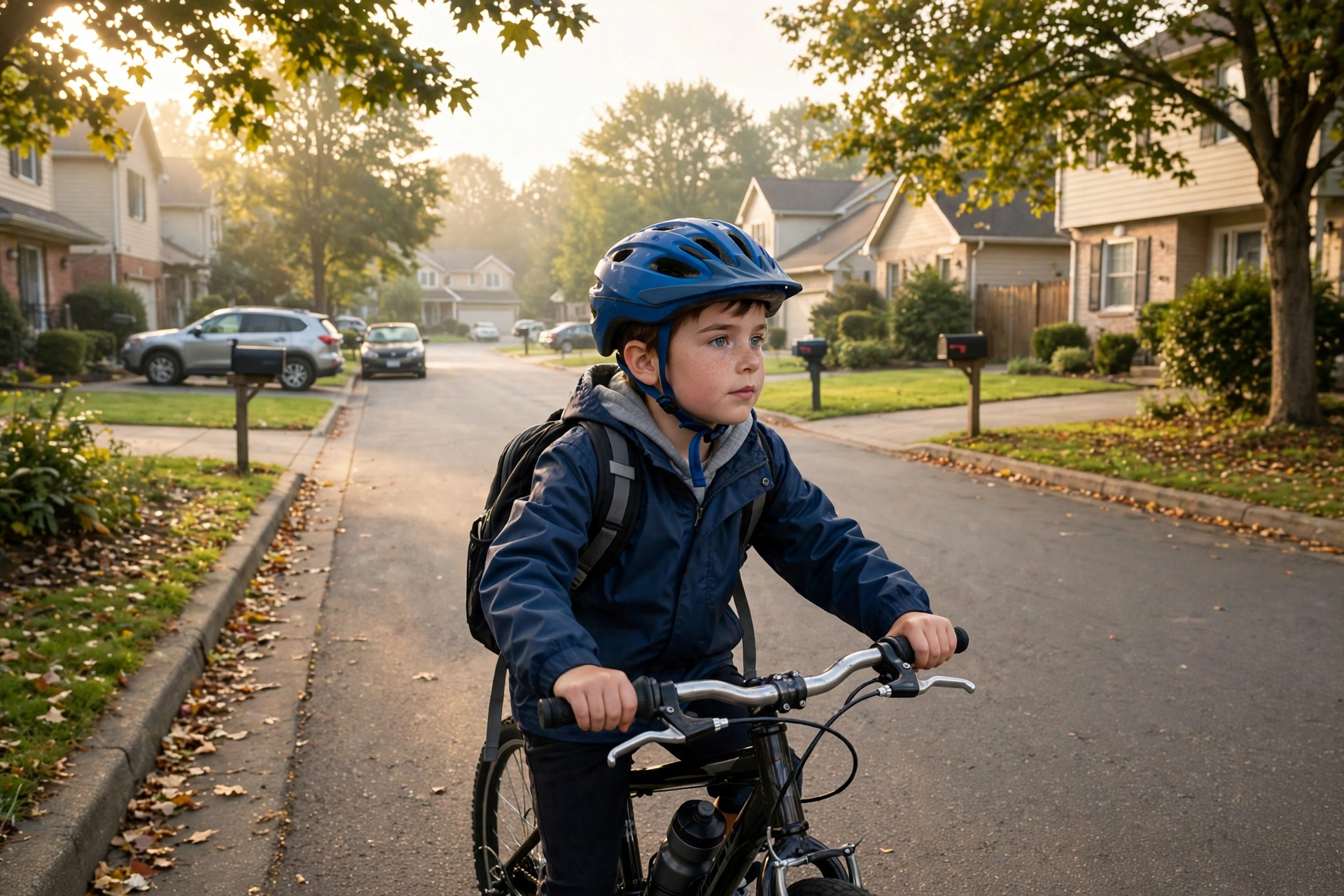
What Features Matter Most for Eight to Ten-Year-Olds?
Ventilation is near the top of the list. Children this age ride hard, and a helmet with good airflow keeps them cooler on the way to school and on weekend rides. Look for vents across the top and front of the helmet. A well-ventilated helmet is also one your child will keep on, rather than carrying it on the handlebars.
Weight matters too. A lighter helmet is easier on the neck, especially on longer rides, but do not choose the lightest helmet if it means giving up coverage at the back of the head. Hold a few helmets in your hand and compare them. The best choice is a helmet that feels light while still covering the head fully.
Should an Eight to Ten-Year-Old Wear a Helmet for Every Ride?
Yes, in general terms a helmet should be worn for every ride, however short. Most falls happen close to home, on familiar roads, and a short ride to school carries the same risks as a long weekend ride. Making the helmet part of the routine — like putting on shoes — means your child does not have to decide each time whether to wear it.
It helps to set the rule early and keep it simple. The helmet goes on before the bike moves, and it stays on until the ride is over. If your child resists, let them choose the colour or design, and ride with your own helmet on too. Children copy what adults do, and a parent who always wears a helmet sends a stronger message than any lecture.
If your child rides to school, talk to the school about helmet storage. Many schools have racks or lockers where a helmet can be kept safely during the day. Check the helmet regularly for cracks, loose straps or a worn dial, and replace it after any hard impact.
What About Helmets with Extra Technology?
Some helmets for older children now include extra features, such as a liner designed to reduce rotational forces in a crash. If you are comparing helmets and want to understand what these features do, reading about what MIPS is for helmets can help you decide whether it is worth looking for. It is not essential for every young rider, but it is a feature worth knowing about when you see it on a label.
Other features worth considering include a rear dial that is easy to turn with one hand, a peak that can be adjusted or removed, and padding that can be taken out and washed. Removable padding is useful at this age, because helmets get sweaty on the school run. Check that spare pads are available if the originals wear out.
Finally, remember that the most important feature is the fit. No amount of extra technology makes up for a helmet that is the wrong size or sits too far back on the head. Choose the helmet that fits your child best, meets a recognised standard, and is comfortable enough to wear every day. That is the helmet that will actually protect them.
Frequently Asked Questions
Q: What size helmet does an eight-year-old need?
A: Measure around the widest part of the head, about a finger’s width above the eyebrows. In general terms, many eight to ten-year-olds measure around 53 to 57 centimetres, which is usually a medium children’s size or a small adult size.
Q: Can my ten-year-old wear an adult helmet?
A: In general terms, yes, if it fits well. Try both children’s and small adult helmets and choose the one that sits level, feels snug all round, and does not press on the forehead or temples.
Q: How often should I replace my child’s cycling helmet?
A: Replace it after any hard impact, even if you cannot see damage, and when your child outgrows it. Check the fit every few months, because children aged eight to ten can grow out of a helmet within a school year.

Olivia
Writer at Helmet Today, covering helmet reviews, fit and riding safety.