A helmet for a pre-teen cyclist should fit snugly, sit level just above the eyebrows, and be light and comfortable enough to wear on every ride. Pre-teens are riding further and faster than younger children, often on roads, on trails, or to school on their own, so a helmet that fitted two years ago is unlikely to fit now. The right helmet is the one that matches your child’s head measurement today, meets a recognised cycling standard, and is one your child will actually wear without being asked.
The pre-teen years bring a tricky change: children are between children’s helmets and adult helmets, and neither may fit perfectly at first. Head shape, hair and personal taste all play a part, and pre-teens have strong opinions about how a helmet looks. This guide explains how to size a helmet for a pre-teen cyclist, what features are worth paying for, and how to check the fit so the helmet protects properly on every ride.
What Size Helmet Does a Pre-Teen Cyclist Need?
Measure your child’s head before you shop. Wrap a soft tape measure around the widest part of the head, about a finger’s width above the eyebrows and ears, and note the number in centimetres. In general terms, many pre-teens measure around 54 to 58 centimetres, which usually puts them in a small or medium adult helmet, but the measurement matters far more than age or the size printed on the box.
Try both children’s and adult helmets if you can. A large children’s helmet may suit a pre-teen with a rounder head, while a small adult helmet may suit one with a longer head shape. Adult helmets often have better ventilation and a more refined adjustment dial, but the fit is what counts. The helmet should sit level, feel snug all round, and not press on the forehead or temples.
Do not buy a size up to grow into. A helmet that is too big will slide around and can leave the forehead exposed in a fall. Buy the size that fits now, use the rear dial to fine-tune it, and check the fit again in a few months. Pre-teens grow quickly, and a helmet that fitted in spring may be tight by autumn.
How Do You Check the Fit on a Pre-Teen?
Start with the position. The helmet should sit level on the head, with the front edge just above the eyebrows. Ask your child to shake their head from side to side and nod up and down. The helmet should move with the head and stay in place. If it slips forward over the eyes or tips back, adjust the rear dial, and if it still moves, try another size or shape.
Then check the straps. Each side strap should form a V that meets just below the ear, and the chin buckle should sit flat under the chin. Tighten the chin strap until you can fit one finger between the strap and the chin. A loose strap means the helmet can come off in a fall, while a strap that is too tight will be uncomfortable and your child will keep loosening it.
Finally, check the fit with the kit your child actually wears. If they ride with a thin hat or a buff underneath in cold weather, try the helmet on with it. If they wear glasses or sunglasses, check that the helmet does not push them down or pinch the arms. A helmet that works with the rest of the kit is one your child will keep wearing.
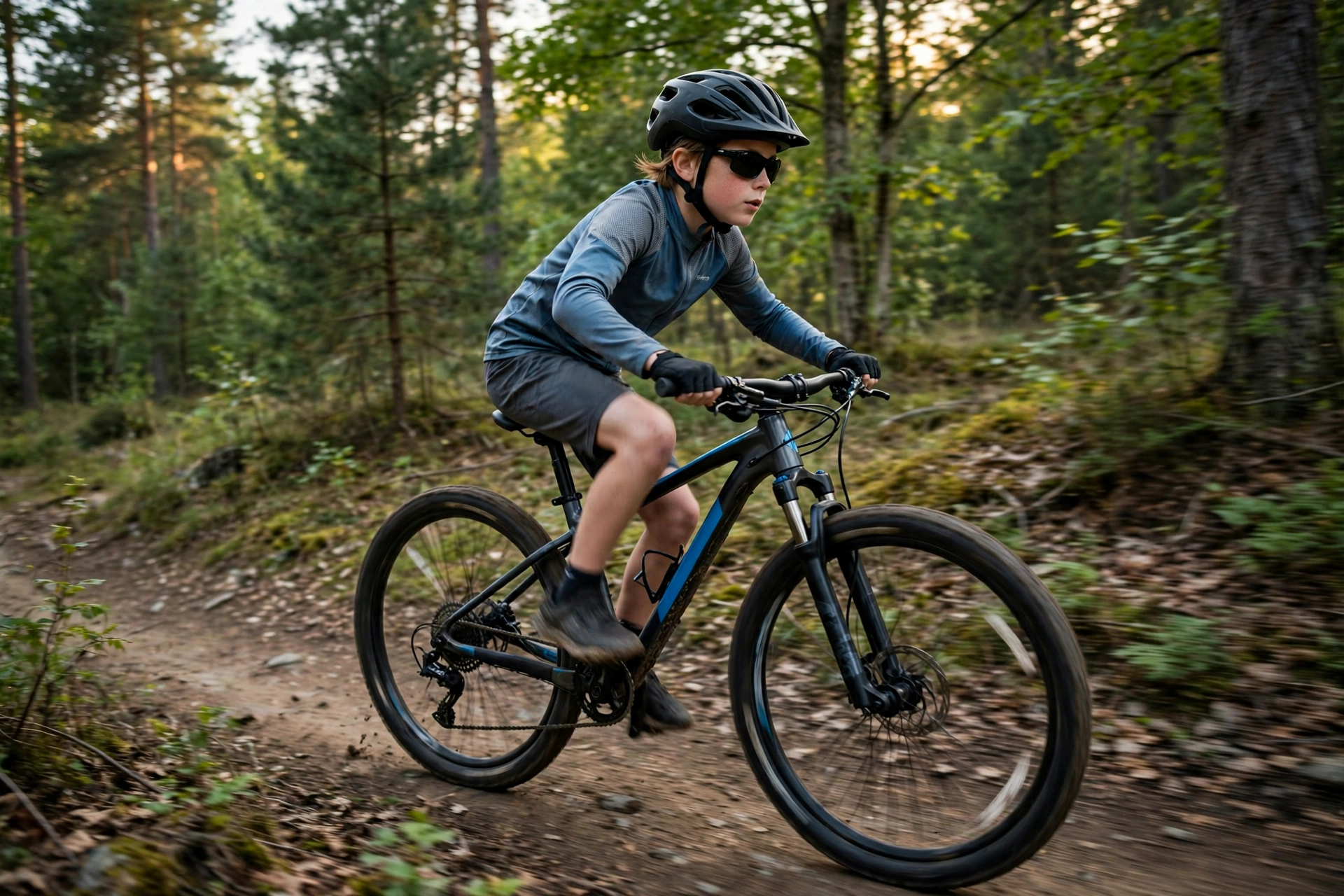
What Features Should a Pre-Teen Helmet Have?
Ventilation and weight are the two features pre-teens notice most. They ride hard, so a helmet with good airflow across the top and front will keep them cooler. A lighter helmet is also easier on the neck on longer rides. Hold a few helmets in your hand and compare them, but do not choose the lightest one if it means giving up coverage at the back of the head.
Look for a rear adjustment dial that is easy to turn, even with gloves on, and padding that can be removed and washed. Pre-teen helmets get sweaty, and removable pads make a real difference.
Visibility matters too, especially if your child rides on roads. Bright colours and reflective details help drivers spot a young cyclist. Some helmets have reflective strips built in, and if yours does not, reflective stickers are a cheap addition. Also check that the helmet has room for a rear light clip if your child rides in low light.
How Do You Get a Pre-Teen to Wear a Helmet Every Time?
Let them choose it. At this age, how a helmet looks matters as much as how it fits, and a helmet your child picked themselves is far more likely to be worn. Set a clear rule — the helmet goes on before the bike moves — but let them have the final say on colour and style within the helmets that fit properly.
Wear one yourself. Pre-teens copy adults more than they admit, and a parent who always wears a helmet sends a stronger message than any lecture. If the whole family wears helmets, it stops being a rule for children and becomes simply what cyclists do.
Make it easy. Keep the helmet by the bike or by the front door, not buried in a cupboard. If your child rides to school, check that the school has somewhere safe to store it. A helmet that is easy to grab and easy to store is one that gets worn, while a helmet that is a hassle to find is one that gets left behind.
Is Extra Helmet Technology Worth It for a Pre-Teen?
Some helmets now include a liner designed to reduce rotational forces in a crash, and these features are appearing on helmets for older children and pre-teens. If you are comparing models and want to understand what the label means, reading about what MIPS is for helmets can help you decide whether it is worth looking for. It is not essential for every rider, but it is a feature worth knowing about.
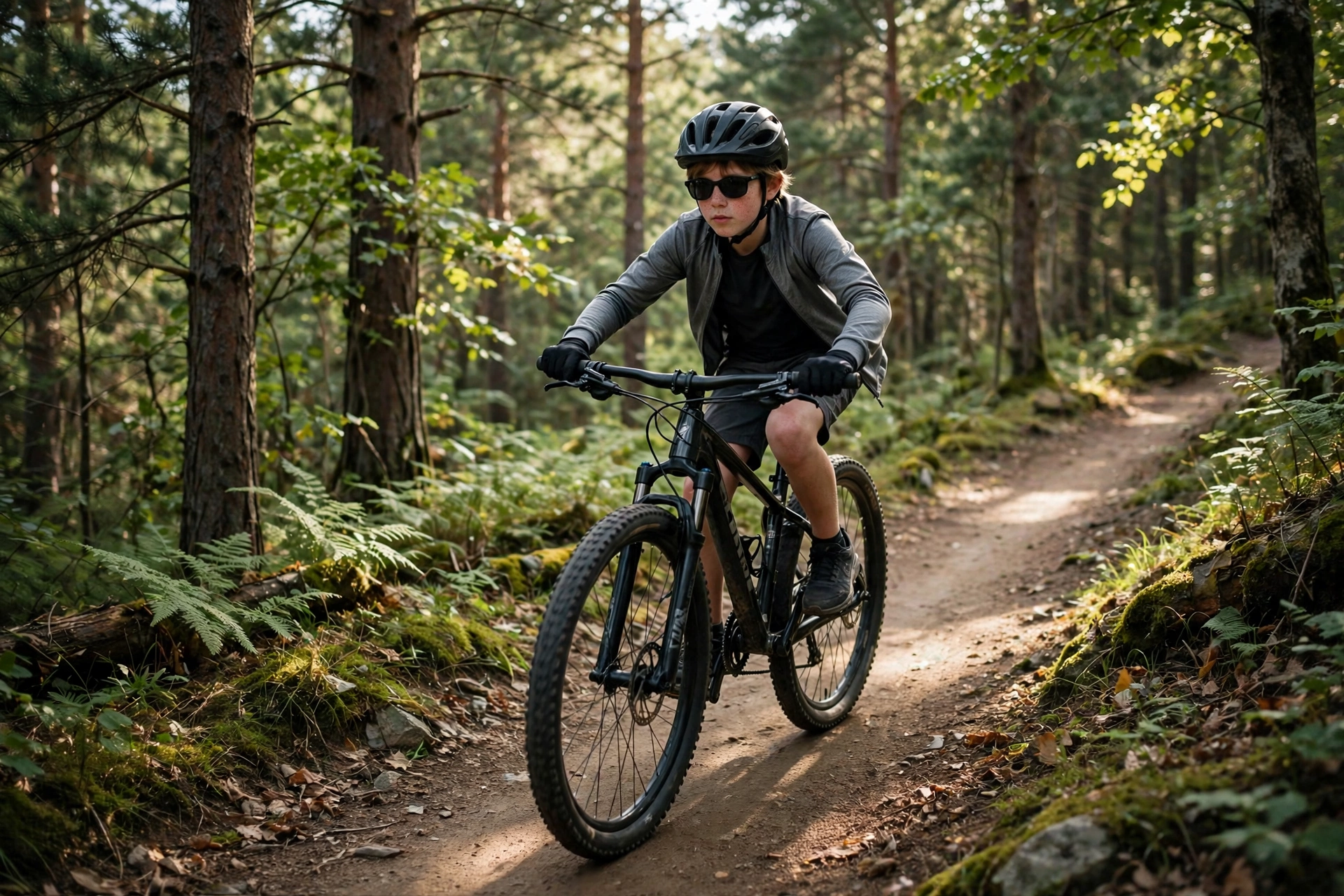
Other extras worth considering include a dial that adjusts easily, washable padding, and a shell that covers the back of the head well for trail riding. If your child rides on rough ground, extra rear coverage is worth having. If they mostly ride on roads, ventilation and visibility may matter more.
Remember that no extra feature makes up for a poor fit. A helmet that is the wrong size, sits too far back, or has loose straps will not protect properly, however much technology it contains. Choose the helmet that fits your child best, meets a recognised standard, and is comfortable enough to wear every day.
Frequently Asked Questions
Q: What size helmet does a pre-teen need?
A: Measure around the widest part of the head, about a finger’s width above the eyebrows. In general terms, many pre-teens measure around 54 to 58 centimetres, which is usually a small or medium adult helmet size.
Q: Can a pre-teen wear an adult cycling helmet?
A: In general terms, yes, if it fits well. Try both large children’s and small adult helmets, and choose the one that sits level, feels snug all round, and does not press on the forehead or temples.
Q: How do I get my pre-teen to wear a helmet?
A: Let them choose the colour and style, set a simple rule that the helmet goes on before the bike moves, and wear one yourself. Keeping the helmet by the bike makes it easy to grab on the way out.

Olivia
Writer at Helmet Today, covering helmet reviews, fit and riding safety.