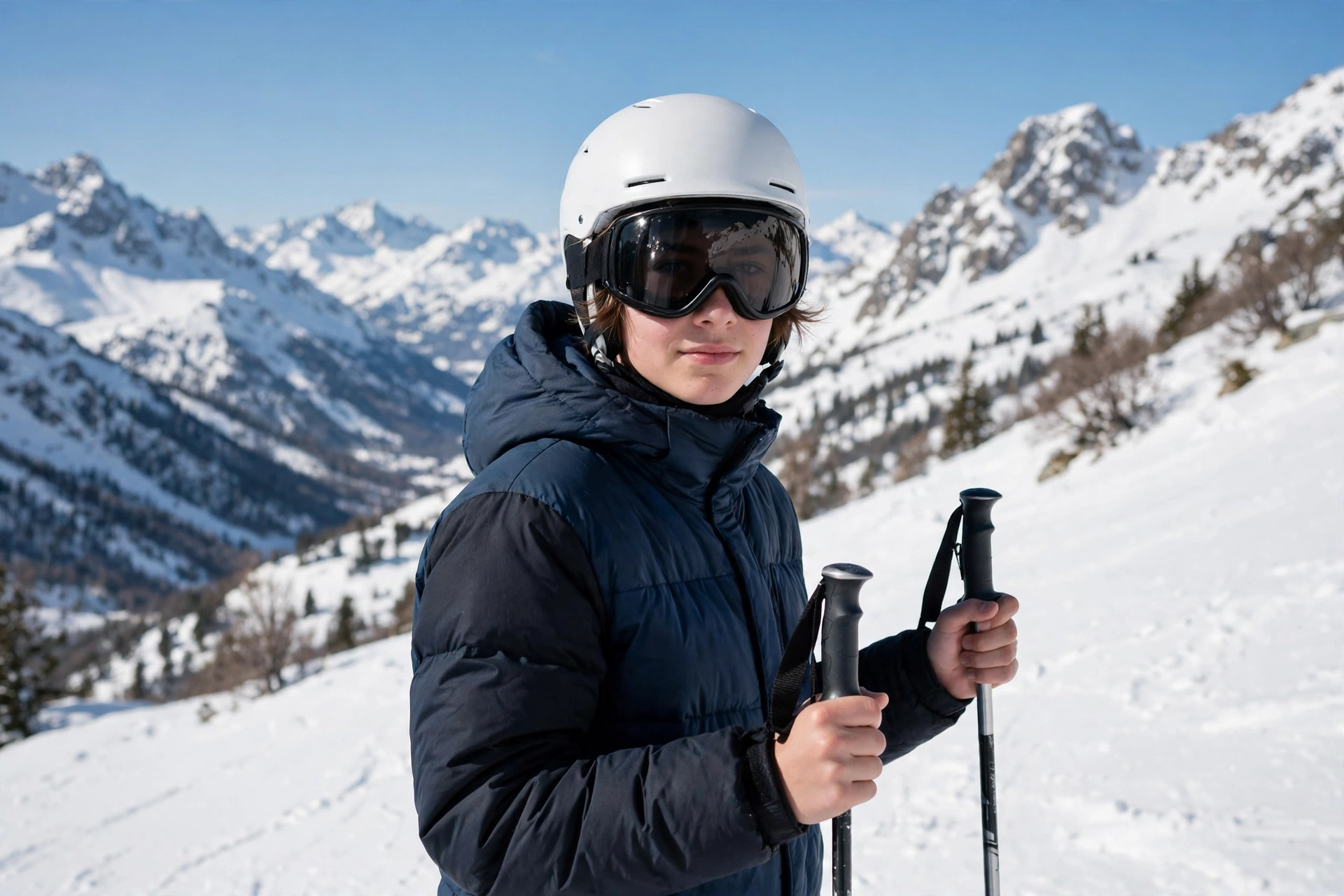
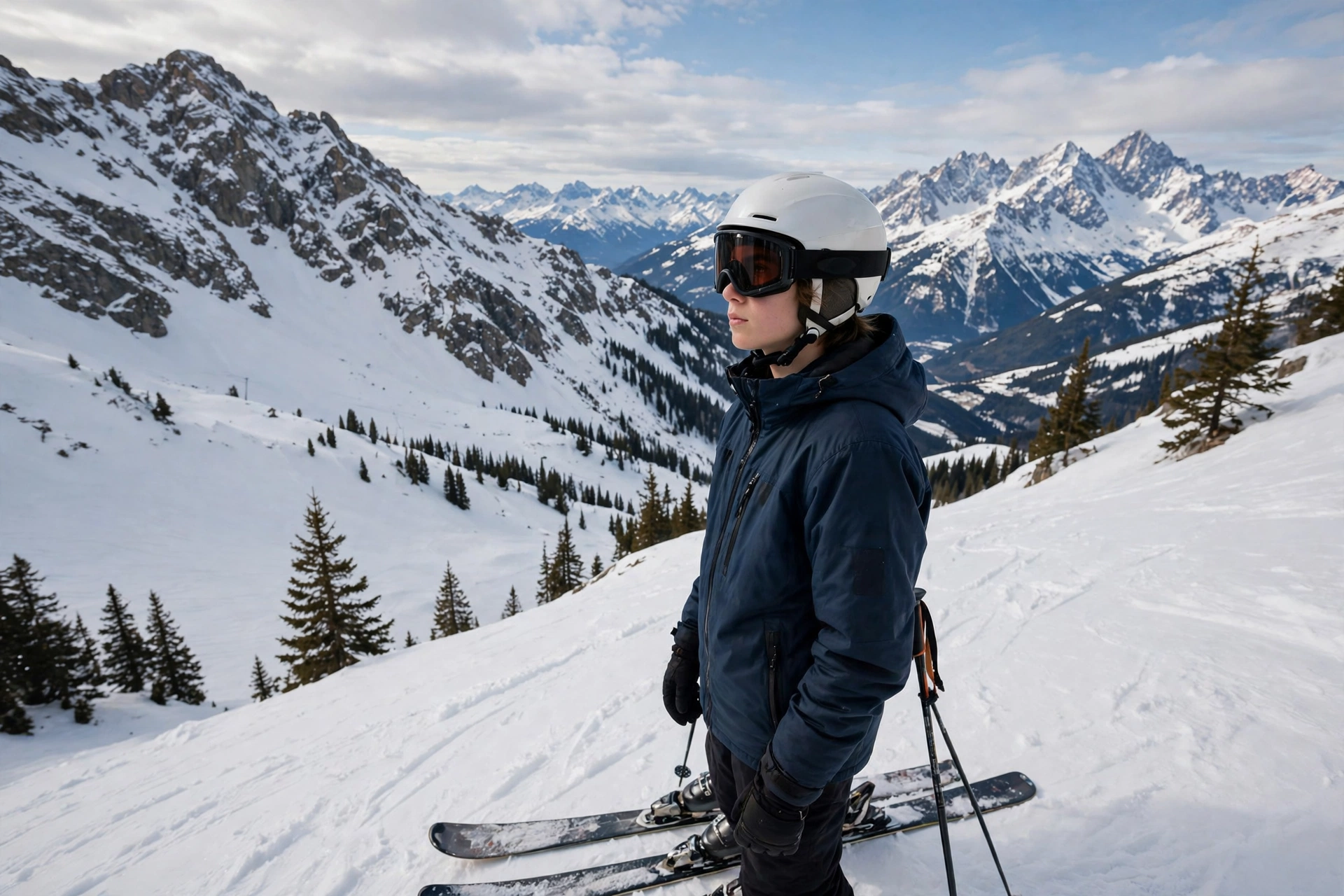
A helmet for a teenage skier should fit snugly, sit level just above the eyebrows, and work properly with their goggles — and it should be checked by a parent before the first run, not on the lift. Teenagers ski faster and take on harder slopes than younger children, so the helmet has to fit well and stay in place at speed. Check the size against your teen’s head measurement, make sure the goggles sit flush with the helmet, and confirm that the helmet meets a recognised ski standard.
Teenage skiers are a challenge for parents. They want to choose their own kit, they may already own a helmet that no longer fits, and they may be skiing with friends rather than with family. Yet they are still growing, and a helmet that fitted last winter can be too small this winter. This guide explains what parents should check — fit, goggles, ventilation and safety features — before a teenage skier heads up the mountain.
How Do You Check the Fit of a Teenage Ski Helmet?
Start with a head measurement. Wrap a soft tape measure around the widest part of your teen’s head, about a finger’s width above the eyebrows and ears, and note the number in centimetres. In general terms, many teenagers measure around 55 to 59 centimetres, which usually puts them in a small or medium adult ski helmet, but the measurement is what counts, not the age on the box.
Put the helmet on and check that it sits level, with the front edge just above the eyebrows. Ask your teen to shake their head from side to side and nod up and down. The helmet should move with the head and stay in place. If it slides around or tips back to expose the forehead, adjust the rear dial first, and if it still moves, try a different size or shape.
Check the fit with the kit your teen actually wears. A thin balaclava or beanie underneath will change the fit, so try the helmet on with it. Check that the helmet does not press on the forehead after a few minutes, and that the ear pads sit comfortably without squeezing. A helmet that presses will give your teen a headache by lunchtime, and a teen with a headache will soon take the helmet off.
How Should a Ski Helmet Work with Goggles?
The helmet and goggles should fit together with no gap. Put the goggles on with the helmet and look for a gap of skin between the top of the goggles and the front of the helmet. In cold weather, that gap — often called a gaper gap — lets cold air onto the forehead and can cause discomfort or even frostbite on very cold days.
Check that the goggle strap sits neatly in the clip or channel at the back of the helmet. Most ski helmets have a small clip or a groove that holds the goggle strap in place. If the strap slips, the goggles will move around while skiing. Also check that the goggles sit flat against the face without pressing too hard on the nose.
If you are buying new goggles as well as a helmet, try them together in the shop. Different brands shape their helmets and goggles differently, and a pair from the same brand often fits together best. But mixed brands can work well too, as long as you try them on together and check for a gap before you buy.
What Safety Features Should Parents Look for?
First, check the standard. Look for a label inside the helmet showing that it meets a recognised ski helmet standard. This tells you the helmet has been tested for the kinds of impacts a skier might have. A helmet without a clear standard label is not worth buying, however good it looks.
Next, look at the shell and liner. A hard outer shell protects against knocks, while the foam liner inside absorbs impact. Check that the shell covers the back of the head and the ears well. Some helmets have extra coverage at the back, which is worth having for a teenager who skis fast or tries terrain parks.
Also check the chin strap. It should fasten securely and sit flat under the chin, tight enough that you can fit one finger between the strap and the chin. If the strap is loose, the helmet can come off in a fall. Some helmets have a magnetic buckle that is easier to fasten with gloves on, which teenagers tend to like.
How Important Are Vents and Warmth?
Vents matter on a ski helmet because teenagers work hard on the slopes and can overheat quickly. Look for a helmet with adjustable vents that can be opened on warm spring days and closed when it is cold or snowing. A helmet with vents that can be worked with gloves on is much more useful on the mountain.
Warmth matters too. Ear pads should be thick enough to keep the ears warm but not so thick that they press. Some helmets have removable ear pads, which is useful in spring when it is warmer. If your teen wears a balaclava, check that the helmet still fits comfortably with it on, and that the vents are not blocked.
Weight is also worth thinking about. A lighter helmet is easier on the neck, especially on a full day of skiing. Hold a few helmets in your hand and compare them. In general terms, a lighter helmet is more comfortable, but do not choose the lightest one if it means giving up coverage or a proper fit.
What Should Parents Do Before a Ski Trip?
Check the helmet before you travel, not on the first morning of the trip. Try it on, check the fit, check the goggles, and look for any cracks or damage from last season. If your teen has grown, measure their head again and compare it with the size range on the helmet. A helmet that was snug last year may be too tight now.
Replace a helmet after any hard impact, even if you cannot see damage, because the liner inside can be damaged in ways that are not visible. If you are curious about the technology inside modern ski helmets, reading about what MIPS is for helmets can help you understand one of the features some helmets offer. It is not essential for every skier, but it is worth knowing about.
Finally, set a simple rule: the helmet goes on before the first run and stays on all day, including on easy runs and on the way back to the lodge. Most falls happen on easy slopes when skiers relax, so the helmet matters just as much there as on the steep runs. If the whole family wears helmets, the rule is easier to keep.
Frequently Asked Questions
Q: What size ski helmet does a teenager need?
A: Measure around the widest part of the head, about a finger’s width above the eyebrows. In general terms, many teenagers measure around 55 to 59 centimetres, which is usually a small or medium adult ski helmet.
Q: How do I stop a gap between my teen’s helmet and goggles?
A: Try the helmet and goggles on together and look for skin showing between them. A pair from the same brand often fits best, but any combination works if there is no gap when both are worn properly.
Q: When should I replace my teenager’s ski helmet?
A: Replace it after any hard impact, even if you cannot see damage, and when your teen outgrows it. Check the fit at the start of each season, because teenagers can grow out of a helmet in a single year.

Olivia
Writer at Helmet Today, covering helmet reviews, fit and riding safety.