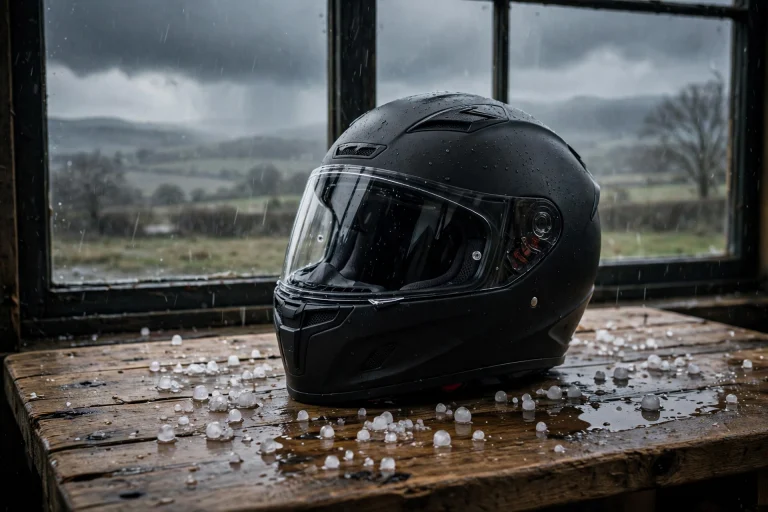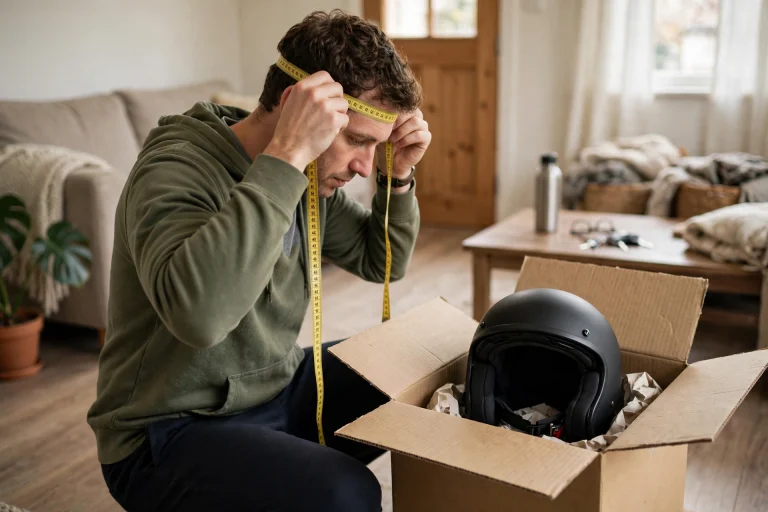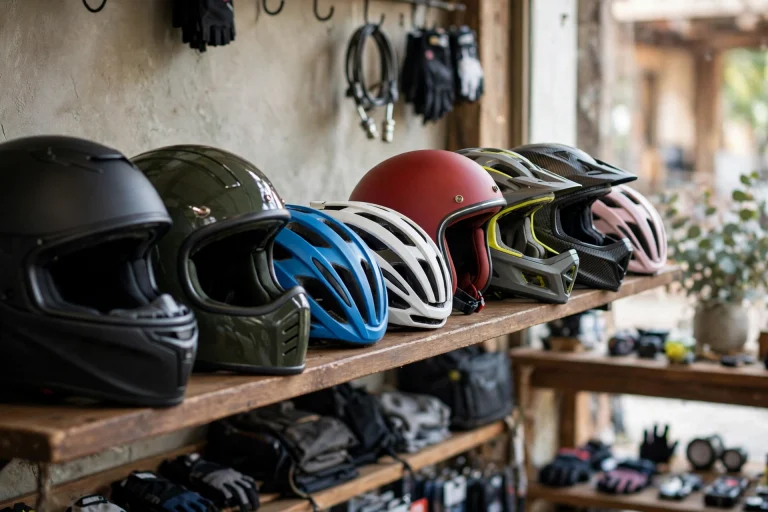
No, helmets do not work properly without the chin strap fastened — a helmet that is not strapped on can shift, tilt, or come off entirely in a crash, just when you need it most. The strap is not an optional extra or a matter of comfort alone; it is the part of the helmet that holds it in place on your head. Without it, the shell and liner cannot stay where they are designed to be, and the protection they offer is greatly reduced. A helmet worn loose on the head is far closer to no helmet at all than many riders realise.
It is a common sight: a rider with a helmet perched on their head and the strap hanging loose, or tucked away, or fastened so loosely that it serves no purpose. Some riders find the strap uncomfortable, others forget to fasten it on a short trip, and some assume that the helmet will stay on by itself. This guide explains in general terms why the chin strap matters, what can happen when it is left undone, and how to fasten it correctly every time.
What Does the Chin Strap Actually Do?
The chin strap has one main job: to keep the helmet on your head and in the right position during a crash. When a rider falls, the forces involved are sudden and violent, and the helmet is thrown about by the impact. Without a strap holding it in place, the helmet can slide forward over the eyes, tip back off the forehead, or fly off the head altogether. In any of those cases, the head is left unprotected for the rest of the fall.
The strap also keeps the helmet in position during normal riding. Wind, vibration, and the movement of the head can all shift a loose helmet, and a helmet that has moved out of place will not cover the parts of the head it is meant to protect. A helmet that sits level and covers the forehead only works if it stays there, and the strap is what makes that happen. It works together with the fit of the helmet: a snug fit and a fastened strap keep the helmet stable.
What Happens in a Crash Without a Fastened Strap?
In a crash without a fastened strap, the most likely outcome is that the helmet comes off or moves out of place at the first impact. A rider who falls forward may see the helmet slide off the back of the head, while a rider who falls backward may see it tip forward over the face. Either way, the head can then strike the ground or another object without any protection, even though the rider was wearing a helmet when the fall began.
Even if the helmet does not come off completely, a loose helmet can still fail to protect properly. If it shifts to one side, part of the head is left exposed, and if it tips back, the forehead is uncovered. The liner can only absorb impact in the areas it actually covers, so a helmet that has moved is a helmet that is protecting the wrong place. In general terms, a helmet that is not held in position by its strap cannot be relied on to be in the right place when it matters.
Why Do Some Riders Leave the Strap Undone?
There are a few common reasons why riders leave the strap undone, and most of them are easy to understand. The first is comfort: a strap that is too tight can press under the chin or rub against the skin, especially on a long ride or in hot weather. A rider who finds the strap uncomfortable may loosen it or leave it undone without thinking about the risk, and over time that can become a habit.
The second reason is habit and forgetfulness. On a short trip, a rider may put the helmet on, intend to fasten the strap, and then set off before doing so. If nothing goes wrong on that trip, the habit can stick, and the rider may stop noticing that the strap is undone. Short trips can feel safe, yet many falls happen close to home at low speed, and a short trip is not a safe trip without a fastened strap. If you want to understand one safety technology used in modern helmets, reading about what MIPS is for helmets is a good place to start.
How Should the Chin Strap Fit?
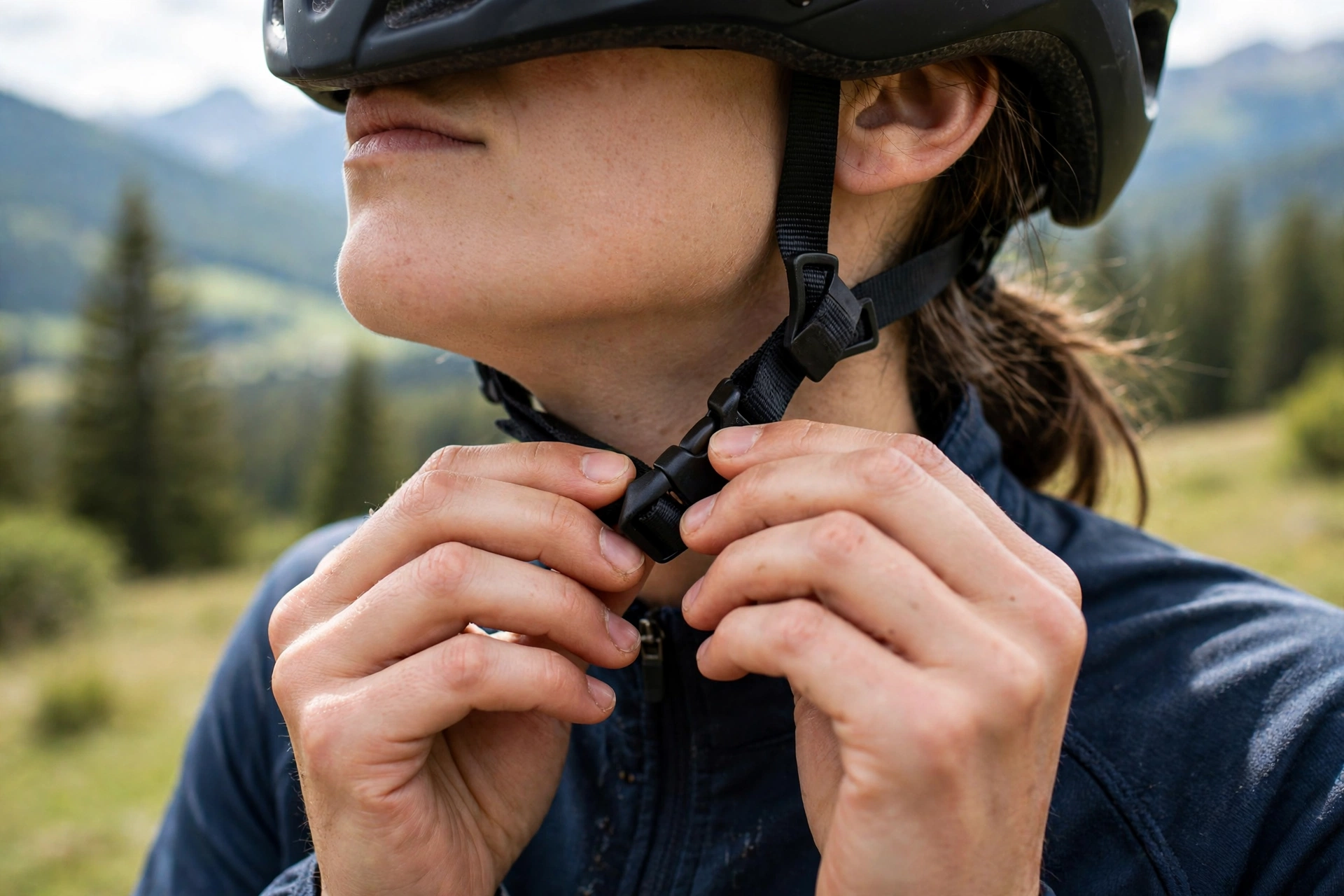
A correctly fastened chin strap should feel snug but not painful. The usual guide is that you should be able to fit no more than one or two fingers between the strap and your chin, and the strap should not move easily from side to side. If you can pull the strap away from your chin with ease, it is too loose, and if it presses so hard that it hurts or makes it difficult to swallow, it is too tight. The right fit is firm and comfortable at the same time.
The strap should also sit in the right place. The two side straps should meet just below the ear, forming a snug shape around it, and the buckle should sit under the chin rather than off to one side. Many helmets have adjustable sliders on the side straps, and taking a moment to set those correctly can make a large difference to comfort. A strap that is adjusted properly is far easier to wear, and a rider is far more likely to fasten it every time.
How Can You Make Fastening the Strap a Habit?
The simplest way to make fastening the strap a habit is to treat it as part of putting the helmet on, not as a separate step. Put the helmet on, fasten the strap, and then check the fit before you set off. Doing it in the same order every time turns it into a routine, and routines are much harder to forget than one-off actions. After a few rides, fastening the strap will feel as natural as putting the helmet on in the first place.
It can help to do a quick check before every ride: helmet level, forehead covered, strap fastened and snug. This takes only a few seconds, and it catches the times when the strap has been left undone or has worked loose. If you ride with others, you can check each other as well, because it is often easier to notice that someone else has forgotten their strap than to notice your own.
Frequently Asked Questions
Q: Do helmets work without a chin strap fastened?
A: No, in general terms they do not work properly. Without a fastened strap, a helmet can shift or come off in a crash, leaving the head unprotected just when protection matters most.
Q: How tight should a helmet chin strap be?
A: It should be snug but not painful, with room for no more than one or two fingers between the strap and your chin. It should hold the helmet firmly in place without pressing hard.
Q: Is it safe to ride a short distance with the strap undone?
A: No. Many falls happen close to home at low speed, and a helmet can come off in any fall. Always fasten the strap before you set off, however short the trip.

Olivia
Writer at Helmet Today, covering helmet reviews, fit and riding safety.