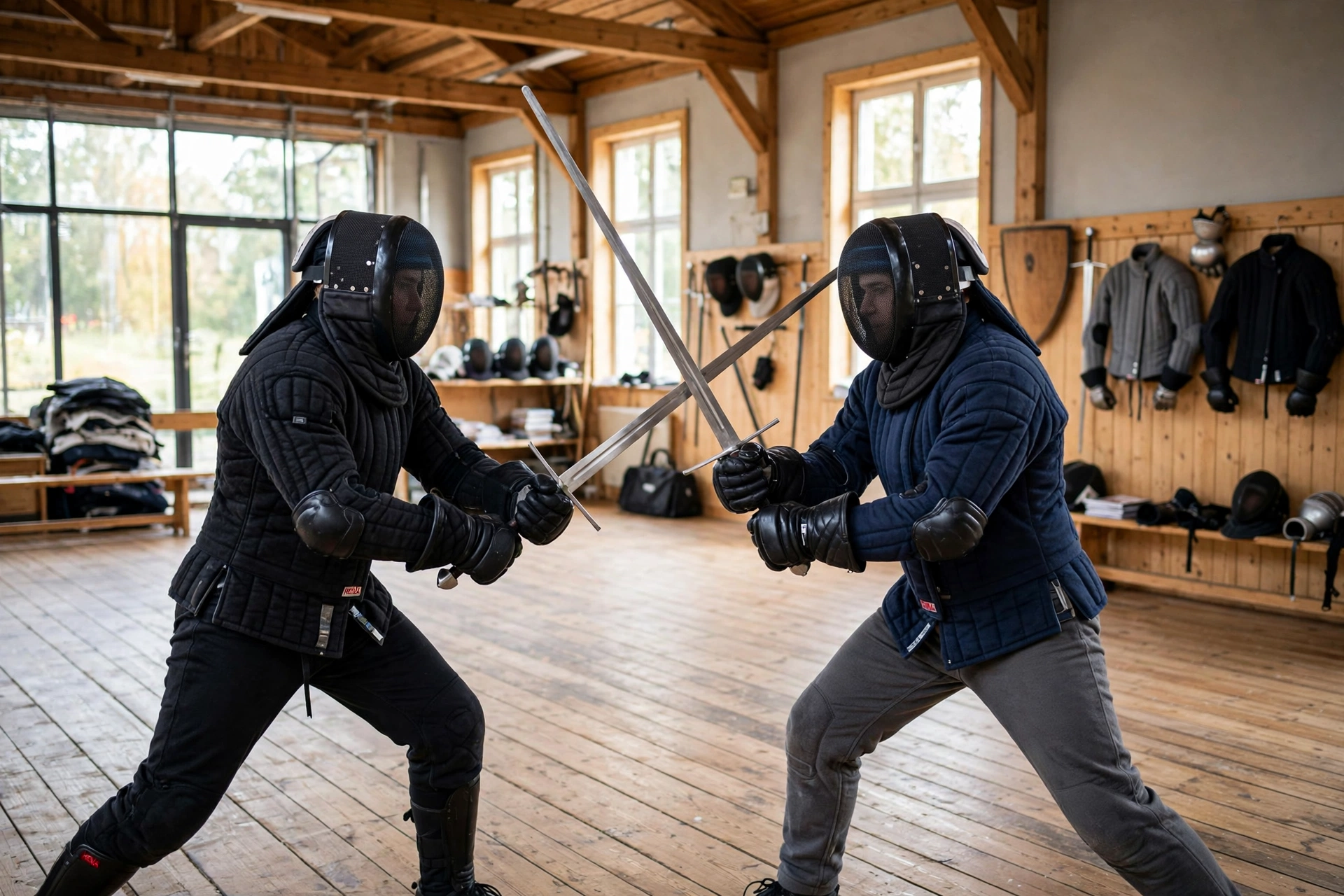
HEMA headgear is protective headgear worn for HEMA, or Historical European Martial Arts, a discipline that reconstructs historical European fighting systems with swords and other weapons. It shields the head and face from strikes during sparring, using a padded mask or a fencing-style mask with extra protection. HEMA involves real contact with steel or synthetic training weapons, so head protection is not optional: it is the piece of kit that makes safe sparring possible, and it is required in most clubs and events.
What Is HEMA?
HEMA stands for Historical European Martial Arts, and it is the study and practice of the fighting systems recorded in European manuals from the medieval period onwards. Practitioners train with weapons such as the longsword, the rapier, the sabre, and the sword and buckler, learning the techniques, footwork, and timing described in the old sources. The practice blends historical research with physical training, and it is done as a martial art, a sport, and a form of historical study.
HEMA training usually includes solo drills, paired exercises, and free sparring, where two practitioners fence against each other with training weapons. Sparring is where the techniques are tested under pressure, and it is also where the risk of being struck is highest. In general terms, the headgear is what allows sparring to happen at a realistic speed without putting the head and face at serious risk, and that is why it is treated as essential kit.
What Does HEMA Headgear Look Like?
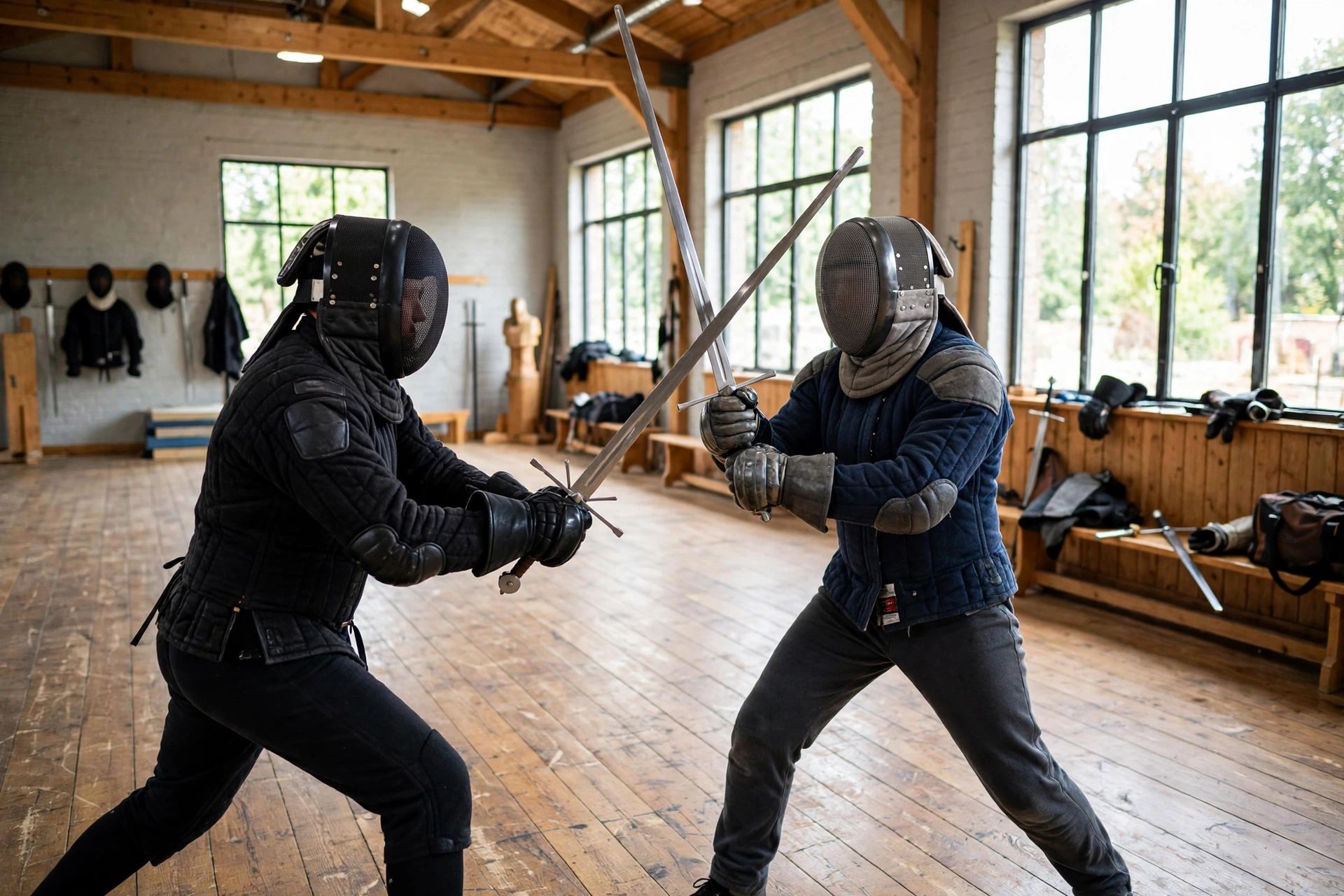
HEMA headgear usually takes the form of a fencing mask with extra padding, or a purpose-made HEMA mask built for heavier weapons. A standard fencing mask has a mesh front that protects the face and a bib that covers the throat, while a HEMA mask adds thicker padding around the back and sides of the head, extra protection for the back of the head, and sometimes a reinforced overlay that spreads the force of a strike.
Some practitioners wear an additional padded overlay or a back-of-head protector over the mask, especially when sparring with steel longswords, because the back of the head is exposed when the fencer turns or moves. The headgear should cover the whole head, including the ears, the back of the head, and the throat, because a strike can land from many angles. In general terms, the headgear is heavier and more protective than a normal fencing mask, because HEMA weapons and techniques hit harder.
Why Is Headgear Essential in HEMA?
Headgear is essential in HEMA because sparring involves real strikes with hard training weapons, and the head is the most common target. A longsword, even a blunt training sword, can cause a serious injury if it strikes an unprotected head, and the face, eyes, and skull are all vulnerable. The mask spreads the force of a strike across the mesh and padding, and it keeps the weapon away from the eyes and the face.
The headgear also protects against accidental strikes, such as a thrust that slips past a parry, or a blow that lands harder than intended. In general terms, headgear does not make HEMA safe in every case, and it cannot protect against every kind of strike, but it does reduce the force that reaches the head and face in the kinds of hits that happen most often in sparring. That is why most clubs will not let anyone spar without it.
How Is HEMA Headgear Different From a Fencing Mask?
HEMA headgear is different from a standard fencing mask mainly in the amount of padding and coverage it offers. A normal fencing mask is made for light, flexible sport fencing weapons, and it has a mesh front with a bib, but little padding at the back of the head. A HEMA mask is built for heavier weapons and harder hits, so it adds thick padding around the sides and back, a stronger mesh, and often a separate overlay or back-of-head protector.
The fit is different too: a HEMA mask must stay firmly in place when the wearer is struck, so the straps and padding are made to hold it steady. Some HEMA masks are sold as complete units, while others are built up from a fencing mask with added padding and overlays. If you want to understand one of the safety technologies used in modern helmets, reading about what MIPS is for helmets is a good place to start, though that system is made for helmets rather than for fencing masks.
What Should HEMA Headgear Fit Like?
HEMA headgear should fit snugly all round the head, with the mesh sitting a comfortable distance from the face and the padding pressing evenly without painful spots. The mask should not wobble when the wearer shakes the head, and it should not shift when struck. The bib should cover the throat, and the back of the head should be covered by the mask or by an added protector, with no gap that a weapon could reach.
The straps should be fastened securely before sparring, and the fit should be checked with the jacket and any other kit that will be worn, because layers change how the mask sits. A mask that is too loose can shift in a bout and expose the face, while a mask that is too tight can cause headaches and distract the fencer. In general terms, a well-fitting mask is one the wearer can forget about while focusing on the fight, and that is exactly what is needed in sparring.
When Should You Replace HEMA Headgear?
HEMA headgear should be replaced if the mesh is dented, cracked, or rusted, or if the padding is worn, compressed, or coming apart. The mesh is the part that keeps a weapon away from the face, so any damage to it is a serious problem, and a mask with a bent or broken mesh should not be used for sparring. Padding that has gone flat may no longer spread the force of a strike, and straps that have stretched may let the mask shift.
Age and use matter as well. Regular sparring wears down the mask over time, and a mask that has taken many hard hits may no longer protect as it once did. Checking the headgear before each session is a good habit: look at the mesh, the padding, the straps, and the bib, and check for rust, loose stitching, or damage. If anything seems wrong, replacing the mask or the worn part is the safer choice.
Do I need special headgear for HEMA?
Yes, in general terms you need a HEMA mask or a fencing mask with added HEMA padding. A normal fencing mask alone may not offer enough protection for heavier HEMA weapons.
Can I spar in HEMA without headgear?
No, in general terms headgear is required for sparring in HEMA. Most clubs will not let anyone fence without a mask, because the risk of a head or face injury is too high.
Does HEMA headgear protect the back of the head?
A good HEMA mask covers the back of the head with padding, and many practitioners add a separate back-of-head protector. It is worth checking the coverage before you spar with steel weapons.

Olivia
Writer at Helmet Today, covering helmet reviews, fit and riding safety.