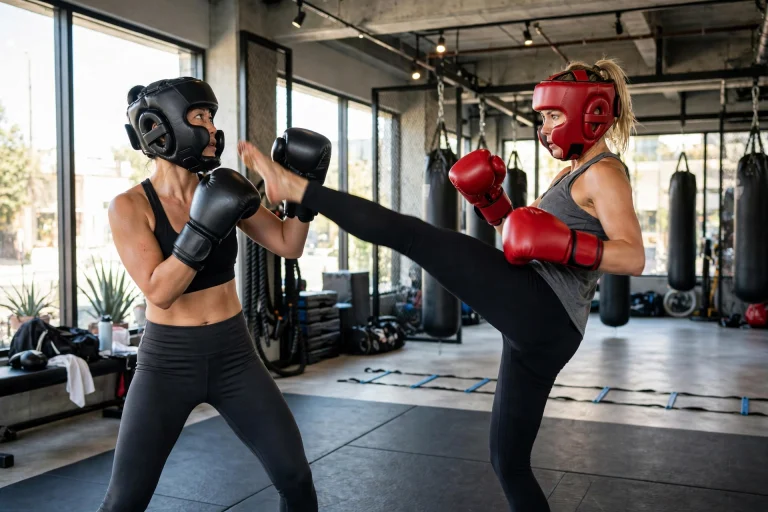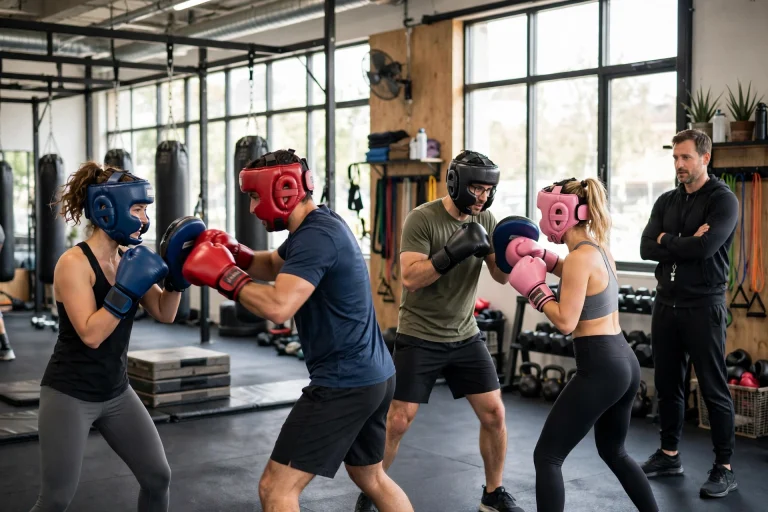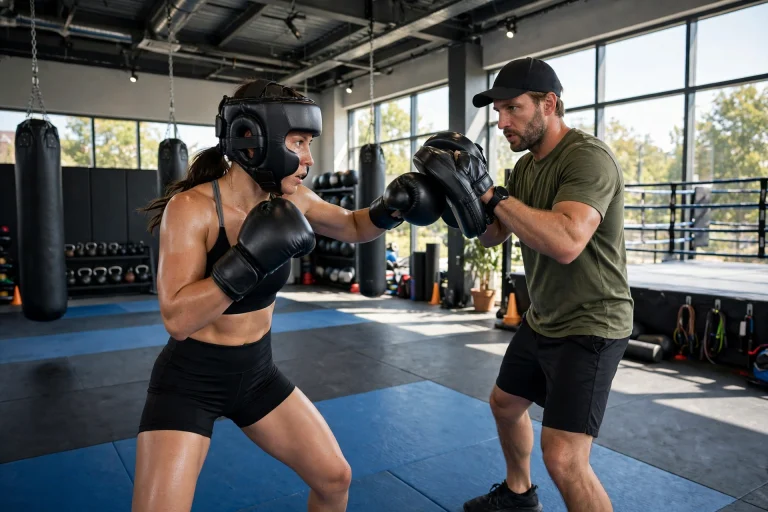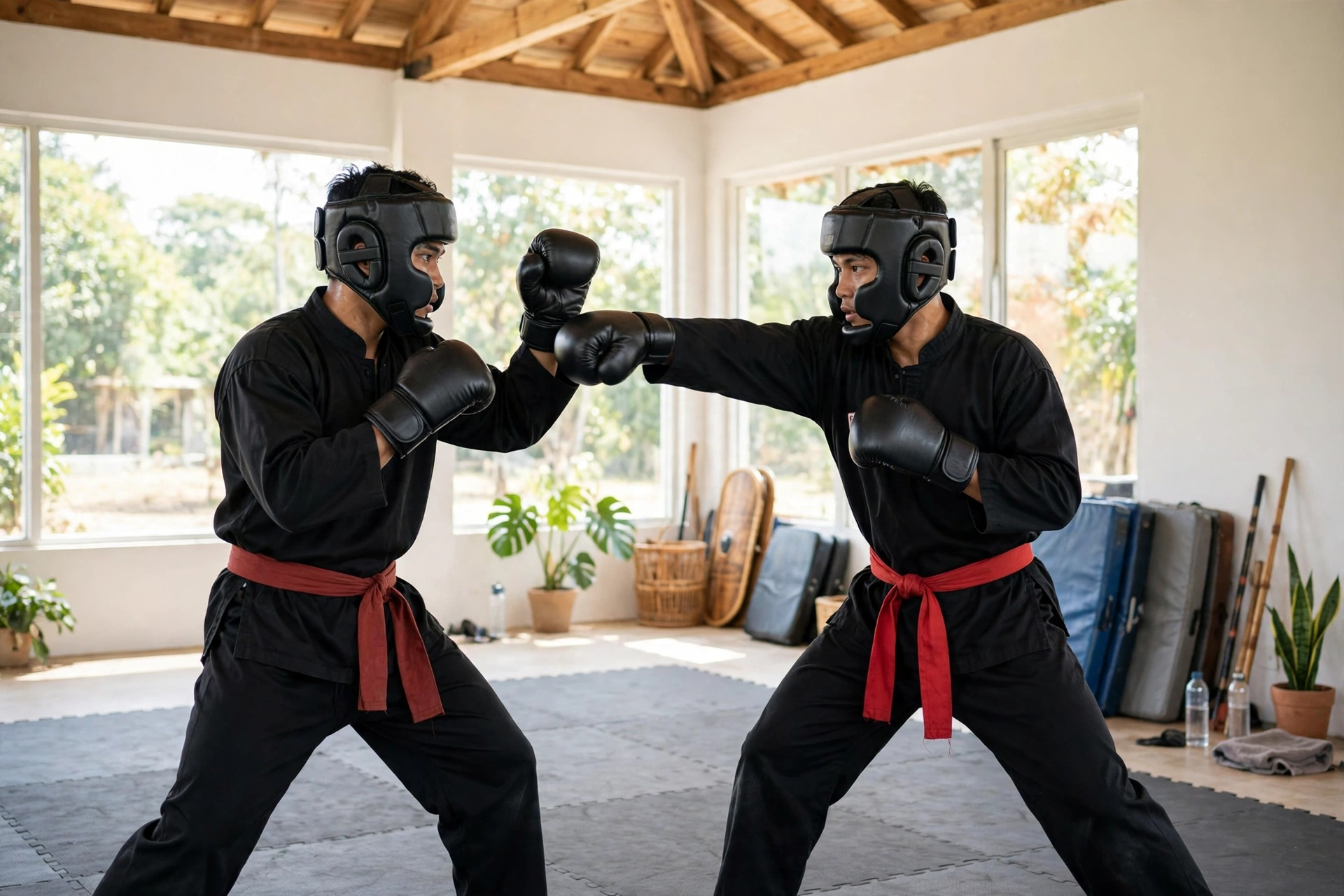
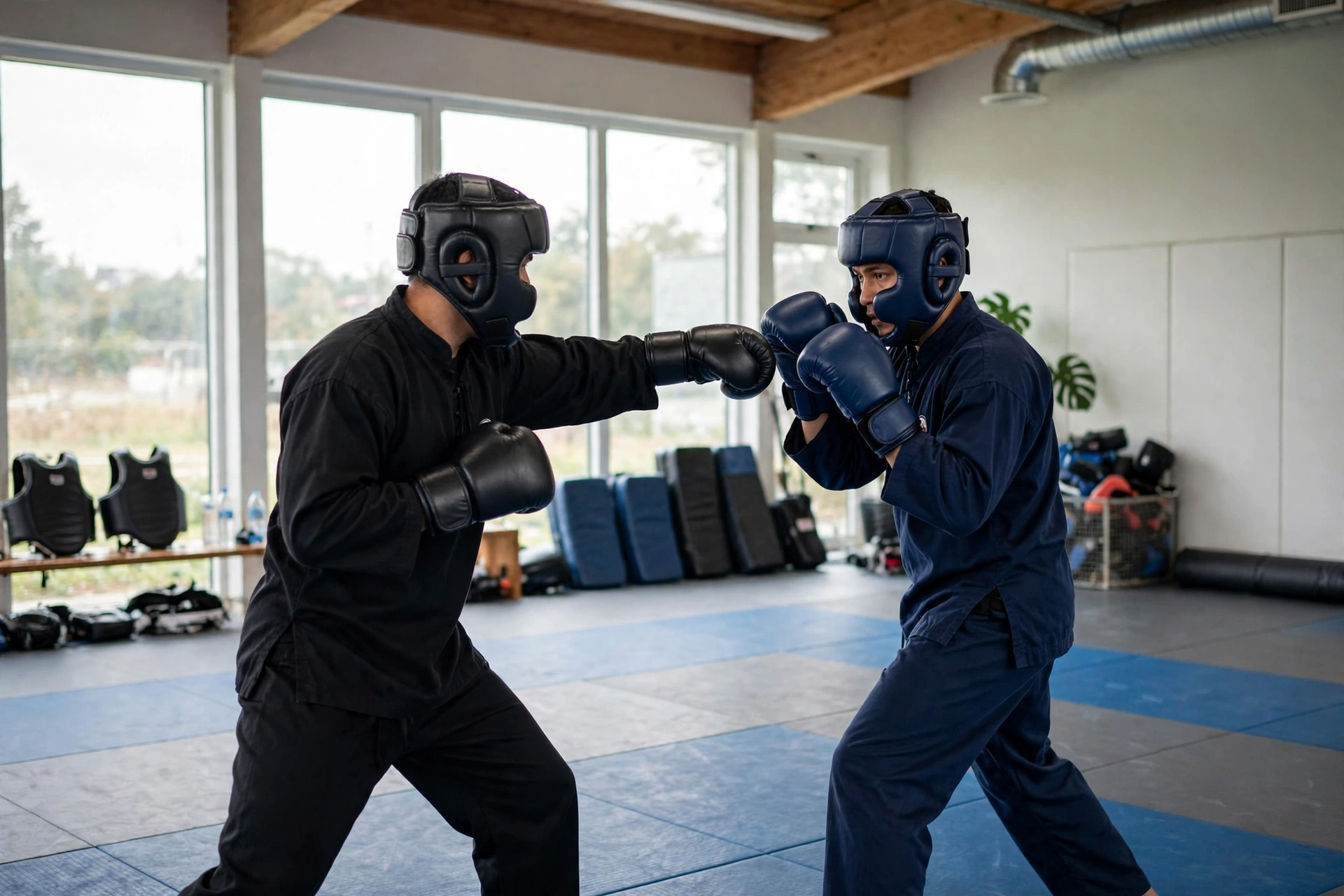
Pencak silat headgear is padded protective headgear worn during sparring and some forms of competition in pencak silat, the Southeast Asian martial art, and in general terms it is designed to soften blows, reduce cuts and bruising, and make training safer without removing the need for control and good technique. It usually covers the top, sides and back of the head, sometimes with extra padding around the forehead and cheeks, and it is worn with other protective gear such as body protectors and gloves. Whether it is required depends on the school, the type of session and the rules of the event, so a beginner should always check with their instructor first.
What Is Pencak Silat Headgear?
Pencak silat is a martial art from Southeast Asia, practised in Indonesia, Malaysia, Singapore, Brunei and elsewhere, and it combines strikes, kicks, sweeps, throws and joint locks with flowing, dance-like movements in its artistic forms. The combat side of the art, often called silat olahraga when it is practised as a sport, involves sparring against a partner, and that is where headgear comes in. In general terms, pencak silat headgear is a padded helmet-like piece of equipment, usually made from foam padding covered in a tough synthetic material, that fits snugly around the head and fastens under the chin.
When Is Headgear Worn in Pencak Silat?
Headgear is most commonly worn during sparring, when two practitioners practise techniques against each other at a controlled pace. In a typical class, students may drill techniques without contact, then move on to light sparring with protective gear, and the instructor will usually say when headgear is needed. It is also worn in many sporting competitions, where rules in general terms require protective equipment for both athletes, although the exact requirements vary between organisations and between age groups, with younger competitors often having stricter protection rules.
Headgear is less common in the artistic side of pencak silat, where practitioners perform choreographed forms, sometimes with weapons, for judges or an audience. In those performances there is no opponent striking at the head, so headgear is usually not needed and would get in the way of the flowing movements. It is also often left off during solo drills, warm-ups and conditioning work. The simple rule is that headgear belongs wherever there is a realistic chance of a strike landing on the head, and a good instructor will make that clear before any contact work begins.
How Should Pencak Silat Headgear Fit?
A good fit is the most important thing about any headgear, and pencak silat headgear is no exception. It should sit snugly on the head without squeezing, and it should not slide around when the wearer moves, turns or ducks. The chin strap should be fastened firmly enough to hold the headgear in place, but not so tightly that it is uncomfortable or makes breathing difficult. If the headgear slips down over the eyes during a movement, it is either the wrong size or it has not been adjusted properly, and it should be fixed before sparring continues.
When trying headgear on, it helps to move the head in every direction, shake it gently from side to side, and open the mouth wide, because the headgear should stay put through all of that. The padding should feel even all the way around, with no hard spots or gaps, and the wearer should still be able to see clearly to the sides. Vision matters a great deal in silat, where attacks can come from unexpected angles, so headgear that narrows the field of view is a poor choice. If you are buying your first set, trying it on in person is far better than guessing a size from a chart.
What Should You Look for When Choosing Headgear?
When choosing pencak silat headgear, start with the rules of your school or competition, because some organisations specify the type of headgear that is allowed. In general terms, look for padding that is thick enough to soften a blow but not so bulky that it feels heavy or unbalanced, and check that the outer material is tough enough to stand up to regular use. The fastening system should be simple and secure, with a chin strap that stays fastened and does not come loose during movement. Stitching should be neat and strong, with no loose threads or rough edges that could irritate the skin. For background on how helmet technology manages impact forces, see what MIPS is for helmets.
How Do You Care for Silat Headgear?
Headgear picks up sweat every time it is used, so regular cleaning matters. After training, wipe the inside and outside with a clean, damp cloth and leave it somewhere with good airflow so it can dry fully before the next session. Avoid leaving it in a closed bag while it is still damp, because that encourages odour and can weaken the material over time. In general terms, mild soap and water are enough for cleaning, and harsh chemicals should be avoided because they can damage the padding and the outer cover.
It is also sensible to check headgear regularly for signs of wear. Look for padding that has gone flat or lumpy, stitching that has come undone, straps that no longer hold, or tears in the outer material. Headgear that is damaged may not protect as well as it should, and it may also be uncomfortable to wear. If the padding has lost its spring, or if the headgear no longer fits snugly, it is time to replace it. Keeping a spare set is a practical idea for anyone who trains several times a week, so training is never missed because of a single piece of kit.
Is Headgear Enough on Its Own for Safe Sparring?
Headgear is only one part of safe sparring, and it should never be treated as a guarantee of safety. It can reduce the force of a blow and lower the chance of cuts and bruises, but it cannot remove the risk of a head injury entirely, and it does not protect the brain from the movement that happens inside the skull when the head is struck. That is why control matters so much in pencak silat: partners should practise with care, use the level of contact the instructor has set, and stop immediately if anyone is hurt or uncomfortable.
Safe sparring also depends on the rest of the protective kit, on a properly supervised session, and on honest communication between partners. A mouthguard, gloves, shin guards and a body protector all play their part, and a good instructor will watch the pace of a session and step in when it gets too intense. Beginners should start with light contact and build up gradually as their control improves, rather than trying to match the pace of experienced practitioners straight away. Headgear helps, but respect for a partner and respect for the rules help more.
Do you have to wear headgear for pencak silat?
Not always. It depends on your school, the type of session and the rules of any competition. It is commonly required for sparring and sporting competition, but it is usually not worn for solo forms or artistic performances.
Does pencak silat headgear protect against concussion?
No, not fully. In general terms it can soften blows and reduce cuts and bruising, but it cannot stop the brain from moving inside the skull, so it cannot remove the risk of concussion entirely.
Can beginners use the same headgear as experienced practitioners?
Yes, in general terms beginners can use the same type of headgear, as long as it fits well and meets the rules of their school. Beginners often benefit from headgear with good all-round padding while they are still learning control.

Olivia
Writer at Helmet Today, covering helmet reviews, fit and riding safety.