Yes, you can clean a white helmet and remove most stains with warm soapy water, a soft cloth, and a little patience, though deep yellowing and ground-in marks may never come out completely. White helmets show every speck of dirt, bug splatter, and scuff, which is why they look so sharp when new and so tired after a season of riding. The good news is that most surface stains lift off with gentle cleaning, as long as you use the right products and avoid anything abrasive.
The trick with a white helmet is to clean it regularly and gently, rather than waiting until it is filthy and then scrubbing hard. Harsh cleaners and rough pads can dull the finish or scratch the shell, which only makes future stains stick more easily. This guide explains how to clean a white helmet safely, how to tackle common stains, and how to keep it looking bright for longer.
Why Do White Helmets Stain So Easily?
White shows everything. A dark helmet hides road grime, dead insects, and scuffs, while a white one displays each mark clearly against its pale surface. That does not mean white helmets get dirtier than other colours; it simply means you notice the dirt sooner, which can actually be a good thing because you clean it sooner.
Most stains on a white helmet come from the road: dust, mud, tar spots, and insect remains that bake on in the sun. Sweat and sunscreen can also leave yellowish marks around the rim and vents, while contact with dark fabrics, bags, or other helmets can leave grey scuffs. Over time, sunlight itself can cause a white shell to yellow slightly, especially if the helmet is stored in direct sun.
The shell material matters too. Glossy finishes tend to wipe clean more easily than matt ones, because dirt has less texture to cling to. Matt white helmets look smart but can hold on to grime in their fine surface texture, so they need a softer touch and a little more patience when cleaning.
What Should You Use to Clean a White Helmet?
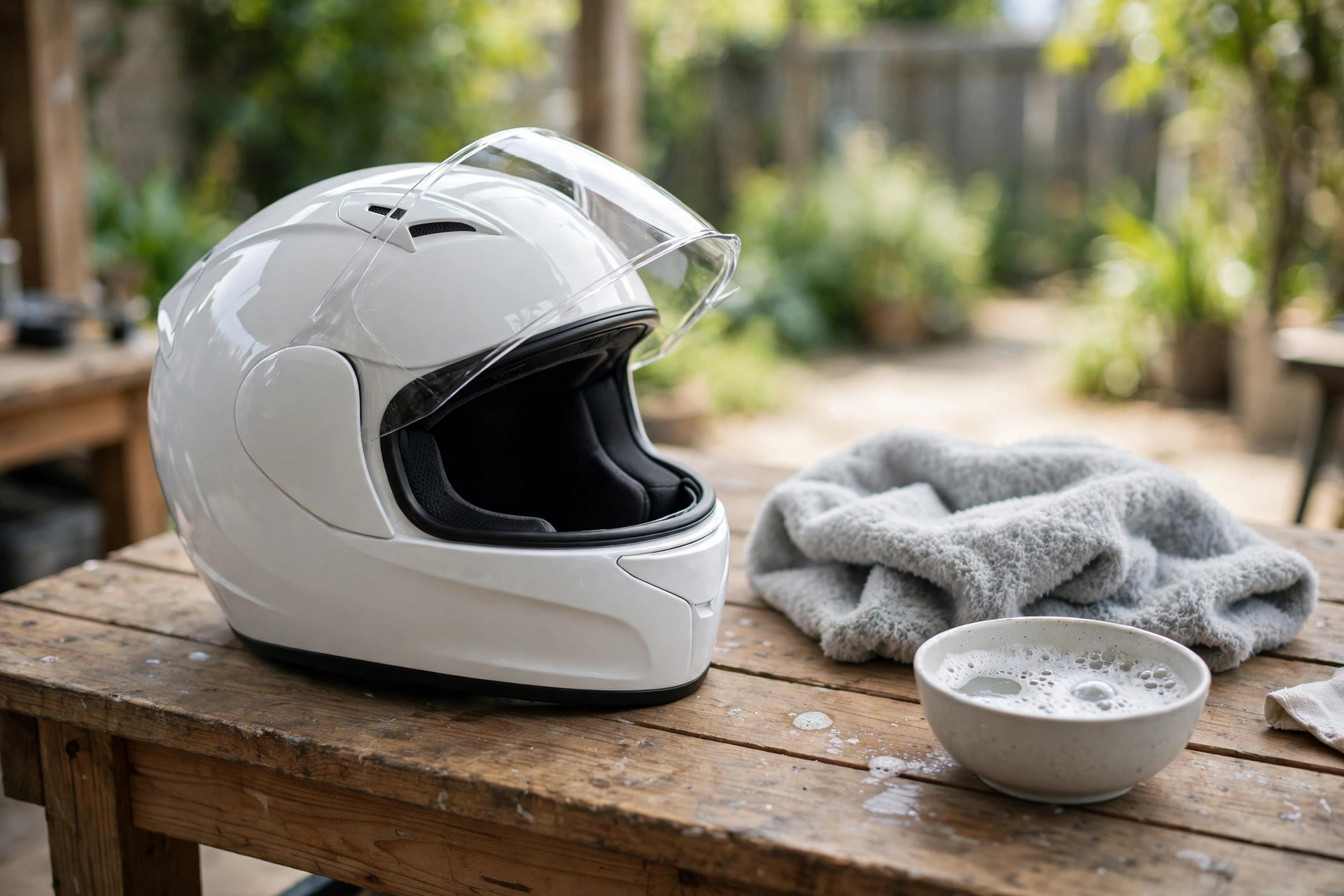
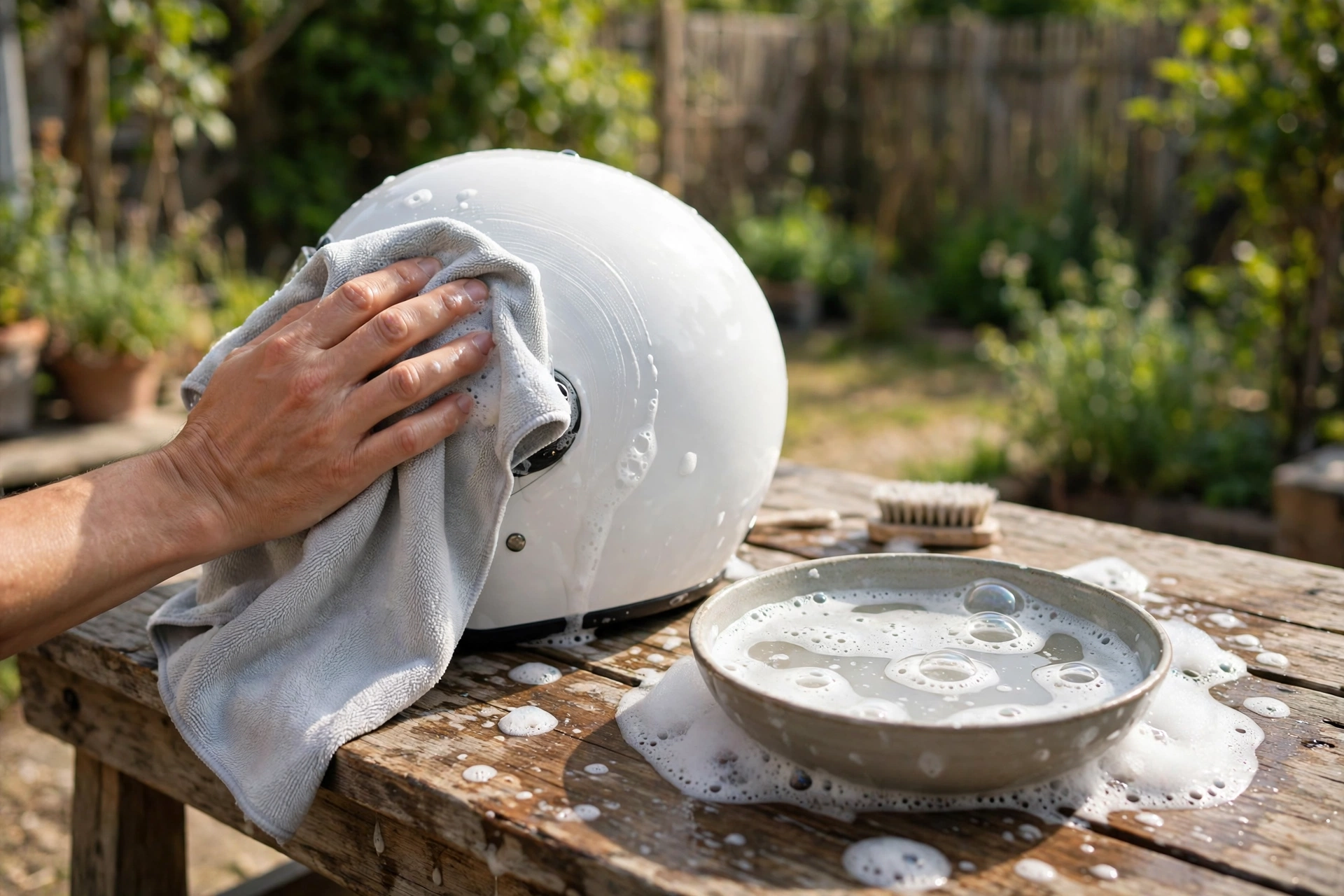
Warm water and a small amount of mild soap or washing-up liquid are the safest starting point, and they will deal with most everyday dirt. Use a soft microfibre cloth or a sponge, and work in gentle circles over the shell. For bug splatter and dried mud, lay a damp cloth over the area for a few minutes to soften it before wiping, rather than scraping at it.
For stubborn marks, a paste of baking soda and water, rubbed very gently with a soft cloth, can lift light staining without scratching the finish. Always test it first on a small hidden area, such as under the peak or near the base of the shell, and stop if you see any dulling. Avoid bleach, acetone, petrol, and abrasive cream cleaners, which can damage the shell, the graphics, and the clear coat.
If your helmet has a removable liner, take it out and wash it separately so you can clean the shell properly without soaking the padding. While you have the shell in your hands, it is worth learning about the protection inside it, and reading about what MIPS is for helmets can help you understand one of the technologies used in modern helmet design.
How Do You Remove Stains From a White Helmet?
Start with the gentlest method and work up only if you need to. Wash the whole shell with warm soapy water first, then look at what is left. Fresh dirt and light road grime usually come off at this stage. For tar spots or sticky residue, a little dab of mild oil on a cloth can loosen the mark before you wash it again with soap.
Yellowish stains around the vents and rim often come from sweat and sunscreen, and these respond to a gentle baking soda paste left on the mark for a few minutes before wiping away. Scuffs from other objects may need a soft eraser or a careful rub with a microfibre cloth, but never use sandpaper, scouring pads, or anything gritty, because scratches on a white shell show up just as clearly as stains do. Some yellowing from age and sun simply will not come out, and that is a sign the helmet is ageing rather than a cleaning failure.
How Do You Clean the Visor and Vents on a White Helmet?
Clean the visor with lukewarm water and a microfibre cloth, using a drop of mild soap if needed, and dry it with a clean, lint-free cloth to avoid streaks. Avoid paper towels, which can scratch the visor over time, and never use glass cleaner containing ammonia on a visor, as it can damage coatings. Remove the visor if your helmet allows it, so you can clean the edges and the seal underneath.
For the vents, use a soft brush or a cotton bud to clear dust and dead insects from the openings, then wipe around them with a damp cloth. Blocked vents make a helmet hotter and stuffier, so this is worth doing regularly. Take care not to push dirt further into the vent channels, and let everything dry fully before you put the visor back on.
How Can You Keep a White Helmet Looking Clean?
Clean little and often. A quick wipe after a ride takes a minute and stops dirt, bugs, and sweat from setting into the finish. Keep a microfibre cloth and a small spray bottle of soapy water in your garage or kit bag so the job is easy to start. Store the helmet in its bag, away from direct sunlight, and keep it away from dark fabrics that could rub colour onto the shell.
It also helps to wash your hands before handling the helmet and to avoid resting it on dirty surfaces. Small habits like these add up over a season, and they are the difference between a white helmet that still looks bright after a year and one that has gone grey and tired. If the shell has yellowed badly or the finish is damaged, no amount of cleaning will restore it, and that may be a sign to start thinking about a replacement.
Frequently Asked Questions
Q: Can I use bleach to clean a white helmet?
A: No. Bleach is too harsh for a helmet shell and can damage the finish, graphics, and any foam or padding it touches. Stick to warm water, mild soap, and a gentle baking soda paste for stubborn marks.
Q: How do I remove yellowing from a white helmet?
A: Light yellowing from sweat or sunscreen may lift with a gentle baking soda paste, but yellowing caused by age and sun exposure often cannot be removed. If the helmet is old or badly yellowed, it may be nearing the end of its useful life.
Q: Is it safe to use a pressure washer on a white helmet?
A: No. A pressure washer can force water into the vents and padding, damage seals and coatings, and strip graphics. Always clean a helmet by hand with a soft cloth and lukewarm water.

Olivia
Writer at Helmet Today, covering helmet reviews, fit and riding safety.