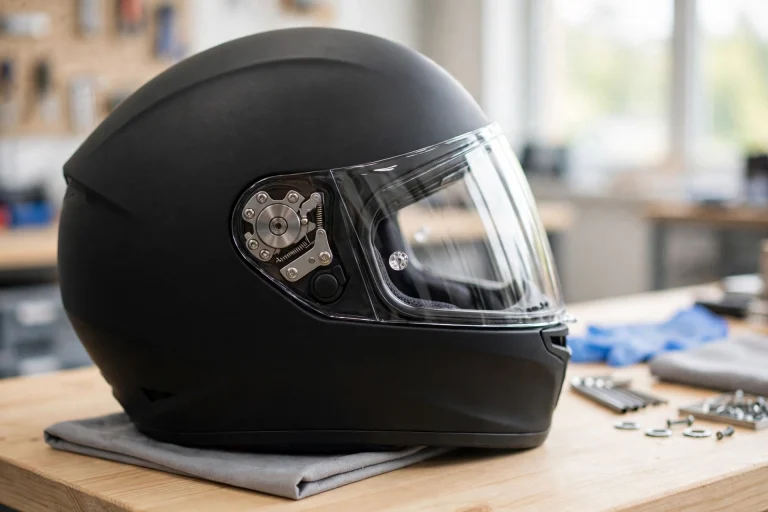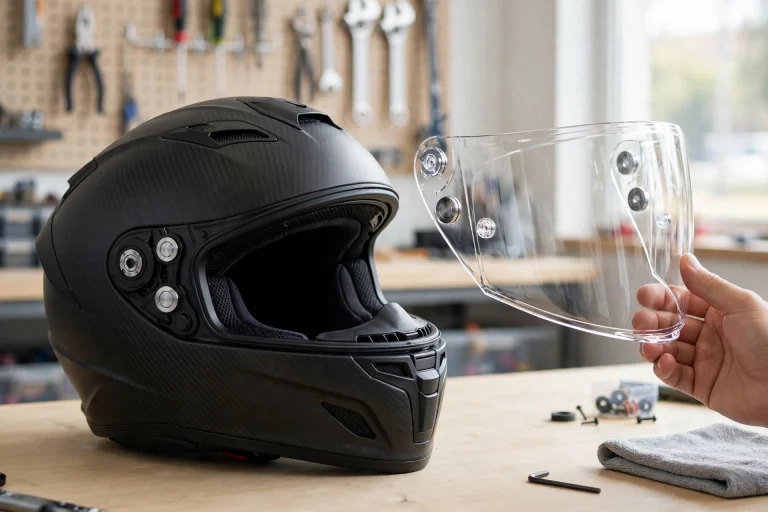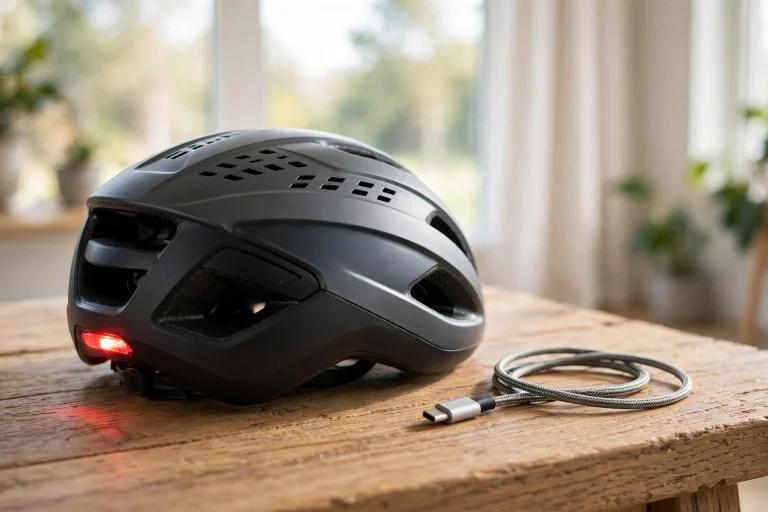
A helmet with a heart-rate monitor is a helmet that measures your pulse while you ride, using a small optical sensor built into the helmet, usually near the forehead or temple. The sensor shines a light onto your skin and tracks the changes in blood flow as your heart beats, turning that into a heart-rate reading that is sent to an app on your phone. In general terms, it is a fitness-tracking helmet that focuses on one measurement — your heart rate — rather than trying to do everything at once.
How Does a Heart-Rate Monitor Work Inside a Helmet?
The sensor inside the helmet is called an optical heart-rate sensor, and it works in the same way as the sensor on the back of a fitness watch. A small light, usually green, shines onto the skin. Blood absorbs some of that light, and the amount absorbed changes slightly with each heartbeat as blood pulses through the vessels. The sensor measures those tiny changes many times a second and works out your heart rate from the pattern.
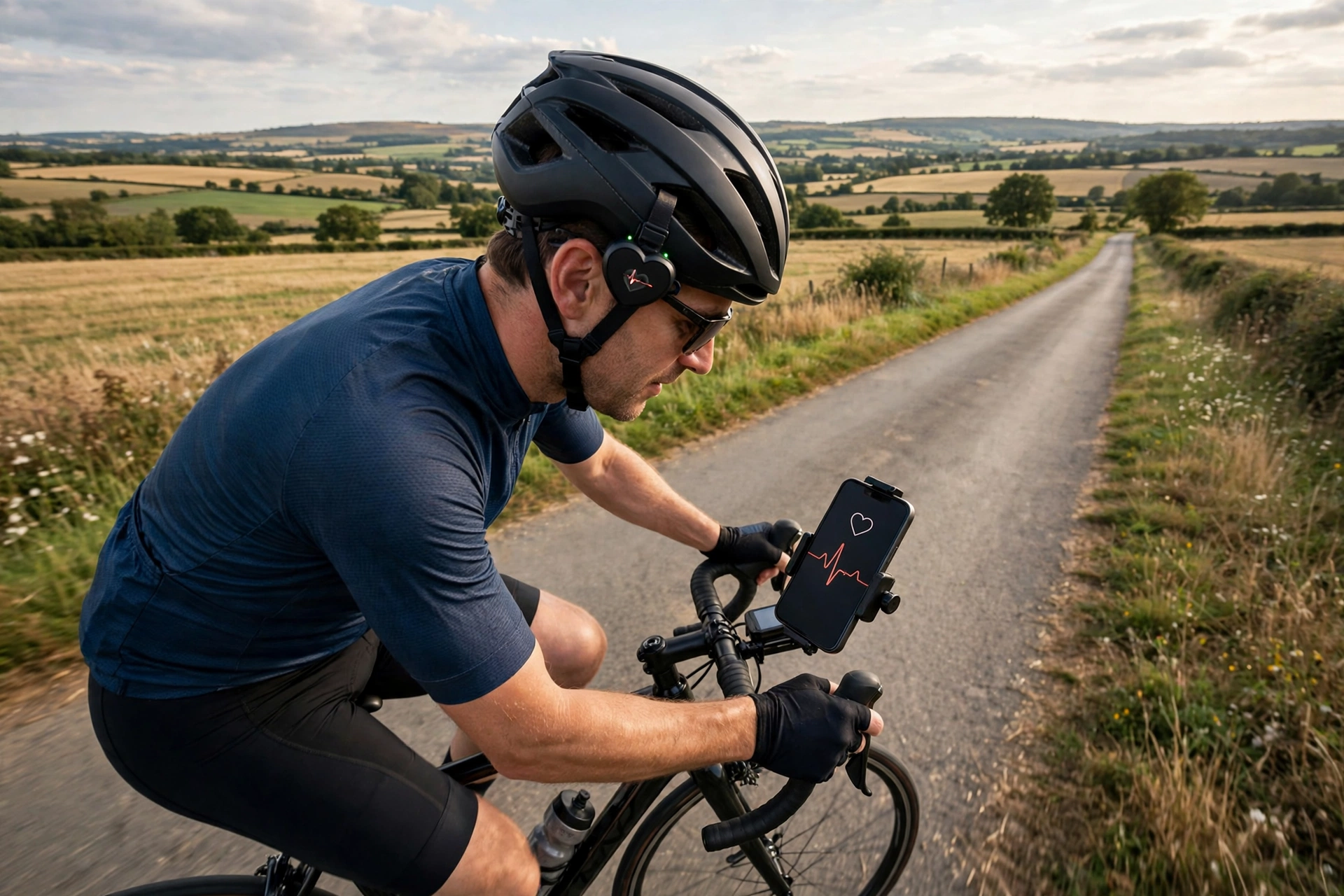
For this to work well, the sensor needs steady contact with your skin. That is why the sensor is usually placed where the helmet sits firmly against the head, often at the forehead just above the eyebrows, or at the temple. Some helmets place it at the back of the head instead. The exact position matters less than the fit: a helmet that sits snugly and does not bounce around gives the sensor the steady contact it needs.
The sensor connects to a small processor and battery inside the helmet. The processor turns the raw light readings into a heart-rate number, and sends it by Bluetooth to your phone, where a companion app displays it in real time or records it for later. Many apps also let you set heart-rate zones, so you can see whether you are riding easy, moderately, or hard, and get an alert if you drift out of your target zone.
What Can You Do with Heart-Rate Data While Riding?
The most common use is training in heart-rate zones. Riders divide their effort into zones, from easy recovery rides to hard intervals, and use their heart rate to stay in the right zone. A helmet monitor lets you glance at your phone, or listen to audio alerts, and adjust your effort on the spot. Over time, this kind of structured training can help you build fitness more effectively than riding hard all the time.
Heart-rate data is also useful for pacing. On a long ride or a big climb, it is easy to start too fast and run out of energy. Watching your heart rate helps you hold a steady effort, which matters more than speed on a long day. Many riders find that pacing by heart rate feels more reliable than pacing by speed, because speed is affected by wind and hills in ways your body is not.
Heart-rate data can also flag when something is off. If your heart rate is unusually high for a familiar ride, or it stays high long after you stop, that can be a sign of tiredness, illness, or heat. It is not a diagnosis, and a helmet sensor should never replace medical advice, but many riders find the early warning useful. If you are interested in the safety technology that sits alongside these sensors in modern helmets, reading about what MIPS is for helmets can help you understand how helmets protect your head in a crash.
How Accurate Is a Helmet Heart-Rate Monitor?
For steady, moderate riding, a helmet heart-rate monitor is generally accurate enough for training purposes. On a smooth road at a steady pace, the sensor has a stable contact with your skin and the reading tracks your real heart rate closely. Most riders find the numbers match what they would expect from a fitness watch, and the trends over time are reliable.
Accuracy tends to drop during very hard efforts, fast changes in pace, or on rough ground. When you sprint or climb hard, your head moves more, and the helmet can shift slightly with each pedal stroke. That movement can confuse the sensor, and the reading may lag behind your real heart rate or jump around. This is a known limitation of optical sensors in general, not just helmet ones, and it is one reason serious athletes often prefer a chest strap for interval training.
Fit is the biggest single factor in accuracy. A helmet that is too loose will move too much for a steady reading, while a helmet that is too tight will be uncomfortable and may press the sensor too hard against your skin. The right fit is snug but comfortable, with the helmet sitting level on your head. If the readings seem unreliable, checking the fit is the first thing to try before blaming the sensor.
What Are the Downsides of a Heart-Rate Monitoring Helmet?
The most obvious downside is that the helmet needs charging. The sensor, processor, and Bluetooth radio all run on a small battery, and that battery will run flat if you forget to charge it. The helmet still works as a helmet when the battery is dead — the protection does not depend on power — but you lose the heart-rate data for that ride. Riders who are used to a chest strap that runs for months on a coin battery may find the regular charging a nuisance.
Cost matters too. A helmet with a built-in heart-rate monitor usually costs more than a comparable helmet without one. If you already own a fitness watch or a chest strap that gives you heart-rate data, you may be paying extra for a feature you do not need. It is worth comparing the price against a separate heart-rate strap, which is often cheaper and can be used with any helmet.
Who Is a Heart-Rate Monitoring Helmet Best For?
These helmets suit riders who train with heart rate and want the simplest possible setup. If you dislike chest straps because they chafe or slip, and you find a watch hard to read while riding, a helmet sensor removes both problems. You put the helmet on, start the app, and the data appears. For regular training rides, that simplicity is a real benefit.
They are less suited to riders who want the highest possible accuracy, such as competitive athletes doing precise interval work. A chest strap is still the standard for that kind of training, and most coaches would recommend it over any optical sensor. They are also a poor choice for riders who do not care about heart-rate data at all — in that case, an ordinary helmet gives the same protection for less money.
Frequently Asked Questions
Q: Does a heart-rate monitoring helmet still protect you if the battery dies?
A: Yes. The shell and padding protect your head without any power, so a flat battery only stops the heart-rate readings. The helmet works exactly like an ordinary helmet in a crash.
Q: Is a helmet heart-rate monitor as accurate as a chest strap?
A: In general terms, no. A chest strap is usually more accurate, especially during hard efforts and fast changes in pace. A helmet sensor is good enough for everyday training and zone work, but it can lag or jump around when the helmet moves.
Q: Can I wear a skull cap under a heart-rate monitoring helmet?
A: You can, but a thick cap can get between the sensor and your skin and make the readings unreliable. If you ride in cold weather, check whether the sensor still makes good contact, or look for a thin cap that does not cover the sensor area.

Olivia
Writer at Helmet Today, covering helmet reviews, fit and riding safety.