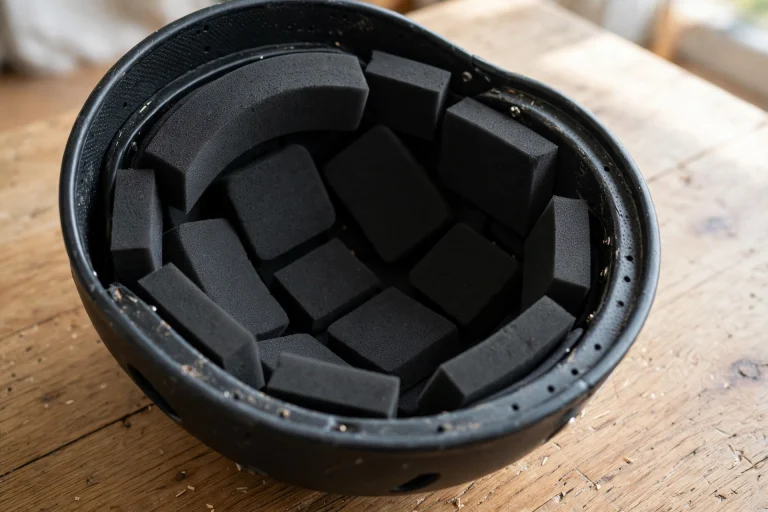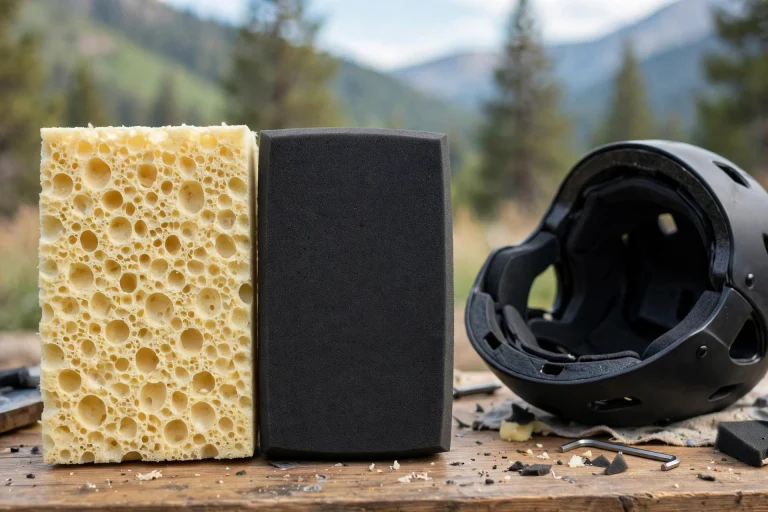
In general terms, EPS foam density affects helmet protection by controlling how the foam crushes in an impact: denser foam handles harder hits, while softer foam handles gentler ones, and a good helmet balances the two. EPS, or expanded polystyrene, is the hard white foam liner inside most helmets. When your head hits something, the foam crushes and slows the impact down, turning a sharp blow into a longer, gentler stop. The density of that foam — how tightly its tiny beads are packed together — decides how much force it takes to crush it and how much energy it can absorb before it bottoms out.
Foam that is too soft for a hard impact can crush completely and leave nothing left to slow the blow, while foam that is too hard for a gentle impact may barely crush at all, passing more force to the head than necessary. This guide explains what EPS foam density means in general terms, how it changes the way a helmet protects you, and what to look for when you choose a helmet for your kind of riding.
What Is EPS Foam and How Does It Work in a Helmet?
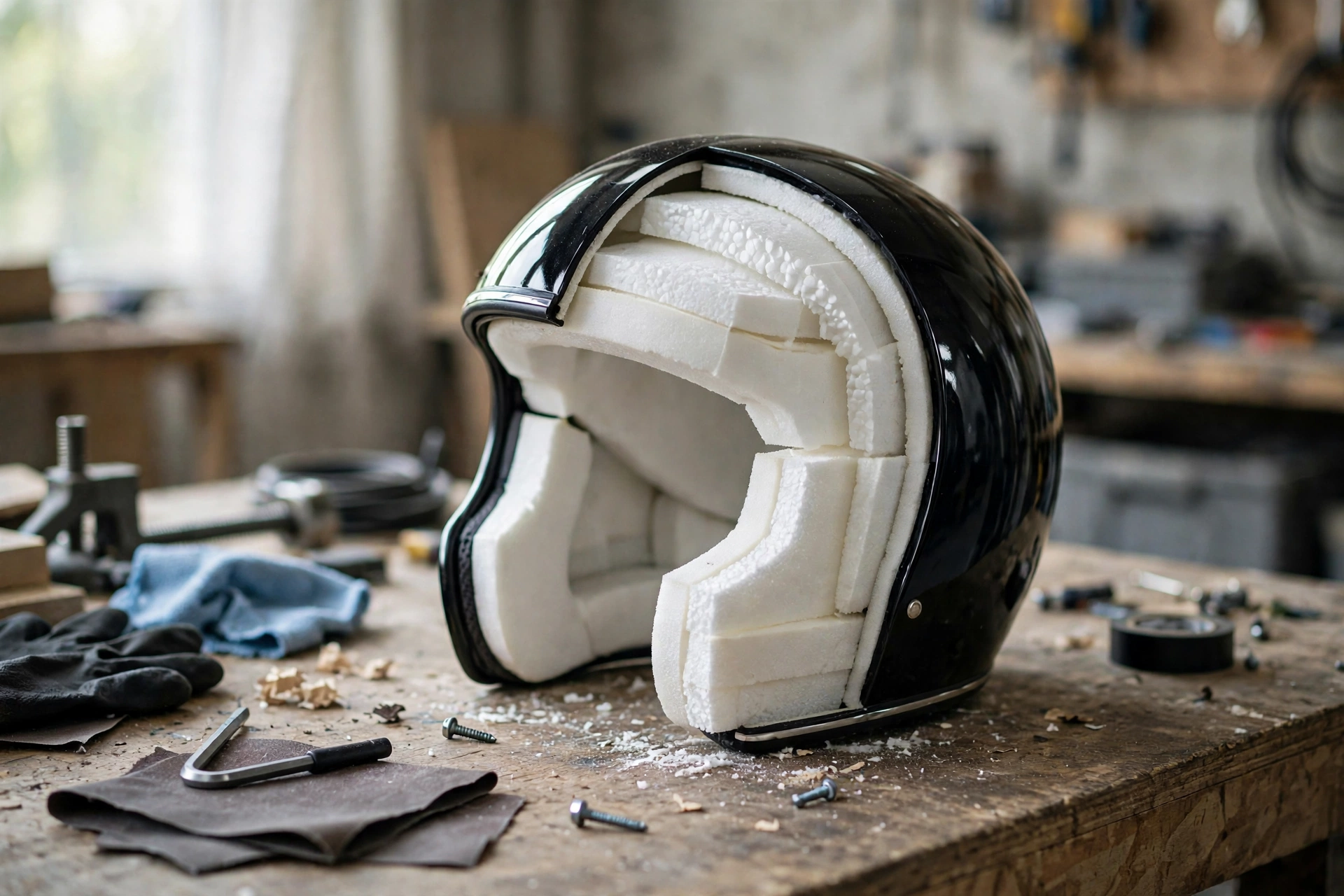
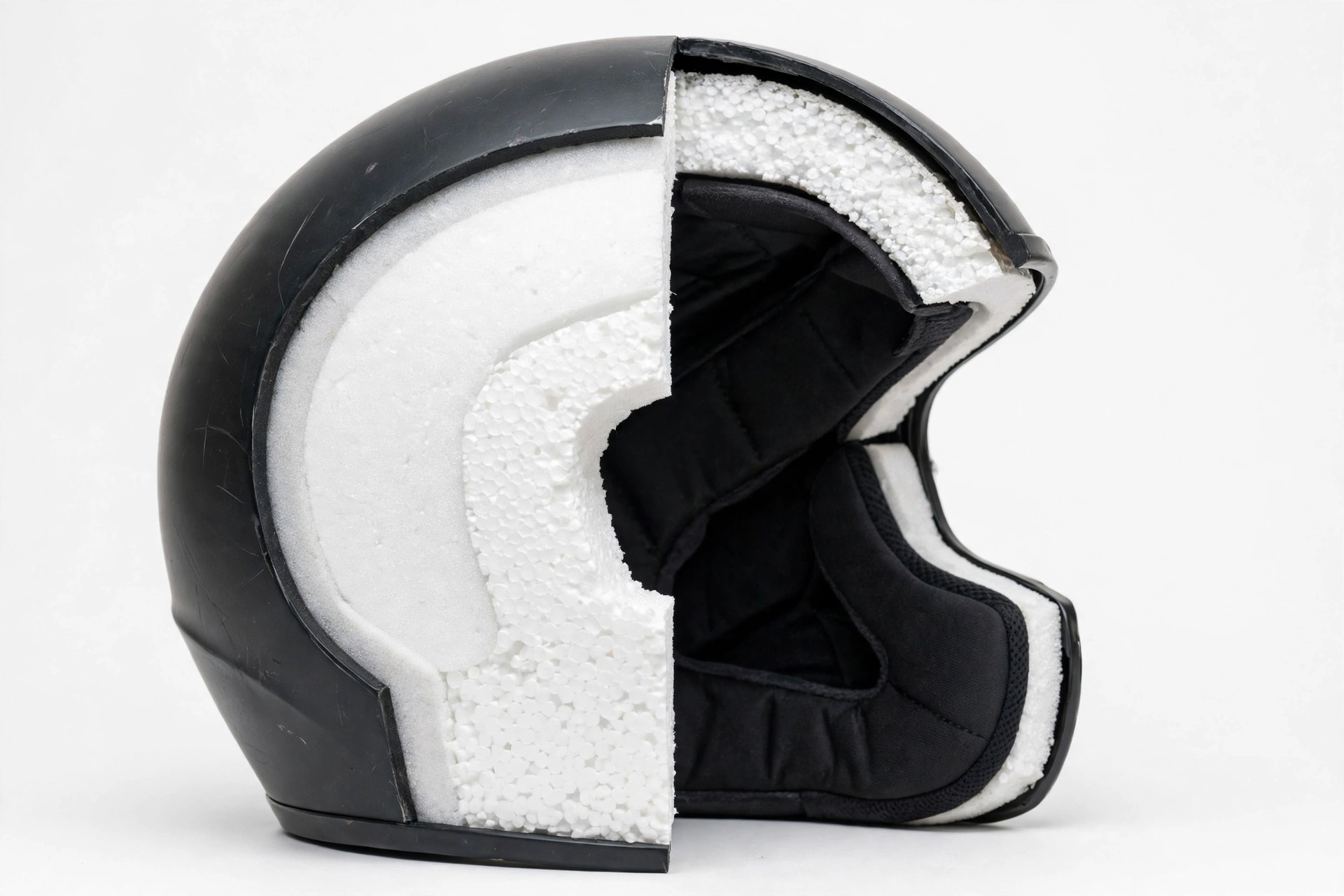
EPS stands for expanded polystyrene, a foam made from small plastic beads that are heated until they expand and fuse together. The result is a light, rigid material full of tiny air pockets. Inside a helmet, the EPS liner sits between the hard outer shell and your head, and it is the part that does most of the work in a crash. The shell spreads the force of an impact over a wider area, and the foam then absorbs that force by crushing.
The crushing is the key. When foam crushes, it converts the energy of the impact into the work of deforming the material, which slows your head down more gradually than a sudden stop would. By stretching the stop out over a fraction of a second longer, the foam reduces the peak force that reaches your head.
Density describes how much material is packed into a given volume of foam. Low-density EPS has more air and less plastic, so it crushes easily under a light force. High-density EPS has more plastic packed into the same space, so it needs a much harder push before it starts to give way. Helmet makers choose density in general terms, because the right density depends on the size of the helmet, the thickness of the liner, and the kind of impact the helmet is expected to handle.
How Does Foam Density Change the Way a Helmet Absorbs an Impact?
Foam density changes the shape of the impact itself. In a gentle knock, soft, low-density foam starts crushing early and absorbs the energy smoothly, which keeps the force on your head low. The same gentle knock against dense foam might barely dent it, so more of the force passes straight through to your head. In that situation, the softer foam actually protects better, because it is working at the level the impact needs.
In a hard crash, the picture flips. Soft foam can crush all the way down — a state sometimes called bottoming out — and once it is fully flat, it has nothing left to give. Any remaining energy goes straight to your head. Dense foam, by contrast, still has room to crush in a hard hit, so it keeps absorbing energy for longer and keeps the peak force lower. That is why helmets built for high-speed riding tend to use denser foam than helmets built for slow-speed activities.
Most modern helmets solve this trade-off by using more than one density in the same liner. A common design puts softer foam near the head and denser foam near the shell, or uses different densities in different zones of the helmet, so the liner can respond well to both light and heavy impacts. If you are learning about how helmets handle different kinds of impact, reading about what MIPS is for helmets can help you understand another technology that works alongside the foam to reduce the forces on your head.
Is Denser EPS Foam Always Better Protection?
In general terms, no. Denser foam is better for hard impacts, but it is worse for light ones, and most real crashes fall somewhere in between. A helmet filled entirely with very dense foam would feel solid and reassuring, yet it could pass more force to your head in a low-speed fall than a helmet with softer foam. Protection is not about the hardest foam you can buy; it is about foam that crushes at the right rate for the impacts you are most likely to face.
Denser foam is also heavier for the same thickness, and a heavier helmet can be tiring to wear for long rides. Helmet makers therefore tune density to the activity: a downhill mountain bike helmet and a road cycling helmet may both use EPS, but their liners will be tuned very differently, because the speeds and likely crash forces are different.
What Role Does Foam Thickness Play Alongside Density?
Density and thickness work together, and neither tells the whole story on its own. A thick layer of soft foam can absorb as much energy as a thinner layer of dense foam, because there is simply more material to crush. That is one reason why helmets for high-speed riding often have thicker liners as well as denser foam: the extra thickness gives the foam more distance over which to slow your head down. A very thick liner, though, makes a helmet bulky and heavy, so designers add thickness only where it is needed most, such as the crown and sides of the helmet.
How Can You Tell If a Helmet’s Foam Is Right for Your Riding?
The most useful check is the helmet’s certification and intended use. A helmet certified for your activity — whether that is motorcycling, cycling, skiing, or another sport — has been tested against the impact levels that activity typically produces, and its foam density has been chosen with those tests in mind. A helmet built for one activity is not automatically right for another, even if it looks similar on the outside.
Fit matters just as much as foam. A helmet that is loose can shift in a crash, so the foam is not in the right place when it is needed, while a helmet that is too tight can be uncomfortable and may not sit correctly. Try the helmet on, fasten it properly, and check that it stays snug without pressure points. Finally, remember that EPS foam is a one-impact material: once it has crushed in a crash, it does not spring back, and the helmet should be replaced even if the damage is not visible from the outside.
Frequently Asked Questions
Q: Does denser EPS foam mean a safer helmet?
A: Not always. Denser foam handles hard impacts better, but softer foam handles gentle impacts better. A good helmet balances density and thickness for the activity it is built for, sometimes using several densities in one liner.
Q: Can I feel the foam density when I try on a helmet?
A: In general terms, no. Foam density is hard to judge by touch, because the liner is covered and the shell hides it. Trust the helmet’s certification and intended use instead, and focus on getting a snug, comfortable fit.
Q: Does EPS foam wear out over time?
A: EPS foam does not wear out quickly in normal use, but it can degrade slowly with heat, sunlight, and sweat, and it is designed for a single serious impact. Replace a helmet after any hard crash, and follow the maker’s guidance on how long to keep one in regular use.

Olivia
Writer at Helmet Today, covering helmet reviews, fit and riding safety.