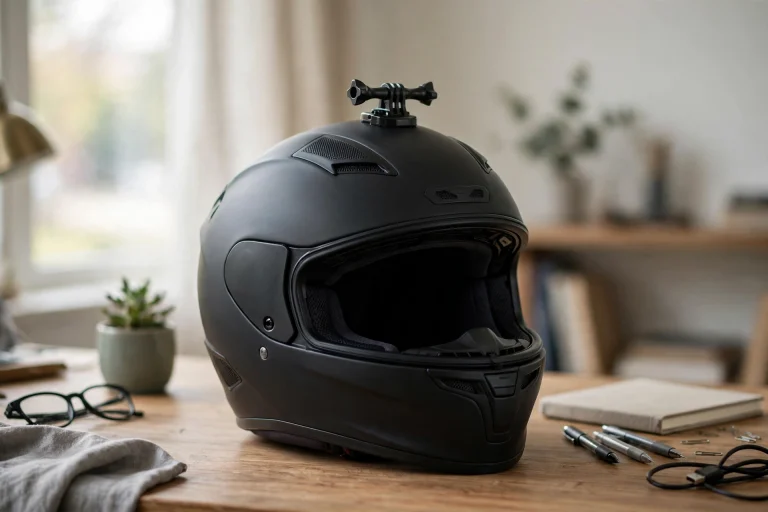
To clean a helmet breath guard, remove it from the helmet, wash it gently by hand in lukewarm water with mild soap, rinse it well, and let it air dry completely before refitting it. A breath guard is the small deflector that sits in front of your nose and mouth inside a helmet, and its job is to direct your warm breath downwards so it does not fog up the visor. Because it sits right where you breathe, it collects moisture, dust, and skin oils over time, and a dirty breath guard can smell unpleasant and work less well. Cleaning it regularly is a simple job that keeps your helmet fresher and your visor clearer.
Many riders forget the breath guard exists until it starts to smell or look grubby, but it is one of the easiest parts of a helmet to look after. This guide explains what a breath guard does, why it gets dirty, how to take it out safely, and how to wash and dry it so it keeps doing its job.
What Is a Helmet Breath Guard?
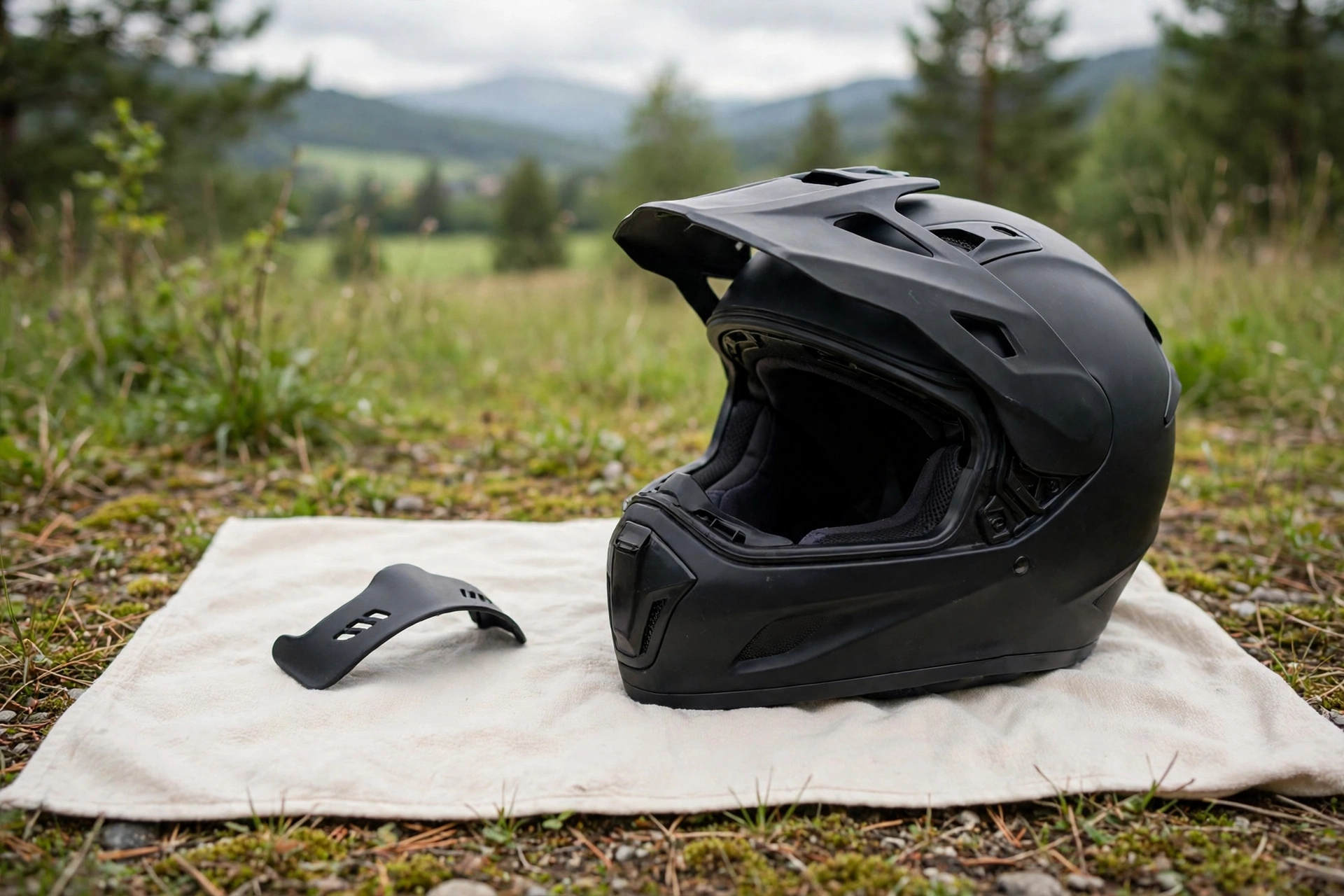
A breath guard, sometimes called a breath deflector, is a small shaped piece that fits inside the front of a helmet, just below the visor and in front of your nose and mouth. On most helmets it is made of soft rubber, flexible plastic, or fabric-covered foam, and it is held in place by clips, press studs, or a snug fit into the chin bar. Its shape is designed to catch the warm air you breathe out and send it downwards, away from the visor.
Without a breath guard, your warm breath rises straight up onto the inside of a cold visor, where it condenses into fog. That fog can appear in seconds on a cold morning and make it hard to see the road. The breath guard does not stop fogging completely on its own, and it often works alongside a Pinlock insert, but it makes a real difference, especially in cold or damp weather.
Why Does a Breath Guard Get Dirty?
The main reason a breath guard gets dirty is simply that you breathe on it every time you ride. Each breath carries warm, moist air, and that moisture settles on the guard along with tiny particles from your breath and skin. Over weeks and months, this builds up into a film that can feel slightly sticky and start to smell stale, especially if the helmet is stored in a warm place.
Dust and road grime also find their way inside a helmet, and the breath guard is in the path of the air that flows through the vents. On a dusty road or in heavy traffic, fine particles can settle on the guard and mix with the moisture there. If you ride with the visor open, even more dust and insects can reach it, and the guard can end up surprisingly grubby after a long summer of riding.
How Do You Remove a Breath Guard for Cleaning?
Start by opening the visor fully and looking inside the front of the helmet to see how the breath guard is attached. On many helmets it simply pulls away from small clips or press studs, while on others it slides out of a slot in the chin bar. If you are not sure, check your helmet manual before you pull anything, because forcing a guard that is screwed or glued in place can break it.
Once you know how it is fixed, remove it gently and slowly. Hold the guard near its fixing points rather than pulling from the middle, so you do not bend or tear it. If it is held by press studs, pop each stud off one at a time rather than yanking the whole guard free at once. Take note of which way round it fits, so you can put it back the right way after cleaning.
While the guard is out, take a moment to look at the area of the helmet it covers. Wipe away any dust or grime from the chin bar and the inside of the visor with a soft, damp cloth, and let it dry. This keeps the whole front of the helmet clean and stops dirt from transferring straight back onto your freshly washed breath guard.
What Is the Best Way to Wash and Dry a Breath Guard?
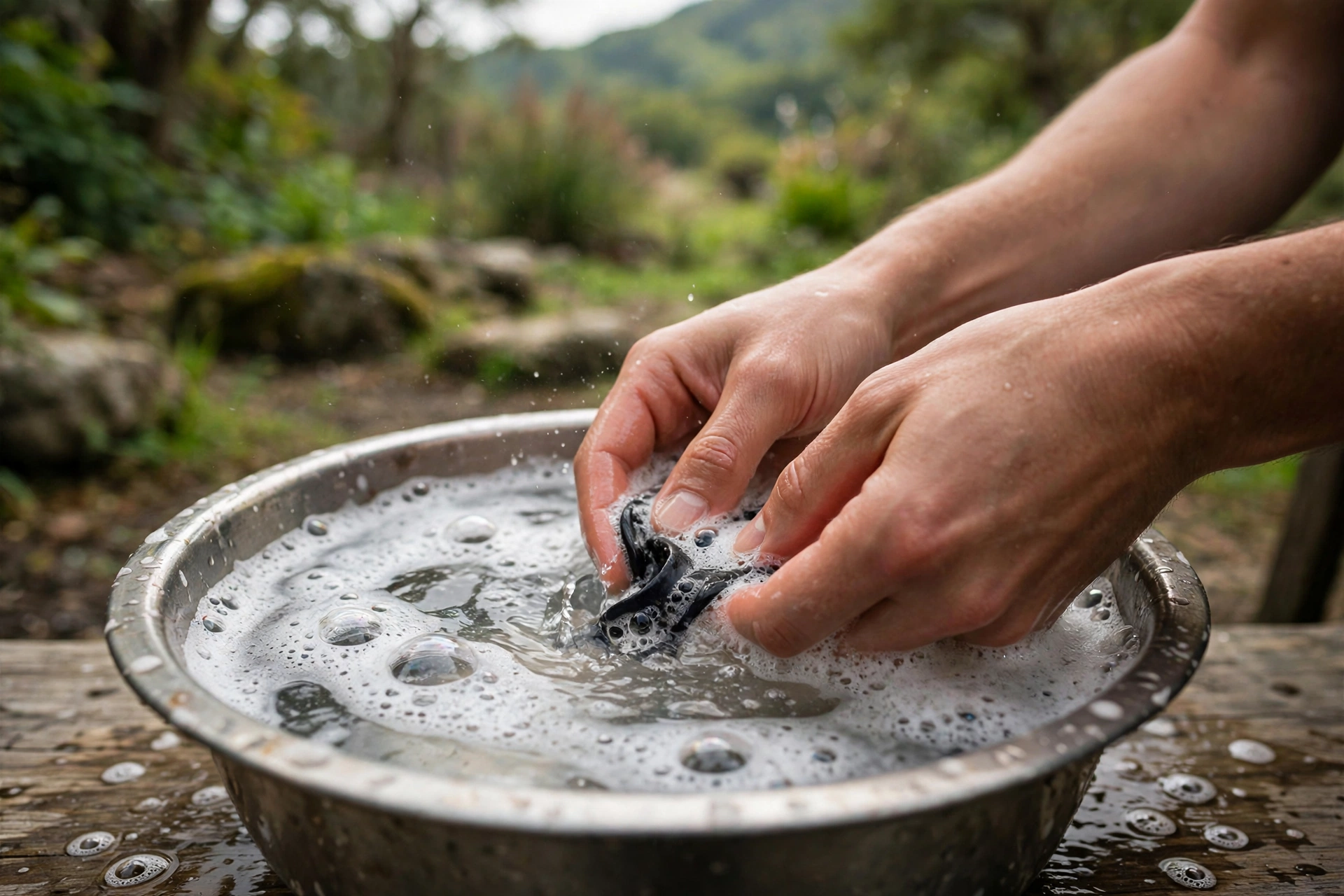
Fill a bowl with lukewarm water and add a small drop of mild soap or washing-up liquid. Place the breath guard in the water and gently squeeze and rub it with your fingers to work the soap through the material. If the guard is made of fabric-covered foam, be gentle and do not twist or wring it hard, because that can tear the fabric or damage the foam underneath.
For a rubber or plastic breath guard, you can use a soft cloth or an old soft toothbrush to reach into corners and grooves where grime collects. Rinse the guard under clean lukewarm water until all the soap is gone, and check that no soapy residue is left in any folds or seams. If you are learning about the parts that keep a helmet comfortable and working well, reading about what MIPS is for helmets can help you understand one of the technologies used in modern helmet design.
Let the breath guard air dry completely before you refit it. Lay it on a clean towel or stand it up somewhere with good airflow, and do not use a hairdryer or a radiator to speed things up, because heat can warp plastic guards or damage foam. A fabric guard may take several hours to dry fully, so it is best to wash it at a time when you do not need the helmet straight away.
How Often Should You Clean Your Breath Guard?
In general terms, cleaning your breath guard every few weeks is a good habit if you ride regularly. If you ride every day or in wet, dusty conditions, once a week is better, because the guard will pick up moisture and grime much faster. A quick wash takes only a few minutes, and it is far easier than dealing with a stale-smelling helmet later.
It is a good idea to clean the breath guard at the same time as you wash the rest of your helmet lining. That way, the whole inside of the helmet stays fresh together, and you only have to take the helmet apart once. Keep a note of when you last cleaned it if you ride a lot, so the job does not slip your mind for months at a time.
Frequently Asked Questions
Q: Can I wash a breath guard in a washing machine?
A: In general terms, no — hand washing is safer. A washing machine can bend a plastic guard or tear a fabric one, and the heat and spin can damage its shape. Wash it gently by hand in lukewarm water with mild soap.
Q: Can I ride without a breath guard?
A: Yes, you can, but your visor is more likely to fog up in cold or damp weather. If you remove it for summer riding, keep it somewhere safe so you can refit it when the weather turns cold.
Q: Why does my breath guard smell even after cleaning?
A: The smell may be coming from the helmet lining rather than the guard itself. Wash the removable cheek pads and liner as well, and let the whole helmet air out fully before you use it again.

Olivia
Writer at Helmet Today, covering helmet reviews, fit and riding safety.