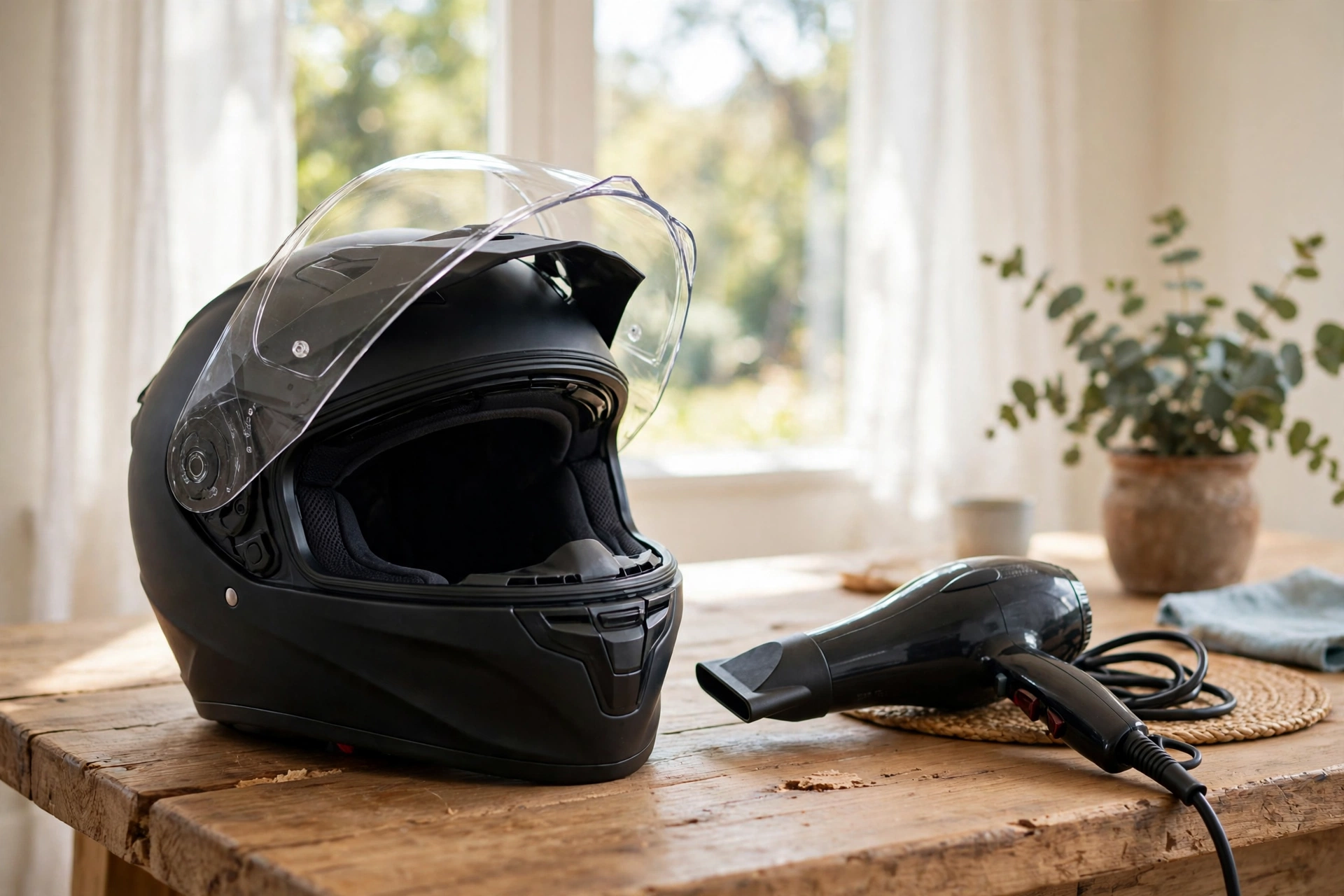
Yes, you can dry a helmet with a hairdryer safely, but only on a cool or low-heat setting, held at a distance, and moved around constantly — never blast hot air into one spot. A hairdryer can help when a helmet is damp after rain or a wash and you need it dry sooner than air drying alone would allow. The danger is heat: too much hot air can warp the shell, damage the foam liner, or shrink the comfort padding. Used carefully, though, a hairdryer is a handy tool for speeding up drying without harming the helmet.
Helmets get wet more often than many riders expect. Rain can soak through the vents, sweat builds up inside on hot days, and washing the lining leaves the whole helmet damp. Air drying is always the safest option, but it can take many hours, and sometimes you need the helmet again the same day. This guide explains when a hairdryer is safe to use, which settings to choose, and how to dry a helmet step by step.
Is It Safe to Use a Hairdryer on a Helmet?
In general terms, yes, as long as you use it with care. The risk from a hairdryer comes from heat, not from the airflow itself. Helmet shells and liners are made from materials that can soften or warp if they get too hot, and the expanded foam liner inside a helmet is especially sensitive to high temperatures. A hairdryer on its hottest setting, held close to one spot, can easily produce enough heat to cause damage.
The cool or low-heat setting changes that picture completely. On cool, a hairdryer is really just a small fan, and the moving air helps moisture evaporate without adding heat. On low heat, the air is warm but not hot, and as long as you keep the dryer moving and hold it at a sensible distance, the helmet should never get hot enough to suffer. The key is to treat the hairdryer as a gentle aid, not as a quick fix.
If your hairdryer has no cool setting, it is better to use a different drying method, such as a fan or simply leaving the helmet in a well-ventilated room. A hairdryer that only blows very hot air is not worth the risk to an expensive helmet. When in doubt, hold the airflow against the back of your hand first: if it feels uncomfortably hot on your skin, it is too hot for your helmet.
What Heat Setting Should You Use?
Always start with the cool setting if your hairdryer has one. Cool air is the safest choice, and it is often enough to dry the padding and lining within a reasonable time, especially if the helmet is only lightly damp. If your hairdryer has a cool shot button, you can use that to keep the air cool while you work.
If you need a little more drying power, switch to the lowest heat setting and keep the dryer at least 20 to 30 centimetres away from the helmet. At that distance, the air will have cooled and spread out before it reaches the helmet, so no single spot gets too hot. Move the dryer slowly from side to side so the warmth is shared evenly, and stop every minute or so to feel the helmet with your hand.
How Do You Dry a Helmet with a Hairdryer Step by Step?
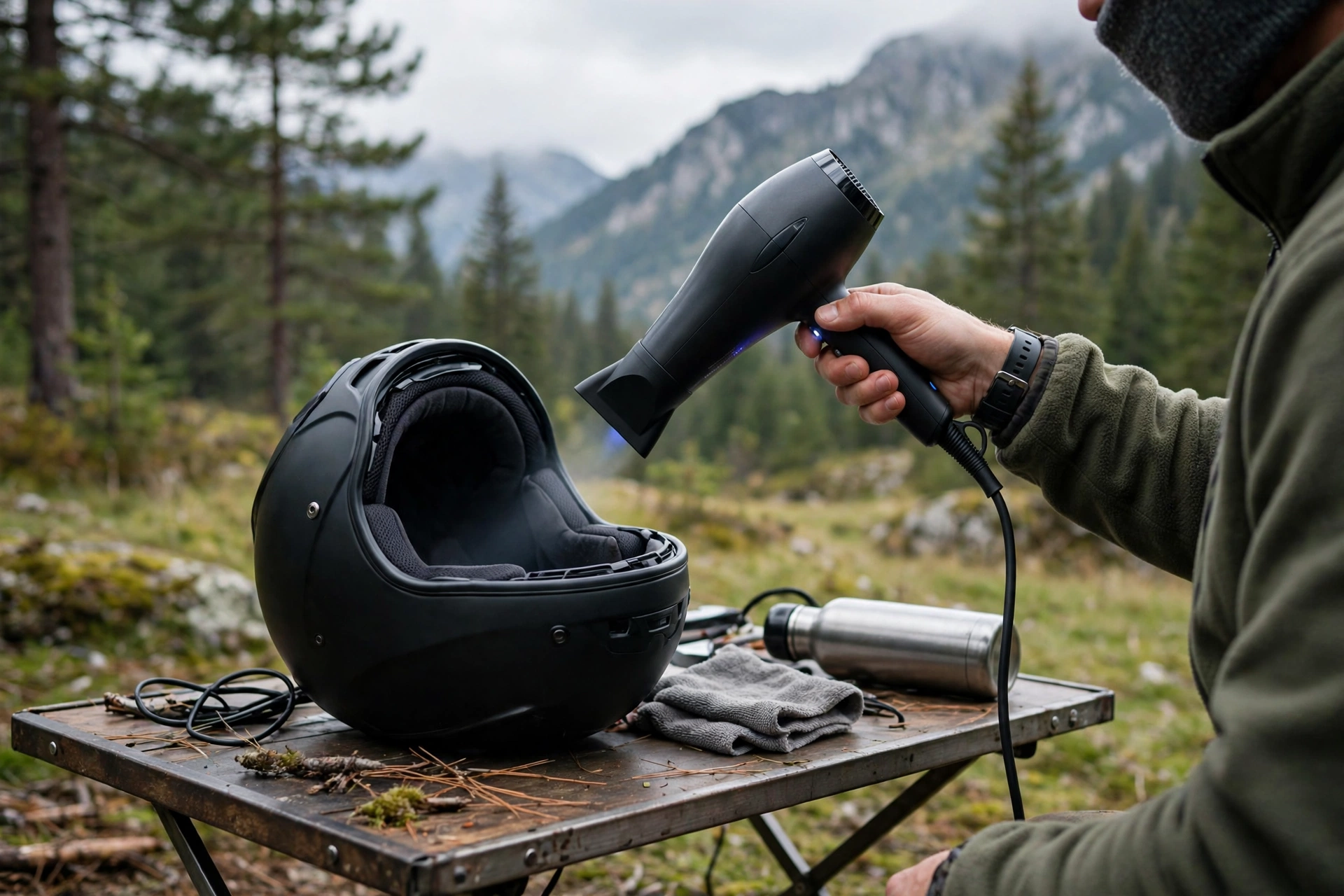
Start by removing as much water as you can without heat. Shake the helmet gently upside down to let water run out of the vents, then pat the inside with a clean, dry towel to soak up surface moisture. If the cheek pads and liner are removable, take them out and dry them separately, because they will dry much faster on their own than they will inside the helmet.
Next, open the visor fully and prop the helmet upside down or on its side so air can flow through it. Hold the hairdryer at a distance and aim the airflow into the helmet, moving it slowly around the inside so the air reaches the crown, the sides, and the chin area. Spend a minute or two on each section, then switch to another part of the helmet so no area gets too much warm air at once.
After a few minutes, stop and check how damp the helmet still feels. Press the padding gently with your fingers to see if water comes out, and look for any areas that are still wet. Repeat the process in short bursts rather than one long session, and finish by leaving the helmet in a ventilated room to air dry fully. If you are learning about how helmets are built and how their parts handle heat and impact, reading about what MIPS is for helmets can help you understand one of the technologies used in modern helmet design.
Which Parts of a Helmet Need Extra Care?
The foam liner needs the most care, because it is the part that protects your head in a crash and it is also the most sensitive to heat. The liner sits just under the comfort padding, and hot air aimed directly at it can soften it. When you dry a helmet with a hairdryer, keep the airflow moving and avoid aiming it at the same spot on the liner for more than a few seconds at a time.
The visor also deserves care. A visor can warp if it gets too hot, and a warped visor may not seal properly or may distort your view. It is best to dry the visor separately with a soft cloth and to keep the hairdryer away from it, or to remove the visor from the helmet before you start drying.
What Are Safer Alternatives If You Are in a Hurry?
A fan is one of the best alternatives to a hairdryer, because it moves a lot of air without adding any heat at all. Placing a helmet in front of a fan with the visor open will dry it steadily, and it is safe to leave running for as long as needed. A fan takes longer than a hairdryer, but it carries none of the heat risk.
Stuffing the helmet with dry towels or newspaper can also help, because the absorbent material pulls moisture out of the padding. Replace the towels or paper once they become damp, and repeat until they stay dry. This method works well overnight and costs nothing.
Finally, a well-ventilated room with the helmet placed upside down on a rack will dry a helmet safely given enough time. If you know you will need your helmet again soon after a wet ride, it helps to have a second set of removable pads, so you can swap in dry pads while the wet ones dry out properly.
Frequently Asked Questions
Q: Can a hairdryer melt a helmet?
A: In general terms, a hairdryer on a cool or low setting, held at a distance, should not melt a helmet. The risk comes from high heat held close to one spot, which can warp the shell or soften the foam liner.
Q: How long should I use a hairdryer on a helmet?
A: Use it in short bursts of a few minutes at a time, checking the helmet between bursts. Finish by letting the helmet air dry fully, since a hairdryer alone rarely dries every part of the padding.
Q: Should I dry the helmet lining separately?
A: Yes, if the pads are removable. They dry much faster outside the helmet, and drying them separately means the hairdryer does not need to blow warm air deep into the helmet for as long.

Olivia
Writer at Helmet Today, covering helmet reviews, fit and riding safety.