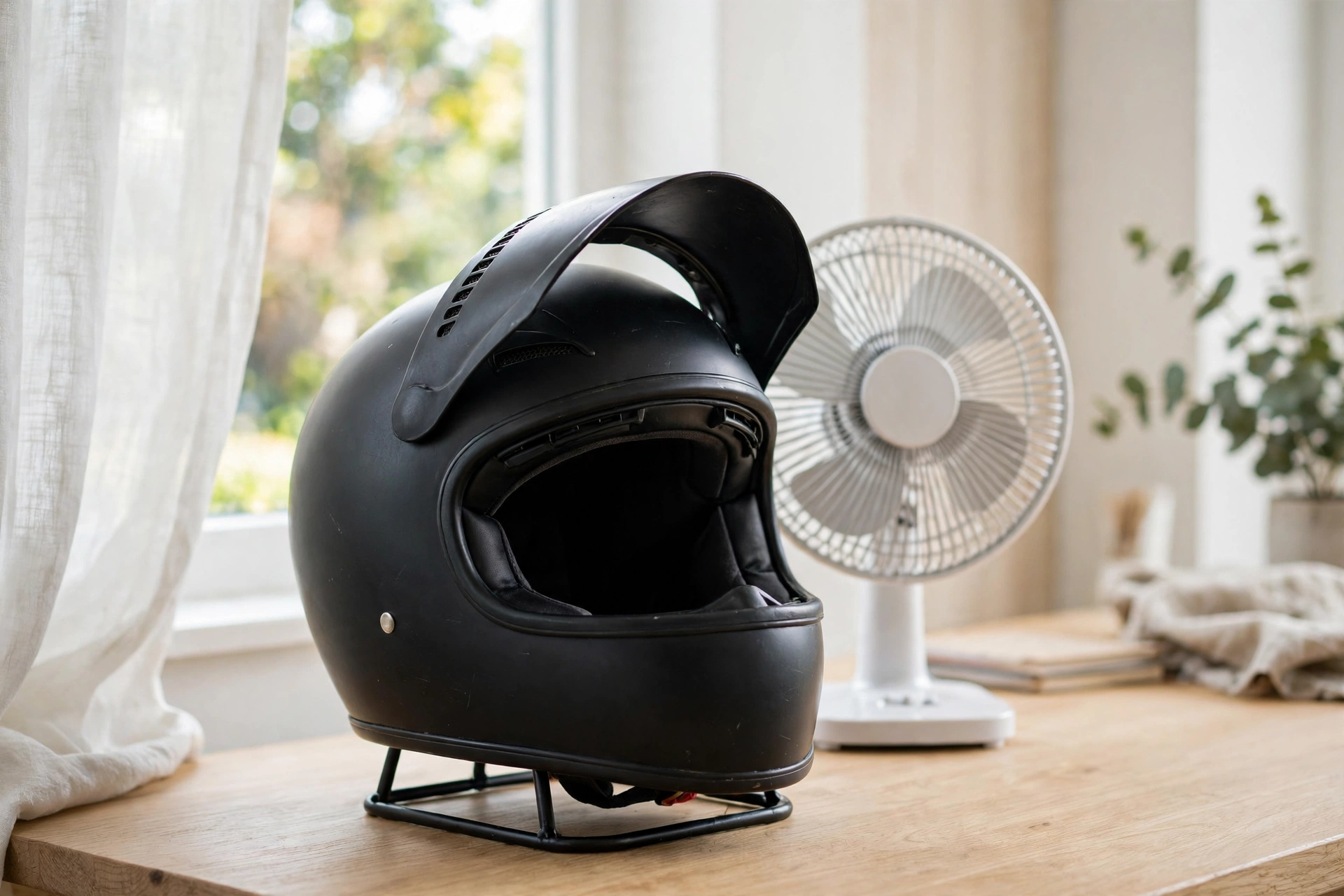
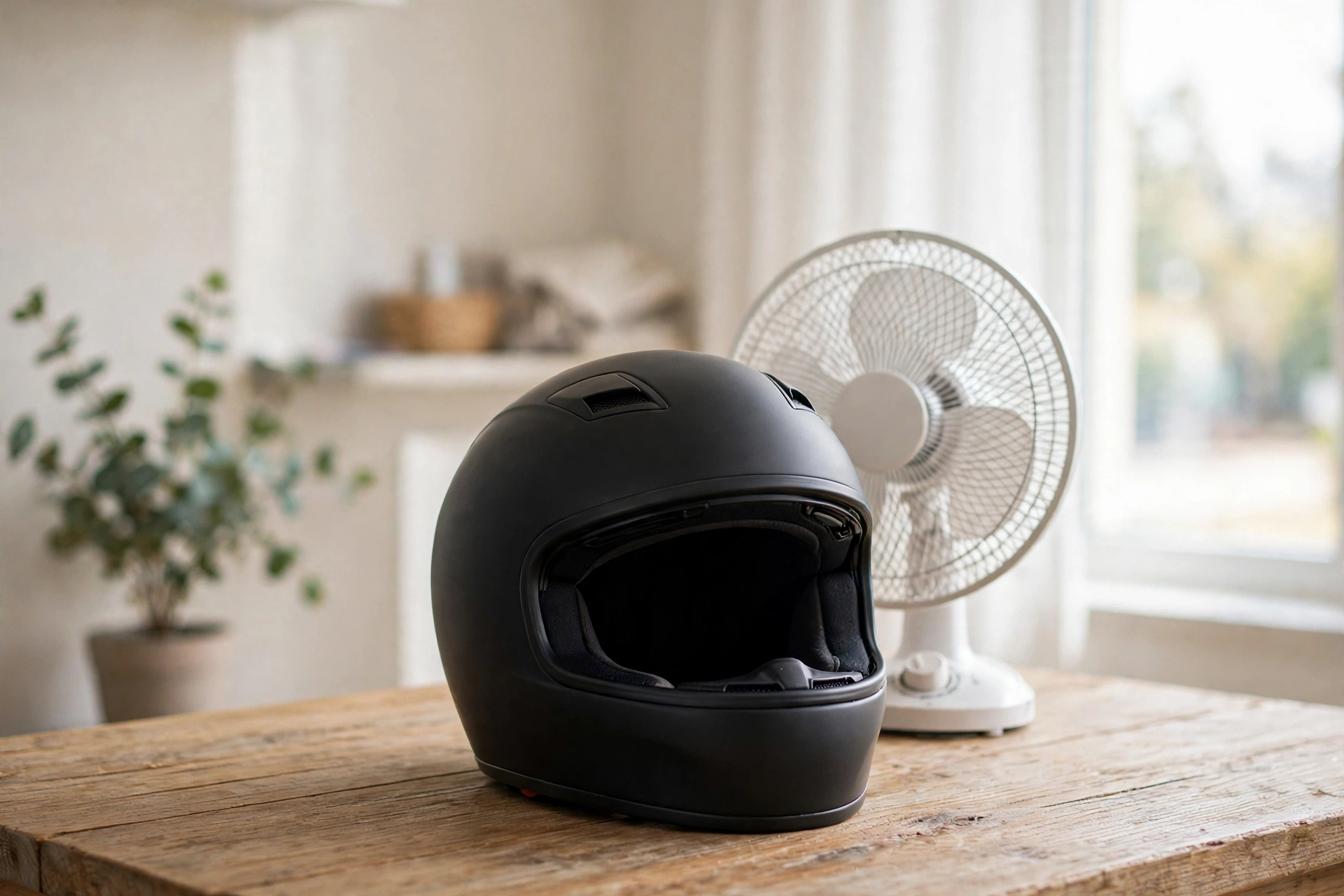
Yes, a fan is one of the safest and most effective ways to dry a helmet — place the helmet in front of a fan with the visor open and the padding removed if possible, and let the moving air do the work. A fan dries a helmet by constantly replacing the damp air inside it with drier air, which speeds up evaporation without adding any heat. That makes it far safer than a hairdryer or a radiator, and it is also cheap and easy: almost everyone has a fan at home, and you can leave it running while you get on with other things.
A wet helmet is a common problem. Rain gets in through the vents, sweat soaks the padding on a hot ride, and washing the lining leaves the whole helmet damp for hours. A helmet that stays damp can develop a stale smell, and in the worst case the padding can stay moist enough for mould to grow. This guide explains why a fan works so well, how to set it up, and how to get your helmet dry as quickly as possible.
Why Is a Fan a Good Way to Dry a Helmet?
A fan works by moving air, and moving air is what dries things. When air sits still around a wet helmet, the air close to the helmet quickly becomes full of moisture and stops taking any more water away. A fan keeps bringing fresh, drier air to the surface, so evaporation continues steadily. That is the same reason clothes dry faster on a windy day than on a still one.
The biggest advantage of a fan is that it adds no heat. Heat can warp a helmet shell, soften the foam liner, and shrink or damage the comfort padding, which is why radiators, hairdryers on high heat, and direct sunlight are all risky. A fan avoids that problem entirely, because the air it moves is just room-temperature air. You can leave a helmet in front of a fan for hours without worrying about heat damage.
How Do You Set Up a Fan to Dry a Helmet?
Start by getting as much water out of the helmet as you can. Shake it gently upside down so water runs out of the vents, then pat the inside with a clean, dry towel. If the cheek pads and crown liner are removable, take them out and dry them separately — they will dry much faster on their own, and the helmet shell will dry faster without them inside blocking the airflow.
Next, place the helmet where the fan can blow into it. The best position is usually upside down or tilted, with the opening facing the fan and the visor fully open. That way, the air flows straight into the helmet and out through the vents. If you can, put the helmet on a rack, a stand, or a couple of books so air can circulate underneath it as well.
Set the fan to a medium or high speed and point it directly at the helmet opening. If your fan oscillates, you can let it sweep across the helmet, but a steady stream aimed into the opening usually dries the inside faster. Make sure the helmet is stable and will not be blown over, especially if you are using a strong fan at close range.
How Long Does Fan Drying Take?
In general terms, a lightly damp helmet may be dry within a couple of hours in front of a fan, while a helmet that has been soaked through by heavy rain or a full wash may need most of a day. The exact time depends on how wet the helmet is, how thick the padding is, and how warm and dry the room is. A warm, dry room with good airflow will dry a helmet much faster than a cold, humid one.
The padding is usually the slowest part to dry, because it is thick and holds water deep inside. Even when the surface of the padding feels dry to the touch, the inside may still be damp, so it is worth pressing the pads firmly to check. If water comes out when you squeeze them, they need more time in front of the fan.
What Can You Do to Speed Up Fan Drying Safely?
One simple trick is to stuff the helmet loosely with dry towels or clean cloths for the first hour, then remove them and let the fan finish the job. The towels absorb a lot of surface moisture quickly, and the fan then dries what is left. Replace the towels once they feel damp, and do not pack the helmet so tightly that air cannot move through it.
Another helpful step is to open every vent on the helmet. Open vents let air flow through the helmet instead of just blowing at the opening, which helps the inside dry more evenly. If your helmet has a chin vent and top vents, open them all and let the fan push air through the whole helmet.
You can also move the helmet every hour or so to expose different parts to the airflow. Turn it on its side, then upside down, then back again, so the fan reaches the crown, the sides, and the chin area in turn. This is especially useful if your fan is fixed in one position and cannot sweep across the helmet on its own. If you are learning about how helmets are put together and what keeps them protective, reading about what MIPS is for helmets can help you understand one of the technologies used in modern helmet design.
What Mistakes Should You Avoid When Fan Drying a Helmet?
The most common mistake is putting the helmet away before it is fully dry. If the padding still feels damp inside, even slightly, that moisture can turn stale and start to smell, and over time it can encourage mould to grow in the lining. Always check the padding by pressing it firmly, and give the helmet extra time if you are unsure.
Finally, do not combine the fan with a heat source to try to dry the helmet faster. Putting a fan heater or a radiator next to the helmet defeats the whole point of fan drying, because it brings back the heat risk you were trying to avoid. Room-temperature air from an ordinary fan is all you need, and patience is the safest way to get a fully dry helmet.
Frequently Asked Questions
Q: How long does it take to dry a helmet with a fan?
A: In general terms, a lightly damp helmet may dry in a couple of hours, while a soaked helmet can take most of a day. The padding is the slowest part, so check it by pressing firmly before you use the helmet again.
Q: Can I leave a helmet in front of a fan overnight?
A: Yes, that is safe. A fan adds no heat, so leaving it running overnight will not damage the helmet, and it is a good way to make sure a washed helmet is fully dry by morning.
Q: Should I remove the pads before fan drying?
A: If the pads are removable, yes. They dry much faster on their own, and the helmet shell dries faster too when the pads are out of the way and air can flow freely through it.

Olivia
Writer at Helmet Today, covering helmet reviews, fit and riding safety.