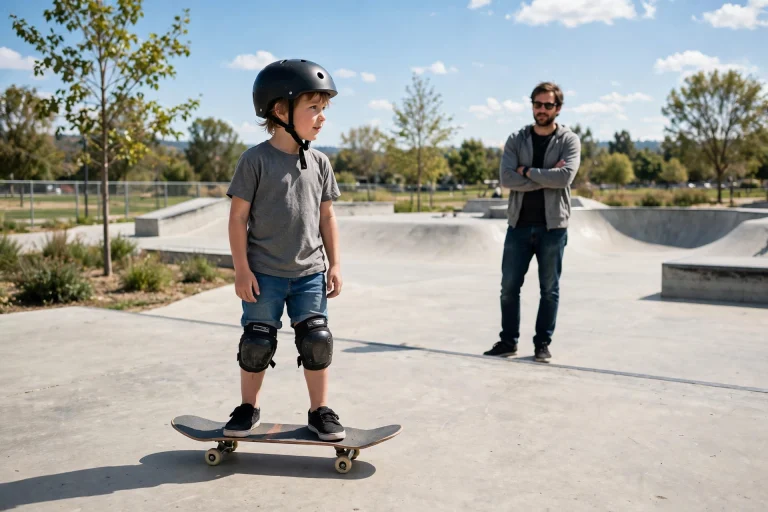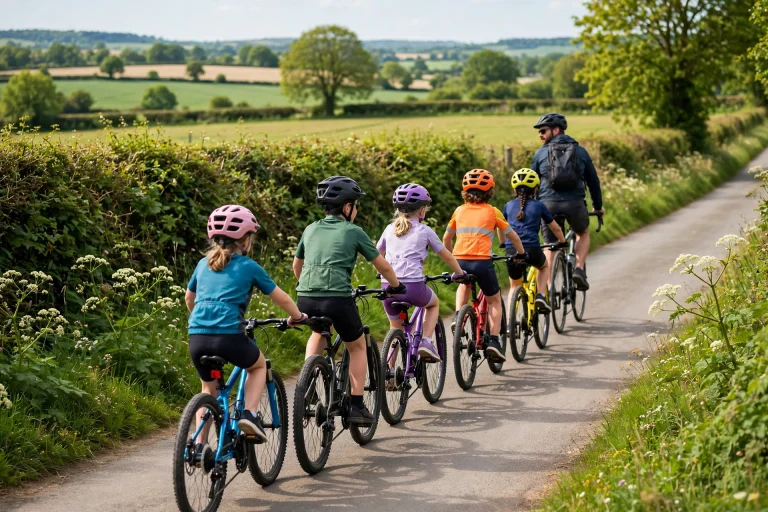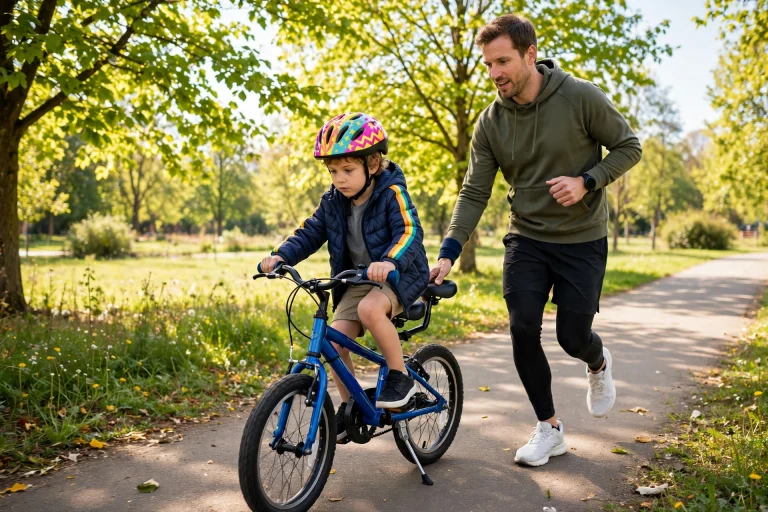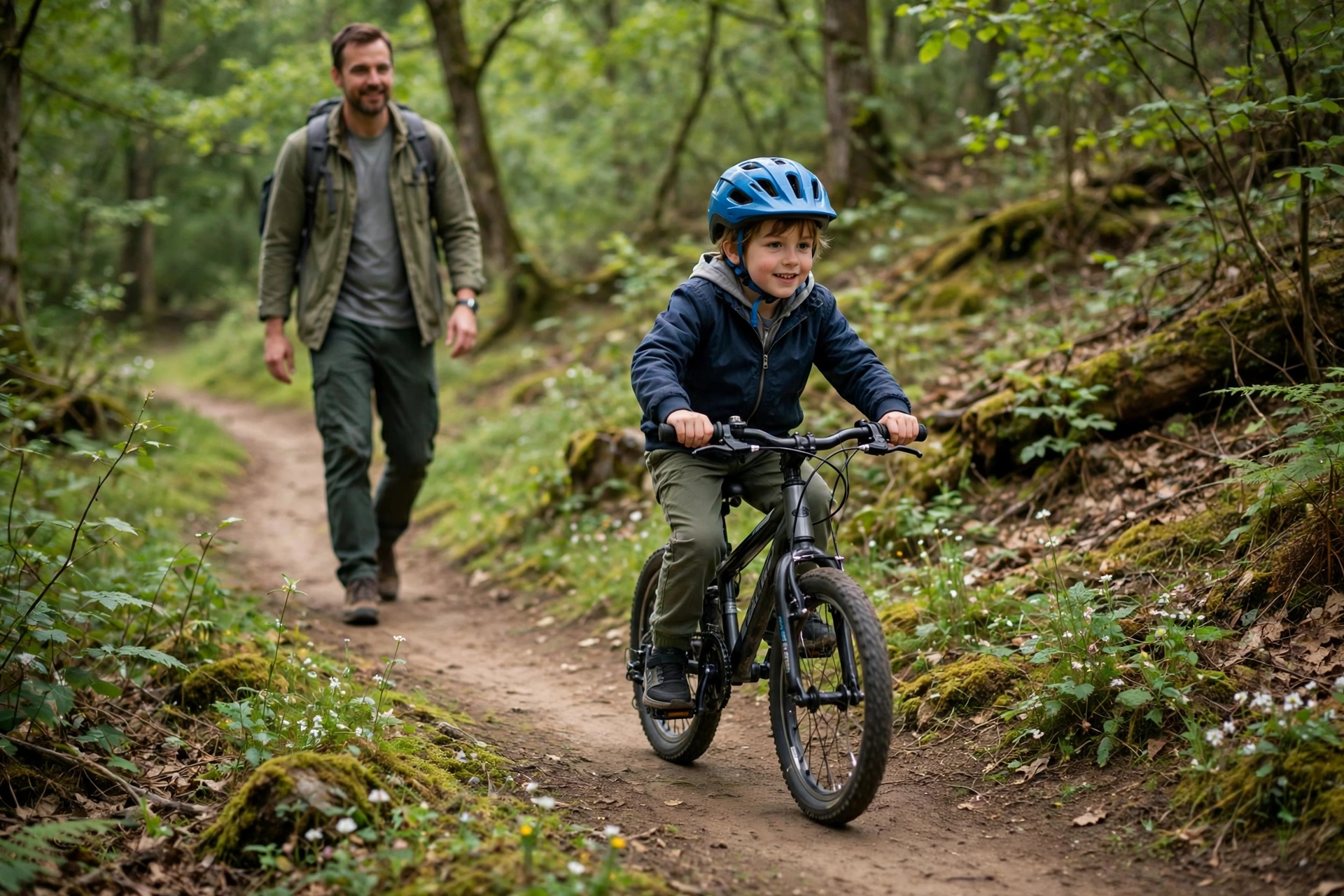
Yes — a first mountain bike helmet for a child should be a proper, certified kids’ mountain bike helmet that fits snugly, sits level on the head, and stays put with the straps fastened, and an adult should check the fit before every ride. A child’s first rides on trails, dirt paths, and bumpy ground are very different from riding on a smooth pavement, so the helmet needs to handle small falls, low branches, and the odd tumble onto soft ground. The right helmet is one the child is happy to wear, because a helmet left at home protects nobody.
Choosing a first mountain bike helmet can feel confusing, because shops are full of options in bright colours and different shapes, and children often choose by looks alone. In general terms, the most important things are fit, coverage, and comfort, in that order. This guide explains what to look for in a kids’ mountain bike helmet, how to check the fit at home, and how to help a child get used to wearing one on the trail.
What Makes a Mountain Bike Helmet Different for a Child?
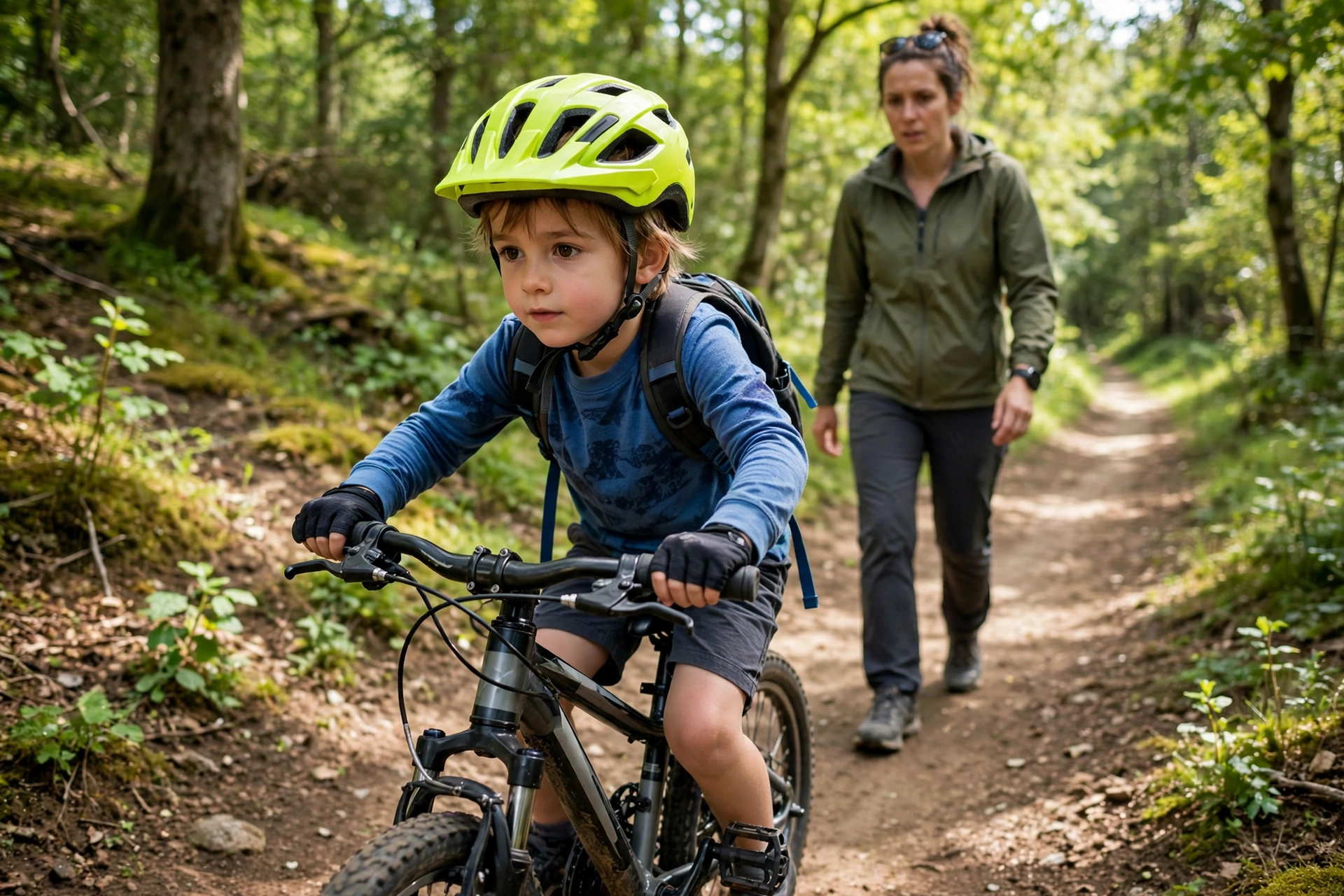
A mountain bike helmet for a child is built for rougher riding than a helmet made for gentle pavement trips. It usually has more coverage at the back and sides of the head, because falls on trails can come from any direction, and it often has a small visor at the front to shade the eyes from sun and to keep light rain and twigs away from the face. The vents are placed to keep a child’s head cool while they pedal uphill, which matters because a hot, sweaty head is one of the main reasons children ask to take a helmet off.
Size matters more than style. Kids’ helmets come in sizes based on head circumference, and a helmet that is too big will slide around and may not protect the head properly in a fall, while one that is too small will press painfully and the child will refuse to wear it. Measure around the child’s head just above the eyebrows with a soft tape measure, and use that number to pick the size range. In general terms, a helmet should feel snug all round without squeezing, and it should not rock from side to side when the child shakes their head gently.
How Do You Check the Fit Before a Ride?
The fit check takes less than a minute and is worth doing before every ride, because children’s heads grow and straps loosen over time. First, the helmet should sit level on the head, with the front edge about two fingers’ width above the eyebrows — not tipped back like a cap and not pulled down over the eyes. If the helmet slides forward when the child looks down, it is sitting too far back or it is too loose.
Next, check the straps. The two side straps should meet in a V shape just below each ear, and the chin strap should be snug enough that only one or two fingers fit between the strap and the chin. Ask the child to open their mouth wide: the helmet should pull down slightly, which shows the strap is holding it in place. If the helmet wobbles when the child shakes their head, tighten the rear dial a little and check the straps again.
What Should a Parent Look for When Buying?
Start by taking the child to the shop if you can, because trying helmets on is the fastest way to find one that fits well and feels comfortable. Let the child pick a colour they like from the models that fit, so they feel ownership of the helmet and are more willing to wear it. A helmet the child hates the look of will be left behind, however good its fit.
Weight is worth considering, because a heavy helmet can feel tiring on a child’s neck over a long ride, and children notice weight more than adults do. In general terms, a lighter helmet is more comfortable, but it should not be chosen at the cost of coverage. A helmet with good rear coverage and a sturdy shell is a sensible choice for trail riding, even if it weighs slightly more than a very light road-style helmet.
Check the visor, the vents, and the buckle before you buy. The visor should be fixed firmly and should not wobble, the vents should be large enough to let air through but covered enough that twigs and insects cannot easily get in, and the buckle should be easy for an adult to fasten and unfasten, even with cold or muddy hands. A buckle that pinches the skin under the chin is a common complaint, so look for one with a small guard or a soft cover. If you want to understand the extra protection some helmets offer against angled impacts, reading about what MIPS is for helmets can help you decide whether that feature is worth looking for.
How Can You Help a Child Get Used to Wearing a Helmet?
Make the helmet part of the routine from the very first ride, so that putting it on becomes as automatic as putting on shoes. A simple rule helps: no helmet, no ride. Children accept rules more easily when they are consistent and when adults follow them too, so wear your own helmet on every family ride and let your child see you checking your straps just as you check theirs.
Keep the first rides short and fun. A gentle trail with a picnic stop or a favourite viewpoint gives the child something to look forward to besides the helmet, and it stops the ride from feeling like a test of endurance. If the child complains that the helmet is hot or itchy, stop and adjust the pads or straps rather than dismissing the complaint, because a small fix often solves the problem and keeps the child willing to ride.
When Should a Kids’ Mountain Bike Helmet Be Replaced?
A helmet should be replaced after any significant impact, even if there is no visible crack, because the foam inside can be compressed by a hard knock and may not protect as well next time. Check the helmet after every fall: look for cracks in the shell, dents in the foam, loose straps, or a buckle that no longer clicks firmly. If any of these are present, retire the helmet and replace it.
Frequently Asked Questions
Q: Does my child need a special helmet for mountain biking, or will any bike helmet do?
A: A helmet made for mountain biking is a better choice for trail riding, because it usually gives more coverage at the back and sides and has a visor. A general kids’ bike helmet is better than no helmet, but a mountain bike model suits rough ground and small falls more closely.
Q: How tight should a child’s mountain bike helmet be?
A: It should feel snug all round without pressing painfully, sit level on the head, and stay still when the child shakes their head gently. The chin strap should allow one or two fingers underneath, and the helmet should pull down slightly when the child opens their mouth wide.
Q: Can my child ride a mountain bike trail without a helmet if an adult is with them?
A: No. Adult supervision is important, but it cannot prevent a fall, and trails have bumps, roots, and loose surfaces that can catch any rider out. A properly fitted helmet should be worn on every ride, however short or easy the trail seems.

Olivia
Writer at Helmet Today, covering helmet reviews, fit and riding safety.