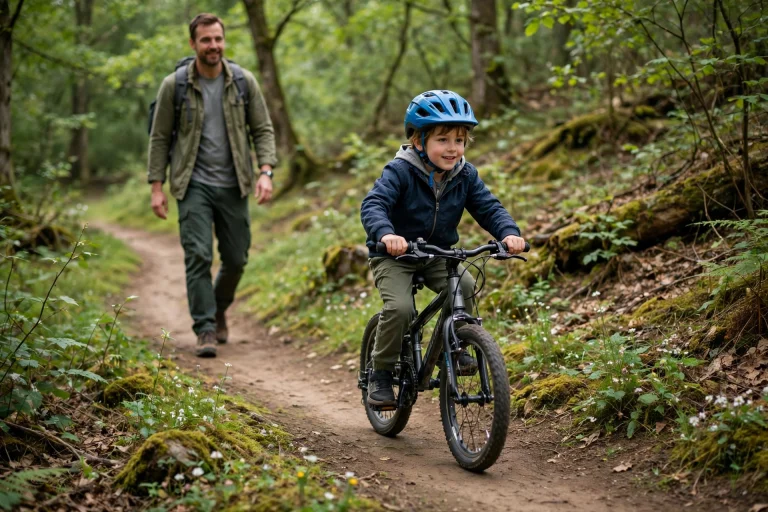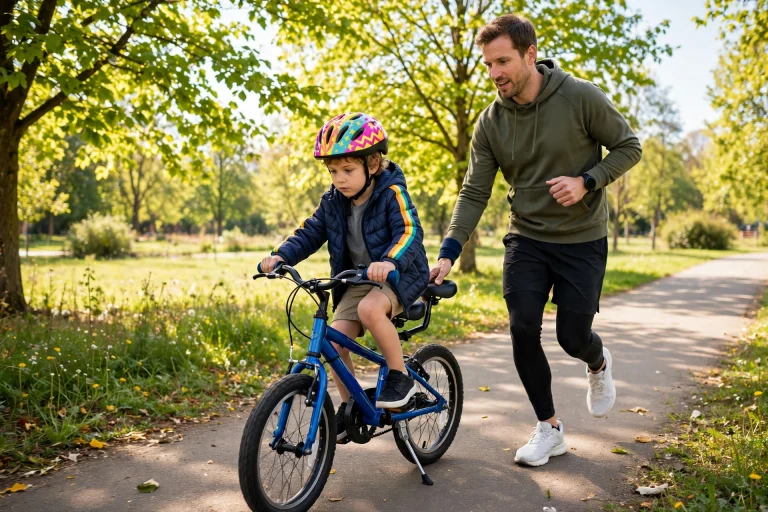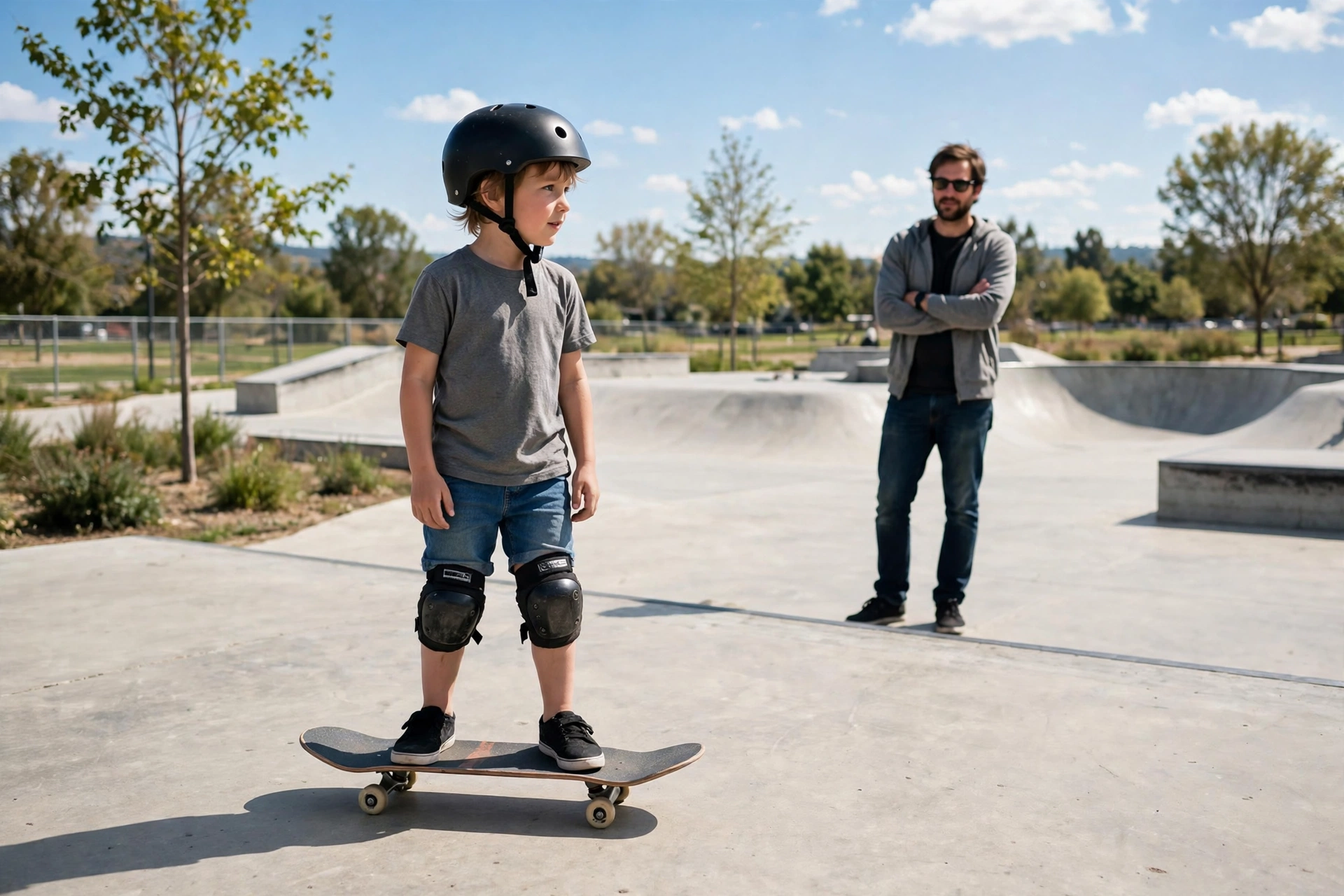
Yes — a child learning to skateboard should wear a proper, certified helmet that fits snugly and covers the back of the head, and an adult should check the fit and supervise the session. Skateboarding involves frequent small falls, often backwards onto the back of the head, so a helmet with good rear coverage matters more than it does for gentle cycling. The right helmet is one that fits well, feels comfortable, and is worn every time the board comes out.
Many parents wonder whether a bike helmet will do for a first skateboard, or whether a skateboard helmet is really different. In general terms, the two are designed with different kinds of falls in mind, and the choice matters. This guide explains what makes a skateboard helmet different, how to fit one on a child, and how to make helmet-wearing a natural part of learning to skate.
What Makes a Skateboard Helmet Different from a Bike Helmet?
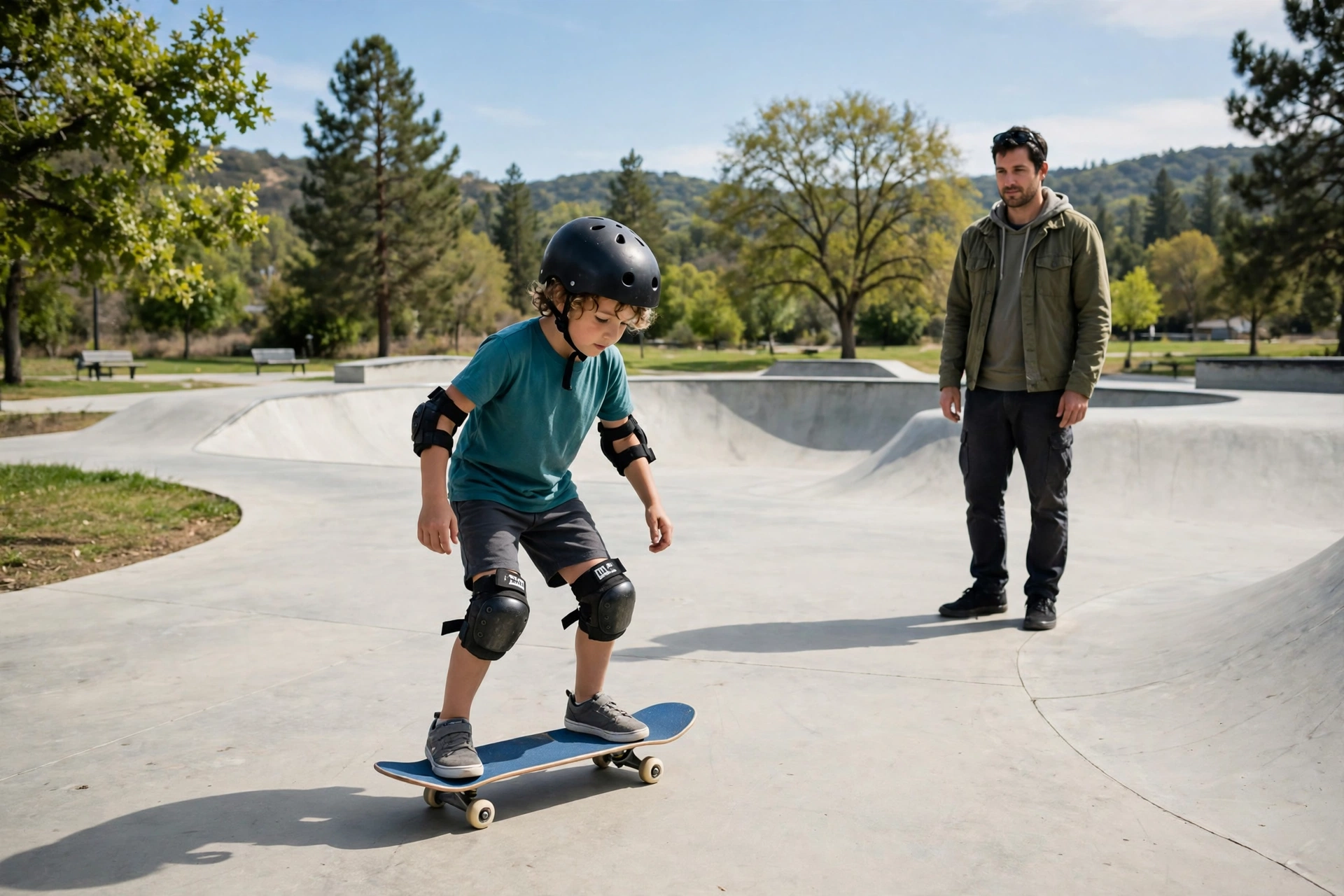
A skateboard helmet is built for the kinds of falls skateboarders have, which often involve hitting the back of the head on concrete or a ramp. For that reason, skate helmets usually sit lower at the back and cover more of the rear of the skull than a typical bike helmet, which is shaped mainly for forward falls at speed. The shell is often rounder and smoother, with fewer large vents, because it is designed to slide and spread the force of an impact across the surface.
Many skate helmets are also made to handle more than one small impact, which suits a sport where beginners fall often and gently while learning to balance. That does not mean a skate helmet lasts forever: after any hard knock, it should still be checked carefully and replaced if it shows damage. A helmet that has been dropped hard onto concrete may look fine on the outside while the foam inside has been compressed, so the after-fall check matters just as much as the choice of helmet.
How Do You Fit a Skateboard Helmet on a Child?
Start by measuring the child’s head with a soft tape measure around the widest part, just above the eyebrows and ears, and use that number to pick the right size range. The helmet should sit level on the head, with the front edge about two fingers’ width above the eyebrows, and it should cover the back of the head well. If the helmet tips back and leaves the forehead bare, or slides forward over the eyes, the size or the shape is wrong.
Check the fit by asking the child to shake their head gently from side to side and up and down. The helmet should move with the head, not slide around on its own. The chin strap should be snug enough that only one or two fingers fit underneath, and the side straps should form a V just below each ear. If the helmet rocks after the straps are fastened, try adjusting the fit pads inside — most skate helmets come with pads of different thicknesses — and if it still rocks, try a different model.
What Should a Parent Look for When Buying?
Take the child along to try helmets on if you can, because fit varies between brands and the only reliable test is wearing one. Let the child choose a colour or design they like from the models that fit properly, so the helmet feels like theirs rather than something imposed on them. A helmet a child likes is a helmet a child will wear, and that matters more than any single feature on the box.
Check the shell and the liner before you buy. The outer shell should feel solid and smooth, with no rough edges, and the inner foam should be even and firmly fixed in place. The vents should be large enough to keep the child’s head cool during an active session but not so large that they leave the head exposed. The buckle should be easy to fasten and unfasten, and it should not pinch the skin under the chin, so look for a buckle with a soft guard if possible.
Think about how the helmet will be used. If the child will also ride a scooter or a bike, a multi-sport helmet certified for several activities can be a practical choice, but check that it genuinely covers skateboarding and that it still gives good rear coverage. If you want to understand how some helmets handle the twisting forces that can happen in a fall, reading about what MIPS is for helmets can help you decide whether that feature is worth looking for in your child’s next helmet.
How Can You Help a Child Get Used to Wearing a Skateboard Helmet?
Make the helmet part of the skateboarding routine from the very first session, with a simple rule: no helmet, no board. Children accept a rule more easily when it is the same every time and when the adults around them follow it too, so if you skate with your child, wear your own helmet and check your straps in front of them. Consistency is what turns a rule into a habit.
Keep the first sessions short, flat, and fun. A smooth, quiet area such as an empty car park or a beginner corner of a skate park is a better place to learn than a busy ramp, and it gives the child time to get used to the board and the helmet at the same time. Short sessions with breaks are better than one long session that ends with a hot, tired, and frustrated child who associates the helmet with discomfort.
When Should a Kids’ Skateboard Helmet Be Replaced?
Replace the helmet after any significant impact, even if there is no visible crack. The foam inside a helmet works by compressing to absorb force, and once it has been compressed by a hard knock it may not protect as well next time. After every fall, check the shell for cracks, the foam for dents, and the straps and buckle for damage. If anything looks or feels wrong, retire the helmet.
Frequently Asked Questions
Q: Can my child use a bike helmet for skateboarding?
A: A bike helmet is better than no helmet, but a skateboard helmet is a better choice, because it covers more of the back of the head and is shaped for the kinds of falls skateboarders have. If you can, choose a helmet made or certified for skateboarding.
Q: How tight should my child’s skateboard helmet be?
A: It should feel snug all round without pressing painfully, sit level on the head, and stay still when the child shakes their head gently. The chin strap should allow one or two fingers underneath, and the side straps should meet in a V just below each ear.
Q: Should my child wear a helmet even when just practising balance on flat ground?
A: Yes. Most beginner falls happen on flat, smooth ground, often backwards onto the back of the head, and that is exactly what a skateboard helmet is designed to help with. Adult supervision and a properly fitted helmet should be part of every session, however easy it looks.

Olivia
Writer at Helmet Today, covering helmet reviews, fit and riding safety.