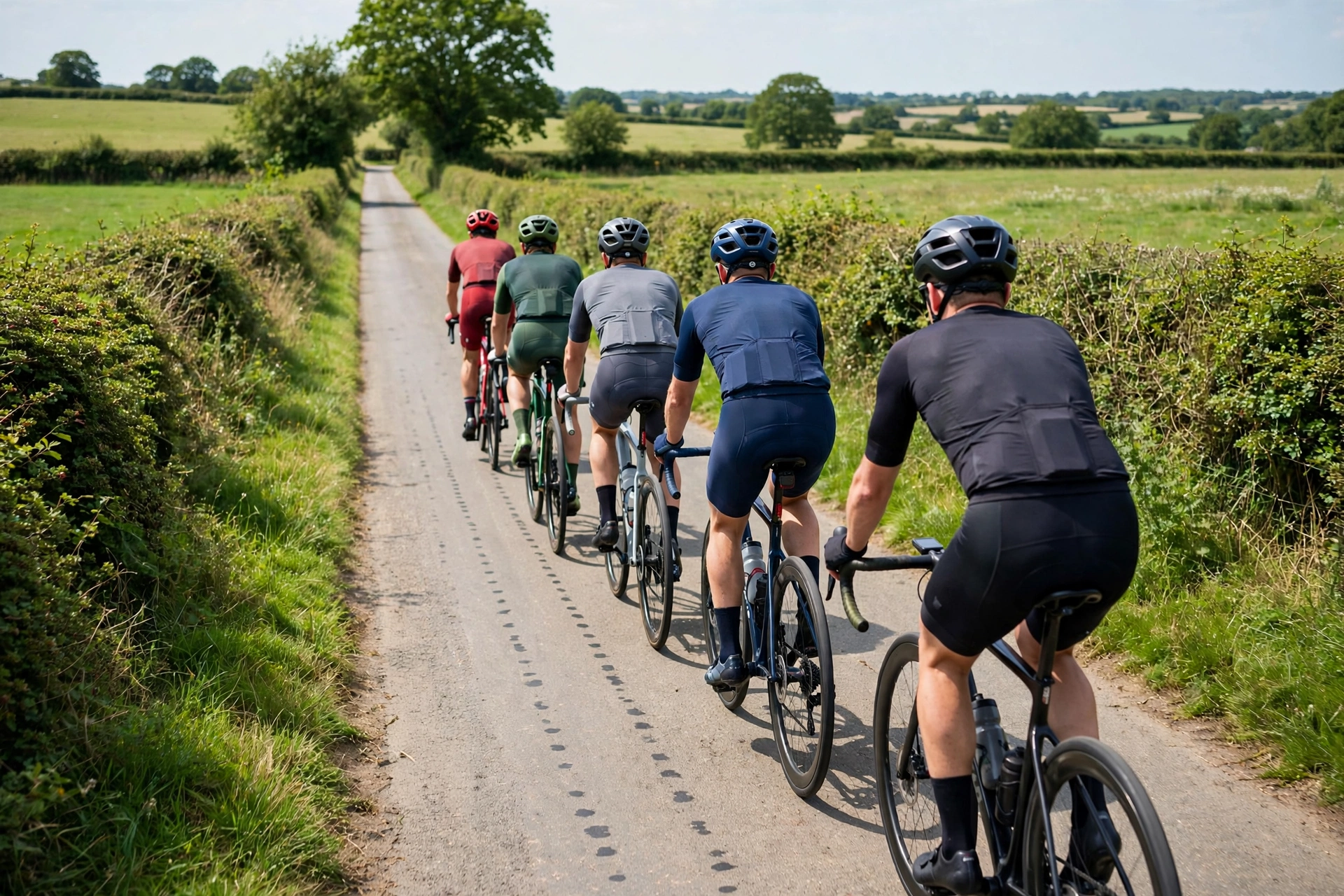
A bike helmet for group riding is a well-fitting road helmet that stays secure, vents well, and lets you hear and see the riders around you — because in a group, your helmet has to work with the pack, not just protect you in a fall. Group riding means riding close to other cyclists, often wheel to wheel, at a pace set by the group rather than by you alone. That changes what matters in a helmet: fit and stability matter more, because a helmet that shifts when you look over your shoulder or stand up on a climb is a distraction at exactly the wrong moment. In general terms, the best group-riding helmet is a comfortable road helmet with good ventilation, a secure retention system, and a shape that does not block your view or your hearing.
This guide explains what group riding asks of a helmet, how to choose and fit one for riding in a pack, and which habits keep the whole group safer. It covers fit, ventilation, communication, and the checks worth doing before you join a group ride, whether it is your first club ride or your fiftieth.
What Does Group Riding Change About Helmet Choice?
Riding in a group changes the demands on a helmet in a few practical ways. You spend much of the ride looking slightly upward at the wheel ahead of you, often in an aerodynamic position on the drops or the hoods. A helmet with a long tail or a shape that digs into your neck when you tilt your head back will become uncomfortable quickly. A compact road helmet suits group riding better than a bulky one.
You also ride closer to other people than you would on your own, so small things matter more: a helmet that wobbles, a strap that flaps, or a peak that catches the wind can distract you or the rider behind you. A secure fit keeps the helmet still when you turn your head to check for traffic or stand up to climb. It also matters that you can hear. Group riding relies on shouted calls — “car back”, “slowing”, “hole” — and a helmet that covers your ears or channels wind noise loudly can muffle those warnings. Most road helmets leave the ears open, which suits group riding.
How Should a Helmet Fit for Long Group Rides?
A good fit starts with size. Measure around your head just above your eyebrows and ears, and choose the size that matches. The helmet should sit level on your head, low enough at the front that you can fit roughly two fingers between your eyebrows and the rim, but not so low that it blocks your view. When you shake your head gently from side to side, the helmet should move with your head rather than sliding around on its own. If it slides, it is either the wrong size or the retention system needs adjusting.
The retention system — the dial or cradle at the back — should be tightened until the helmet feels snug all round without pressing painfully anywhere. The straps should form a neat V under each ear, and the buckle should sit just under your chin with room for about two fingers between the strap and your throat. Comfort over several hours is the real test: a helmet that feels fine for ten minutes in a shop can develop a pressure point after two hours on the road. If you are learning about how helmets handle different kinds of impact, reading about what MIPS is for helmets can help you understand one of the technologies used in modern helmet design.
Why Does Ventilation Matter in a Paceline?
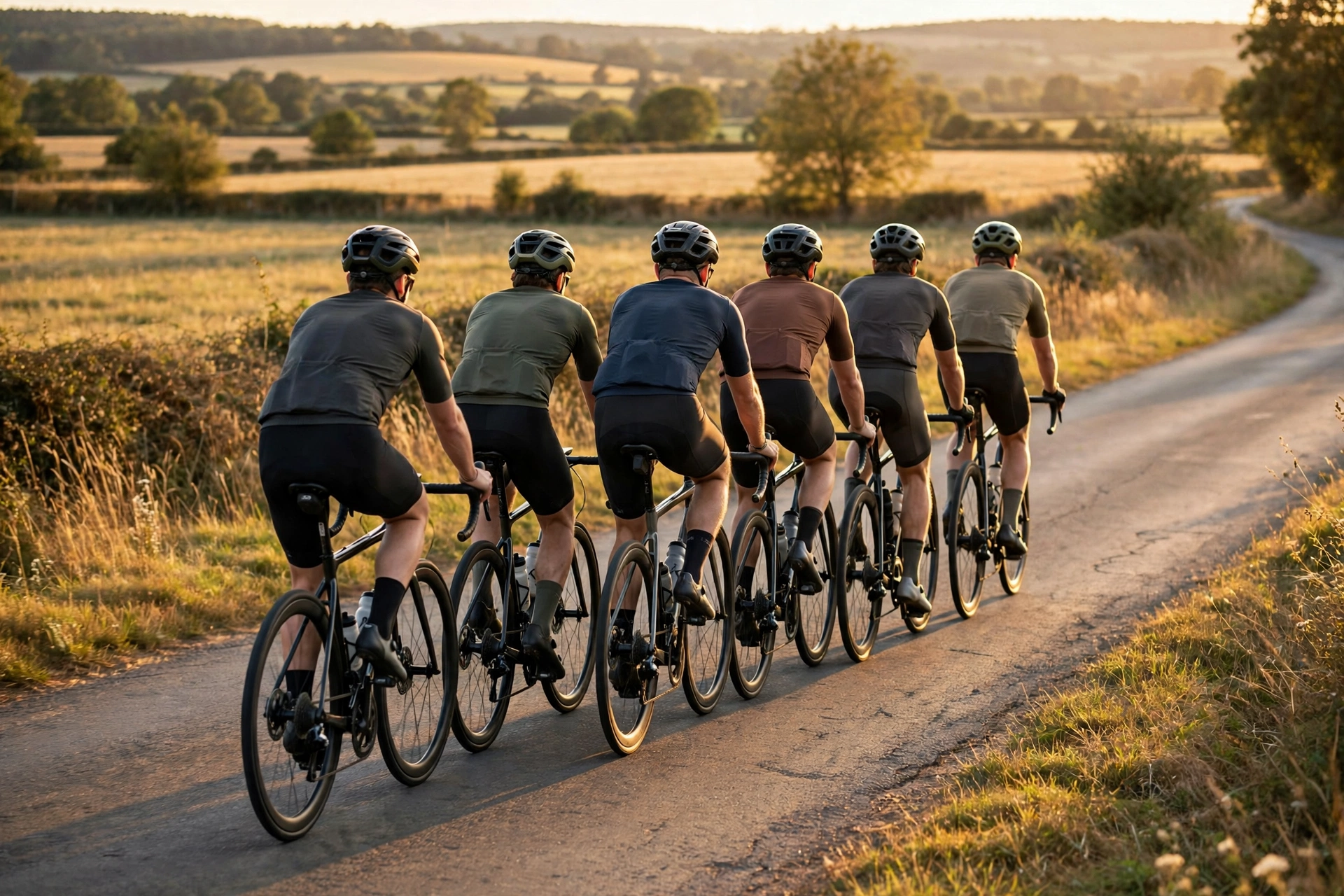
A paceline is the line of riders you form in a group, each rider sheltering behind the one in front. It is efficient, but it is also warm. The rider at the front takes the wind, and everyone behind rides in stiller air, which means less cooling airflow over your head. On a warm day, that still air can make a poorly ventilated helmet feel hot and stuffy within the first half hour. Good ventilation — vents that channel air across your scalp — makes a real difference to comfort over a long ride.
Ventilation also matters because heat affects concentration. A rider who is overheating is more likely to lose focus, miss a call, or react slowly to a change in pace. In a group, where you are riding close to the wheel ahead, a slow reaction can cause a touch of wheels or a sudden brake. Keeping cool is not just about comfort; it is part of riding safely with others. Look for vents at the front and back, with internal channels that connect them.
What Safety Habits Matter Most in a Group?
The helmet is only one part of group safety. The habits that matter most are the ones that keep the group predictable. Hold your line, which means riding in a steady, straight path rather than weaving or drifting sideways. Avoid sudden braking, and when you do need to slow down, call it out first so the riders behind you have time to react. Signal hazards clearly: point at potholes, call out parked cars, and warn about oncoming traffic. These habits protect everyone, and they work best when every rider follows them.
Communication is the other half of the job. In a group, you are the eyes and ears for the riders behind you, and they are yours. Call out what you see in a loud, clear voice, and repeat calls from the front so they reach the back. Finally, know your limits: if you are tired, say so and let the group know you are dropping back. A tired rider makes mistakes, and mistakes in a group affect everyone.
What Should You Check Before Joining a Group Ride?
Before your first ride with a new group, check your helmet. Look for cracks or damage to the shell, check that the straps are not frayed, and make sure the retention dial turns smoothly. If the helmet has been dropped hard or involved in a crash, it should be replaced rather than reused, even if the damage is not visible.
Check the rest of your kit too: make sure your tyres are pumped up, your brakes work, and your gears shift cleanly. Carry a spare tube, a pump, and a multi-tool, and know how to use them. Find out the group’s rules before you arrive — the meeting point, the route, the pace, and any rules about helmets or lights. Arrive early, introduce yourself, and ride within yourself.
Frequently Asked Questions
Q: Do I need a special helmet for group riding?
A: In general terms, no. A well-fitting road helmet with good ventilation and a secure retention system is ideal. You do not need a special model, but a helmet that stays put and lets you hear calls clearly will serve you better than a loose or noisy one.
Q: Should I wear a helmet on a group ride if the group does not require one?
A: Yes, it is a sensible choice. Group riding puts you close to other riders, where a touch of wheels or a sudden stop can cause a fall. A helmet protects your head if that happens, and many groups require one anyway.
Q: How do I keep my helmet from moving when I look behind me in a group?
A: Make sure the retention system is snug and the straps form a neat V under your ears, with the buckle just under your chin. A helmet that fits well should move with your head when you turn, not slide around on its own.

Olivia
Writer at Helmet Today, covering helmet reviews, fit and riding safety.