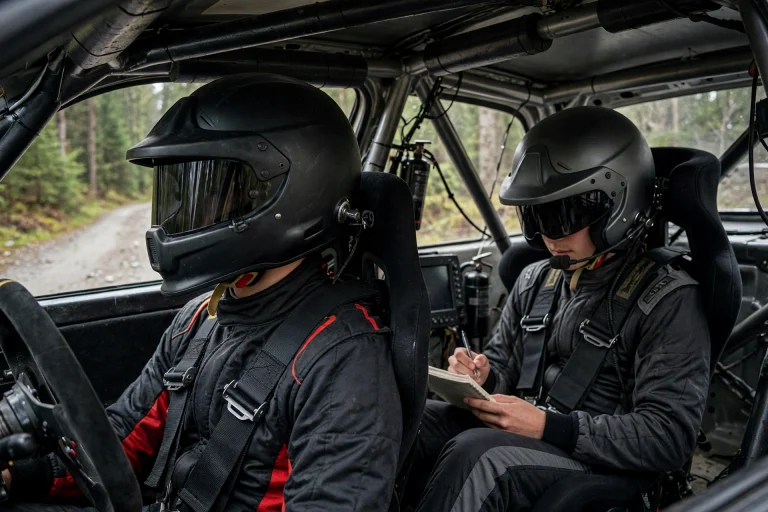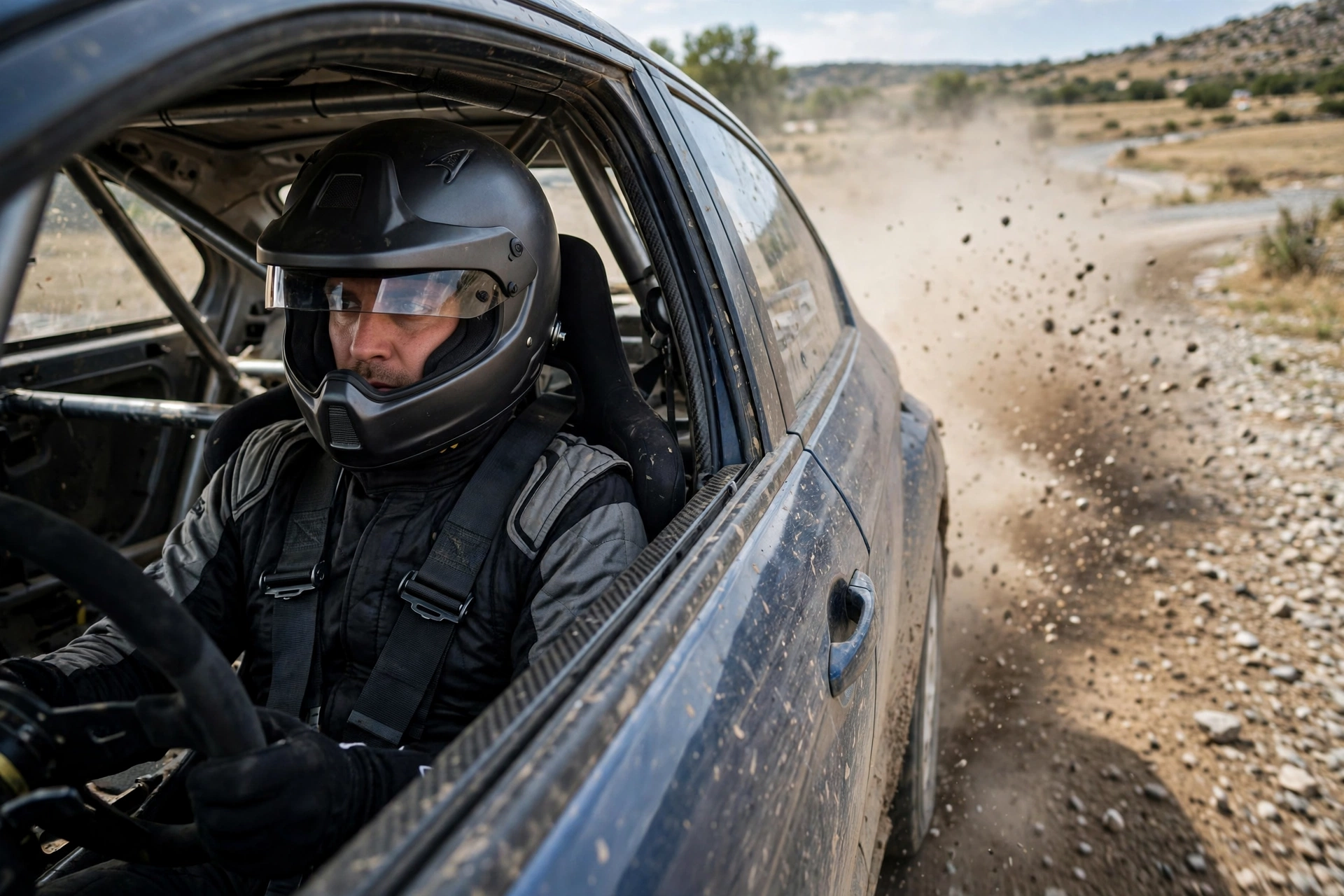
A rallycross helmet is a full-face motorsport helmet worn for short, intense races on mixed surfaces — part tarmac, part dirt — where cars race door to door over jumps, through dust, and around tight corners. Rallycross is one of the most frantic forms of motorsport: several cars start together, race a handful of laps on a compact circuit, and take a longer “joker” route once per race. Drivers face dust, gravel spray, bumps, and close contact with other cars, so the helmet has to protect against impacts while staying comfortable and clear-headed in hot, dusty conditions. In general terms, a rallycross helmet is a full-face design with a wide visor, strong ventilation, and a secure fit that holds steady through jumps and heavy braking.
This guide explains what a rallycross helmet is, how it differs from helmets used in other motorsport, and what to look for when choosing one. It covers fit, visors and dust, ventilation, communication with a co-driver or team, and the care a helmet needs after a dusty race.
What Is Rallycross and Why Does It Need Its Own Helmet?
Rallycross packs a lot into a short race. Events are usually held on circuits of around a kilometre, with a mix of sealed tarmac and loose dirt or gravel. Races last only a few minutes, but they are flat out from the green light, with cars launching together, fighting for the first corner, and taking jumps that can throw a car into the air. Contact between cars is common, and so is being hit by stones and dirt thrown up by the car ahead. A helmet built for this needs to handle impacts from more than one direction, and it needs to stay in place through sudden jolts.
Unlike circuit racing, where a driver might settle into a rhythm over a long race, rallycross is a sprint: full concentration from start to finish, with no time to adjust a slipping helmet or wipe a dusty visor mid-race. That is why fit and clarity matter so much. In general terms, drivers choose a full-face helmet with a wide field of view, good airflow, and a visor that can be cleared quickly between heats.
How Should a Rallycross Helmet Fit?
Fit is the first thing to get right, and it follows the same rules as any motorsport helmet. The helmet should be snug all round, with even pressure and no loose spots, and it should not move when you shake your head. It should sit low enough to protect your forehead and the sides of your head, with the visor opening giving you a clear view ahead and to the sides.
Pay attention to the areas that cause trouble in a rallycross car. The helmet must clear the headrest and the harness straps when you turn your head to look for a car alongside you. It should not press on your collarbone when you brace for a jump landing, and the chin bar should sit far enough from your mouth that you can breathe and speak clearly. Wear it for a while before buying, ideally sitting in a seat with a harness on, because a helmet that feels fine standing in a shop can press uncomfortably once you are strapped in. If you are learning about how helmets handle different kinds of impact, reading about what MIPS is for helmets can help you understand one of the technologies used in modern helmet design.

What About Visors, Dust, and Visibility?
Dust is the biggest visibility problem in rallycross. The car ahead throws up a cloud of dirt, and the circuit surface is loose enough that every car adds to it. A visor with a wide aperture helps you see the track, the cars around you, and the flag points at the edges of the circuit. Many drivers carry tear-off strips — thin clear layers over the visor that can be pulled away one at a time — so a dusty visor can be cleared in seconds between heats without taking the helmet off.
Visor choice also matters for light. Rallycross is often run in bright sun, and a tinted visor can cut glare, but it can also make a shaded or dusty section harder to read. Whatever you choose, make sure the visor seals well against the helmet shell, because a gap lets dust into the helmet and onto your eyes. Keep a spare visor and spare tear-offs in your kit, and check the visor for scratches after each event, since a scratched visor scatters light and makes dust harder to see through.
Why Does Ventilation Matter in a Rallycross Car?
A rallycross car gets hot quickly. The engine sits close to the cabin, the driver wears a fireproof suit and balaclava, and the race is run at full effort, so the driver is working hard from the first corner. A helmet with good ventilation helps keep the driver cool and alert, which matters when a race is decided by split-second reactions. Vents at the front bring in fresh air, and vents at the back let warm air out, and the best designs channel air across the face and over the top of the head.
Ventilation has to work with the rest of the safety gear, not against it. The balaclava covers the driver’s head and neck, and a head restraint device sits over the shoulders, so air needs a clear path in and out of the helmet despite those layers. After the race, let the helmet air out fully before putting it away, because a damp helmet left in a bag will smell and can damage the lining over time.
What Should You Check Before and After a Rallycross Event?
Before an event, check the helmet the way you would check any safety gear. Look for cracks or damage to the shell, check the visor for scratches, and make sure the visor mechanism opens and closes smoothly. Check the lining and the straps for wear, and make sure any fasteners for a head restraint device are secure.
After the event, clean the helmet properly. Wipe dust from the shell and the vents with a soft, damp cloth, and clean the visor with a proper visor cleaner rather than a dry rag, which can scratch it. Remove the lining if it comes out and wash it according to the maker’s instructions, or air it out well if it does not. Store the helmet in a cool, dry place, away from fuel and chemicals, and keep it in its bag when you are not using it. A well-kept helmet lasts longer and performs better, and it is one less thing to worry about when the next heat starts.
Frequently Asked Questions
Q: Can I use a circuit racing helmet for rallycross?
A: In general terms, a full-face motorsport helmet can suit rallycross, but check that it fits your head restraint, works with tear-off visor strips, and has good ventilation for dusty, hot conditions.
Q: Do rallycross drivers need tear-off visor strips?
A: They are not always required, but they are very useful. Tear-offs let you clear a dusty visor in seconds between heats, which keeps your vision sharp when the circuit is dry and loose.
Q: How do I keep dust out of my rallycross helmet?
A: Make sure the visor seals well, close the vents when the track is very dusty, and clean the helmet after each event. A balaclava also helps by covering the gaps around your neck and chin.

Olivia
Writer at Helmet Today, covering helmet reviews, fit and riding safety.