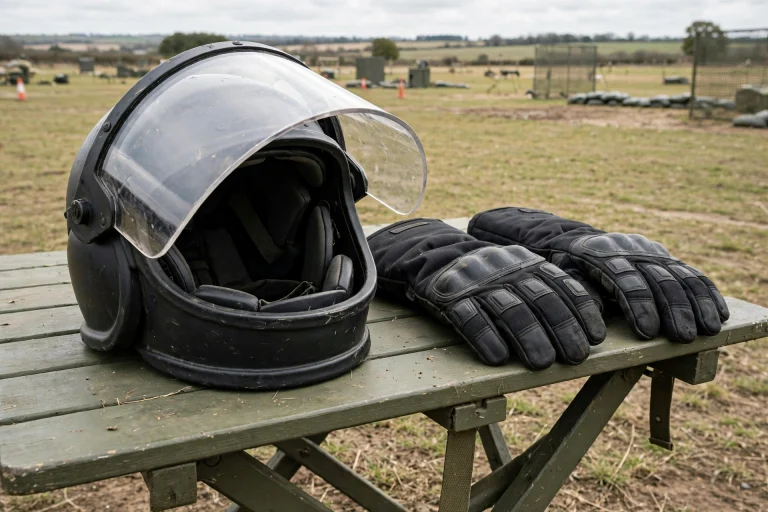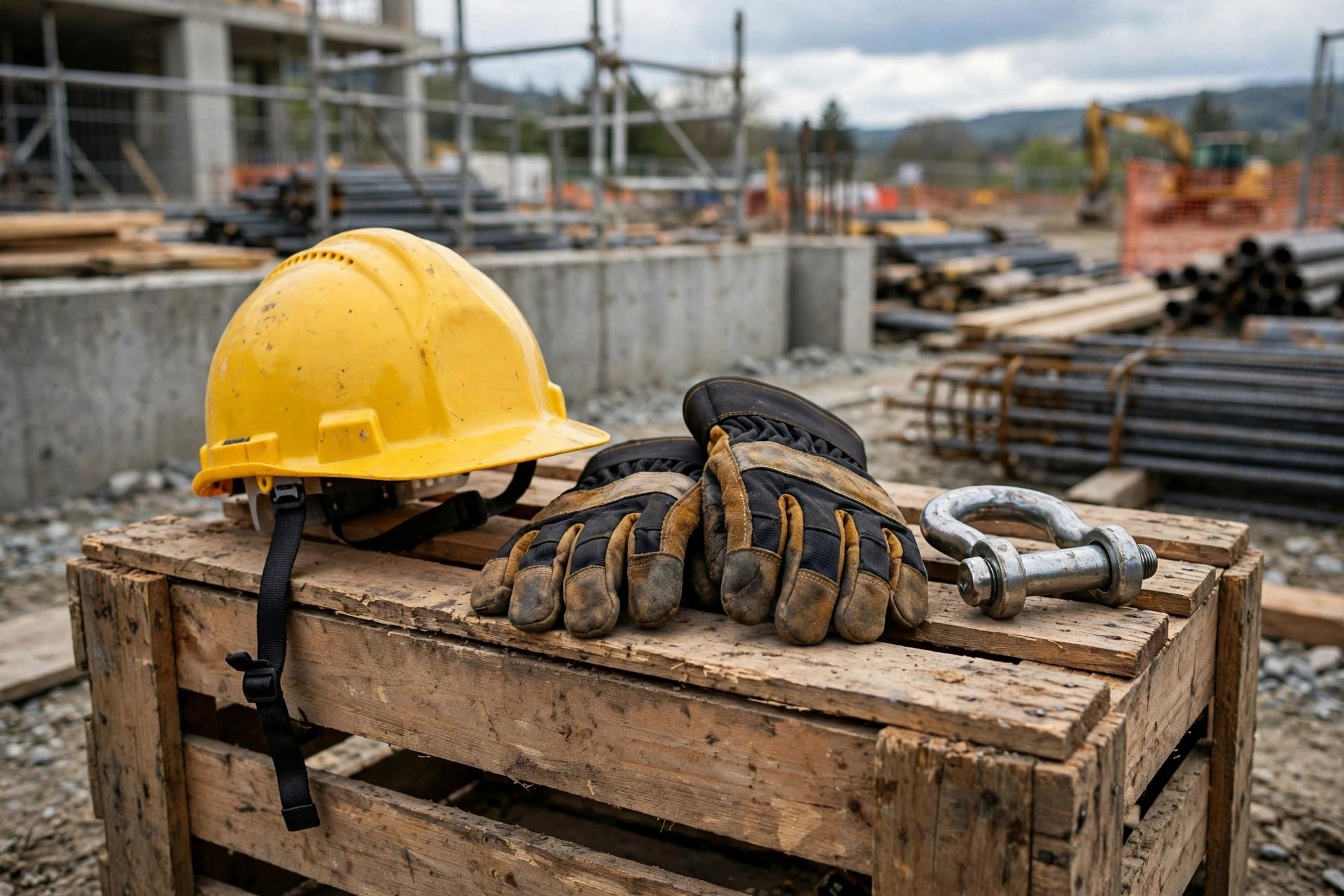
A rigger helmet is, in general terms, a hard hat that protects the head from falling objects, swinging loads and knocks against steelwork, and is designed to stay firmly in place while a rigger climbs, lifts and works at height. Riggers move heavy loads with cranes, ropes and chains, working on construction sites, in factories, on ships and at events. Their heads are exposed to falling tools, swinging loads and steel structures, so a helmet is an essential part of their protective gear, alongside a harness, gloves and sturdy footwear.
Rigging is one of the most demanding jobs on a site. A rigger may be signalling a crane operator, guiding a load into place, climbing a structure to attach a sling, or working on a scaffold high above the ground. At every stage there is a risk of something falling or swinging onto the head, and a risk of the rigger bumping their own head on steelwork. This guide explains what a rigger helmet needs to do, which features matter most, and how to look after one, all in general terms.
What Does a Rigger Do, and What Are the Risks?
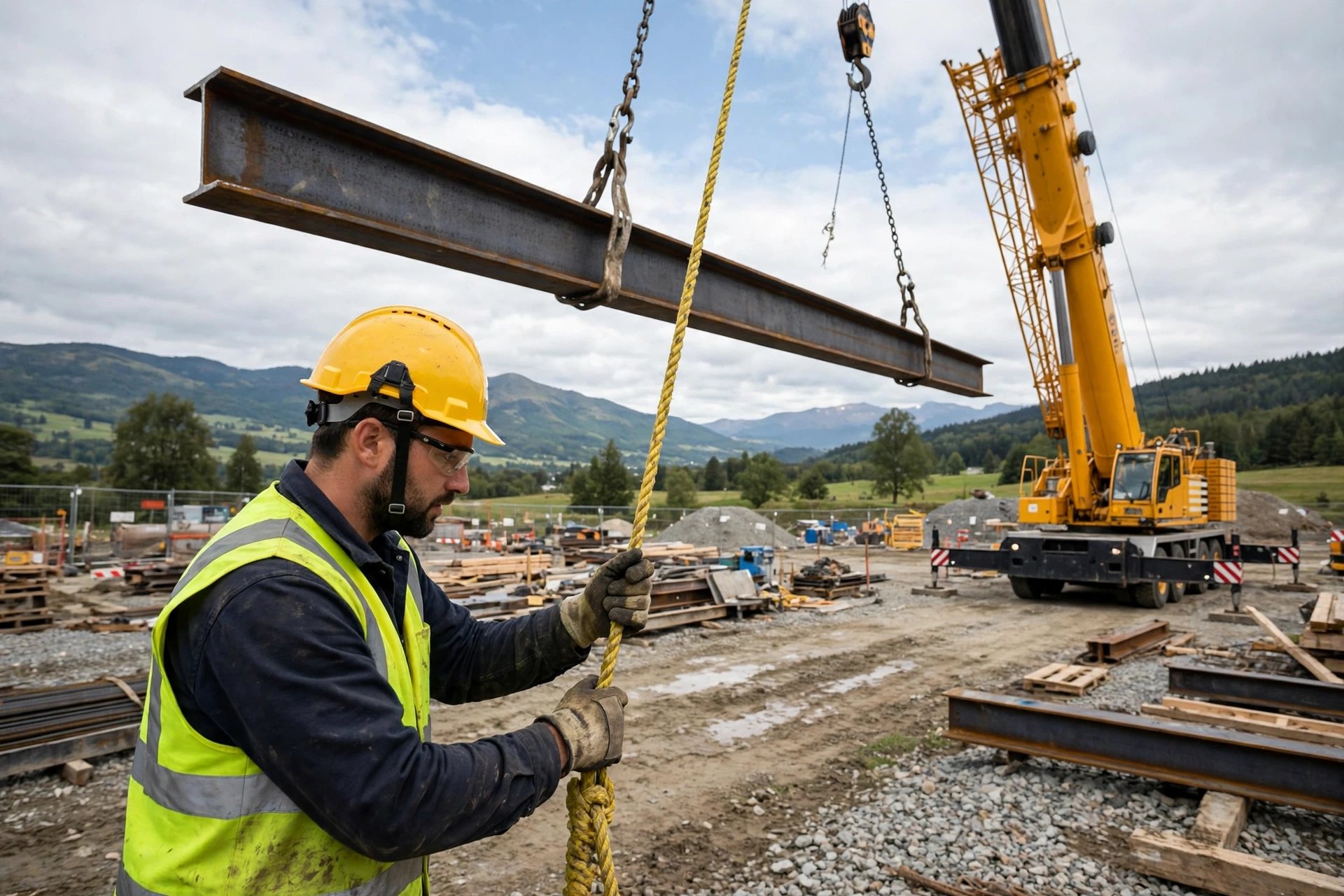
A rigger’s job is to move heavy loads safely. They attach slings, chains and ropes to a load, signal the crane operator, guide the load as it is lifted and set it down in the right place. The loads can be steel beams, machinery, containers, stage equipment or sections of a building, and they are often moved high above the ground.
The most obvious risk is a falling object. Tools, bolts, shackles and pieces of a load can drop from above, and a load itself can shift or slip. A load that swings on a crane can also strike a worker who is standing too close, and a swinging load is one of the most dangerous things on a site. A helmet protects the head from these impacts, but it is only one part of the safety system: good rigging practice, clear signals and keeping clear of suspended loads matter just as much.
What Kind of Helmet Does a Rigger Need?
In general terms, the helmet for this work is a hard hat of the kind used across construction and heavy industry, with a chin strap that keeps it firmly in place. It has a rigid outer shell that spreads the force of an impact, and an inner suspension or padding system that holds the shell away from the head and absorbs some of the shock. This is the basic design that has protected industrial workers for many years, and it suits rigging well.
The chin strap is especially important for a rigger. A helmet without a chin strap can fall off when the wearer bends over, looks up, or is jolted, and a helmet that falls from a height is both useless and dangerous to anyone below. A four-point chin strap, which attaches at four places around the helmet, holds it more securely than a simple two-point strap, and it is worth choosing a helmet that has one.
Fit is adjusted with a simple system at the back or sides of the helmet, often a dial or a sliding strap. The helmet should sit level on the head and feel snug without pressing painfully anywhere. It should not wobble when the wearer moves quickly or climbs, because a helmet that shifts around is a distraction when handling heavy loads. If you are learning about how helmets handle different kinds of impact, reading about what MIPS is for helmets can help you understand one of the technologies used in modern helmet design.
What Features Matter Most for Riggers?
Retention comes first. A helmet that stays on the head in all positions is essential for a rigger, who may be looking up, bending over, climbing or working upside down. A good chin strap, a well-adjusted fit system and a helmet that sits snugly all contribute to this. The helmet should be tested in the positions the rigger actually works in, not just standing upright.
Ventilation matters too, because rigging is physical work, often outdoors in sun or in a hot industrial hall. Vents in the shell let heat escape and help keep the wearer cool, and a sweatband inside the helmet helps manage sweat. The sweatband should be easy to remove and wash or replace, because it will need cleaning often.
Compatibility with other gear is also important. Riggers wear a harness, gloves and sometimes ear protection, and the helmet needs to work with all of these. Some helmets have slots for attaching ear defenders or a visor, which can be handy for certain jobs. A lamp clip can be useful for work in dim areas, and a brightly coloured helmet is easier for crane operators and colleagues to see.
How Does the Helmet Fit with Harnesses and Other Gear?
A rigger’s helmet and harness work together as a system. The harness protects the rigger if they fall, and the helmet protects the head if something falls on them or they bump their head. The two should not get in the way of each other.
How Should a Rigger’s Helmet Be Maintained?
A work helmet needs regular care if it is to keep doing its job. It should be cleaned often, because dust, grime and sweat build up quickly on a construction site. Warm water and mild soap are usually enough, and the helmet should be left to dry naturally rather than placed on a heater or in strong sunlight. Harsh chemicals and solvents should be avoided, as they can damage the shell.
The chin strap deserves special attention, because it is what keeps the helmet on the head. The strap should be checked for fraying, wear and damage, and the buckle should be tested to make sure it fastens and releases properly. A worn chin strap should be replaced straight away, and a helmet whose strap no longer holds should not be used until it is fixed.
- Inspect the shell, suspension and chin strap before each shift.
- Replace the helmet after any heavy impact, even if no damage is visible.
- Clean the shell and padding regularly with warm water and mild soap.
- Store the helmet in a cool, dry place away from sunlight and chemicals.
- Follow the maker’s guidance on the helmet’s working life.
A helmet that has taken a heavy knock, been dropped from a height, or shows cracks or dents should be taken out of service. Even if the damage looks minor, the shell may have been weakened in a way that is hard to see, and it may not protect as well in a second impact.
Frequently Asked Questions
Q: Does a rigger need a helmet with a chin strap?
A: In general terms, yes. A chin strap keeps the helmet on the head when the rigger bends over, looks up or is jolted, and a four-point strap holds it more securely than a simple two-point strap. A helmet that falls off at height protects no one.
Q: What is the biggest risk a rigger’s helmet protects against?
A: Falling objects are the main risk, including tools, bolts and pieces of a load dropped from above. Swinging loads and knocks on steelwork are also common, so the helmet needs to stay firmly in place in all working positions.
Q: How often should a rigger’s helmet be replaced?
A: It should be replaced after any heavy impact or visible damage, and after the working life given in the maker’s guidance. In general terms, a hard hat in daily use is replaced after a number of years even if it looks fine, because the materials can weaken over time.

Olivia
Writer at Helmet Today, covering helmet reviews, fit and riding safety.