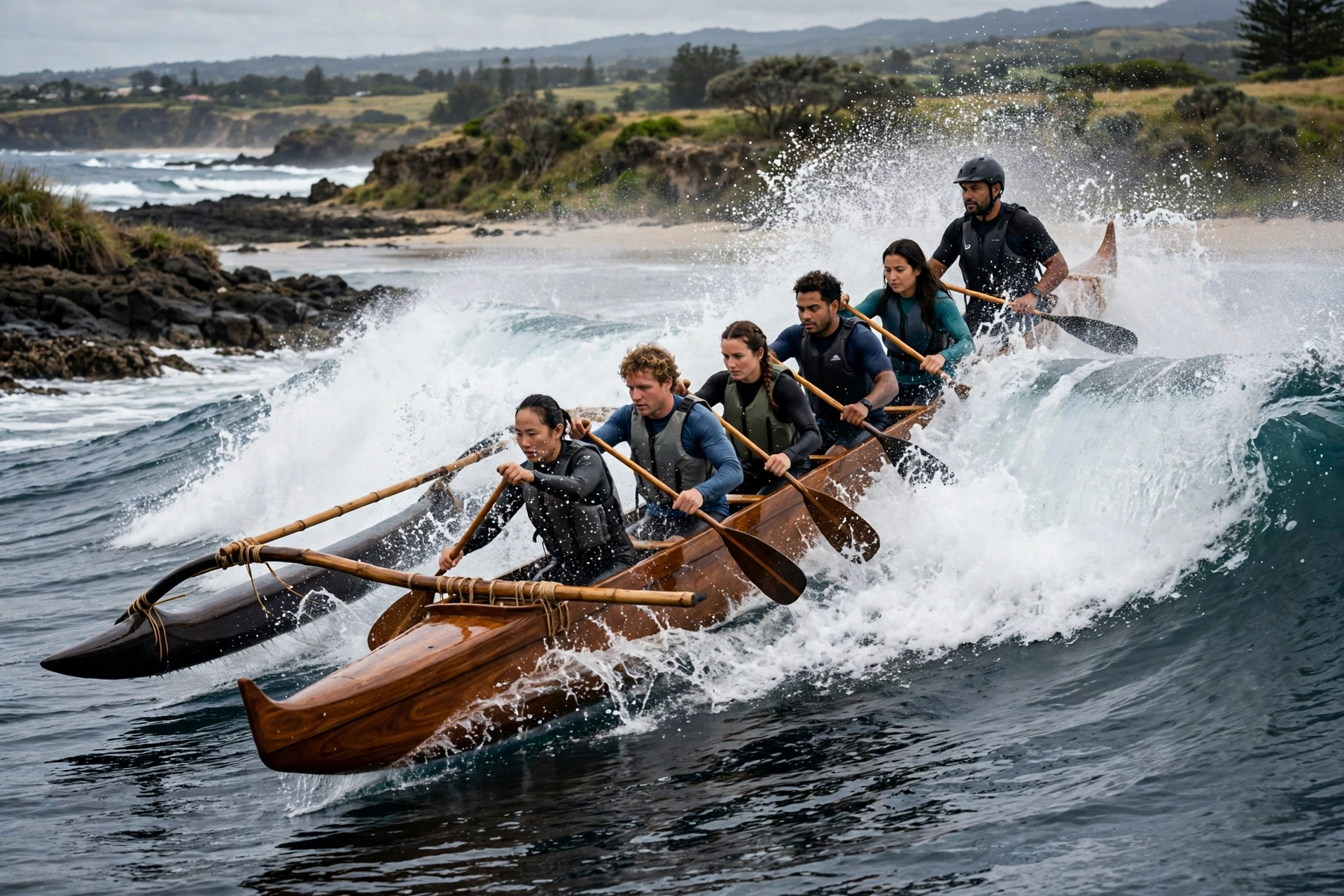
An outrigger canoeing helmet is a lightweight water-sports helmet worn by paddlers to protect the head during outrigger canoeing, especially in surf, rocky shores, and rough water where a capsize can throw a paddler against the canoe, a paddle, or the seabed. Outrigger canoeing is usually done without a helmet on calm water, but in surf zones, river rapids, and crowded race starts, a helmet is a sensible piece of protection that more and more paddlers are choosing to wear.
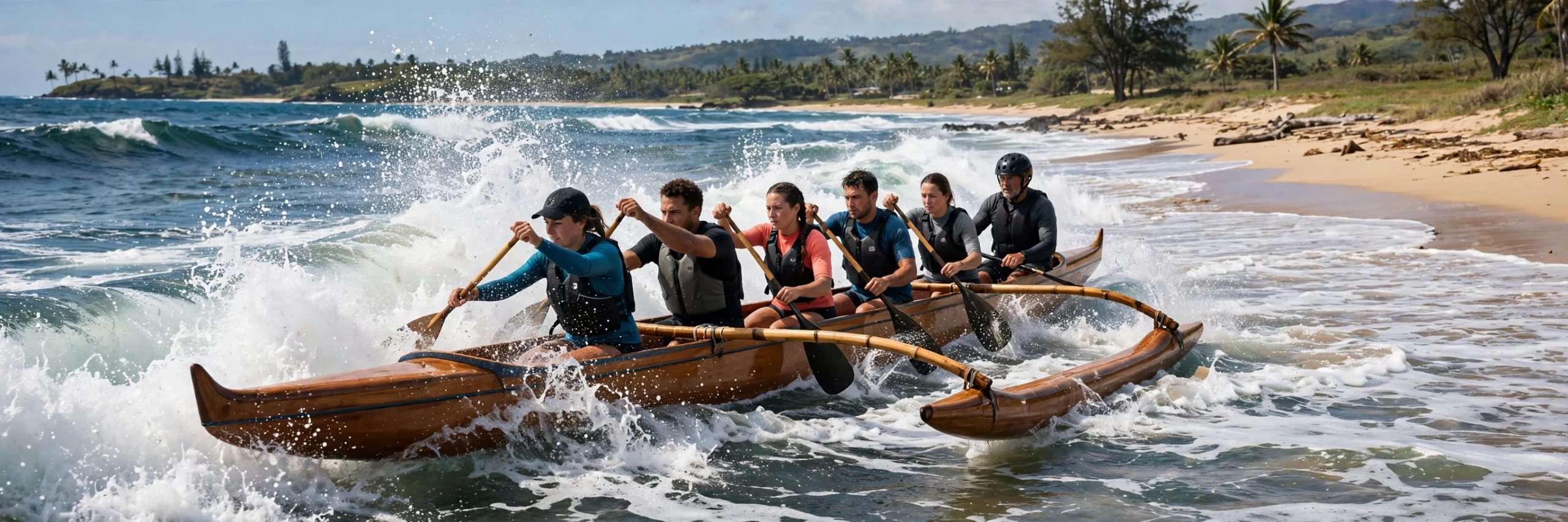
An outrigger canoe is a long, narrow canoe with a lateral support float, called an ama, held out to one side by two wooden arms. That float gives the canoe stability, but it also means the canoe behaves differently from a normal canoe in waves. In surf, the canoe can be picked up by a wave, turned sideways, and rolled over, and a paddler who falls out can be hit by the hull, the ama, or their own paddle. This guide explains when a helmet is needed, what to look for, and how to wear and care for one.
What Is Outrigger Canoeing?
Outrigger canoeing has its roots in the Pacific, where outrigger canoes have been used for travel, fishing, and racing for centuries. Today it is a popular sport in many coastal countries, with single-person canoes, six-person racing canoes, and long-distance races that cover many kilometres of open water. Crews paddle in rhythm, steering with the back paddler, and the ama keeps the canoe upright in most conditions.
Outrigger canoeing is a team sport, and the crew works together to keep the canoe moving and upright. Each paddler has a role, and the steerer at the back controls the direction. When things go wrong, the crew needs to stay calm, stay with the canoe, and help each other back in — and a helmet helps protect the head during that scramble.
When Do You Need a Helmet for Outrigger Canoeing?
On calm, flat water with no surf, most paddlers do not wear a helmet, and in general terms that is a reasonable choice. The main risks on flat water are sun, tiredness, and the occasional knock from a paddle, and a helmet is not usually needed for those. But the moment the water gets rough, the case for a helmet becomes much stronger.
Surf is the main reason to wear one. When a wave picks up an outrigger canoe and rolls it, paddlers can be thrown against the hull, the ama, or the seabed, and a head knock in the surf can be serious, especially if the paddler is disoriented underwater. Rocky shores and river mouths with strong currents are similar: a capsize near rocks leaves little room for error.
Crowded race starts are another situation where a helmet helps. With many canoes close together, paddles swing in all directions, and a paddle blade to the head is a real risk. Some race organisers now require helmets for surf starts or for junior paddlers, so it is worth checking the rules before a race. Even where it is not required, wearing one in the surf is a sensible choice.
What Should an Outrigger Canoeing Helmet Be Like?
An outrigger canoeing helmet should be light, comfortable, and designed for the water. A heavy helmet is tiring on a long paddle and can feel awkward when it gets wet, so look for a light shell with good drainage. Water-sports helmets usually have holes or channels that let water drain out quickly, so the helmet does not fill up and drag the head down after a capsize.
Look for a helmet with good coverage over the back and sides of the head, since those are the areas most likely to hit the canoe or the seabed in a capsize. A low profile helps too, since a bulky helmet can catch on the canoe or make it harder to get back in after a capsize. Ear coverage is a matter of personal choice: some paddlers like it, others prefer open ears so they can hear the steerer clearly. If you want to understand how helmets handle different kinds of impact, reading about what MIPS is for helmets can help you learn about one of the technologies used in modern helmet design.
How Do You Wear and Adjust the Helmet?
Put the helmet on level, with the front edge about two fingers above the eyebrows, and fasten the chin strap so two fingers fit between the strap and the chin. Adjust the fit system until the helmet feels snug without pressing hard in one spot, and give it a shake test: it should stay put rather than rocking or sliding.
Check the helmet before every paddle, especially before a surf session. Look for cracks, worn straps, and a buckle that works smoothly, and make sure the drainage holes are clear. A helmet that has been in salt water should be rinsed after use, but the pre-paddle check is the one that matters most for safety.
Wear the helmet for the whole surf session, not just the launch. It is tempting to take it off once the canoe is past the breakers, but conditions can change quickly, and a wave can catch the canoe on the way back in too. Keep it on until you are safely ashore.
How Do You Look After an Outrigger Canoeing Helmet?
Rinse the helmet in fresh water after every paddle, especially after salt water, and let it air dry away from direct sunlight. Salt and sand can damage straps and buckles over time, and a helmet that is stored wet can develop a smell and the lining can degrade. A quick rinse takes a minute and makes the helmet last much longer.
Store the helmet in a cool, dry place, away from the sun and away from heavy kit that could crush it. Do not leave it in a hot car, since heat can damage the shell and the liner. Check the shell regularly for cracks and dents, and check the straps and buckle for fraying or stiffness.
Replace the helmet after a heavy knock, even if it looks fine, since the protective material inside may have absorbed the impact already. Also follow the maker’s guidance on service life. A helmet that is old, loose, or damaged is not a bargain — it is a risk, and in the surf, that risk matters more than ever.
Frequently Asked Questions
Q: Do I need a helmet for outrigger canoeing?
A: On calm, flat water most paddlers do not wear one, but in surf, near rocky shores, and in crowded race starts a helmet is a sensible choice. Some races require helmets for surf starts or junior paddlers, so check the rules before you race.
Q: What makes a water-sports helmet different from other helmets?
A: A water-sports helmet is light, drains water quickly, and is designed to stay on during a capsize. It protects the head from knocks against the canoe, paddles, and the seabed in rough water.
Q: How should an outrigger canoeing helmet fit?
A: It should sit level, about two fingers above the eyebrows, feel snug all around, and stay put when you shake your head. The chin strap should be fastened so two fingers fit between the strap and your chin.

Olivia
Writer at Helmet Today, covering helmet reviews, fit and riding safety.