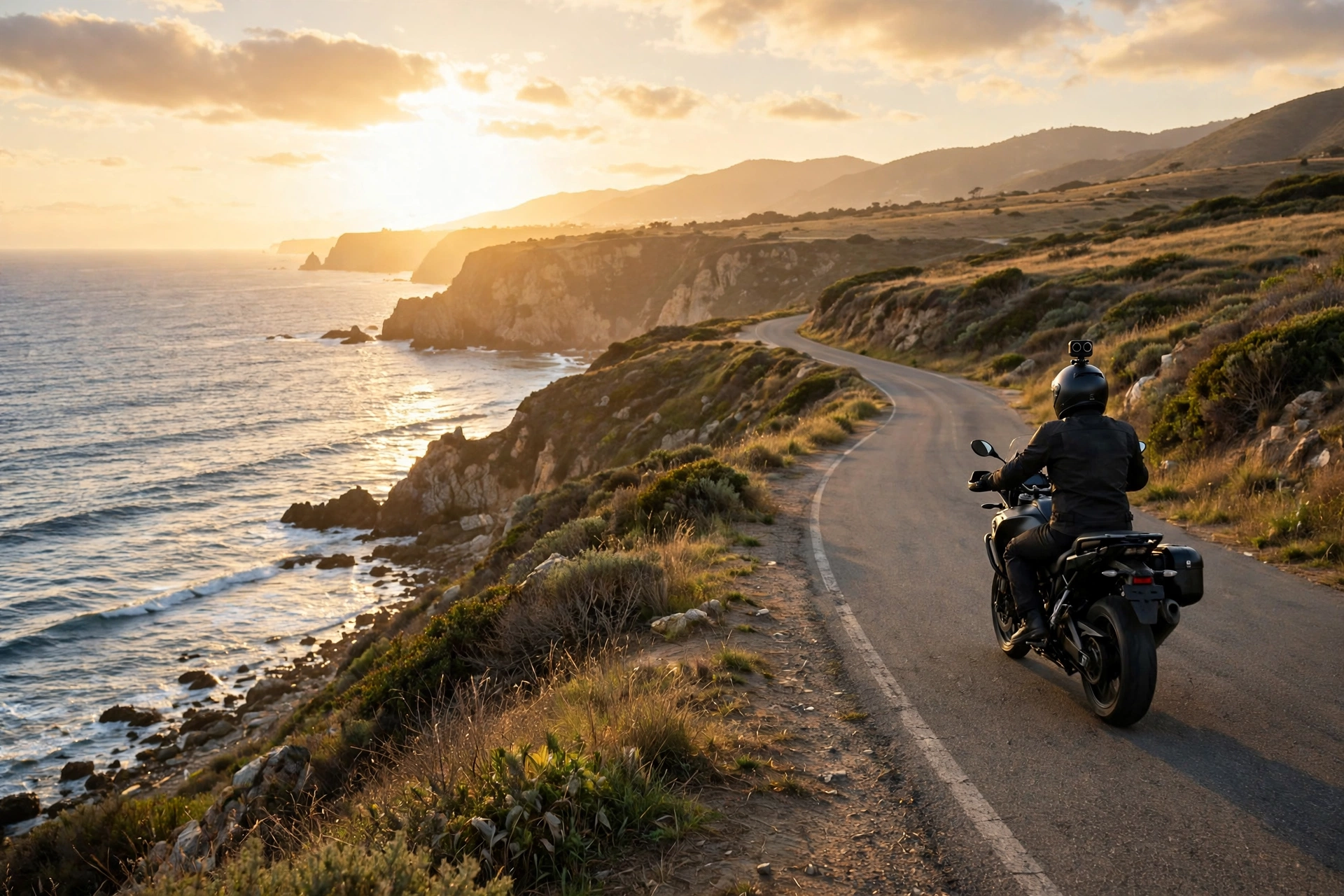
A helmet with a 360-degree camera mount is a helmet fitted with a mounting point that holds a 360-degree camera, which records everything around the rider in every direction at once. Unlike a normal action camera that films only what is in front of it, a 360-degree camera captures the full scene, and the rider can later choose which direction to look in when watching the footage back. In general terms, it turns the helmet into a moving viewpoint that records the whole ride, not just the road ahead.
How Does a 360-Degree Camera Mount Work?
A 360-degree camera mount works by holding the camera firmly on the helmet so that its lenses have a clear view in all directions. Most 360-degree cameras have two lenses back to back, and the mount must keep both lenses free of obstruction so the footage can be stitched together into a single spherical view. The mount is usually fixed to the top or the side of the helmet with an adhesive base or a clamp, and a short arm or bracket holds the camera away from the shell so the helmet itself does not block too much of the picture.
The mount must be strong enough to hold the camera steady at speed, because vibration and wind can blur the footage or shake the camera loose. Riders should check the mount before each ride, since a loose mount can let the camera fall off or swing into the rider’s line of sight.
Where Is the Best Place to Mount a 360-Degree Camera?
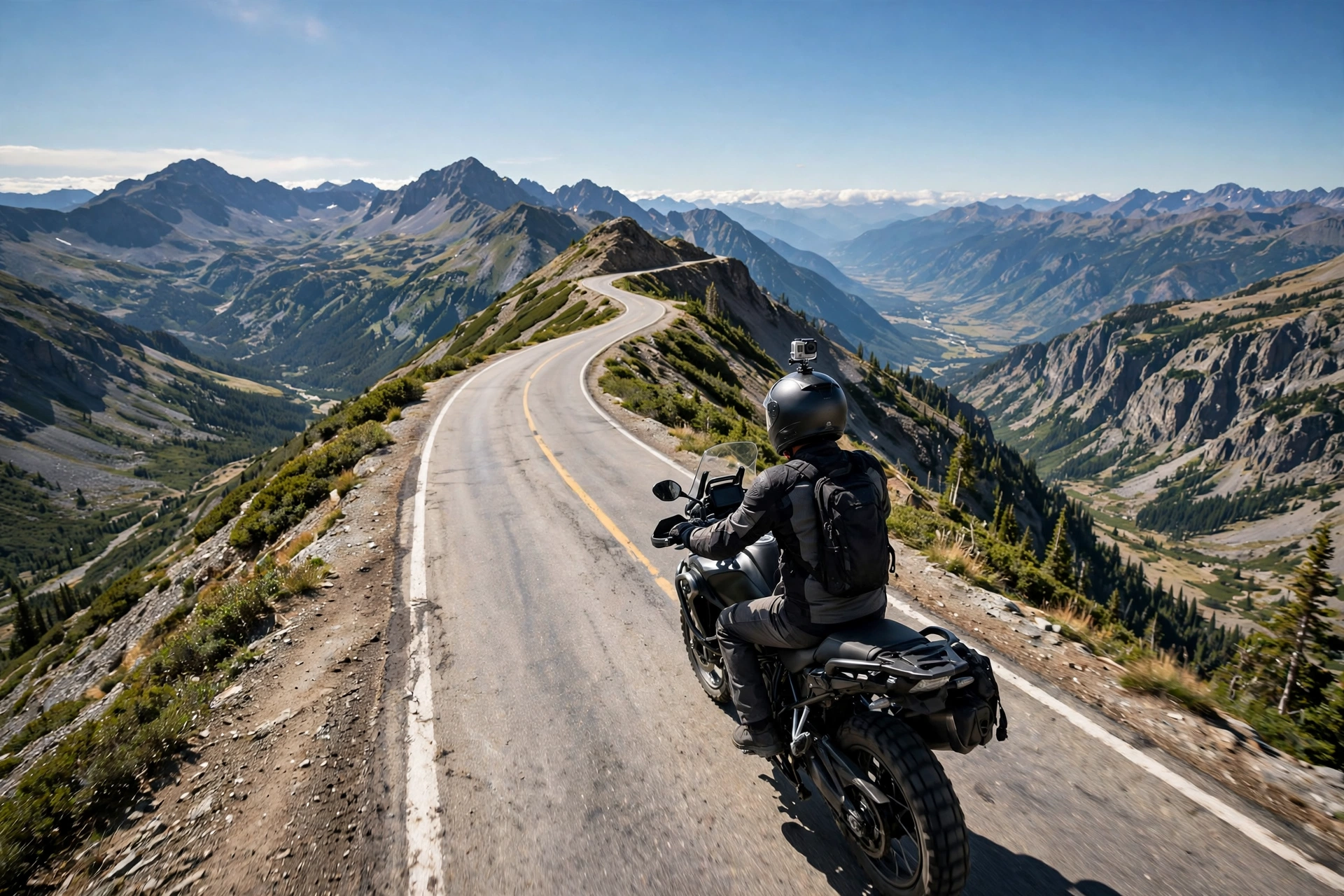
The best place to mount a 360-degree camera depends on what the rider wants to film. A top mount gives a high viewpoint and a clear view in every direction, which suits touring and scenic rides where the surroundings matter as much as the road. A side mount sits lower and can give a more natural view of the rider and the bike, but the helmet may block part of the scene on one side.
Whatever the position, the camera should not block the rider’s vision or catch the wind in a way that pulls the helmet around. If you want to understand the safety technology that protects the head underneath the mount, reading about what MIPS is for helmets is a good place to start, since a camera mount should never be fitted in a way that weakens the helmet or interferes with its protection. In general terms, the mount should sit where it films well and stays out of the way, and the rider should test it at low speed before a long ride.
What Are the Benefits of Recording in 360 Degrees?
Recording in 360 degrees has several benefits for riders. The main one is that nothing is missed: the camera records the road ahead, the traffic behind, and the scenery on both sides at the same time, so the rider does not have to choose a single direction before the ride. Later, the footage can be reframed to show whatever was most interesting, whether that is an overtake, a view, or something happening behind the bike. This makes 360-degree footage more flexible than a fixed forward-facing recording.
Another benefit is that the footage can be useful after an incident. A 360-degree recording may show what happened around the rider from several angles, which can help when describing an event later. In general terms, it is not a substitute for riding carefully or for insurance, but it does give a fuller record of a ride than a single-direction camera.
What Are the Drawbacks of a Helmet Camera Mount?
A helmet camera mount has drawbacks that riders should think about before fitting one. The camera adds weight to the helmet, and even a small camera can make the helmet feel heavier on a long ride, especially when it sits on top and catches the wind. Wind drag can also pull at the helmet at higher speeds, which can be tiring and distracting. The camera can also change how the helmet behaves in a fall, since a hard object fixed to the shell may catch on the ground or concentrate force in one place.
Battery life and storage are practical limits as well, since 360-degree footage uses a lot of both. In general terms, a helmet camera mount is a useful tool, but it is worth weighing the extra weight, wind, and hassle against the footage it produces before deciding to use one on every ride.
How Do You Fit a 360-Degree Camera Mount Safely?
Fitting a 360-degree camera mount safely starts with choosing a mount made for helmet use and for the weight of the camera. The mounting surface should be clean and dry before an adhesive base is stuck on, because dirt or moisture can weaken the bond. The base should sit on a flat or gently curved part of the shell, not over a vent or a sharp edge, and it should be left to set for the time the maker recommends before the camera is attached. A tether or safety cord is a sensible extra, so the camera is not lost if the mount fails.
Once fitted, the rider should check that the camera does not block any vents the helmet needs for airflow, and that it does not sit where it could hit the rider in a fall. In general terms, a mount that is fitted carefully and checked often is far safer than one that is stuck on in a hurry and never looked at again. If the mount ever feels loose, it should be removed and refitted before the next ride.
What Should You Look For When Choosing a Mount?
When choosing a mount for a 360-degree camera, the first thing to check is that it is made for the camera’s size and weight. A mount that is too light for the camera may flex or break, while a mount that is too heavy adds unnecessary weight to the helmet. The mounting method matters too: adhesive bases are simple and work on most shells, while clamps can be stronger but may only fit certain helmet shapes.
It is also worth thinking about how easy the camera is to take on and off. A quick-release mount lets the rider remove the camera when it is not needed, which keeps the helmet lighter and protects the camera from knocks. Water resistance matters for riders who ride in rain, and a mount that holds the camera steady at speed is worth more than one that looks neat but wobbles. In general terms, the best mount is the one that holds the camera firmly, stays out of the rider’s way, and can be removed quickly when the ride is over.
Does a 360-degree camera mount fit any helmet?
Not every mount fits every helmet. The shape of the shell, the position of vents, and the weight of the camera all matter. Check that the mount is made for your helmet type and camera before buying it.
Will a camera mount damage my helmet?
An adhesive mount should not damage the shell if it is fitted and removed as the maker directs, but drilling or screwing into a helmet can weaken it. Avoid any mount that needs holes in the shell.
Can I use a 360-degree camera mount on a bicycle helmet?
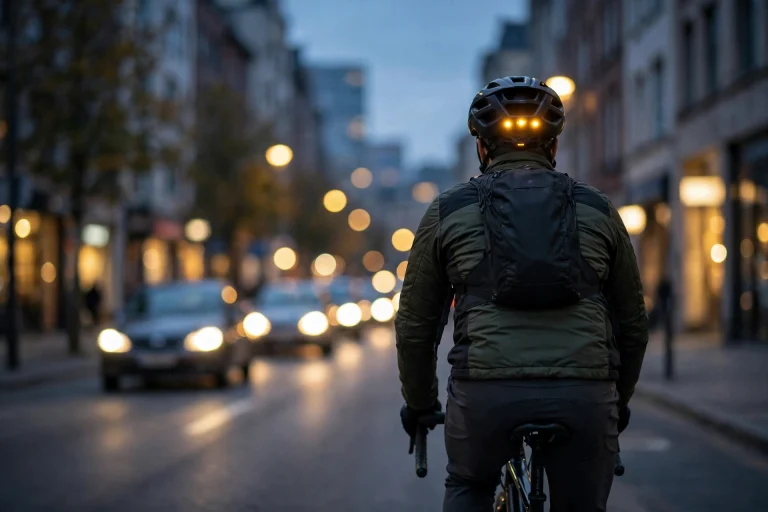
Yes, in general terms, as long as the mount and camera suit the helmet’s weight and shape. Keep the camera light, check the mount often, and make sure it does not block your vision or the helmet’s vents.

Olivia
Writer at Helmet Today, covering helmet reviews, fit and riding safety.