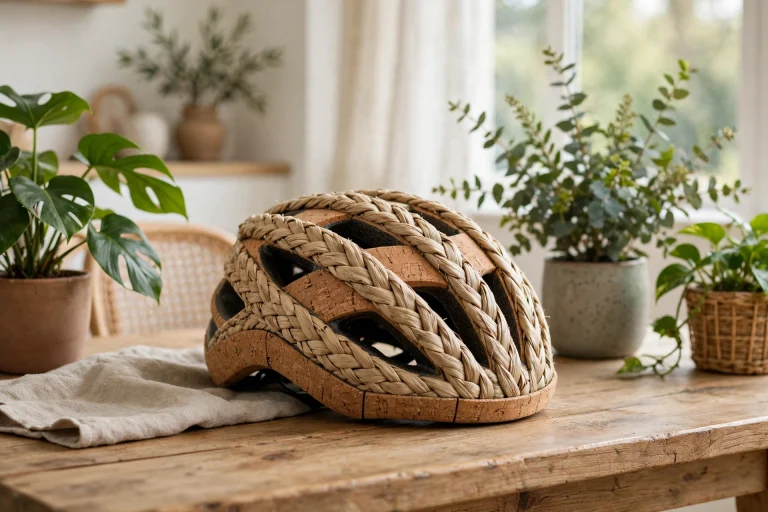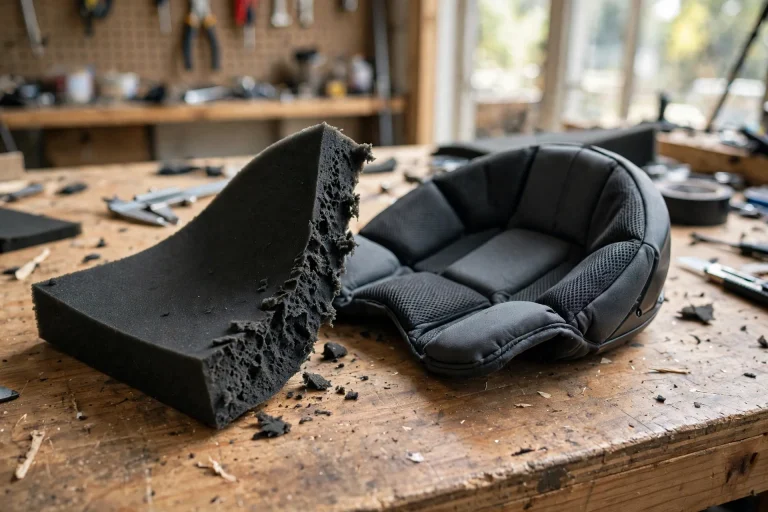
A mycelium helmet liner is a helmet liner made from mycelium, the root-like network of a fungus, which is grown into a foam-like material and used inside a helmet to cushion the head and absorb impact. Mycelium can be grown on farm waste such as straw or sawdust, and the resulting material is light, springy, and able to break down naturally at the end of its life. In general terms, it is a plant-based alternative to the foam liners used in most helmets today, and it is still a new idea rather than a common one.
What Is Mycelium?
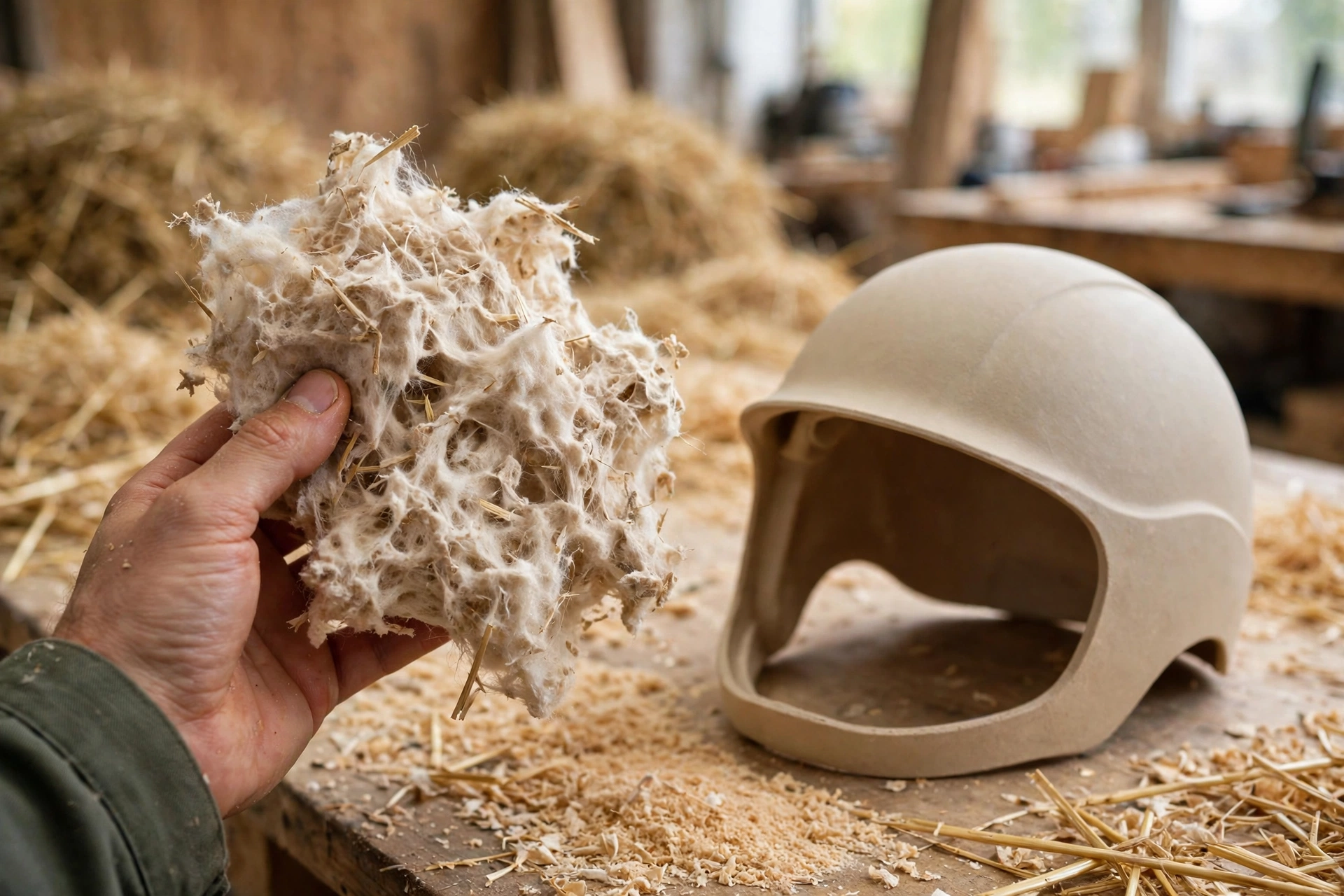
Mycelium is the part of a fungus that grows underground or inside its food source, forming a dense network of fine threads. The mushroom that we see above ground is only the fruiting body; the mycelium is the main body of the fungus, spreading through soil, wood, or other material. When mycelium is grown in a mould on a feedstock such as straw, sawdust, or grain husks, the threads bind the feedstock together into a solid, foam-like block that holds its shape when it is dried.
This grown material is light and has a texture a little like a soft, dense foam. It can be shaped by the mould it grows in, which makes it useful for making parts that need a particular form. In general terms, mycelium is interesting to designers because it grows rather than being made in a factory process, and because it uses waste material that would otherwise be thrown away. It is already used for packaging and for some building materials, and helmet liners are one of the newer uses being explored.
How Is a Mycelium Liner Made?
A mycelium liner is made by filling a mould shaped like the inside of a helmet with a mix of feedstock and fungal spores, then keeping it warm and damp while the mycelium grows. Over days, the threads spread through the feedstock and bind it into a single solid piece that takes the shape of the mould. Once the growth is complete, the piece is dried to stop the fungus growing further and to make it stable, and it may be treated to make it last longer and resist moisture.
The dried piece is then trimmed to fit the helmet shell and fixed in place, much like a foam liner. In general terms, the process uses far less energy than making plastic foam, because the growing happens at low temperatures and the main work is done by the fungus itself.
How Does a Mycelium Liner Protect the Head?
A mycelium liner protects the head in the same general way as a foam liner: it sits between the hard shell and the head, and when the helmet is hit, the liner compresses and slows the head down more gently, spreading the force over a longer time. The mycelium material is springy and can absorb energy as it is squeezed, which is what a liner needs to do. If you want to understand one of the safety systems that liners work alongside, reading about what MIPS is for helmets is a good place to start, since a liner and a slip system protect the head in different ways and can work together in the same helmet.
How well a mycelium liner protects depends on its density, thickness, and how evenly it is grown, and these are still being tested and refined. In general terms, a liner made from mycelium needs to meet the same safety standards as any other liner before it can be sold as a protective helmet part. A rider should not assume that a liner is safe simply because it is natural or new; it should carry the certification that applies to the kind of riding it is made for.
What Are the Benefits of a Mycelium Liner?
The main benefit of a mycelium liner is that it is grown from natural materials and can break down at the end of its life, unlike plastic foam, which can last for a very long time in landfill. Helmets are hard to recycle because they mix several materials, and a liner that can be composted or that breaks down naturally could make the helmet easier to dispose of. The feedstock is often farm waste, so the material also makes use of something that would otherwise be thrown away.
There may be comfort benefits too. Mycelium is naturally breathable in some forms, and a liner that lets air move through it could feel cooler than a solid foam block.
What Are the Limits of Mycelium Liners?
Mycelium liners have limits, and the biggest one is that the material is still new for helmets. Growing a liner takes time, and keeping the growth even across a whole liner is hard, so the material may vary in density from one part to another. Moisture is another concern: mycelium is a natural material that can absorb water, and a liner that gets damp and stays damp may go soft, smell, or break down sooner than it should. Makers treat the material to resist this, but sweat and rain are a constant test.
Durability is also a question. A helmet liner needs to last for years of use, and it is not yet clear how well mycelium holds up over that time compared with foam. In general terms, mycelium liners are best seen as a developing idea rather than a proven replacement for foam. Riders who are interested should look for helmets that carry the right certification and have been tested properly, rather than buying on the strength of the green story alone.
Should You Choose a Helmet With a Mycelium Liner?
Choosing a helmet with a mycelium liner comes down to the same checks as any helmet: fit, certification, and comfort. The liner material is interesting, but it matters far less than whether the helmet fits snugly, covers the head properly, and carries the safety certification for the kind of riding you do. If a mycelium-lined helmet meets those checks and feels comfortable, the natural material is a genuine bonus, especially for riders who care about the environmental impact of their gear.
It is worth asking how the liner should be cared for, since a natural material may need different cleaning and drying than foam. The helmet should be kept dry between rides, and the maker’s instructions should be followed rather than guessed at. In general terms, a mycelium liner is a promising idea for riders who want greener gear, but the helmet should be chosen on safety and fit first, with the liner material as a welcome extra rather than the main reason to buy.
Is a mycelium helmet liner safe?
It can be, as long as the helmet carrying it meets the safety standards for its kind of riding. The material is still new, so check for proper certification rather than assuming a natural liner is automatically protective.
Is mycelium the same as mushroom?
Not quite. Mycelium is the thread-like network of the fungus, while the mushroom is the fruiting body that grows from it. The liner is made from the mycelium network, not from mushrooms.
Can a mycelium liner be composted?
In general terms, mycelium material can break down naturally, but a finished helmet liner may include treatments or be fixed to other materials. Check the maker’s guidance before trying to compost any part of a helmet.

Olivia
Writer at Helmet Today, covering helmet reviews, fit and riding safety.