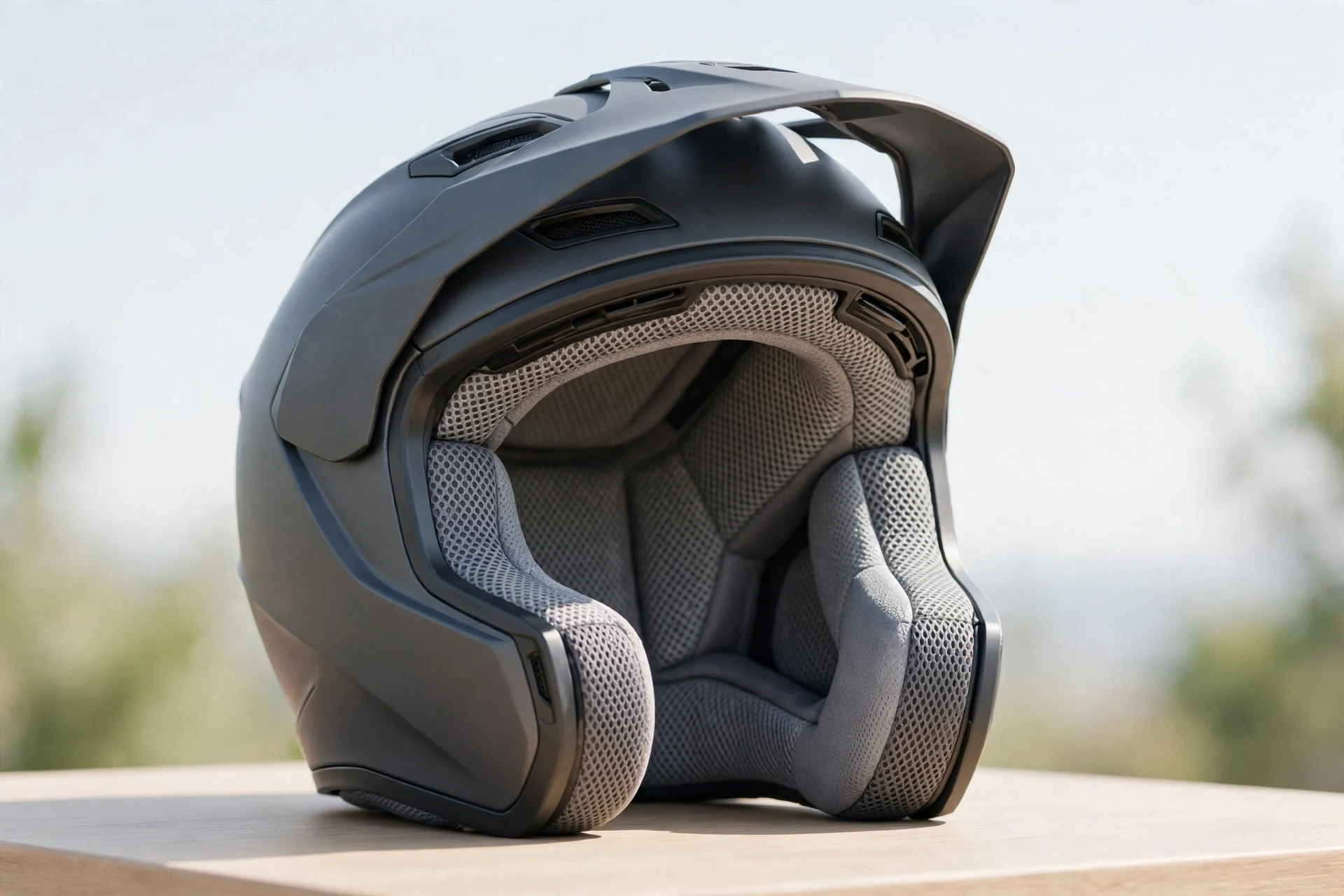
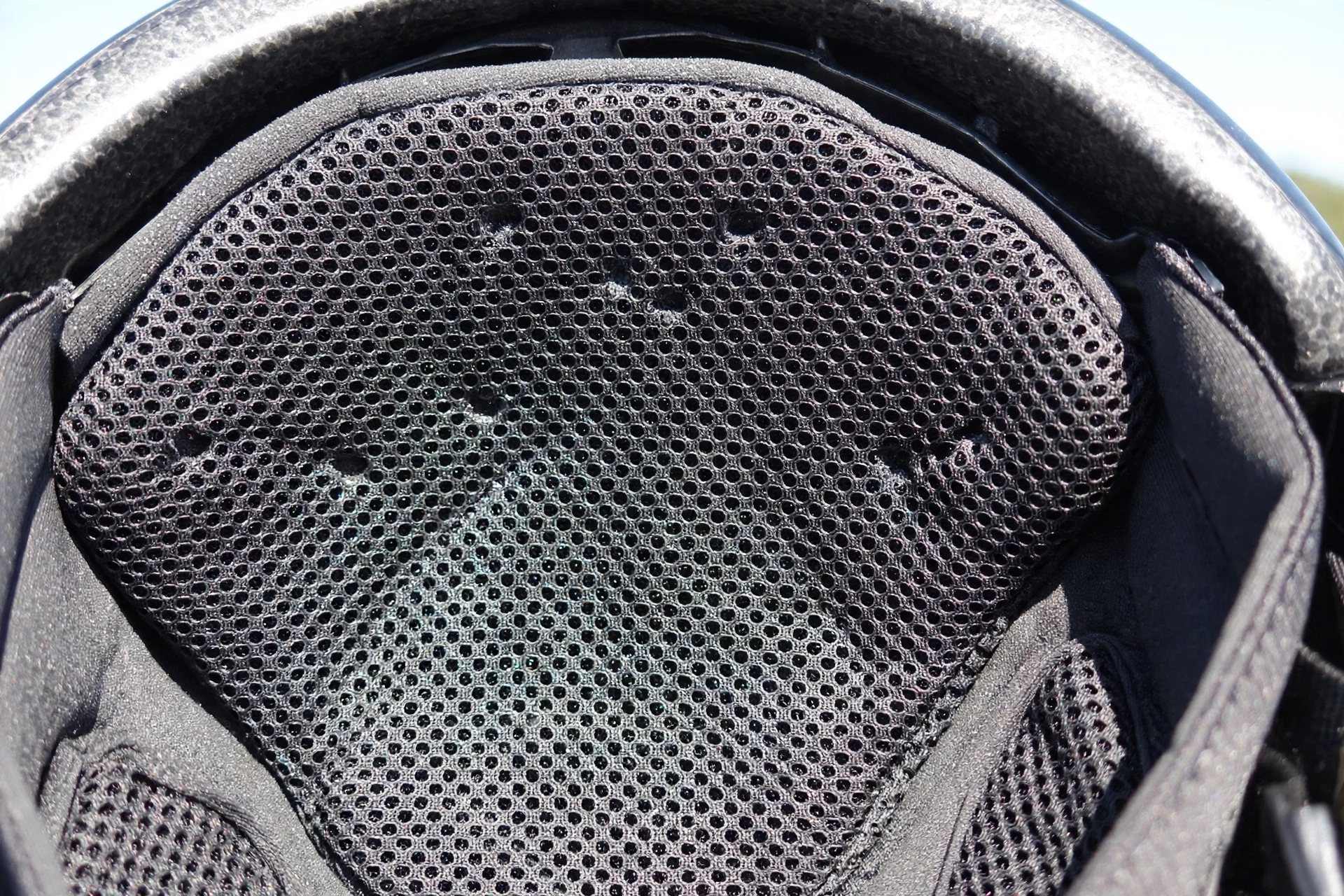
An air mesh helmet liner is a lightweight inner lining made from a breathable mesh fabric that lets air flow through the helmet, keeping the head cooler and drier while adding a thin layer of cushioning. It is the soft layer that sits against the head inside the shell, and it is commonly found in motorcycle, cycling, and sports helmets designed for warm weather or hard physical effort. The open weave of the mesh is what sets it apart from solid fabric liners.
What Is Air Mesh Made Of?
Air mesh is usually made from polyester or a similar synthetic fibre, knitted or woven into an open, net-like structure with small holes throughout. The fabric often has two layers joined by fine threads, which creates a springy, three-dimensional material that holds its shape while still letting air pass through. This structure is sometimes called spacer mesh, because the space between the layers is part of what makes it work.
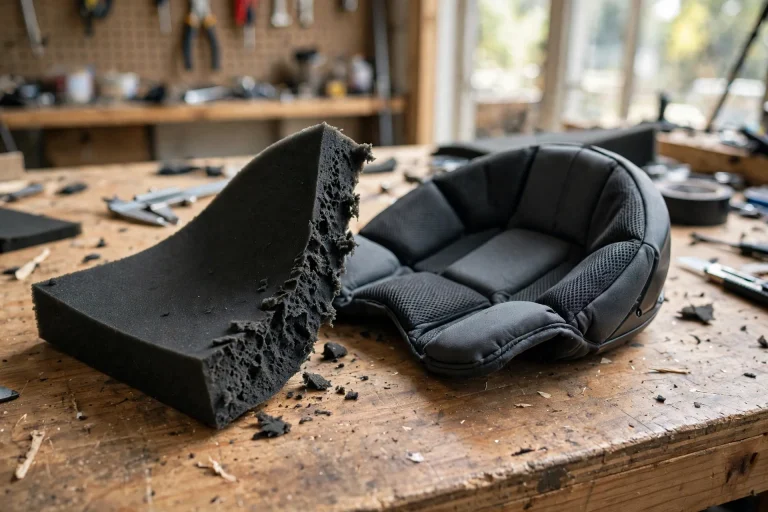
The mesh is then cut and sewn into panels that line the inside of the helmet, covering the areas that touch the head, such as the crown, forehead, and cheeks. In many helmets the mesh is attached to a thin layer of foam, which gives the liner its shape and a little cushioning. The result is a liner that feels light and airy rather than thick and padded, and that dries quickly after it gets sweaty.
How Does an Air Mesh Helmet Liner Work?
An air mesh helmet liner works by letting air move freely between the head and the helmet shell. As the rider moves, air enters through the helmet’s vents and passes through the open mesh, carrying heat and sweat away from the scalp. This airflow is the key benefit: a solid liner can trap heat against the head, while a mesh liner lets the ventilation system of the helmet do its job properly.
The mesh also manages moisture. Sweat passes through the open weave instead of pooling on the skin, and the thin fabric dries fast once the ride is over. The liner still provides a soft, even surface against the head, so the helmet feels comfortable and does not press hard in one spot. If you want to understand one of the safety technologies used in modern helmets, reading about what MIPS is for helmets is a good place to start, though the liner and the safety system are separate parts of the helmet.
What Are the Benefits of an Air Mesh Helmet Liner?
The main benefit of an air mesh helmet liner is cooling. In hot weather, a helmet can quickly become uncomfortable, and a mesh liner helps keep the temperature inside the helmet lower by allowing air to circulate. Riders who wear a helmet for long hours in summer, or who ride hard and sweat a lot, often notice the difference straight away compared with a solid liner.
Quick drying is another benefit. Because the mesh is thin and open, it does not hold much water, so it dries out fast between rides and is less likely to develop a damp, stale smell. The liner is also lightweight, which helps keep the overall weight of the helmet down. In general terms, a mesh liner suits warm conditions and high-effort riding better than a thick, insulating liner does.
Are There Any Downsides to Air Mesh Helmet Liners?
Air mesh liners have some downsides to consider. One is that they offer little insulation, so in cold weather a mesh liner can make a helmet feel chilly, since the same airflow that cools in summer lets cold air in during winter. Riders in cold climates often switch to a thicker liner or wear a thin balaclava under the helmet in winter.
The mesh can also feel less plush than a thick foam or wool liner, and some riders find the texture slightly rough against bare skin. Over time the open weave can snag or wear thin, especially if the liner is pulled in and out of the helmet often for washing. In general terms, these are fair trade-offs for a liner designed mainly for ventilation rather than warmth or heavy padding.
How Do You Care for an Air Mesh Helmet Liner?
Caring for an air mesh helmet liner is usually simple, because the synthetic fabric is tougher than natural fibres such as wool. A removable mesh liner can normally be hand-washed in cool or lukewarm water with a mild detergent, then rinsed and left to air dry. Because the mesh is thin and open, it dries quickly, often in a few hours in a ventilated room.
For a liner that cannot be removed, wiping it with a damp cloth and letting the helmet air out after each ride will keep it fresh. It helps to store the helmet in a dry, ventilated place rather than sealed in a bag while it is still damp. Strong bleach and harsh cleaners should be avoided, since they can weaken the mesh fibres. Checking the maker’s instructions first is always the safest approach.
How Do You Choose an Air Mesh Helmet Liner?
Choosing an air mesh helmet liner starts with the helmet model. Liners are usually shaped for a specific helmet, so the liner made for that model will fit best and will not change how the helmet sits on the head. A liner that is too thick or the wrong shape can alter the fit, which affects both comfort and how well the helmet protects.
Think about the riding conditions as well. If most riding happens in warm weather, a mesh liner is a sensible choice, while a rider who faces cold mornings may want a thicker liner for winter and a mesh liner for summer. A removable liner is worth looking for, since it makes washing easy and lets the liner be replaced when it wears out. In general terms, the right mesh liner should feel light, sit smoothly, and let air move through it freely.
Is an air mesh helmet liner cooler than a normal liner?
Yes, in general terms a mesh liner is cooler than a solid liner, because its open weave lets air flow through the helmet and carry heat and sweat away from the head.
Can I wash an air mesh helmet liner?
Yes, in most cases. A removable mesh liner can be hand-washed in cool water with a mild detergent and left to air dry, and it usually dries quickly because the fabric is thin and open.
Does a mesh liner protect my head in a crash?
The liner is a comfort layer, and the main impact protection comes from the helmet shell and the foam inside it. A mesh liner that fits correctly should not reduce protection, but it is not a substitute for the helmet’s impact-absorbing foam.

Olivia
Writer at Helmet Today, covering helmet reviews, fit and riding safety.