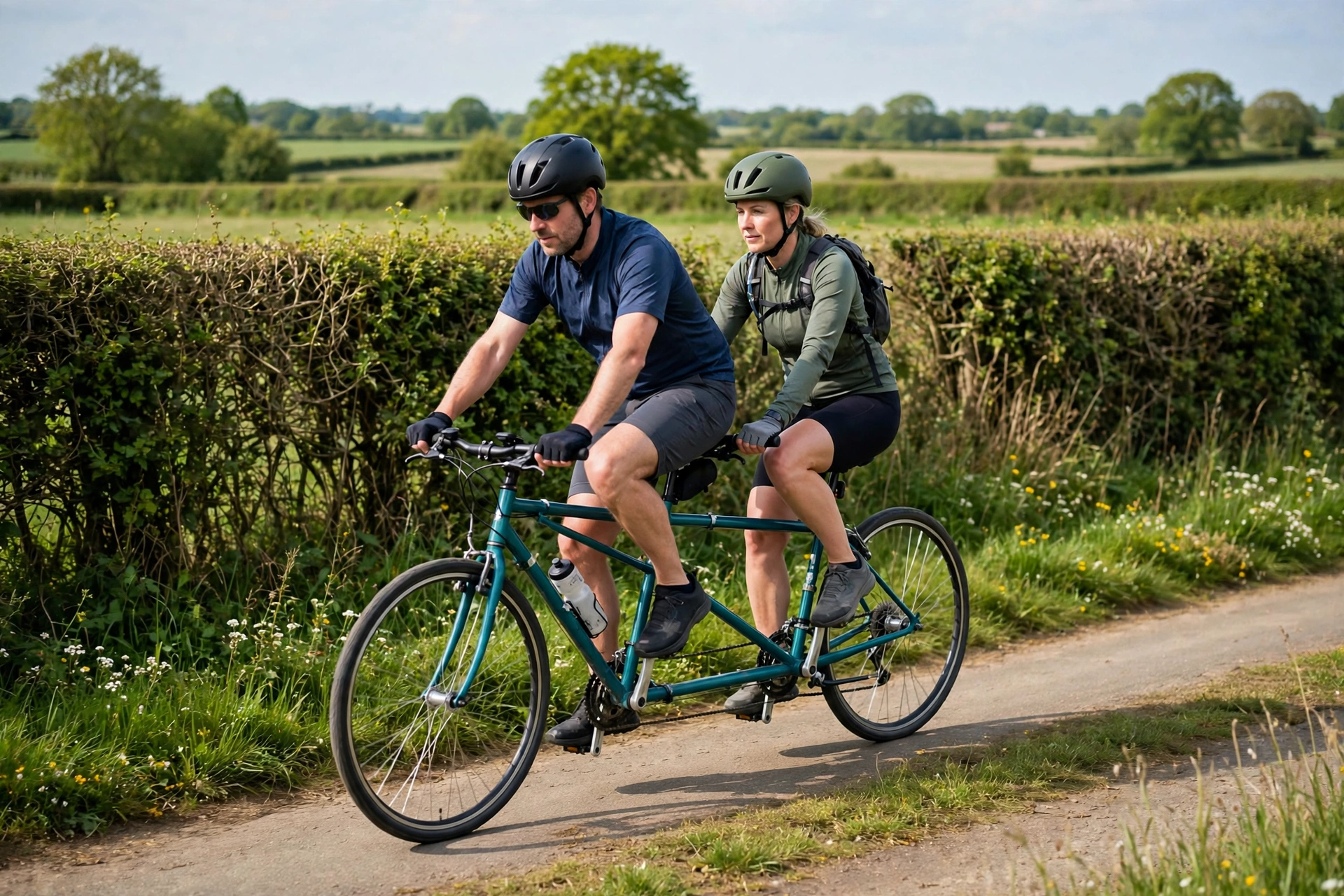
Yes, in general terms helmets work for tandem riders, because each person on a tandem needs the same head protection as a solo rider, and the same helmets, the same fit, and the same rules apply to both seats. A tandem is a bicycle built for two, with the riders sitting one behind the other, and both are travelling at the same speed, on the same road, facing the same risks. If the tandem falls, both riders can hit the ground, so both need a helmet, and there is no reason the helmet should work any less well for the person at the back than for the person at the front.
Do Both Riders on a Tandem Need a Helmet?
Yes, both riders on a tandem need a helmet, and this is one of the most important points about tandem safety. The person at the back, often called the stoker, cannot steer or brake, and cannot see the road ahead as well as the person at the front, so they are more dependent on the captain’s judgement and have less chance to brace for a sudden stop or a fall. That makes head protection just as important for the stoker as for the captain, if not more so.
Some couples ride tandem with only the captain wearing a helmet, often because the stoker feels safe sitting behind, or because they are only going slowly. That is a mistake. In a fall, the stoker can be thrown just as far, and can hit the ground just as hard, as the captain, and a low-speed fall can still cause a serious head injury. In general terms, the rule is simple: two riders, two helmets, every ride, no exceptions.
Is There a Special Helmet for Tandem Riders?
No, there is no special helmet made only for tandem riders, and none is needed. A tandem rider wears the same cycling helmet a solo rider wears, chosen for fit, comfort, and ventilation, and meeting the same safety standards. The captain and the stoker may need different sizes, because their heads are different shapes, but the helmet itself is the same kind of product.
Some tandem pairs choose matching helmets, which looks smart and makes it easy to tell the pair apart, but matching is a matter of style rather than safety. What matters is that each helmet fits its wearer properly, sits level on the head, and is fastened snugly before every ride. If you want to understand a safety system used in modern helmets, reading about what MIPS is for helmets is a good place to start, and that system works just as well for a tandem rider as for a solo rider.
Does the Stoker Face Different Risks From the Captain?
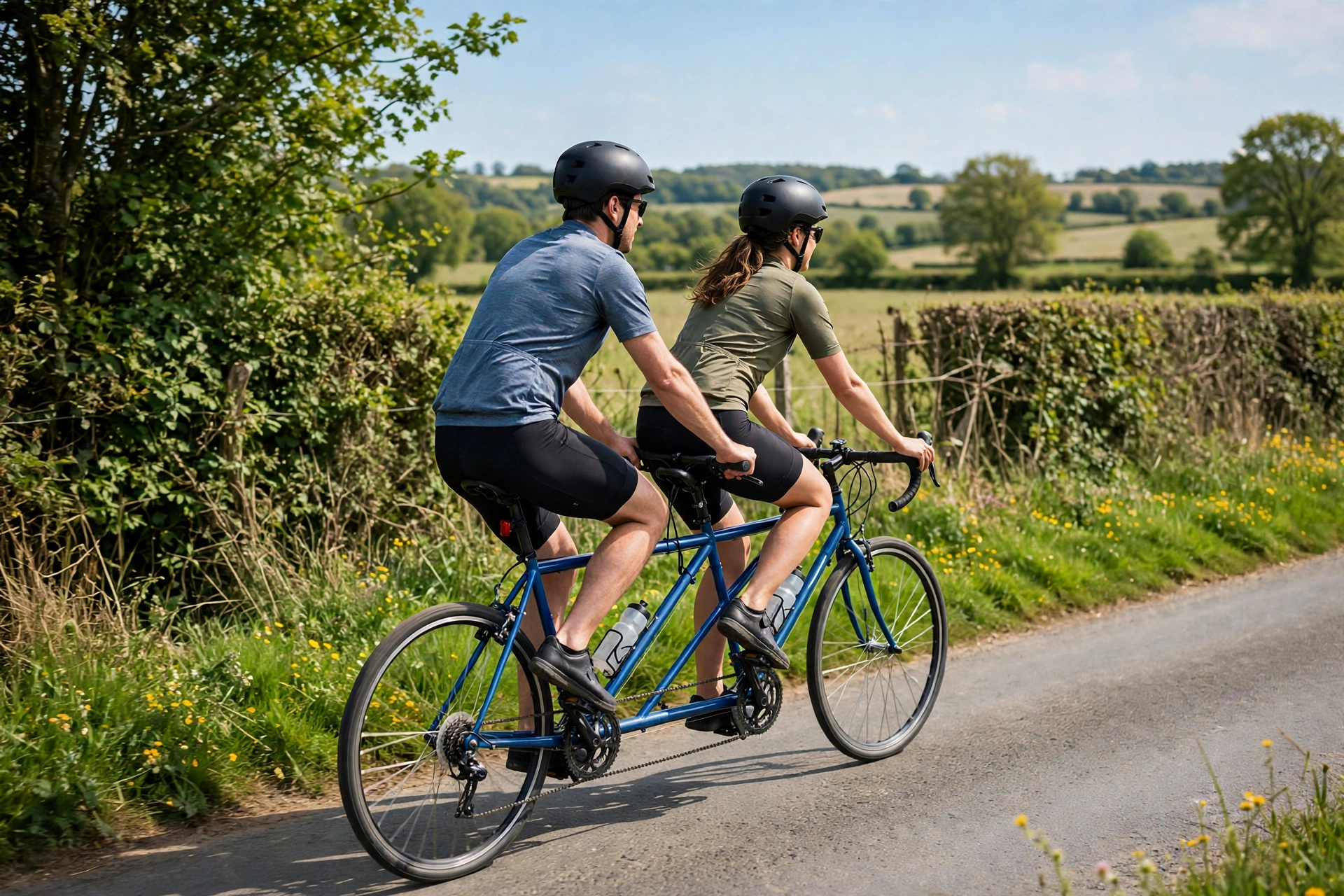
Yes, the stoker faces some different risks, and it is worth understanding them. The stoker cannot see the road ahead clearly, because the captain blocks the view, so they cannot anticipate potholes, turns, or sudden braking. They also cannot steer, so if the tandem starts to fall, the stoker has less chance to correct it or to step off, and they may be thrown in a direction they did not expect.
Communication matters more on a tandem than on a solo bike, and the captain should warn the stoker before braking, turning, or standing up on the pedals, so that the stoker is ready. In general terms, the stoker is more vulnerable because they have less control, and that is exactly why a well-fitting helmet is so important for the back seat. A helmet cannot give the stoker control, but it can reduce the harm if the tandem does fall.
How Should a Tandem Helmet Fit?
A tandem helmet should fit in exactly the same way as any cycling helmet: snug all round the head, level from front to back, and fastened with a chin strap that is snug enough to keep the helmet in place but not so tight that it is uncomfortable. The helmet should sit low enough to cover the forehead without slipping down over the eyes, and it should not rock forwards or backwards when the rider shakes their head.
For the stoker, fit is especially important, because they may be looking down or to the side more than the captain, and a loose helmet can shift and block their vision or slip off in a fall. It is worth trying the helmet on together before a ride, checking each other’s fit, and adjusting the straps so that both helmets sit correctly. In general terms, a helmet that fits well is comfortable enough to wear for a long ride, and a comfortable helmet is one that stays on, which is the whole point.
What About Children on a Tandem?
Children riding on a tandem need a helmet too, and they need one that is made for a child’s head. A child’s helmet is smaller, lighter, and shaped to fit a smaller head, and an adult helmet that is too big will not protect a child properly, because it can shift or slip off in a fall. Some tandems are set up with a child stoker kit, which moves the pedals and handlebars to suit a smaller rider, and the helmet should be chosen to match the child’s head, not the bike.
Children are also less able to judge risk and less able to brace for a fall, so their helmet is even more important than an adult’s. Parents should check the fit before every ride, because children grow quickly and a helmet that fitted last summer may be too small now. In general terms, the same rules apply to children on tandems as to adults: a proper helmet, fitted well, fastened snugly, worn on every ride, without exception.
Do Helmets Change How a Tandem Handles?
No, helmets do not change how a tandem handles in any meaningful way. A cycling helmet is light, and the extra weight on two heads is a tiny fraction of the total weight of two riders and a tandem bicycle, so it has no real effect on balance, steering, or speed. Some riders worry that a helmet will make them hotter or less comfortable on a long ride, and it is true that a helmet adds warmth, but modern helmets are well ventilated, and the comfort trade-off is small compared to the protection they offer.
The bigger effect of helmets on tandem riding is psychological: both riders feel safer, and that can make the ride more relaxed and enjoyable, especially for the stoker, who has to trust the captain. That trust is easier when both riders know they are protected. In general terms, helmets are a normal part of tandem riding, and most tandem clubs and organised rides expect every rider to wear one, just as they would on a solo bike.
Do helmets work for tandem riders?
Yes, in general terms helmets work for tandem riders just as they do for solo riders, because both people on a tandem face the same risks in a fall, and the same helmets, fit, and rules apply to both seats.
Do both riders on a tandem need a helmet?
Yes. Both the captain at the front and the stoker at the back need a helmet on every ride, because both can be thrown and hit the ground in a fall, and the stoker has less control and less warning.
Is there a special helmet for tandem riding?
No, there is no special tandem helmet. Tandem riders wear ordinary cycling helmets, chosen for fit and comfort, and the same safety standards apply as for solo riders.

Olivia
Writer at Helmet Today, covering helmet reviews, fit and riding safety.