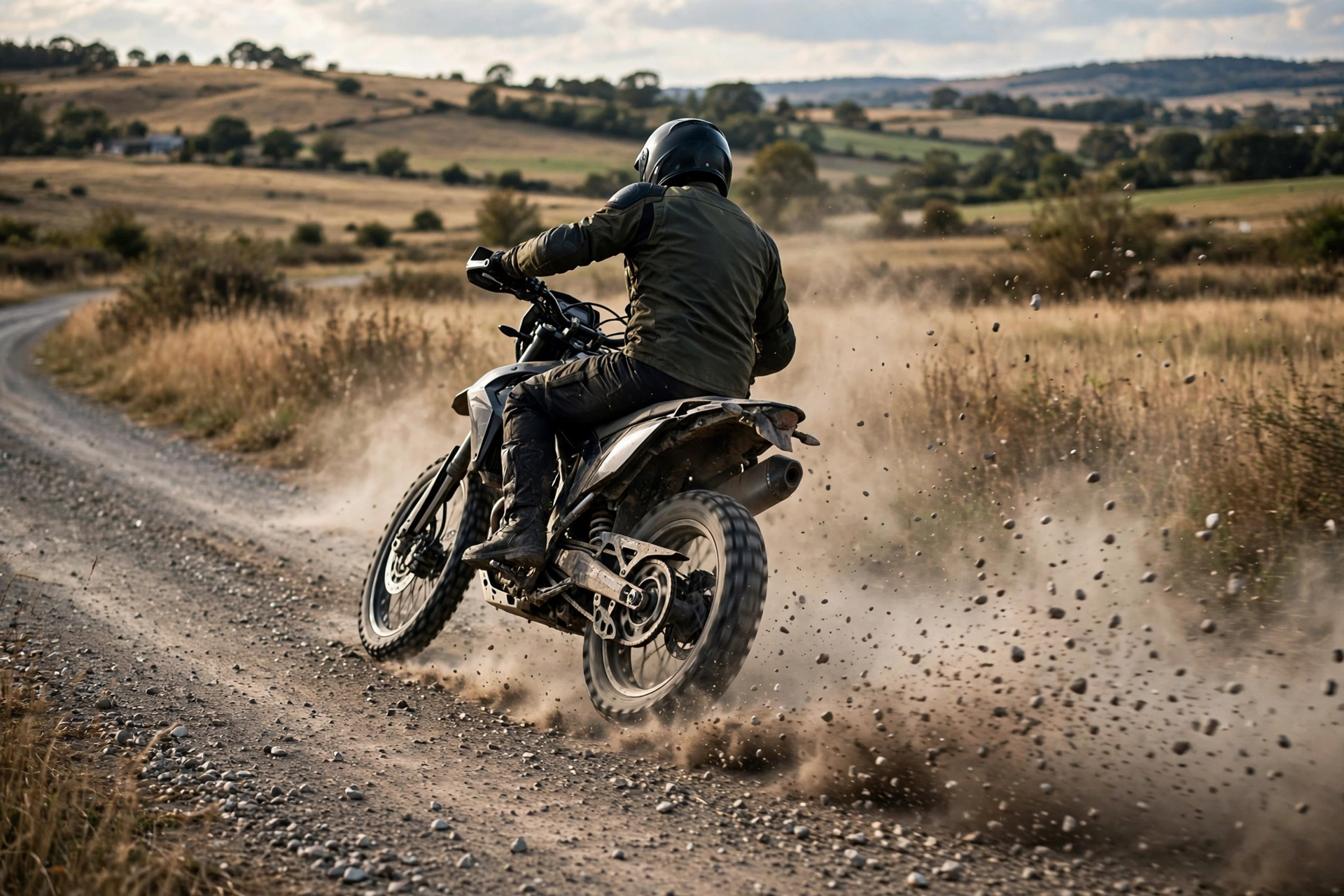
Yes, in general terms a helmet can protect against gravel spray, because its shell and visor shield the head and face from the small stones that are thrown up by tyres on loose surfaces. Gravel spray is a common hazard on unpaved roads, construction sites, and trails, where the wheels of a vehicle flick up a stream of small stones at speed. Without a helmet, those stones can sting the scalp, cut the skin, or hit the eyes. With a helmet, the shell takes the hits instead, and a visor or glasses protect the face, so a shower of gravel becomes an annoyance rather than an injury.
What Is Gravel Spray and Why Does It Hurt?
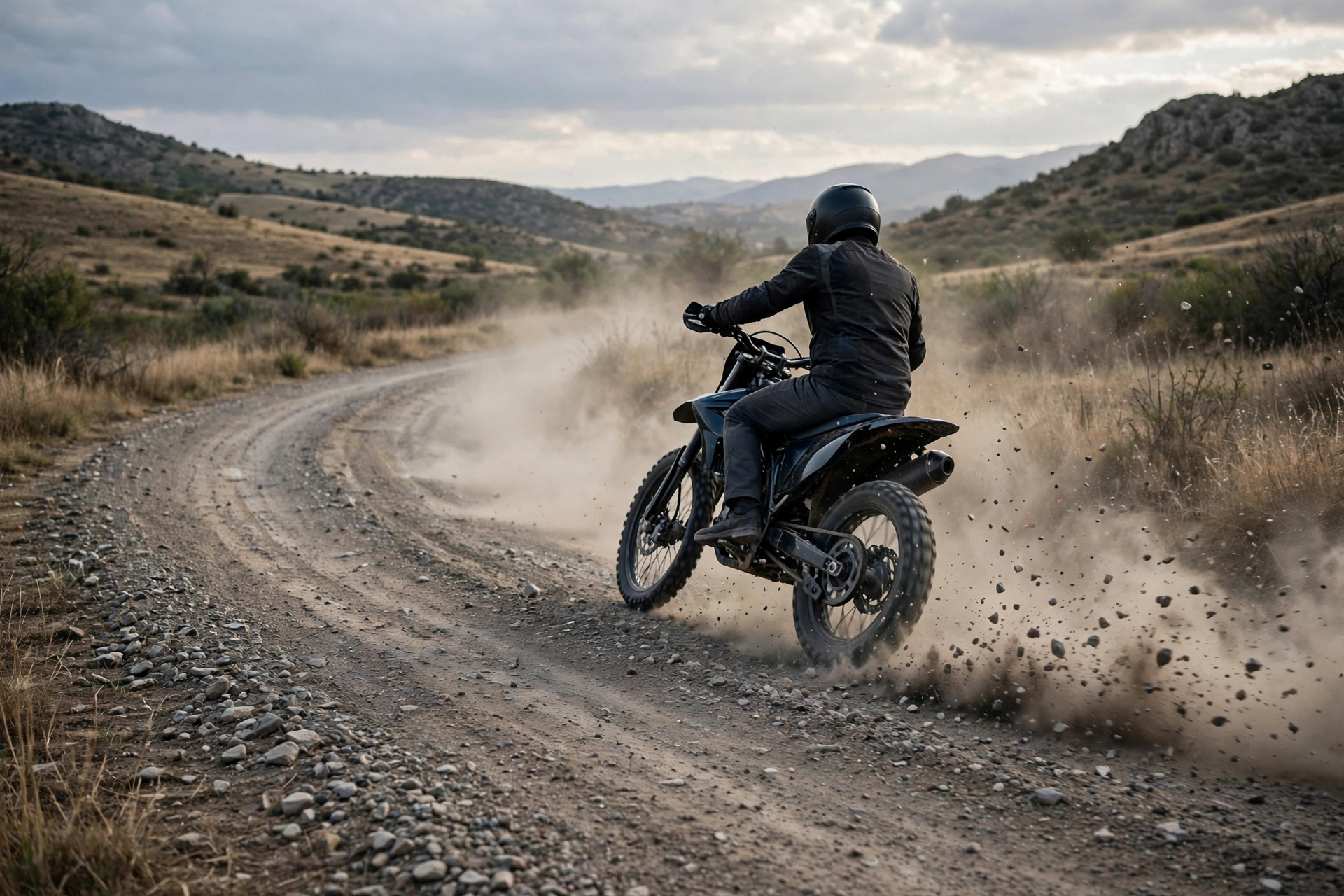
Gravel spray is the stream of small stones, grit, and dust thrown up by tyres rolling over a loose surface. When a vehicle moves over gravel, its tyres pick up stones and fling them backwards and sideways at speed, and a rider following behind, or a worker standing nearby, can be caught in that spray. The stones are small, but they are moving fast, and a stone the size of a pea arriving at speed can sting sharply, bruise the skin, or chip a tooth if it hits the mouth.
The eyes are the most vulnerable part, because even a tiny piece of grit in the eye is painful and can scratch the surface of the eye. The scalp is also sensitive, and repeated hits from gravel can leave small cuts and bruises. In general terms, gravel spray is not usually dangerous in the way a crash is, but it is painful, distracting, and capable of causing real injury, especially to the eyes and face, which is why protection matters.
How Does a Helmet Protect Against Gravel Spray?
A helmet protects against gravel spray by putting a hard barrier between the stones and the head. The shell covers the top, sides, and back of the head, so stones that would have struck the scalp bounce off the shell instead. The liner underneath adds a second layer, and the straps keep the helmet in place so that it does not shift when stones hit it.
For the face, the protection comes from the visor on a full-face helmet, or from goggles or glasses worn with an open-face or cycling helmet. A closed visor turns the face into a protected zone, and gravel simply patters against the plastic instead of hitting skin. Without a visor, the cheeks, lips, and chin are still exposed, so riders on gravel roads often wear goggles even with a helmet. If you want to understand a safety system that helps helmets manage impact forces, reading about what MIPS is for helmets is a useful starting point, though it is about crash protection rather than gravel.
Can Gravel Spray Damage a Helmet?
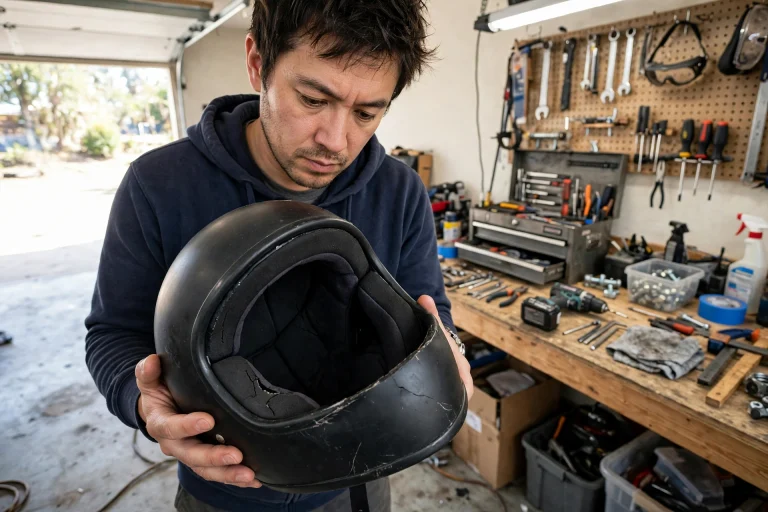
Yes, gravel spray can damage a helmet over time, though usually in small ways. Repeated hits from stones can chip the paint and scratch the shell, and a stone that hits a visor hard enough can leave a chip or a scratch on the plastic. A scratched visor can be a problem, because scratches catch the light and make it harder to see, especially in low sun or at night. Many riders carry a spare visor or replace a badly scratched one rather than riding with poor visibility.
The shell itself is tougher, and small stones are unlikely to crack it, but the damage adds up over a long season of gravel riding. It is worth checking the helmet regularly for chips, cracks, or loose fittings, and for damage to the visor and vents. In general terms, cosmetic damage from gravel is normal and not a reason to replace a helmet on its own, but any crack in the shell or damage to the structure is a different matter and should be taken seriously.
Is a Full-Face Helmet Better for Gravel Roads?
Yes, on gravel roads a full-face helmet generally offers the best protection against spray, because it covers the face as well as the head. The visor closes off the cheeks, chin, and mouth, which are the areas most exposed to stones thrown up by the rider’s own front wheel or by vehicles ahead. An open-face helmet still protects the scalp, but it leaves the face open, so riders need goggles or glasses to protect their eyes and a face covering for the rest.
A cycling helmet with large vents is the least protective against gravel spray, because stones can pass through the vents and hit the scalp, though the shell still blocks most of them. Some cyclists wear a cap or a bandana under the helmet on gravel rides, which adds a layer of fabric between the scalp and any stone that gets through. In general terms, the more of the head and face a helmet covers, the better it will deal with gravel spray, and the trade-off is heat and ventilation on a long, dusty ride.
What Else Can You Do to Protect Yourself From Gravel Spray?
A helmet is the most important protection against gravel spray, but there are other steps that help. The simplest is to keep a sensible distance from the vehicle in front of you, because gravel spray is worst close behind another vehicle and fades with distance. Slowing down also helps, because the faster you travel, the faster the stones are thrown up and the harder they hit.
Eye protection is essential if your helmet does not have a visor: goggles or sturdy glasses will stop stones from reaching your eyes, and they are worth wearing even on a short gravel stretch. Long sleeves and gloves protect the arms and hands, which are also hit by spray, and a neck gaiter can protect the neck and lower face. In general terms, gravel spray is a whole-body hazard, and while the helmet protects the head, the rest of your kit should cover the parts the helmet does not reach.
Should You Clean Your Helmet After Riding on Gravel?
Yes, it is a good idea to clean your helmet after a gravel ride. Dust and grit can work their way into the vents, the padding, and the visor mechanism, and if left there they can scratch the visor, clog the vents, and wear the padding out faster. A gentle clean with warm water and mild soap, followed by air drying, is usually enough, and you should avoid harsh chemicals or high-pressure water that could damage the shell or the liner.
Cleaning the visor deserves extra care, because grit on the visor can scratch it if you wipe it dry. Rinse the visor with water first to wash the grit away, then clean it gently with a soft cloth. Check the vents for trapped stones or dust, and clear them out so that airflow is not blocked on your next ride. In general terms, a helmet that is cleaned after dusty or gravelly rides will last longer, work better, and be more comfortable to wear.
Do helmets protect against gravel spray?
Yes, in general terms a helmet protects against gravel spray by shielding the head with its shell and the face with a visor, turning stones that would have stung or cut the skin into harmless hits on the helmet.
Can gravel spray damage my helmet visor?
Yes, stones can chip or scratch a visor over time, and a badly scratched visor can make it harder to see, so it is worth replacing a visor that has become hard to see through.
Should I wear goggles with my helmet on gravel roads?
Yes, if your helmet has no visor. Goggles protect your eyes from stones and dust, and they are worth wearing even on a short stretch of gravel road.

Olivia
Writer at Helmet Today, covering helmet reviews, fit and riding safety.