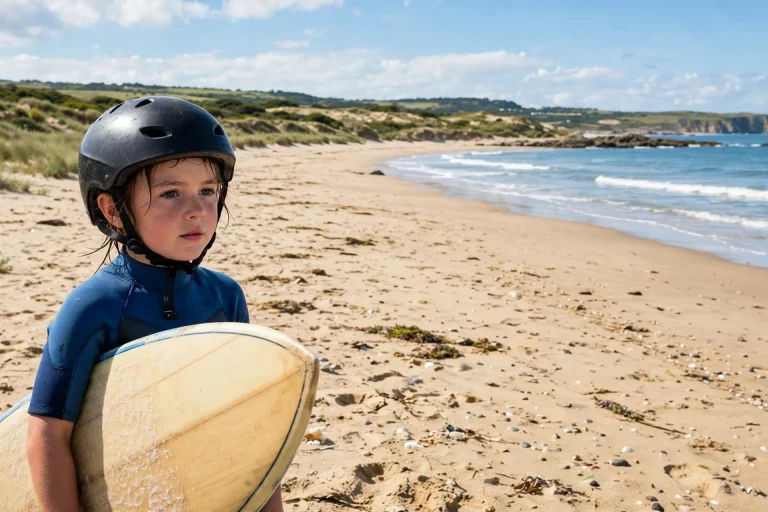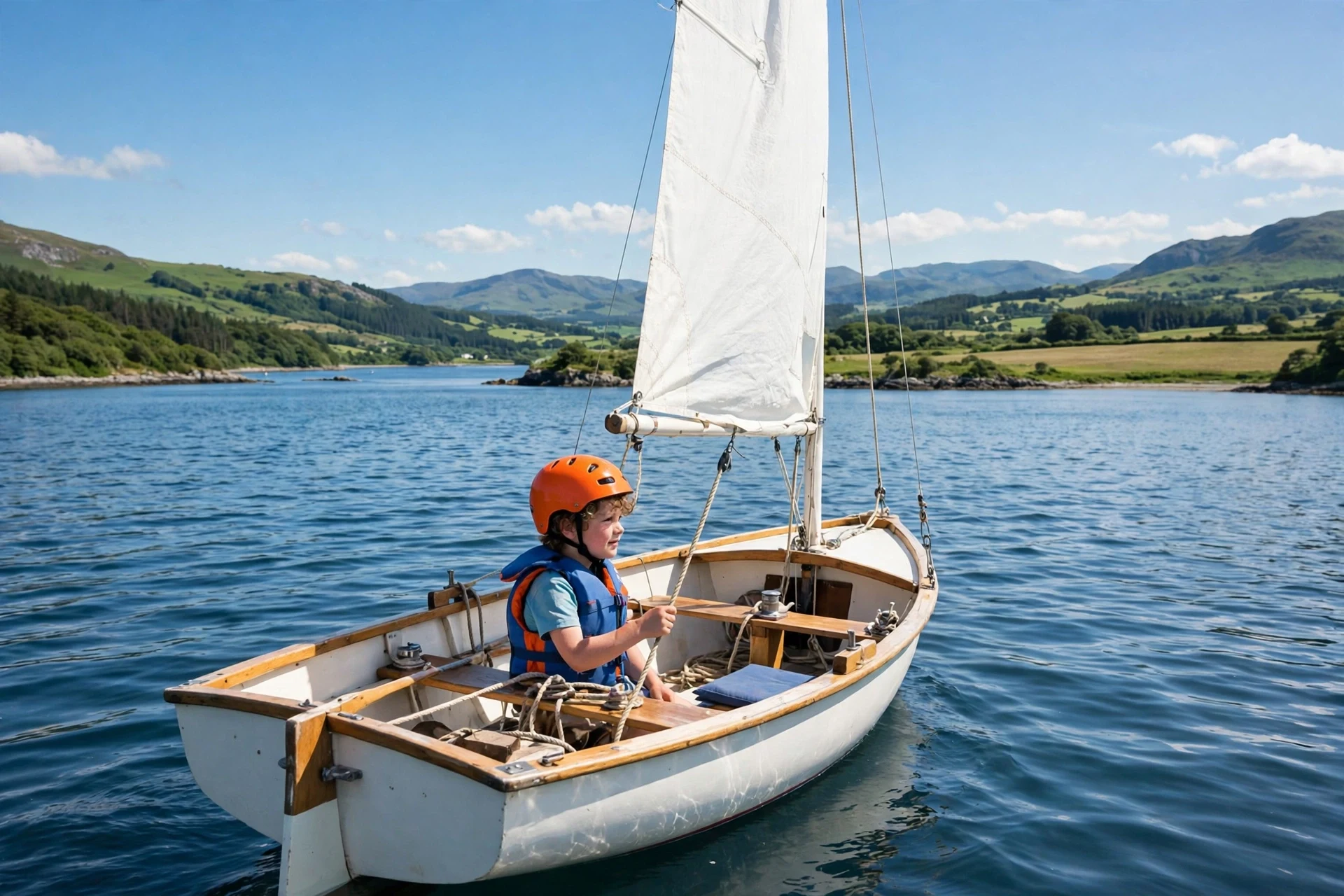
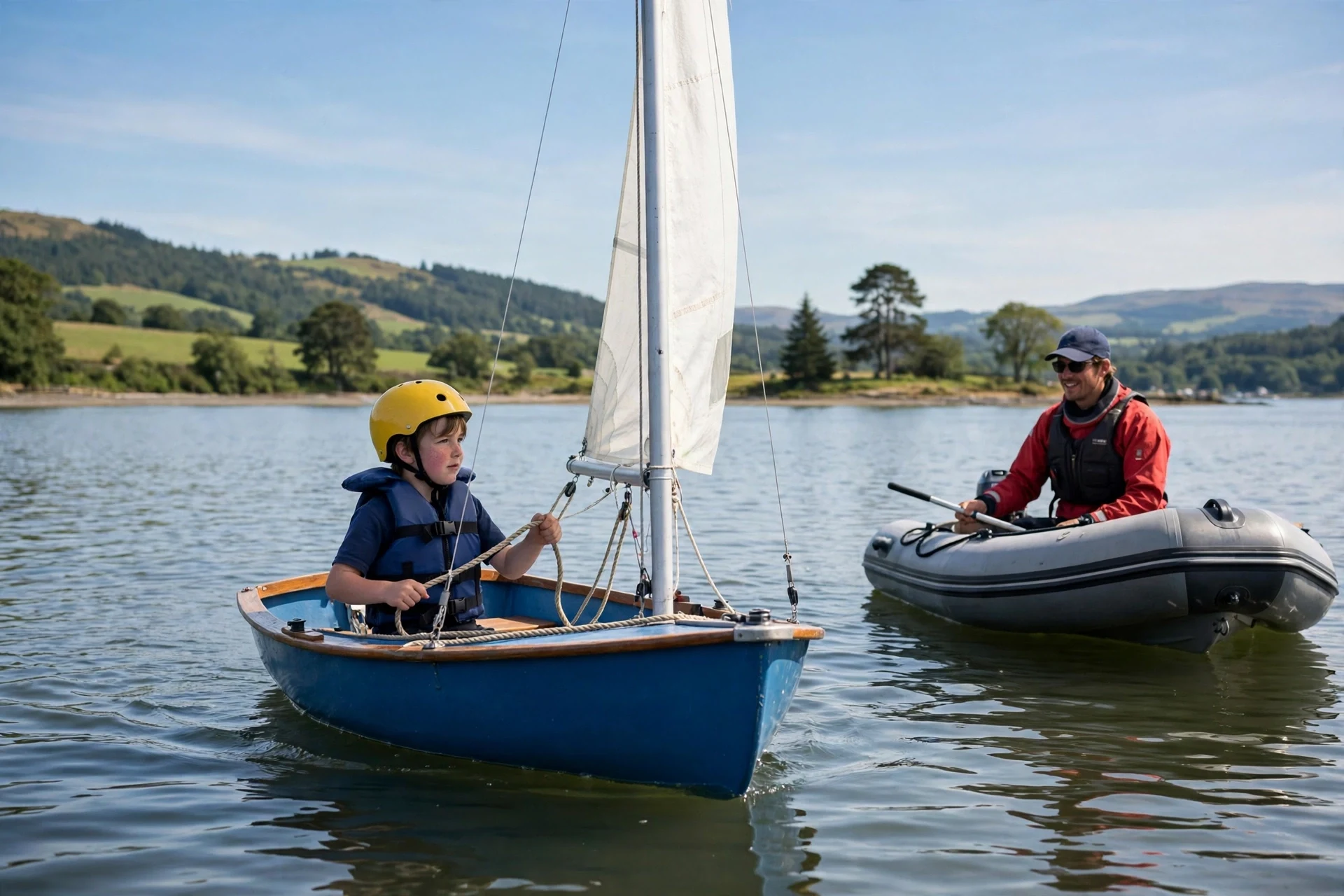
A kids helmet for a first sailing lesson is a light water sports helmet worn by a young sailor who is learning to sail for the first time. It protects the head from the boom, the mast fittings, and hard parts of the boat, and it is built to stay on and drain well when it gets wet. For a first lesson, the helmet is a sensible piece of kit, because a small sailing boat has a boom that swings across the cockpit when the boat turns, and a beginner may not yet know when to duck. A helmet that fits well lets a young sailor focus on learning instead of worrying about bumps.
What Does a Kids Sailing Helmet Do?
A sailing helmet protects the head from the kinds of knocks that are common on a small boat. When a sailing boat tacks, the boom swings from one side to the other, and it can catch a sailor on the head if they do not duck in time. The mast, the fittings, and the sides of the boat are also hard, and a child moving around the cockpit can bump into them. The helmet’s shell and inner padding work together to spread out and soften the force of these impacts.
For a first lesson, the protection matters even more, because a new sailor is still learning where the boom goes and when to move. They may be watching the sail or the water instead of the boom, and they may not yet react quickly when the instructor calls a turn. A good kids sailing helmet is built to cope with these everyday knocks on the boat, and it should stay in place through a whole lesson without sliding over the eyes.
What Should a Sailing Helmet Cover?
A sailing helmet should cover the top, sides, and back of the head, sitting level so the forehead is protected without the helmet sliding down over the eyes. The shell should feel solid and cover the head well, because a boom can strike from the side as well as from above. Ear coverage varies by design: some helmets cover the ears for extra protection, while others leave them open so the sailor can hear the instructor and the wind.
The helmet should also have drainage holes or vents, so water flows out rather than pooling inside when spray comes over the boat. If you want to understand one of the safety technologies used in modern helmets, reading about what MIPS is for helmets is a good place to start, though not every kids sailing helmet uses that system. Checking that the helmet is made for water sports, rather than for another activity, is also important, because a water helmet is built to cope with soaking and repeated wetting.
How Should a Kids Sailing Helmet Fit?
A kids sailing helmet should fit snugly all round the head, with no pressure points and no wobbling when the child shakes their head from side to side. It should sit level, covering the forehead, and the back should sit low enough to protect the back of the head. If the helmet can be rocked forwards or backwards easily, it is probably too loose, and it may shift during a lesson, which is when it is needed most.
The chin strap should be fastened snugly before the child steps into the boat, and it is worth testing the fit with wet hair, since hair behaves differently when wet and can change how the helmet sits. Many kids helmets can be adjusted in size, which helps as the child grows, but a helmet that is bought too big in the hope it will last longer is a poor choice, because a loose helmet protects less well. In general terms, it is better to use a helmet that fits now.
What Features Matter for a First Sailing Lesson?
For a first sailing lesson, the most important features are a comfortable fit, good drainage, and a light weight. Children wear the helmet for a whole lesson on the water, often in warm sun, so a heavy helmet or one with no airflow will soon feel uncomfortable. Vents or drainage holes matter, because spray and splashes are part of sailing, and a helmet full of water is heavy and can slide around on the head.
Adjustability is worth having in a kids helmet, since kids grow quickly and a helmet with adjustable sizing can be fine-tuned as the head grows. The fastenings should be easy to use, so the helmet can be put on and taken off without a struggle, even with wet hands.
How Do You Look After a Kids Sailing Helmet?
Looking after a kids sailing helmet starts with rinsing it with fresh water after each lesson, especially if it has been in salty water. Salt can wear down the straps and the padding over time, so a quick rinse and a good air dry keep the helmet in better shape. Leaving the helmet upside down or on a shelf to dry helps the water drain out, and the padding can usually be wiped or rinsed if the maker allows it.
It is also worth checking the helmet regularly, looking for cracks in the shell, worn padding, or a chin strap that no longer holds tight. Small problems caught early can often be fixed, but a helmet with a cracked shell or a strap that will not stay fastened should not be used. Keeping the helmet out of strong sun when it is stored, and in a bag that protects it from knocks, is a simple habit that helps it last longer.
When Should a Kids Sailing Helmet Be Replaced?
A kids sailing helmet should be replaced after a hard impact, even if it looks fine from the outside. The padding inside a helmet can compress or crack in a heavy knock, and that damage may not be visible under the shell. A helmet that has already absorbed a hard blow may not protect as well the next time, so it is generally sensible to retire it after a serious impact and use a new one.
Growth is the other common reason to replace a kids helmet. A helmet that has become too tight, or that can no longer be adjusted to fit snugly, is no longer doing its job properly, and it may also be uncomfortable enough that the child resists wearing it. Wear and tear matters too: straps that no longer hold, padding that has gone thin, or a shell that feels brittle after many seasons in the sun are all signs that the helmet has reached the end of its useful life.
Does my child need a helmet for a first sailing lesson?
Yes, in general terms a helmet is a sensible choice for a first sailing lesson. The boom swings across the boat when it turns, and a beginner may not duck in time, so a helmet protects against knocks that are hard to predict.
Can my child use a bike helmet for sailing?
No, a bike helmet is not a good choice for sailing. Bike helmets are not designed to cope with water, repeated soaking, or impacts from a boom, and they can fill with water and slide around, so a water sports helmet is the right tool for the job.
How do I know if my child’s sailing helmet fits?
It should sit level, feel snug all round without pressing anywhere, and stay put when your child shakes their head. Test it with wet hair too, and check that the chin strap stays snug when the helmet is wet.

Olivia
Writer at Helmet Today, covering helmet reviews, fit and riding safety.