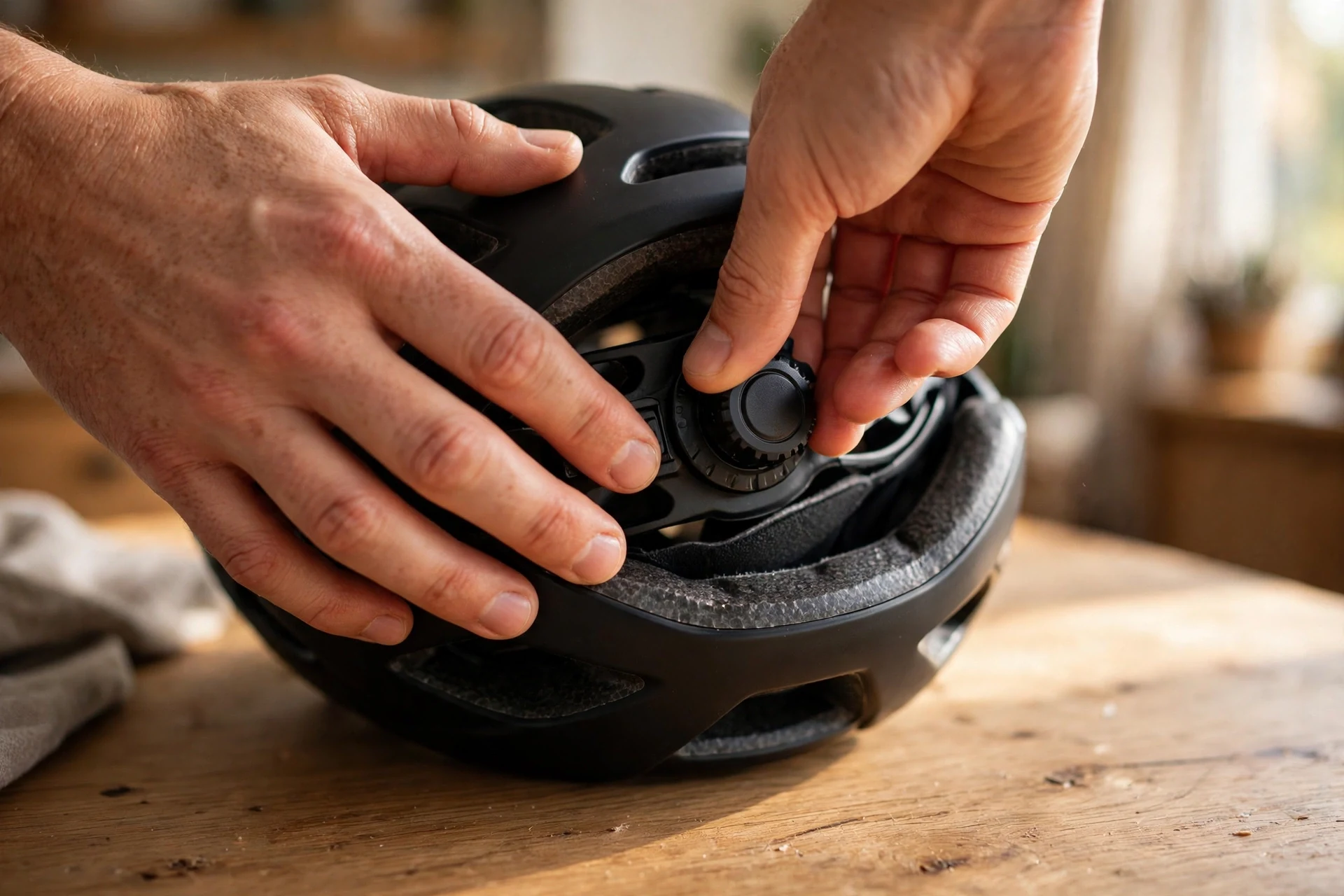
A helmet that feels too loose can usually be adjusted with the retention dial, thicker fit pads, and a properly fastened chin strap. In general terms, if those three fixes still leave the helmet rocking or sliding, the shell is the wrong size and you need a smaller one, because no strap can make an oversized helmet safe. A loose helmet is a common problem, and it is worth fixing properly rather than putting up with it. A helmet that moves around on your head is distracting at best, and at worst it may not be in the right place when you fall.
Why Does My Helmet Feel Too Loose?
A helmet feels too loose when there is a gap between the liner and your head. The most common reason is simply that the shell is too large: helmet sizes are based on head circumference, and if you are at the bottom of a size range, or if you guessed your size rather than measuring, the helmet may be a size too big. Head shape plays a part too, because a helmet built for a rounder head will leave gaps at the sides of a longer, more oval head.
Wear and change can also make a helmet looser over time. The fit pads inside compress with use, so a helmet that felt snug when new can feel roomy after a season or two. Weight loss can have the same effect, as the soft tissue around the face and temples thins and leaves a gap. Whatever the cause, the test is the same: fasten the helmet, shake your head gently, and see whether the helmet moves with your head or lags behind it.
How Do I Tighten the Retention Dial?
The retention dial, usually found at the back of the helmet, tightens a cradle around the back and sides of your head. Turn it clockwise, a little at a time, until the cradle feels snug all round without pressing painfully in one spot. The helmet should then stay put when you shake your head, and the skin on your forehead should move slightly with it when you push it.
Do not rely on the dial alone, though. It works best together with the straps and pads, and if you have to turn it to its very tightest setting to stop the helmet moving, the shell is probably too big. If you want to understand one of the safety technologies used in modern helmets, reading about what MIPS is for helmets is a useful starting point, but remember that fit comes first: any liner system needs the helmet to stay in place to work as designed.
Can Thicker Fit Pads Fix a Loose Helmet?
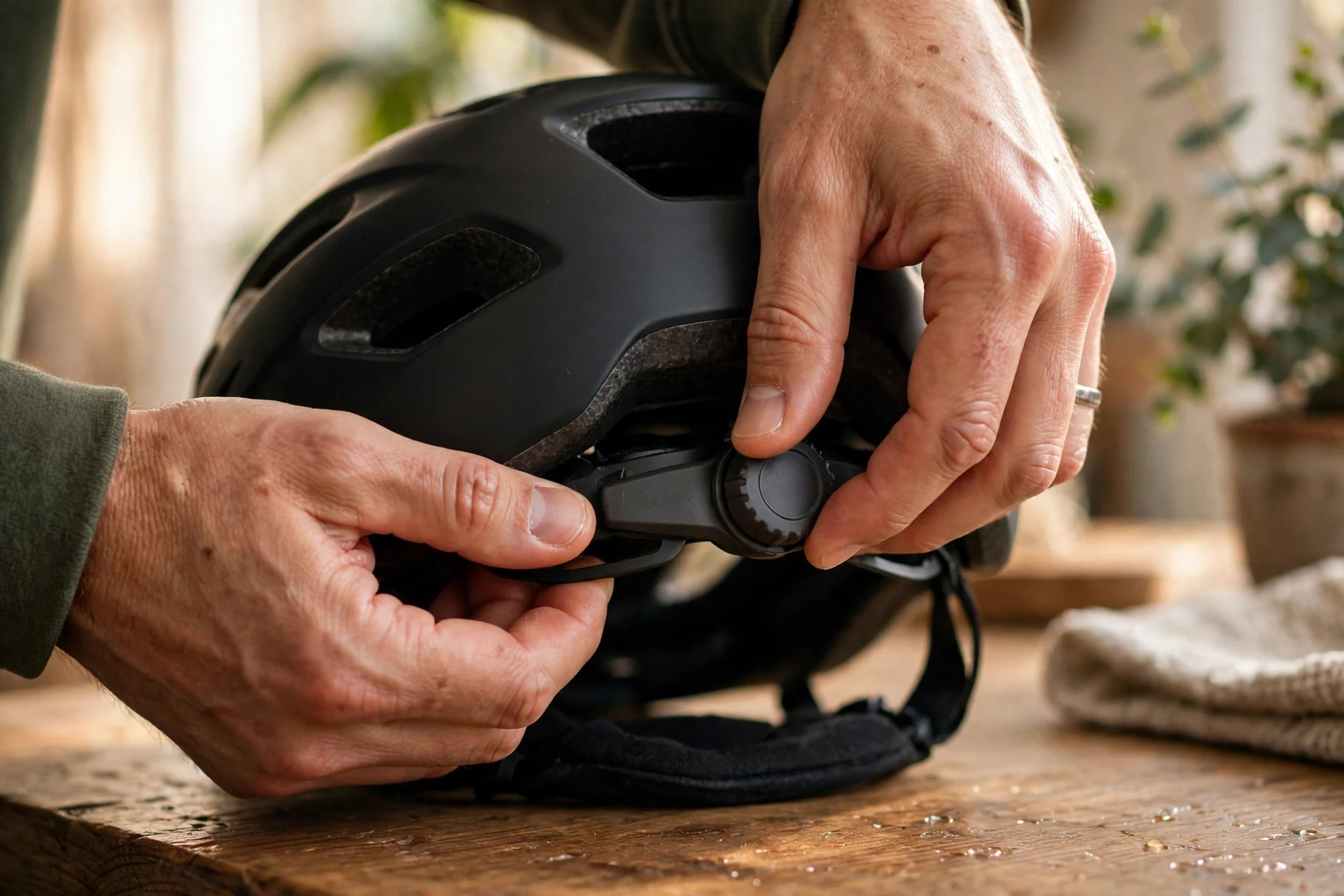
Yes, thicker fit pads can fix a helmet that is only slightly too loose. Most helmets come with a set of foam pads in different thicknesses, and swapping a thin pad for a thicker one fills the gap between the liner and your head. Start by working out where the helmet feels loose: if it rocks side to side, add thicker pads at the sides, and if it tips forward, add padding at the back or crown.
Make one change at a time and test the fit after each one, because adding too much padding in the wrong place creates pressure points without fixing the looseness. Pads should make the helmet feel even and snug all round, not tight in one spot and loose in another. In general terms, pads are a good fix for a small gap, but they cannot rescue a helmet that is a whole size too large: if you need the thickest pads everywhere and the helmet still moves, the shell is the problem.
How Should the Chin Strap and Side Straps Be Adjusted?
The chin strap should be fastened snugly under your chin, with room for only one or two fingers between the strap and your skin. If you can fit your whole hand under it, it is far too loose, and the helmet will lift off your head in a fall. Pull the strap through the buckle until it feels firm, then check that you can still open your mouth and talk comfortably.
The side straps should meet in a neat V just below each ear, with the front strap running in front of the ear and the back strap behind it. If the V sits too far forward or back, slide the buckle along the strap until it sits in the right place. Even straps matter: if one side is tighter than the other, the helmet will be pulled sideways and will feel loose on one side and tight on the other.
What If Adjustments Do Not Fix the Looseness?
If you have tightened the dial fully, fitted the thickest pads, and fastened the straps snugly, and the helmet still rocks or slides, the shell is too large and you need a smaller size. This is the honest answer, and it is better to accept it than to keep riding in a helmet that cannot stay in place. A smaller helmet should feel snug when you first try it on, without painful pressure, and it should stay put when you shake your head.
When you shop for the replacement, measure your head with a soft tape just above your eyebrows and ears, and check the result against the maker’s size chart. Try the helmet on before you buy if you can, and test it with your hair and any glasses exactly as you will wear them. In general terms, a helmet that fits properly feels like a firm handshake around your head, and it is worth taking the time to find one that does.
Is It Safe to Wear a Loose Helmet While I Look for a Replacement?
In general terms, it is best not to ride in a loose helmet if you can avoid it. A helmet that moves around may not be in the right position in a fall, and it can also distract you while you ride, which is a risk in itself. If you have no alternative for a short, slow trip, tighten everything as much as you safely can and keep the ride gentle, but treat that as a stopgap, not a solution.
It is also worth checking whether the helmet is loose because it is worn out. Pads flatten, straps stretch, and the retention cradle can wear, and if the helmet is old, a new set of pads or a new helmet may be the real fix. A helmet that has taken a hard impact should be replaced in any case, even if it looks fine, because the liner inside may have compressed in ways you cannot see.
How tight should a helmet feel?
Snug all round, without painful pressure points. It should stay in place when you shake your head, and the skin on your forehead should move slightly with it when you push it forward.
Can I add extra padding to a loose helmet?
Yes, thicker fit pads can help if the helmet is only slightly loose. Add them where the gap is, one change at a time, and stop if the helmet still rocks: that means the shell is too big.
Should the chin strap be tight if the helmet is loose?
The chin strap should always be snug, but it cannot fix a loose shell on its own. Tighten the strap, the dial, and the pads together, and if the helmet still moves, move down a size.

Olivia
Writer at Helmet Today, covering helmet reviews, fit and riding safety.